
On November 1, 2001, just before 4:00 a.m., Stacy Paik stopped her car outside the State College Park Apartments on Blue Course Drive and said goodbye. Cindy Song stepped out, still wearing her rabbit costume. Stacy waved and drove away. She did not wait to see Cindy reach the door.
That was the last confirmed sighting of Hyang Jong Cindy Song. She was 21 years old.

A Life Built From Scratch
The 21-year-old integrative arts major had been working two jobs to put herself through Penn State and was six months away from graduating.
Cindy Song was born on February 25, 1980, in Seoul, South Korea. In 1995, at 15, she moved to Springfield, Virginia, to live with her aunt and uncle just outside Alexandria. According to those who knew her, she enjoyed every minute of her newfound freedom in America.
At Penn State, she joined the Korean Undergraduate Student Association, volunteered with the Red Cross, and took part in an advertising club. She maintained solid grades throughout. Her friends described her as responsible, hardworking, and not someone who would simply leave without telling anyone. She had career goals, a loving family, and plans for after graduation. By the fall of 2001, she was a senior preparing to graduate the following spring.
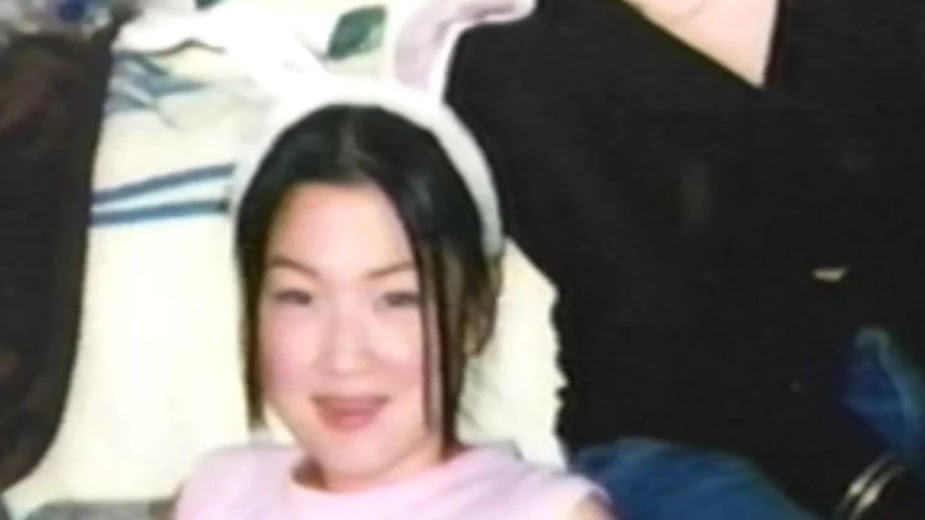
Halloween Night, 2001
Halloween fell on a Wednesday in 2001. Cindy spent it with two friends, Stacy Paik and Lisa Kim, at Players Nite Club on West College Avenue, a popular student venue on campus now known as The Basement. She had arrived in a rabbit costume: a pink sleeveless shirt with a rabbit design on the front, a white tennis skirt with a cotton bunny tail at the back, brown suede knee-high boots, rabbit ears, and a red knee-length hooded parka jacket. Lisa Kim later recalled the outfit specifically.
She had bunny ears and a tail that she had bought. It was a very cute outfit. It wasn’t like a sexy outfit. That was her thing. She was very cute. She liked to look cute.
The women danced and drank until around 2:00 a.m. Cindy had consumed alcohol that night and was mildly intoxicated, but friends reported nothing unusual about her behavior or her mood. She appeared upbeat and cheerful throughout. After leaving Players, the group spent about two hours at another friend’s apartment playing video games.
Nothing seemed wrong. Just before dawn, Stacy drove her home to Blue Course Drive, pulled up in front of the building, and waved goodbye.
She drove away before Cindy reached the door.

She Vanished Overnight
The morning after Halloween, friends assumed Cindy was sleeping, studying, or visiting someone. She was known to be independent and sometimes spent time away without warning. Concern turned to alarm when she failed to show up for her shift at the Korean restaurant where she worked. By November 4, three days after her last confirmed sighting, friends officially filed a missing persons report. They insisted to police that Cindy had no personal problems, no history of mental health struggles, and no reason to disappear. She would not have cut off contact this long. Not voluntarily.
The Ferguson Township Police Department took charge of the case. Detective Brian Sprinkle became the lead investigator. From the start, his team had no witnesses, no confirmed timeline after 4:00 a.m., and no crime scene.
When investigators searched Cindy’s apartment, they found no signs of a struggle and no signs of forced entry. Her false eyelashes, worn as part of the Halloween costume, were sitting on a counter. She had removed them; she would only have done that inside. Her backpack was in her bedroom. Her cell phone, which she almost never left behind, was still in the bag. Her computer showed normal recent activity, with no emails or messages suggesting travel, distress, or plans to leave.
What investigators found next would reshape everything they thought they knew about that night.
Her rabbit costume was gone. Her purse, containing her driver’s license and credit cards, was also missing.
Those two absences pointed to a specific sequence of events. Cindy had made it inside, removed her eyelashes, set down her backpack, then left the apartment again, taking her purse. Whatever happened to her, happened after that second departure.
Sprinkle later described the investigation’s central problem plainly.
We have no body. We have no crime scene and we have no actual crime. So it’s been very frustrating. It seems like she just vanished in thin air.
Investigators reconstructed four possible scenarios. Cindy was known to walk to a nearby 24-hour supermarket late at night; she may have headed there shortly after dropping her backpack and encountered someone along the way. She may have opened her door willingly to someone she recognized and stepped outside briefly, intending to return.
A third possibility was a rapid abduction near the building. The parking lot had no surveillance cameras at the time, and the missing costume and purse were consistent with her still wearing them when she was taken. A fourth scenario, voluntary disappearance, was dismissed early. Cindy had no known personal problems and no reasons to run. She had two tickets to Britney Spears’ Dream Within a Dream Tour, scheduled for Philadelphia on December 10, 2001, and a computer order arriving on November 6. There was no evidence she had chosen to abandon any of it.
Police and volunteers searched wooded areas near campus and locations Cindy was known to visit. The searches produced nothing. A tip from a security guard led investigators to search a 14-acre plot of land behind the nearby Lion’s Gate Apartments, described by police as a known dumping ground. They found an assortment of discarded items. None belonged to Cindy. Investigators also pulled her credit card records, phone logs, and email accounts. There were no transactions, no outgoing calls, and no digital communication of any kind after 4:00 a.m. on November 1.
Then the physical record was lost too. Cindy’s family, who had flown in from South Korea, cleaned her apartment after the initial police search. The decision was made with good intentions. It destroyed whatever forensic evidence investigators had not yet recovered.
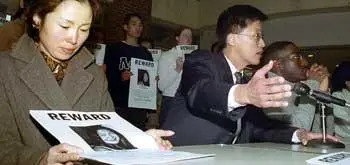
More than a month passed before Ferguson Township police formally began treating the case as a possible abduction. It was not until December 2001 that authorities publicly acknowledged foul play was likely. By that point, critical time had already been lost. Students and community members, frustrated by what they saw as an inadequate response, formed the Coalition to Find Cindy Song and called on police and Penn State to do more. Authorities maintained they had pursued every available lead.

The Philadelphia Lead
On December 5, 2001, 35 days after Cindy was last seen, Ferguson police investigated their first promising lead. A woman came forward claiming she had witnessed a struggle in Philadelphia’s Chinatown district, roughly 200 miles from Penn State.
She described a woman matching Cindy’s description being forced into a vehicle by a man while screaming and crying for help. Investigators produced a composite sketch. The man was described as Asian, with an olive to light brown complexion and medium-length hair. Police stressed he was not a suspect but urgently wanted to question him.
Before long, the lead weakened. The witness changed parts of her account. In an effort to recover further detail, investigators placed the witness under controlled hypnosis. It produced nothing usable. Investigators could not verify the incident or confirm that the woman in the car was Cindy. The lead was eventually deemed unreliable. It has never been formally eliminated.

Selenski’s Claim
In 2003, investigators uncovered multiple sets of human remains on property belonging to Hugo Selenski, a Pennsylvania bank robber suspected in several murders. An informant named Paul Weakley, serving a life sentence in an Indiana federal prison, came forward claiming that Selenski and an accomplice, Michael Kerkowski, had encountered Cindy on the night of her disappearance.
According to Weakley, the two men abducted her, held her captive in a walk-in safe in Selenski’s home until she died, and then buried her body in Luzerne County. Weakley further alleged that Kerkowski had kept Cindy’s bunny ears as a souvenir, and that Selenski killed Kerkowski when he found out.
Kerkowski could neither confirm nor deny the account. He and his girlfriend were among the five sets of remains recovered from Selenski’s property. But investigators later established that Weakley had researched Cindy’s case independently online before approaching police. No DNA recovered from Selenski’s property matched Cindy’s. Selenski was convicted of multiple murders unrelated to her case. Investigators have not ruled him out. They have been unable to corroborate a single element of Weakley’s account.

The Ferguson Township Police kept the case open. It currently sits with Detective Jonathan Mayer. A $27,000 reward remains in place for any information leading to an arrest or to the discovery of what happened to Cindy Song.
Hyang Jong Cindy Song was between 5’1 and 5’3, weighing between 110 and 130 pounds, with black hair and brown eyes. Her ears and navel were pierced. When last seen, she was wearing a pink sleeveless shirt with a rabbit design, a white tennis skirt with a cotton bunny tail, brown suede knee-high boots, rabbit ears, and a red hooded parka jacket. She was carrying a purse. She has never been found. If alive today, she would be 45 years old.
She moved to a new country at 15 with nothing but her aunt and uncle’s address. She learned a language, enrolled in a university, worked two jobs, volunteered, studied, built friendships, and made plans. She was 21 years old and six months from the degree she had spent years working toward. She had concert tickets on her dresser and a package arriving in five days.
She never made it to any of it.
