
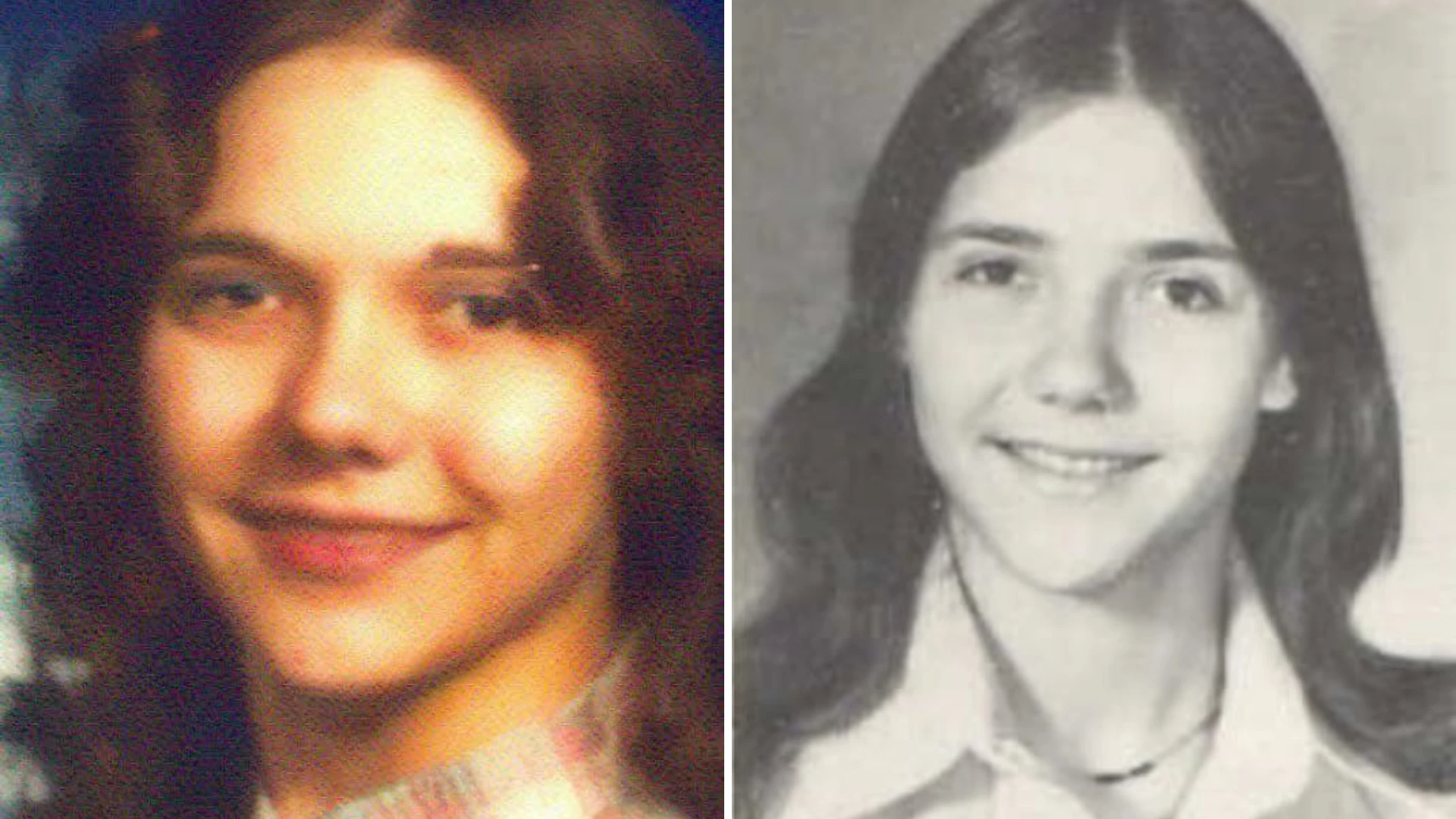
On the morning of March 5, 1986, a co-worker arrived at Darla Harper’s apartment in Gravel Ridge, Arkansas, with officers from the Pulaski County Sheriff’s Office at his side. Darla had not come in to work. She had not called. In four years on the job, she had never once done either of those things.
They knocked. Nothing. They knocked again. Silence. Then, from somewhere beyond the door, a small voice reached them.
It was Leslie. She was two years old. She was alone.
She Never Called In
Darla Melissa Nixon had been born on July 2, 1960, in Pine Bluff, Arkansas, the daughter of Jerry Nixon, a title insurance executive, and his wife, Mel. She grew up alongside a sister and a brother, graduated from Pine Bluff High School in 1977, and spent two years at the University of Arkansas at Little Rock before stepping into the workforce. By the time she vanished, she had spent four years working as a personnel analyst at an IRS office in Little Rock. The word her supervisors used when describing her to investigators was dependable. Not once in four years had she missed a shift without notifying someone first.
She had married Barry Harper, and together they had Leslie. The marriage collapsed, in part, because of Barry’s drug problem. Their divorce had been finalized roughly four months before she disappeared, though legal proceedings over the division of marital property and custody of Leslie were still working their way through the courts. Darla had moved with her daughter into an apartment in Gravel Ridge, off Jacksonville Cato Road, and she was rebuilding her life.
The family was already absorbing a separate wound. Just ten days before Darla disappeared, her sister Debbie had died.

What They Found
Officers entered the apartment and found almost everything as it should have been. No overturned furniture. No broken glass. No visible signs of a struggle anywhere inside. The scene looked, to the naked eye, like an apartment where someone had simply stepped out.
But Darla had not stepped out.
The blood was on the exterior of the front door, not inside, where a confrontation might have happened, but outside, as though whatever had taken place had concluded before anyone crossed the threshold. Her car was gone. The following day, it turned up in a commuter parking lot near Crystal Hill, nine miles from her apartment and nowhere near any location she was known to frequent. Her 1981 Honda Accord was mud-caked and had been wiped down. Despite that, investigators found traces of blood inside and, on closer examination, lifted a set of unidentified fingerprints.
Five months after Darla disappeared, a neighbor came forward and claimed to have witnessed the abduction directly. The statement was investigated but never verified. Separately, painters who had been working in the area around her building were identified and questioned as potential persons of interest. Neither lead produced an arrest.
Six months after Darla vanished, Jerry and Mel Nixon announced a $10,000 reward for any information leading to the recovery of their daughter, alive or dead, and an additional $16,000 for information resulting in the arrest and conviction of whoever was responsible. The phones stayed silent.
Mel Nixon was unequivocal from the moment she learned her daughter was gone. Darla, she told investigators, would never have left Leslie alone. Not for any reason. Not under any circumstances.
Leslie Spoke
The only person who had been inside the apartment that night was Leslie. She was two years old.
When investigators asked what had happened, she told them that three people came in with their faces covered, that she saw mommy in a bag, and that mommy’s feet were broke. Investigators had to weigh her words carefully. She was far too young for her account to be used as testimony, and it was entirely possible that fear had distorted what she believed she remembered, or that her imagination had filled gaps her eyes had not fully captured.
But it was also possible she was describing exactly what she had seen.
Mommy’s feet were broke. That detail, investigators believed, was almost certainly real. A two-year-old watching someone being carried out of an apartment would not understand why the body appeared wrong. She would not have the word for unconscious. She would reach for the nearest thing she knew.
In a 2003 interview, speaking as an adult, Leslie said she still carried fragments from that night, though she struggled to separate what she had witnessed from what she had absorbed in the years since. She recalled figures dressed entirely in black, their faces concealed behind ski masks, ascending the stairs.
Barry Harper
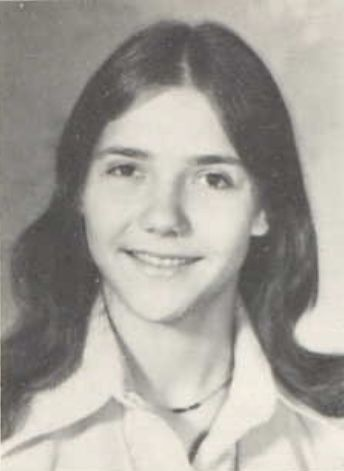
Barry Harper presented himself to investigators as a man who had moved on. He had no idea what had happened to Darla. He had nothing to hide. He said this repeatedly, across multiple interrogations, and his account did not waver.
Investigators were not convinced.
His alibi, according to those close to the investigation, was imperfect. Police had developed a theory of motive: with Darla gone, Barry stood to gain full custody of Leslie and access to the marital assets, including a $126,000 life insurance payout from Darla’s policy. It did not unfold that way. A judge put the divorce proceedings on hold. The insurance money went into escrow for Leslie. The divorce itself was not legally granted until 1988. Leslie went to live with her maternal grandparents.
In the week immediately after Darla disappeared, Barry missed every day of work. He had bandages on his hand. During that same week, he remodeled his bathroom.
By that point, the case had made its way into the courts in another form. During a custody hearing for Leslie, accusations that Barry had killed Darla were raised directly in open court. Barry’s response was to challenge police to search his property themselves. They accepted.
Investigators, along with Pulaski County Coroner Steve Nawojczyk, excavated the crawlspace beneath Barry’s home. What they found was a tarp, saturated in lime and acid. Beneath it, a bone fragment. Testing could not extract usable DNA. The fragment could not be positively identified. They could not prove it was Darla’s. They could not rule it out.
In 1990, Barry’s then-wife contacted investigators with what she described as crucial new information: Darla’s remains, she claimed, were buried under the shed in the backyard of the home Barry and Darla had once shared. A search found nothing. Darla was officially declared deceased in October 1991, according to the Social Security Administration.
Unanswered Questions
In February 2009, a man walking his dog through wooded land in Sherwood, Arkansas, came across what appeared to be a shallow grave and contacted police immediately. Darla’s was the only open missing person case in the region. The site was three miles from Barry Harper’s home. Officers obtained a court order, brought in equipment from Texas to assist, and excavated the mound. They found nothing.
Barry Wayne Harper died on December 2, 2013. He was 57 years old, driving a tanker truck, when it was involved in a fiery three-vehicle accident in Lufkin, Texas. He had never been charged. He had never been cleared.
Disturbingly, Darla was not the only woman in her family to vanish without a trace. Her first cousin, Pam Frisby Page, disappeared from her home in Peoria, Arizona, on July 22, 1989, three years after Darla. Pam’s husband, Rob Page, was later identified by the Maricopa County Attorney’s office as someone who would have been charged with second-degree murder had he still been alive. He died of cancer in 2009. Investigators do not believe the two cases are connected.
Jerry Nixon, Darla’s father, died on May 26, 2017, never knowing what happened to his daughter.
Darla’s family has accepted that she was most likely killed on the night she disappeared, in the apartment on Jacksonville Cato Road, while her two-year-old lay in the next room. What they have never stopped asking for is her remains. They want to bury her. They want a grave with her name on it. She was 25 years old, and she had a daughter who still remembers the figures coming up the stairs.
