
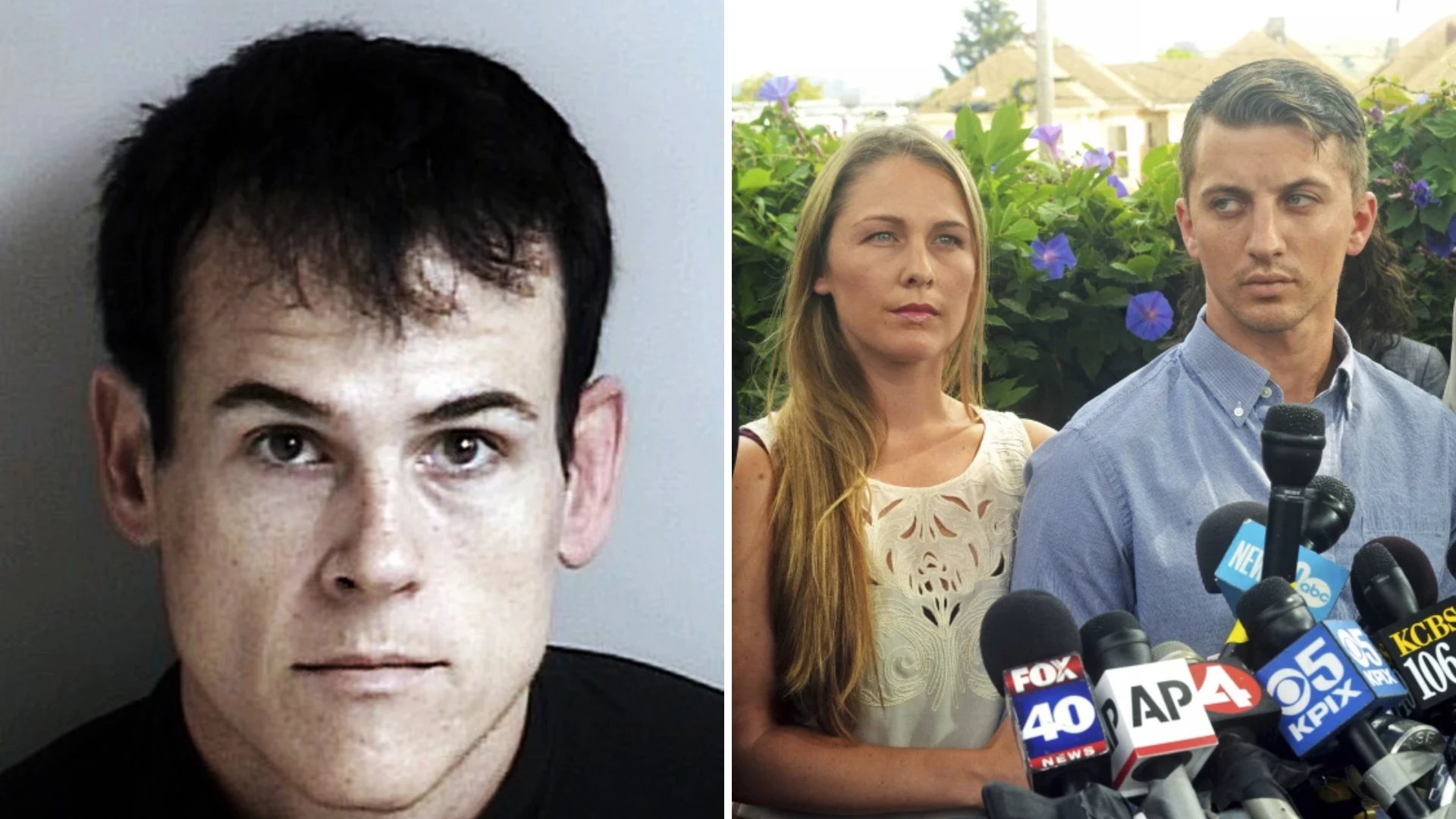
At 3 a.m. on March 23, 2015, a man in a black wetsuit slipped through the back door of a home in the Mare Island neighborhood of Vallejo, California.
He had spent weeks studying the property from above using a remote-controlled drone. He knew which window to enter through, where the couple slept, and exactly how much sedative it would take.
He placed blacked-out swim goggles over the eyes of the sleeping couple inside. He fed them a mixture of Diazepam and NyQuil through a straw. Then he pressed play on a pre-recorded audio message that announced, in a calm professional voice, that the intruders were a debt-collection crew, that non-compliance would be punished by electric shock or cuts to the face, and that the woman in the bed was being taken as collateral.
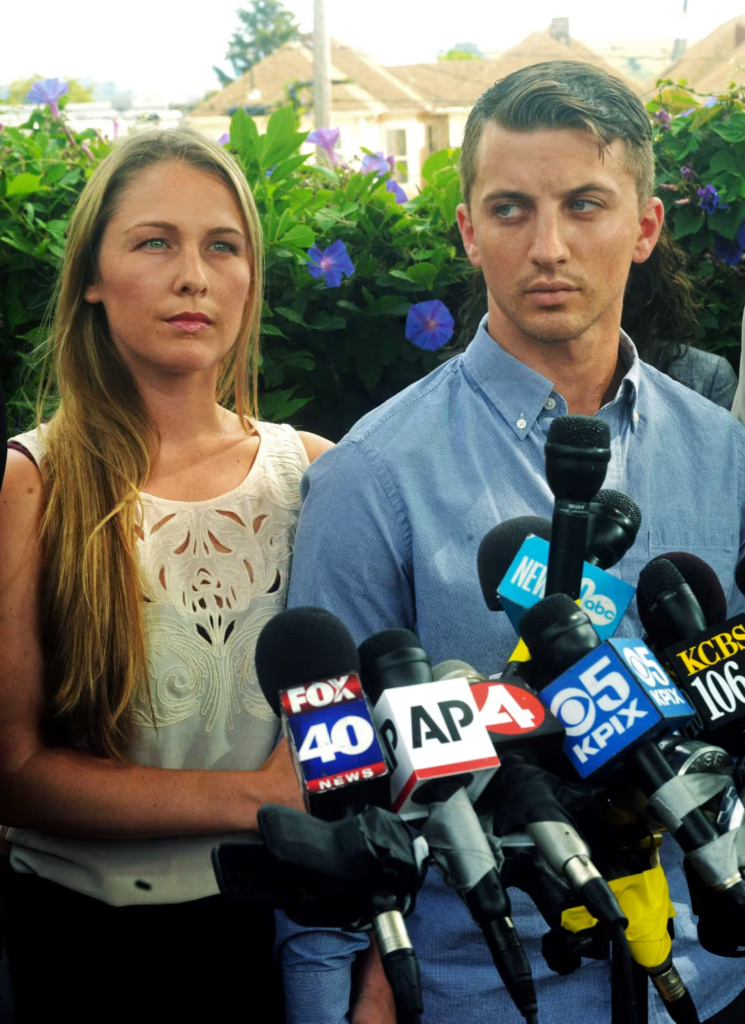
Denise Huskins, 29, was a physical therapist. Aaron Quinn, 30, was her boyfriend. By the time Quinn was conscious enough to reach for his phone, Huskins was in the trunk of his own car, being driven north through the California darkness.
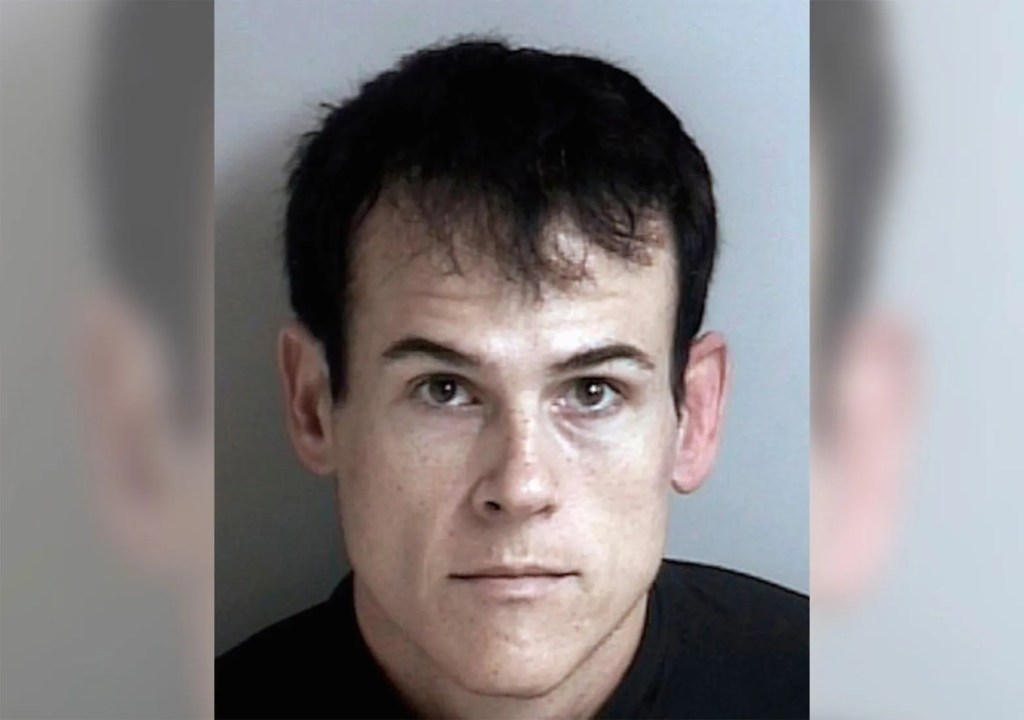
The man driving was a decorated Marine veteran. He had a law degree from Harvard. He had been publicly praised as one of the most innovative immigration attorneys in the country.
He had also committed his first kidnapping and rape at the age of 16.
A Celebrated Career
Matthew Daniel Muller was born on March 27, 1977, and grew up in Fair Oaks, a suburb of Sacramento. His mother taught middle school English. His father was a school administrator and wrestling coach.
Muller was introverted and bullied as a child. But classmates consistently remembered one thing about him: he reliably took the side of whoever was being targeted. He was the kid who fought for the underdog.
He graduated from Bella Vista High School in 1995 with a GPA above 3.8, fluent in four languages. He enlisted in the Marine Corps the same year, served four honorable years, earned three service medals, and was promoted to sergeant.
After his discharge, he enrolled at Pomona College and graduated summa cum laude. He then entered Harvard Law School in 2003, where he volunteered at the Legal Aid Bureau working with immigrants and domestic violence victims.
He stayed on after graduation as a fellow in the Immigration and Refugee Clinical Program. He contributed to a published law book. He stepped in to manage the program when its director went on sabbatical.
In private practice in San Francisco, he took on a pro bono client facing imminent deportation and launched a Change.org petition that gathered nearly 118,000 signatures. ICE reopened the case. The deportation was halted.
The American Bar Association named him one of its “Techiest Lawyers.” He founded a nonprofit to provide free legal services for immigrants with mental illness.
To everyone who knew him, Matthew Muller was exactly the kind of person you would want arguing on your behalf.
The Collapse
During his first year at Harvard, Muller contemplated suicide and was diagnosed with major depression with signs of mania. The symptoms worsened. By 2008, he had received a formal bipolar disorder diagnosis.
The paranoid delusions followed. He became convinced the government had wiretapped his phone due to suspected terrorist ties among his immigration clients. He began copying thousands of files from his law firm’s servers, certain his bosses were tracking him.
In November 2012, after police questioned him in connection with a home invasion near Stanford, Muller vanished. He left a note on a USB flash drive: “I’m going completely off the grid. I have problems beyond my mental health.”
He traded vehicles with his mother and fled to a remote campsite in Utah, where he set up motion detectors and trip wires against what he genuinely believed was a Chinese government psychological warfare campaign against him. He lasted two days before fear drove him back.
His law license was suspended in 2013. He was disbarred in California in 2015. He filed for bankruptcy with $500,000 in liabilities and failed to submit the required follow-up paperwork. The case was dismissed.
By early 2015, he had moved into his mother’s cabin in South Lake Tahoe. He stopped sleeping. He watched the Batman film series on repeat. He entered a full psychotic episode.
He constructed an elaborate internal mythology: he was a nocturnal vigilante, tasked with fighting evil. He wore a wetsuit and assembled crude weapons from flashlights, laser pointers, and toy guns. He became convinced that the world’s wealthiest people were, in his words, a “scienced-up version of demons.”
He decided to kidnap them for ransom. He told himself he was running an elite criminal operation. He acted entirely alone.
His neighbor on Mare Island, Aaron Quinn, appeared on his list.
Crimes Already Committed
What no one around Muller understood, through his Marine service, his Harvard fellowship, and his ABA nomination, was that violent crime had been running in parallel with all of it.
In 1993, when Muller was 16 years old, he drove to Folsom Lake State Recreation Area and found a teenage couple camping in a tent. He held them at gunpoint, tied up the male victim, abducted the girl from the campsite, and sexually assaulted her.
The crime went unsolved for 32 years. He confessed to it in a signed affidavit in 2024.
In September 2009, while working as an immigration attorney in Silicon Valley, he broke into a 27-year-old woman’s home in Mountain View wearing a black suit and ski mask. He tied her up, covered her eyes with blacked-out goggles, and forced her to drink NyQuil.
He whispered throughout as though coordinating with unseen accomplices. Then he calmly informed the woman he was going to rape her. She begged him not to. He apologized, told her to get a dog, and left.
Three weeks later, he broke into the apartment of a 32-year-old Stanford student in Palo Alto. Same suit, same goggles, same NyQuil, same whispered pretense of a team. This time he attempted the assault. The victim fought back. He stopped, offered her crime prevention advice, and left.
Palo Alto police identified Muller as their prime suspect. DNA evidence cleared him. What investigators did not know was that the victim had attended a policy panel Muller organized at Harvard the year before. He had selected her long before he broke into her apartment.
By 2015, he had committed at least five violent crimes across three California counties. He had not been charged with any of them.
The Night of March 23
Muller had been watching Aaron Quinn’s home on Mare Island for weeks using a drone. He had originally intended to take Quinn’s ex-fiancee, Andrea Roberts, whom he had placed on his list of “demons.” When he entered the home and found Denise Huskins sleeping beside Quinn instead, he noted the physical resemblance to Roberts.
He took Huskins anyway.
He left Quinn zip-tied and blindfolded, loaded Huskins into the trunk of Quinn’s own car, transferred her to a stolen Ford Mustang, and drove north toward the South Lake Tahoe cabin.
Quinn eventually reached his brother, an FBI agent, who told him to call 911. He reported the kidnapping at approximately 2:00 p.m. Vallejo police detectives did not believe him. They interrogated Quinn for hours, pressing him about a supposed love triangle. An FBI agent ran a polygraph and told Quinn he had failed.
Quinn later recalled staring at the same four walls, wondering if he’d had a psychotic break.
At the cabin in South Lake Tahoe, Muller raped Huskins twice and videotaped both assaults. He threatened to kill her if she ever spoke to police.
Then he sent anonymous emails to reporter Henry Lee at the San Francisco Chronicle, claiming the kidnapping was a training mission by an elite criminal organization “perfecting its tactics” before moving to higher-value targets. He attached a proof-of-life recording of Huskins. Vallejo police refused to confirm the voice was hers.
On March 25, Muller drove Huskins 400 miles south and left her near her family’s home in Huntington Beach. That night, Vallejo Police Lt. Kenny Park held a press conference.
He declared the kidnapping a “wild goose chase.” He compared the case to Gone Girl. Then he said: “Mr. Quinn and Ms. Huskins have plundered valuable resources away from our community. So if anything, it’s Mr. Quinn and Ms. Huskins that owe this community an apology.”
Denise Huskins had been drugged, kidnapped, raped twice, held captive for two days, and threatened with death.
She was now being told on live television that she owed the community an apology. Muller was still free.
The Cell Phone
On June 5, 2015, Muller broke into a home in Dublin, California. The couple inside woke up, attacked him, and chased him out. In the struggle, he dropped his cell phone.
Dublin detective Misty Carausu traced the phone to Muller. Investigators obtained warrants within two days. Muller was arrested without incident at the South Lake Tahoe cabin on June 9, 2015.
Inside the cabin and the stolen Mustang parked outside, Carausu found zip ties, duct tape, Quinn’s laptop, and a pair of blacked-out swim goggles with a single strand of Huskins’ blonde hair still attached to the tape. The GPS history in the Mustang contained the exact coordinates in Huntington Beach where Muller had released her.
Every detail confirmed what Quinn and Huskins had told police in March. The Vallejo Police Department sent them a written apology from Police Chief Andrew Bidou.
Muller pleaded guilty to federal kidnapping for ransom in September 2016. On March 17, 2017, a federal judge sentenced him to 40 years in prison. At the sentencing, Huskins addressed him from the stand. “You treated me like an object, a toy, an animal,” she said.
Muller told the court he was “sick with shame” for the “pain and horror” he had caused.
In 2018, Huskins and Quinn, by then married, settled their civil lawsuit against the City of Vallejo for $2.5 million. In 2022, state charges of forcible rape, robbery, and false imprisonment added a concurrent 31-year sentence. He is held at Federal Correctional Institution in Tucson, Arizona, and will not be eligible for release until July 2049.
In 2024, Seaside Police Chief Nick Borges began writing letters to Muller in prison. Muller wrote back. He confessed to the 1993 Folsom Lake rape, the 2009 home invasions in Mountain View and Palo Alto, and a 2015 home invasion in San Ramon that had not been publicly connected to him. In December 2024, Santa Clara County prosecutors filed new felony charges for the 2009 assaults.
The women he had attacked in those homes had been waiting fifteen years for an answer.
On January 7, 2025, Denise Huskins stood before reporters in Seaside, California, tears on her face, and described how she had spent the years since her kidnapping helping investigators identify victims whose cases had gone cold for decades.
She had been drugged, abducted, raped, threatened, and publicly accused of fraud by the police department assigned to protect her. She had spent the years that followed finding other women who had been through the same thing and making sure they were not forgotten.
She was 39 years old. She had never owed anyone an apology.
