
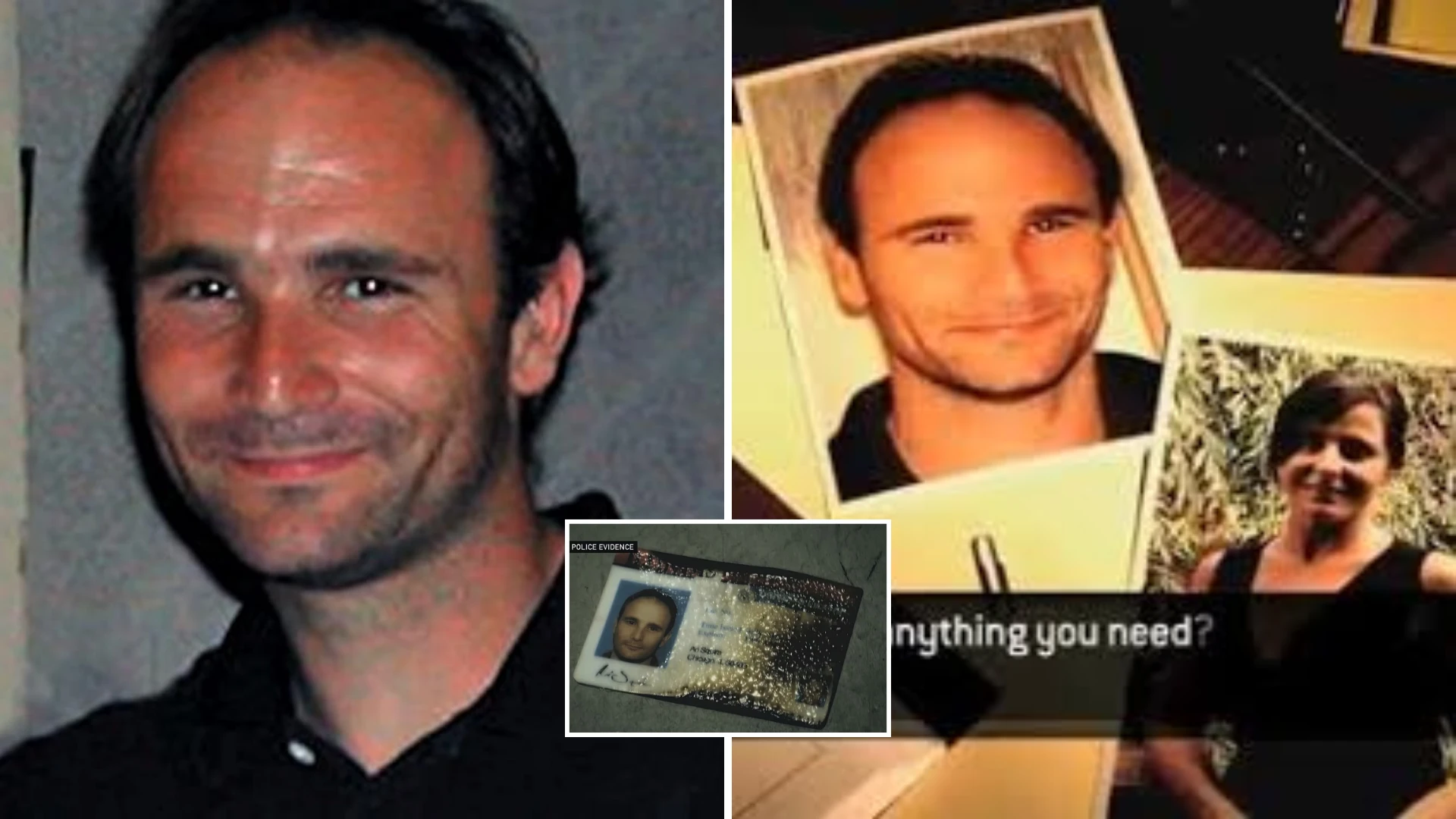
On February 23, 2008, Denise Squire stepped out of her bedroom around 8 a.m. to find thick black smoke pouring from the garage behind their Lake Barrington, Illinois home. She assumed her husband Ari was already in there, as he always was on Saturday mornings, bent over one of his diesel trucks. She called his cell phone. No answer. The smoke thickened. At 8:24 a.m., she called 911.
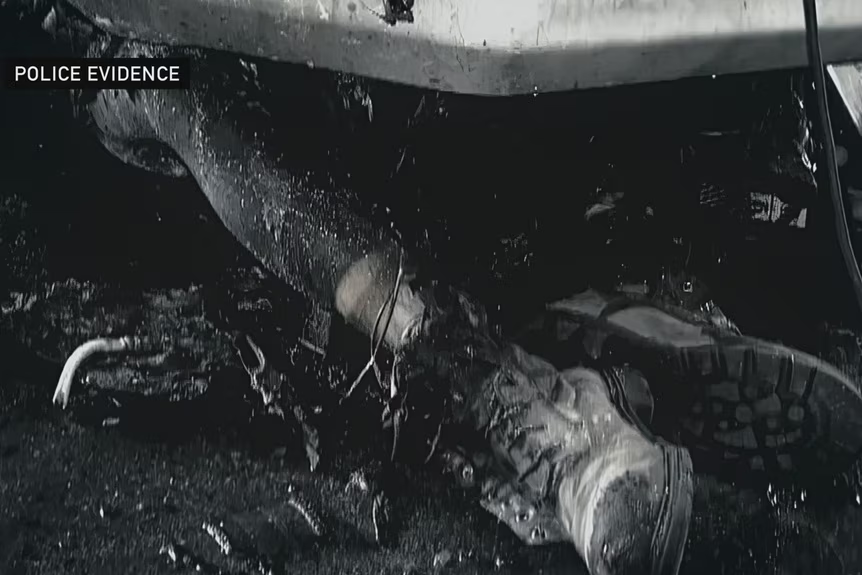
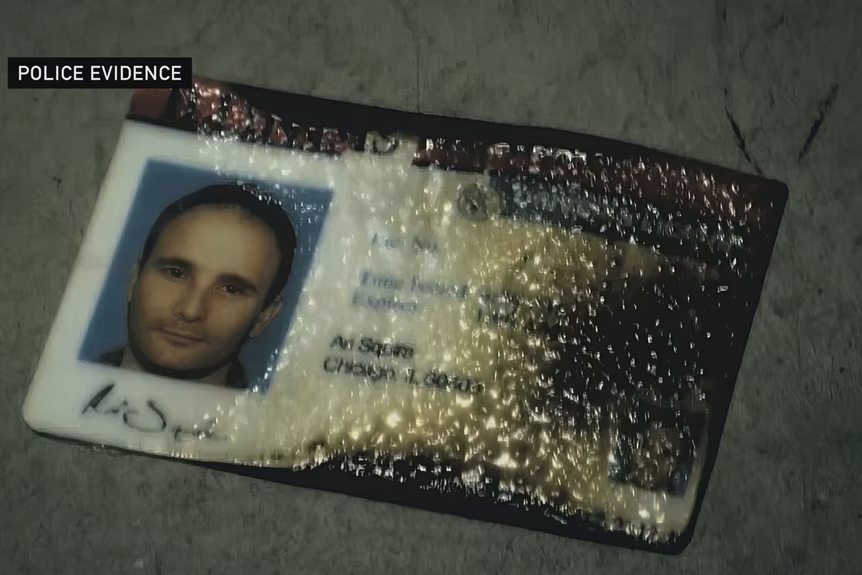
Firefighters arrived within minutes and pushed into the garage. When the smoke cleared, they found two legs sticking out from beneath Ari’s white pickup truck. The upper body was burned beyond recognition. A wallet in the jeans pocket carried identification for Ari Squire, 39.
His truck had apparently slipped from its jack while he worked underneath it, crushing him, igniting a fire. A terrible accident. Investigators would soon establish that almost nothing about that scene was accidental.
The Perfect Community Figure
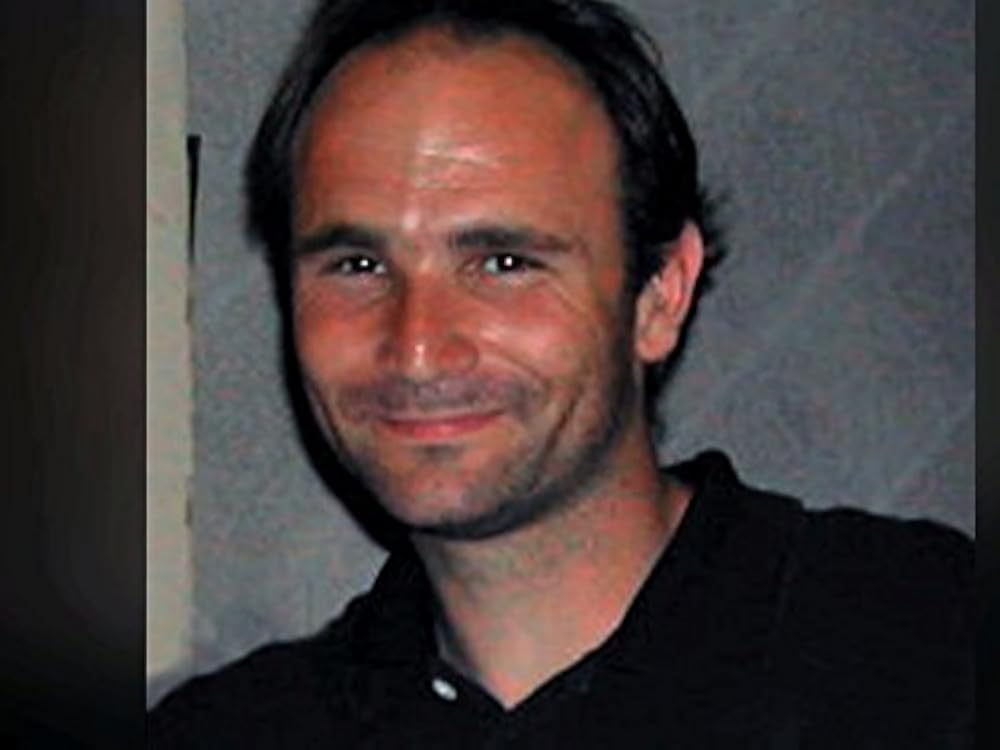
To the people who knew him in Lake Barrington, Ari Squire was the kind of man who made a neighborhood feel like a community. He had co-founded a construction contracting firm in the Chicago suburbs, was known as generous with his time, and had a reputation for helping anyone who needed it. But his real passion was diesel trucks.
He had built a large garage on his property specifically to house and work on them, competing in pulling competitions and speed events, always ready to talk horsepower with anyone who was interested.
He and Denise had been married for 14 years. They slept in separate bedrooms, moved in different social circles, and had no children together. To outside observers, they were more business partners than husband and wife. There was, reportedly, not a single photograph of the two of them together anywhere in the house. The only wedding picture on display showed Ari alone in his tuxedo.
Beneath the surface, the Squire finances were collapsing. In December 2007, Ari had pleaded guilty to Medicare fraud, admitting his earlier home health care firm had billed over $2.3 million for unnecessary services. He owed $200,000 in restitution and a separate $126,000 civil settlement.
His construction business was faltering badly amid the 2008 housing crash. His legal fees had run to another $200,000. He was on house arrest, permitted to leave only for work and essential errands. He had also purchased a condo complex in Florida that was draining money without return.
A $5 million life insurance policy, with premiums about to quadruple to $12,000 a year, named Denise as the sole beneficiary.
The Plan Takes Shape
The idea, according to his construction business partner, was something Ari had floated casually a couple of years earlier. He had mused out loud that it would be useful to have a dead body he could plant and burn, assume another man’s identity, and start over completely. At the time, his partner apparently heard it as dark humor. It was not.
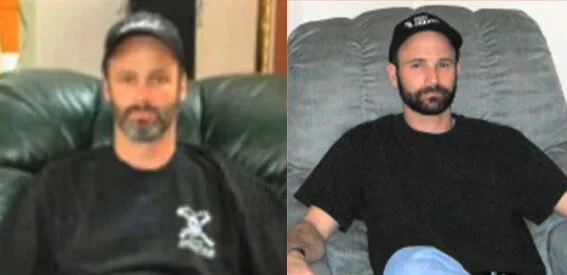
Ari had identified his hunting ground: the Home Depot in Lake Zurich, where he was a regular, visiting four or five times a week for construction supplies. He needed a man who looked enough like him to pass identification checks. His first candidate was Sandy Lively, a carpenter who matched his hair and facial features closely. Ari offered Lively a position paying $60,000 a year.
The application he handed over asked for eye color, shoe size, waist measurements, piercings, and tattoos. It read less like a job application than a body double questionnaire. Lively agreed to come to Ari’s home for what was described as a follow-up meeting. He overslept. He never showed. He later reflected that he had almost certainly avoided being murdered.
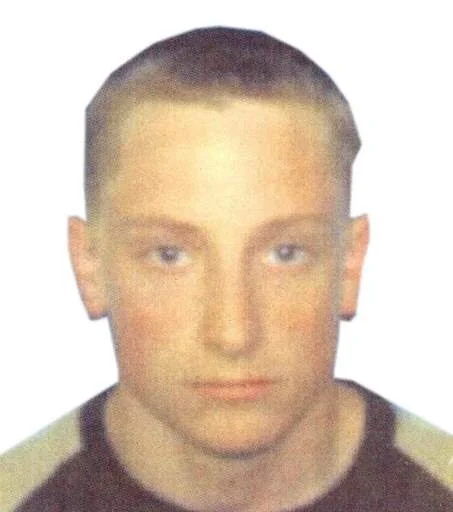
His next target was Justin Newman, a 20-year-old cashier at the same Home Depot. Justin was from Arlington Heights, the eldest son of Donna FioRito, a single mother he supported on $10 an hour. He loved fishing, NASCAR, and his family, and he was, by every account, the kind of young man who did not let people down.
Every Saturday without fail he drove his mother to her shift at a nearby Target because she could not drive herself. He was so committed to this that he would not even let his brother take over the task. When Ari offered him a construction job at $15 an hour, twice the Illinois minimum wage at the time, Justin jumped at it.
The Morning of February 23
Justin told his mother he would start the new job early that Saturday morning and be home by 3 p.m., in time to drive her to work. He arrived at the Squire property sometime around 7 a.m. According to investigators’ reconstruction of events, Ari incapacitated him with chloroform, positioned his body beneath the white pickup truck, and brought the vehicle down on him.
He then doused Justin’s body in an accelerant and ignited it, left a lit propane torch near the scene, placed Ari’s wallet and identification in Justin’s jeans pocket, and drove away in Justin’s car toward Missouri.
Before he left, he had put in blue contact lenses. Justin Newman’s eyes were blue. Ari’s were brown. He had also dyed his hair and grown a beard in the weeks preceding, working to close the physical gap between himself and a man 19 years his junior.
He was carrying Newman’s driver’s license, cell phone, and prepaid credit card. He checked into Room 133 of a Days Inn in Eureka, Missouri.
The Scene Falls Apart
From the start, Lake County investigators had doubts. Ari Squire was known in the diesel community as a safety-conscious, highly skilled mechanic. People who heard he had been killed by a slipping jack expressed immediate disbelief.
The forensic detail supported their instinct. There were no scratches or dents on the truck consistent with a fall. The hydraulic jack had been placed in an unusual position without stabilizers. The garage circuit breaker was switched off, meaning no hanging light could have sparked the fire as initially theorized. The body had been covered with cardboard and was soaked in an accelerant far beyond what any fuel spill would produce.
The coroner moved more slowly still. Dental records submitted by Denise did not match the victim’s teeth. The body showed no healed arm fracture that Ari’s medical history documented. The build was slimmer, younger-looking. A tribal shoulder tattoo that Ari carried was absent. The coroner determined the remains were those of a man significantly younger than 39.
Meanwhile, at 3 p.m. on February 23, Donna FioRito was waiting for Justin. He did not come. He did not answer his phone. She called the Home Depot, hoping to reach his manager, and learned through a phone chain that Ari Squire, Justin’s new employer, had supposedly died in a fire that morning.
The next day, a text arrived on Donna’s phone, purportedly from Justin: Gone to Missouri. Call you next week. Justin did not text. His family filed a missing person report.
Eureka, Missouri
On March 2, 2008, eight days after the fire, a patrol officer in Eureka, Missouri ran a routine license plate check on a vehicle parked outside a Days Inn. The registration came back to Justin Newman. Investigators assembled, armed, outside Room 133. They knocked and announced themselves. No answer. They obtained a master key. The door was still chained from inside. They could hear nothing.
Then a single gunshot sounded from inside the room.
When they entered, they found a man dead on the bed from a self-inflicted gunshot wound to the head. Fingerprints confirmed it was Ari Squire. Justin Newman’s cell phone, car, and identification were in the room.
The blue contact lenses were still in Ari’s eyes. Two days later, DNA results confirmed that the body recovered from the Lake Barrington garage was Justin Newman’s. He had been killed by crushing before the fire was set.
The Emails
Lake County Sheriff’s investigators found at least four emails Ari had sent to Denise in the days after the fire, while he was supposed to be dead. He asked when his ashes would be returned. He asked what she planned to do with them.
Denise’s reply referenced the medical examiner still holding the body. She did not write your body. She wrote the body.
Denise’s attorney argued she had believed the emails were scheduled messages Ari had arranged before his supposed death, sent automatically after the fact. She passed a polygraph examination.
She was never charged with any crime. The $5 million insurance claim was denied under the policy’s suicide clause. In a subsequent civil suit, a jury found Denise liable and awarded Justin Newman’s family $6 million in damages.
Whether that award was ever collected is not publicly known. Denise Squire continued to live in the Lake Barrington home.
Justin Newman was 20 years old. He was driving his mother to work every Saturday without exception. He had been offered what looked like his first real break, a job that paid real wages, by a man he had met at the store where he worked. He told his mother he would be home by 3 p.m. He had never been late before.
