
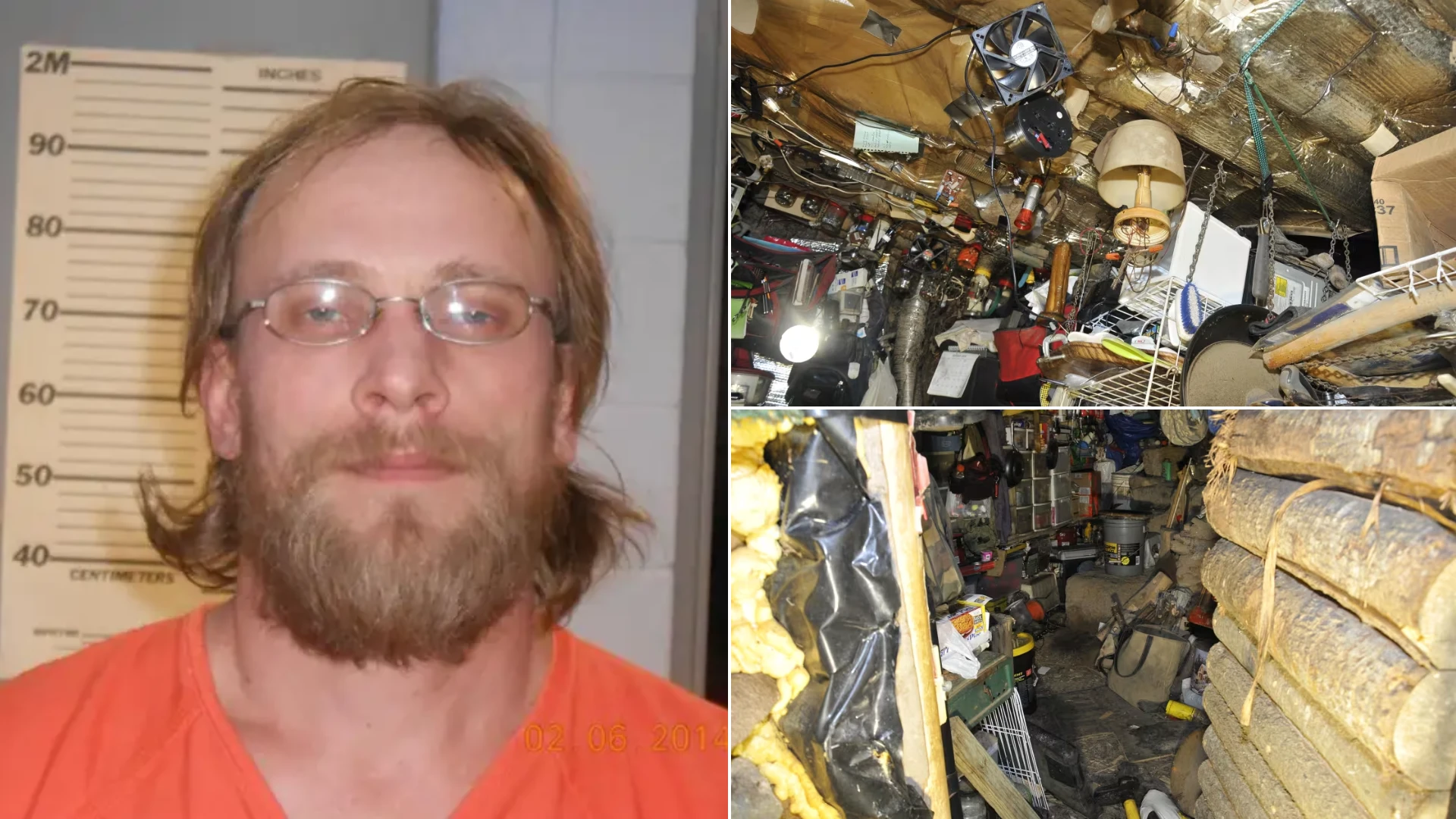
On the morning of August 9, 2019, Thomas Nelson pushed open a log door built into the side of a Wisconsin hillside and stepped inside. He saw canned food, storage bins, a radio still faintly crackling with an advertisement. The air was cool and smelled of cold earth. Then he swept his flashlight around a corner. A man was lying on a cot, staring directly back at him.
Nelson walked out and called the police.
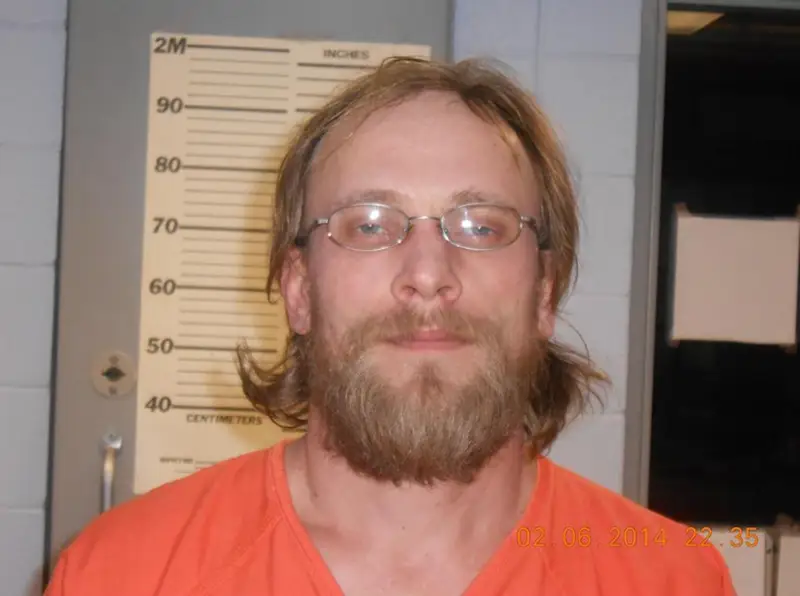
The man on the cot was Jeremiah Button, a 44-year-old fugitive who had been on Wisconsin’s most wanted list for three and a half years. Authorities had assumed he had fled the state, possibly the country. He had done neither. He had built a hidden underground bunker in a state forest half a mile from a landfill, and he had lived there alone, in near-total silence, since February 2016.
He had disappeared two weeks before his trial for the repeated sexual abuse of his own daughter was set to begin.
What happened under that roof
Jeremiah Button was born in April 1975 and grew up near Warsaw, Wisconsin, in a small town where front doors went unlocked and neighbors knew each other’s middle names. Those who knew him described him as quiet, mechanically minded, and mostly harmless. He lived with his parents into his late 30s.
He was not harmless.
Between 2006 and 2012, Button repeatedly sexually assaulted his daughter, beginning when she was 5 years old. The assaults occurred as often as three times a week. He gave her monetary incentives to keep quiet. As she grew older, he supplied her with marijuana and alcohol. He threatened her. His family had no idea.
In 2014, his daughter walked into her middle school and told a counselor. She said Button had been assaulting her for the past four years.
Police executed a search warrant on the family home. A flash drive recovered during the search contained roughly 10,000 pornographic images of children. Investigators also recovered footage Button had filmed himself inside the home, timestamped and matched to the room where the abuse took place. He was arrested and charged with 15 felonies.
His mother, Lynda Miller, paid his $25,000 cash bond in July 2014. He was released.
The plan he had already made
Button attended every pre-trial hearing. He met with his lawyer. For a year and a half, he gave no outward sign of what he was doing.
While his case moved through the courts, he was making quiet trips north, 145 miles from Richfield to a patch of state forest in the township of Ringle. He stockpiled canned goods, tools, and supplies, transporting them load by load. He lopped the tops off trees near his chosen site. He planted others. He encouraged heavy undergrowth to spread across the entrance until the hillside looked entirely undisturbed.
In February 2016, two weeks before his trial was set to begin, Button left a note on the kitchen counter for his mother. He was heading to Florida, he wrote, to start a new life. He left behind his car, his wallet, and his ID.
He later told deputies he had buried himself in coal on a freight train, ridden it north, and walked two days on foot to the bunker he had spent nearly two years constructing.
Wisconsin authorities placed him at the top of the most wanted list. Every tip went nowhere. A year after Button vanished, his original defence attorney, Gary Kryshak, withdrew from the case entirely.
Life underground
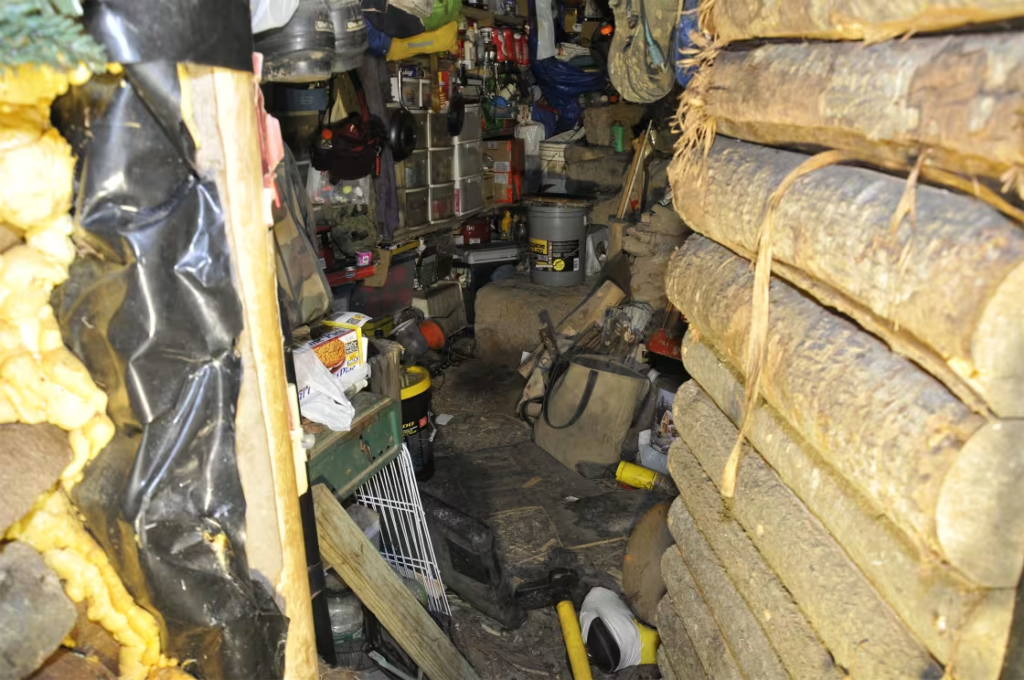
The bunker was carved into a south-facing embankment near the Ice Age Trail, half a mile north of the Marathon County landfill. Button had dug 12 to 15 feet into the hillside. The chamber was barely wide enough to move around in. Standing 20 feet from the entrance, you would not know it was there.
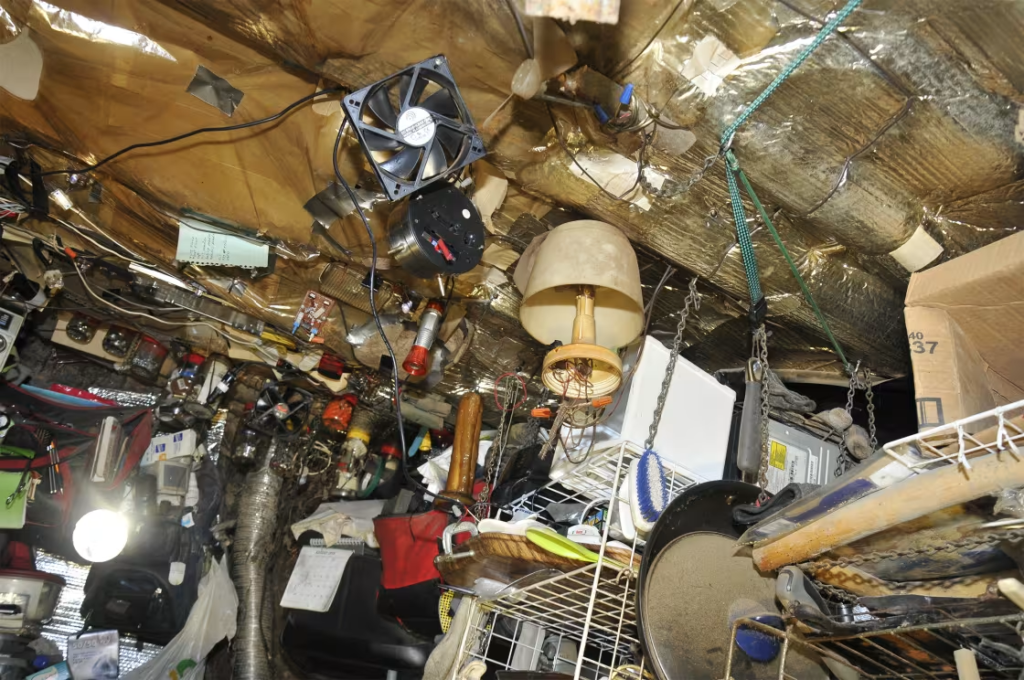
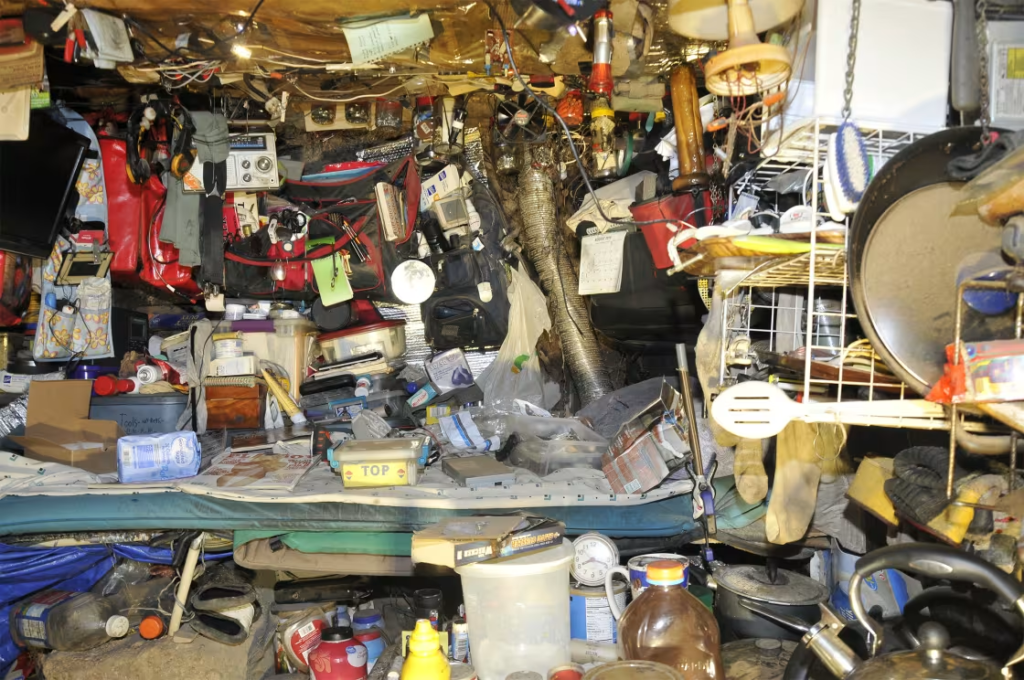
Inside, he had built something closer to a home than a hideout. Eight solar panels mounted above the tree line fed three car batteries, which powered LED lights, cooling fans, a radio, and a flat-screen television connected to a DVD player and a VHS machine. For cloudy days, he had wired a stationary bicycle to a homemade generator.
For water, he dug a well in a wet area of the woods, lined it with sand and charcoal, and boiled everything before drinking it. He built a Dakota-style fire pit with a tin-can chimney designed to pipe smoke above ground and disperse it. Shelves held hundreds of canned goods and dried foods, all carefully rationed. He grew his own marijuana in the surrounding woods, up to a pound a year.
Most of what he owned had been scavenged from the Marathon County landfill, which he could reach in under a mile. He made the trip almost every night.
Sheriff’s Lt. Jeff Stefonek, who examined the structure after the arrest, said Button had been “not only surviving, but thriving.”
To avoid leaving tracks in the snow, he walked in deliberate loops and swept his footprints away with pine branches. That habit would eventually give him away.
The hunter found the door
Tom Nelson of Wausau had hunted that stretch of state land for years. In November 2018, on a bitterly cold day with snow on the ground, he spotted something that did not belong. The snow near a hillside had been brushed clean in a pattern no wind or animal produces. He followed the marks. He found a log-paneled door built into the embankment.
He called police. Without precise directions to the remote site, they could not locate it. Nelson reported it and left. He could not stop thinking about the door.
Nine months later, on the morning of August 9, 2019, he went back. The door was unlatched. He pushed it open, stepped inside, and saw the canned food, the storage boxes, the radio still going. He stepped around a corner. Button was on the cot, staring back at him.
Nelson walked straight out and called police.
The standoff
Deputies surrounded the bunker. For 20 minutes, Button refused to come out. He told them through the door that he was wanted on warrants out of Portage County. He reportedly considered setting the bunker on fire rather than surrender. He changed his mind.
Deputy Matt Kecker, one of the first officers to speak with Button after he emerged, said he seemed almost glad for human contact. Button had not left the area once in three and a half years. His only conversations had been occasional exchanges with hikers who passed near the bunker. That was the full extent of his human contact.
During interviews, Button told investigators that when he had fled in 2016, his intention had been to die in the bunker. He said he hated himself for what he had done to his daughter.
15 charges, 2 convictions
Button’s original evidence, collected in 2014, remained fully intact and admissible. When prosecutors examined the charges, the original 15 felony counts were amended and consolidated. In September 2019, Button pleaded guilty to two: repeated first-degree child sexual assault and possession of child pornography.
The remaining 13 charges were dropped as part of the plea agreement.
The verdict
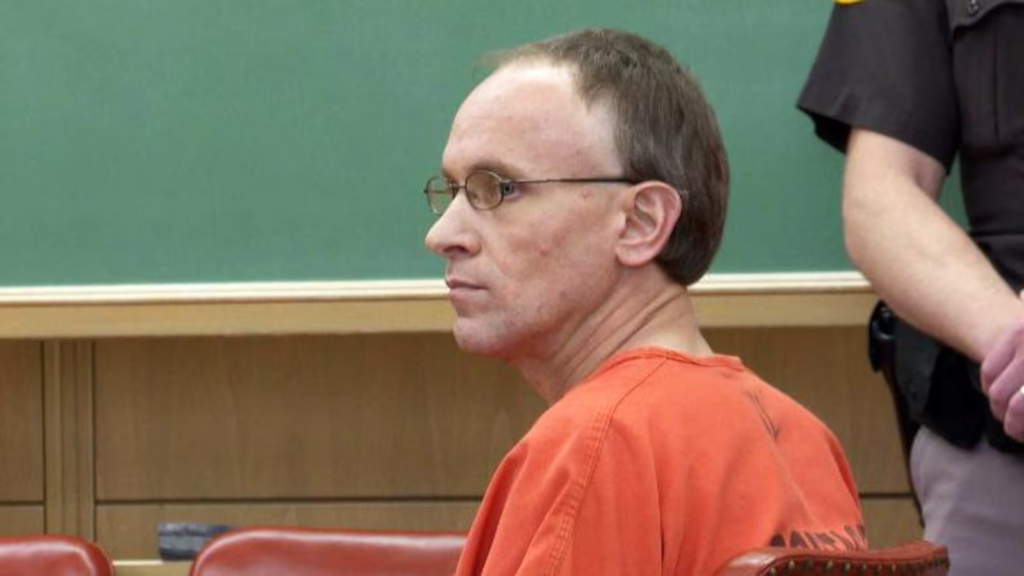
On October 10, 2019, the sentencing hearing took place in Portage County, where the abuse had occurred. Button’s sister and niece both spoke in support of a lenient sentence. His niece told the court Button had been a great influence in her life, that he had taught her to fish and to camp, and that the years he spent alone in the bunker had been his way of punishing himself.
Then his daughter stood and addressed the court. She was 19 years old. She described daily flashbacks, anxiety, depression, and two years of suicidal thoughts.
“People will say this made me stronger. But I didn’t need to be stronger. I needed to be safe.”
Button told the court he had no excuse for what he had done. “The bottom line is I was sick and out of my mind,” he said. District Attorney Louis Molepske told reporters after the hearing: “This was one of the most serious sexual assaults of a child in my time as district attorney. As this defendant admitted, he can’t keep his hands off children.”
Judge Thomas Eagon sentenced Button to 30 years in prison, 25 for the repeated sexual assault and 5 for the child pornography charges, followed by 30 years of extended supervision. He told Button he had considered a longer sentence. Five days later, Button was transferred to a Wisconsin state correctional facility to begin serving it. He will be 74 years old before he is eligible for release.
What the clearing looks like now
In August 2021, a crew of more than ten Wisconsin DNR workers spent two days clearing the site. They cut a trail through the undergrowth just to reach the entrance, sorted the contents for evidence and hazardous material, and filled the structure in. The surface was mulched over.
Today the clearing is quiet and flat. No door, no panels, no antenna taped to a tree.
Button’s daughter was 5 years old when the abuse began. She was a teenager when she told a school counselor. She waited years for a trial that her father ran from, and three and a half more years for him to be found. She stood in a courtroom while his family asked for leniency, and then she told a judge she had not needed to be stronger. She had needed to be safe. That was the one thing she had never been given.
