
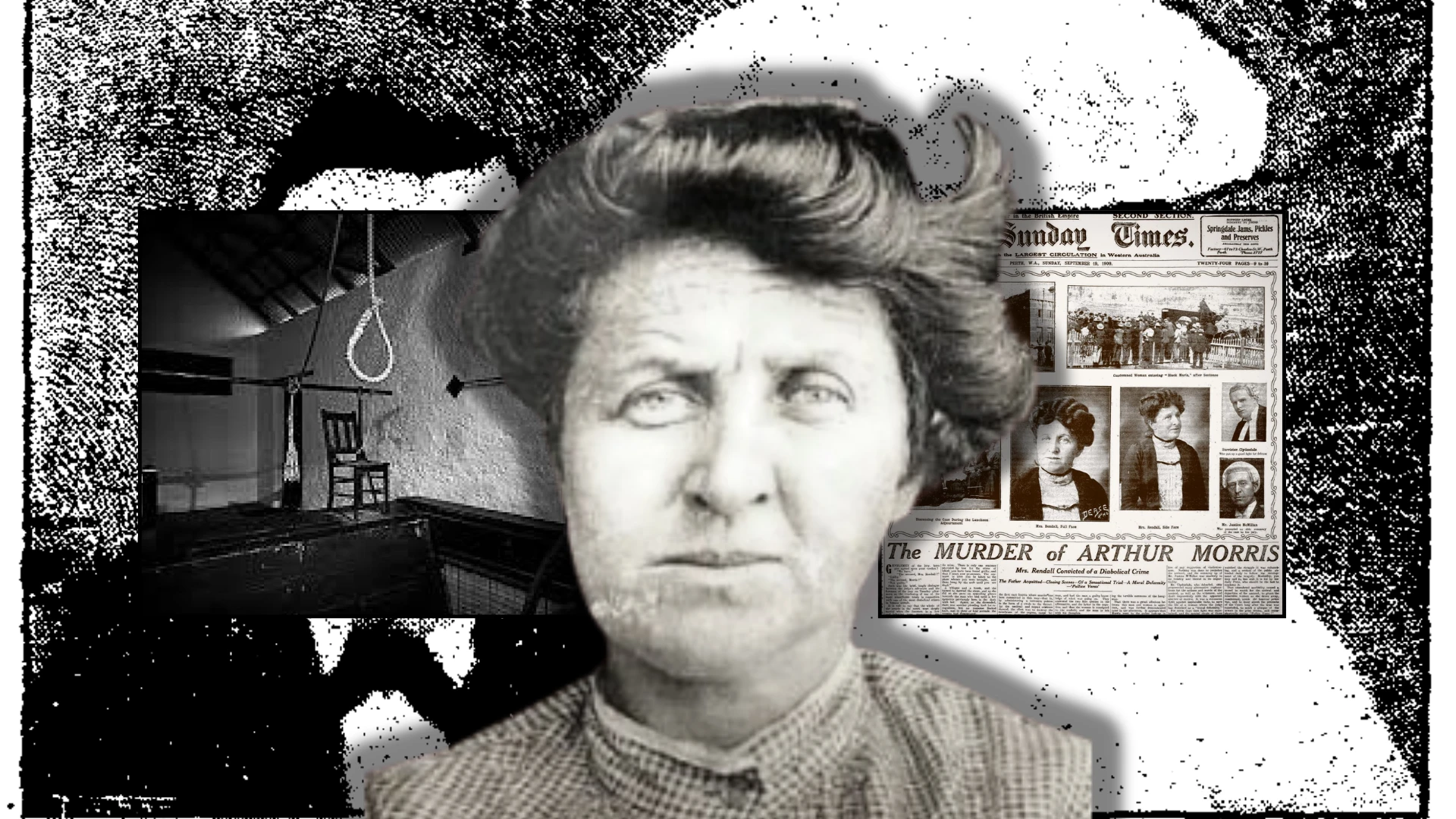
In April 1909, neighbors on Robertson Street in East Perth had begun asking questions. Fifteen-year-old George Morris had not been seen in days, and the answers coming from inside number 23 were vague and shifting. When Detective Inspector Harry Mann tracked the boy to his mother’s house across the city, George sat down and told him something that stopped the investigation cold. His brother and two sisters had not died of diphtheria. They had been murdered. Their stepmother had painted their throats with acid and watched them suffer.
Two years earlier, three children had died in the same house during what appeared to be a run of devastating illness. Perth was in the grip of diphtheria and typhoid epidemics. The deaths had been certified. The family had mourned. Nobody had thought to look harder. Now, with George’s words echoing in his notes, Mann knew he had to dig up the dead.
The Affair Followed Them West
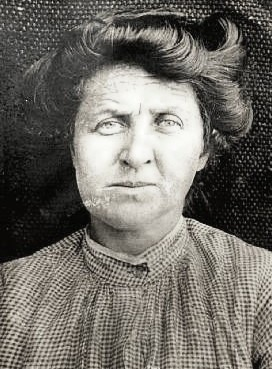
Martha Rendell was born on August 10, 1871, in Hope Valley, South Australia. Little is recorded of her early life, but by the time she reached adulthood she had left home at 16, given birth to three children outside of marriage, and begun an affair with a married man. That man was Thomas Nicholls Morris, who had nine children with his wife Sarah.
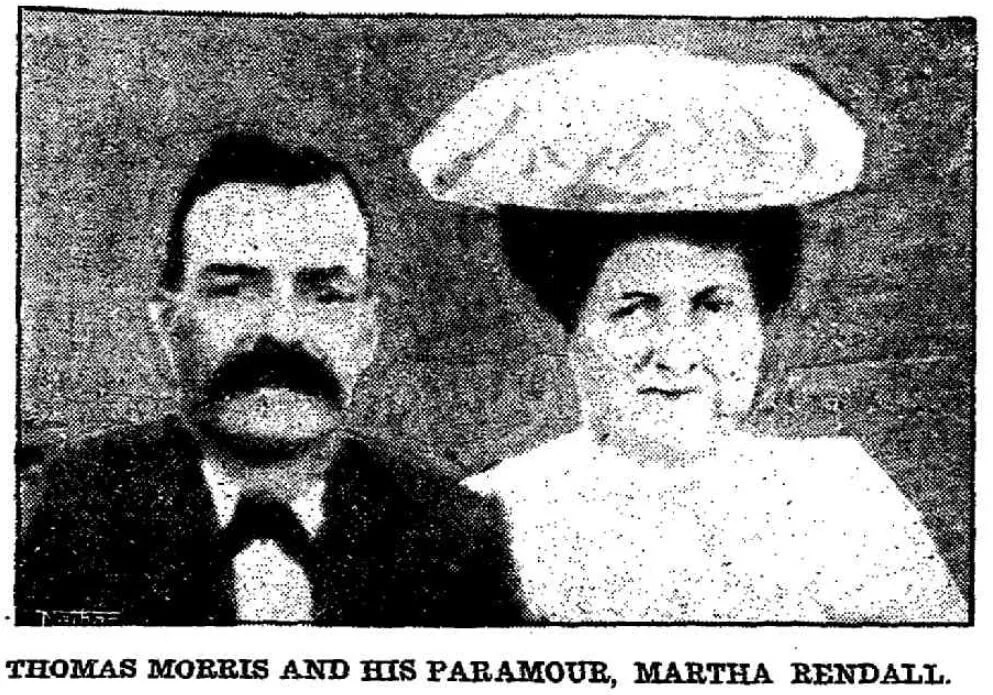
The affair became an open wound within the Morris household. Eventually, Thomas packed up and moved roughly 2,700 miles to Perth, Western Australia, in 1900, partly for work, partly to outrun the scandal spreading through their small South Australian town. The move did not save the marriage. When Sarah discovered that Martha had followed Thomas to Perth, she had endured enough. She left the family home. Thomas was granted custody of the five youngest children: Olive, Annie, George, Arthur, and William, whose ages ranged from roughly six to fifteen.
Martha moved in almost immediately. After nearly a decade of waiting, she had what she had pursued. The children were told to call her Mother.
Stepmother, Not Mother
At 23 Robertson Street, the Morrises presented as a respectable family to neighbors who had no reason to suspect otherwise. Behind closed doors, the reality was sharply different. Thomas worked long hours. Martha had no friends or family in the city and lived in constant fear that her de facto arrangement with a still-married man would be exposed. That fear kept her locked inside the house, alone for most of each day with five children who resented her presence and missed their mother.
She was not gentle with them. Martha beat Annie so savagely on at least one occasion that the girl could not walk from the pain. Over time, the children’s attempts to resist her punishments reportedly drove her cruelty further.
In April 1907, four of the five children contracted diphtheria. Perth was suffering through a serious outbreak; the disease had ranked among the top ten causes of death in Australia for years. When Olive, Annie, George, and Arthur fell ill together, their family doctor, James Cuthbert, administered antitoxin and prescribed tinctures to ease their sore throats. During his many visits, Cuthbert observed Martha diligently nursing her stepchildren. She swabbed medication onto the backs of their throats to relieve the pain. He noted no reason for concern.
Three Children Died
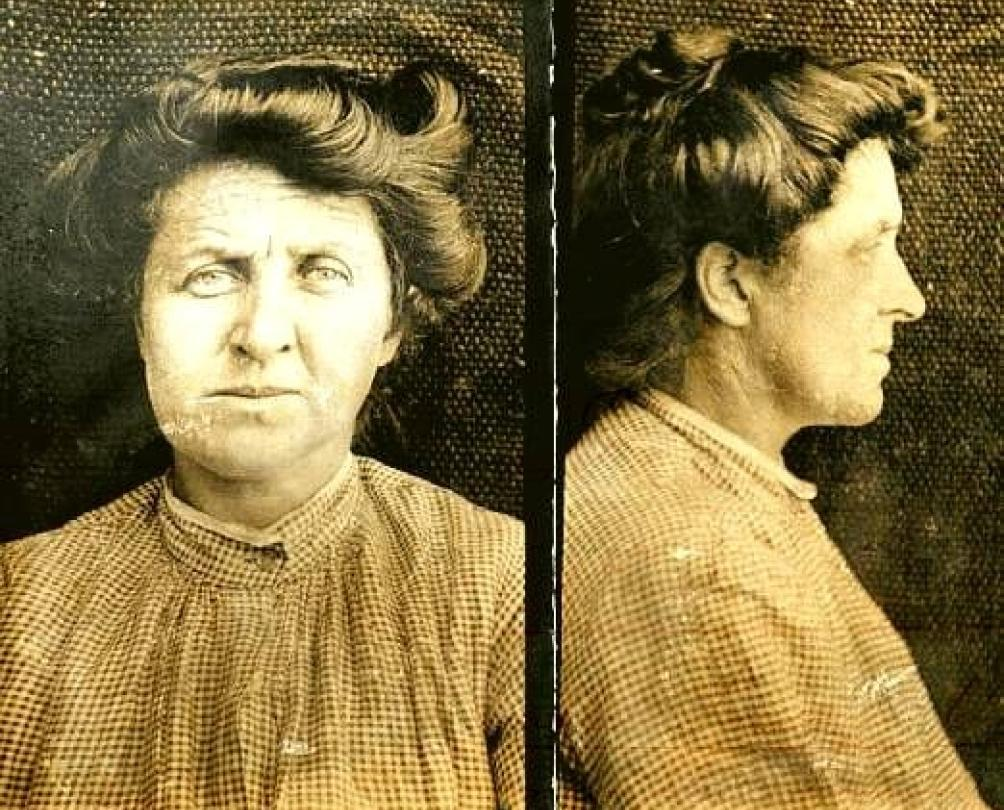
Nine-year-old Annie never recovered. She died on July 28, 1907. Cuthbert, puzzled by a death that did not quite match his clinical expectations, listed the cause as epilepsy and cardiac weakness. Her three surviving siblings recovered from diphtheria, and life in the house on Robertson Street began to settle.
It did not settle for long. Within weeks, Olive, George, and Arthur fell ill again, this time with typhoid. Five-year-old Olive died on October 16, 1907. Her death certificate attributed the cause to hemorrhage and cardiac weakness. Two doctors had now certified two deaths in the same household and found nothing that demanded a second look.
In June 1908, fifteen-year-old Arthur began suffering from vomiting, diarrhea, and an undiagnosed throat condition. Martha resumed her routine of swabbing the back of his mouth with what she described as antiseptic tincture. Arthur kept getting worse. The medications Cuthbert prescribed had no apparent effect. On October 8, 1908, Arthur died. Three children. Three death certificates. Three causes of death that had satisfied the authorities. Cuthbert listed Arthur’s cause of death as ulceration of the bowels, hemorrhage, and cardiac failure.
This time, however, Cuthbert asked for an autopsy. Martha said she wanted to be present. She stood in the room as the examination was performed. The doctors found nothing incriminating.
George Ran
In April 1909, Martha turned her attention to George. He developed a sore throat shortly after she began swabbing his throat with her tincture. The pain alarmed him enough that he fled the house and ran to his mother’s, several streets away. Sarah had not seen her children in three years.
It was neighbors who alerted police. Thomas told investigators he did not know where his son was. When Mann found George at his mother’s home, the boy laid out his account with precision. Martha had been slowly killing his siblings by painting their throats with spirits of salts, the common name for diluted hydrochloric acid, available at pharmacies and sometimes used as a home antiseptic. The cup of tea that had made his own throat burn, George believed, was a test. He had not waited to find out.
Mann began pulling the investigation apart. He confirmed that Thomas Morris had purchased significant quantities of hydrochloric acid during the periods when the children were ill. Purchases stopped entirely after Arthur died. A neighbor came forward to say she had witnessed Martha swabbing Arthur’s throat while the boy screamed in pain and cried for help. Mann would later tell the court that he believed Martha had delighted in watching her victims writhe in agony and had derived what he described as sexual satisfaction from it.
On July 3, 1909, the bodies of Annie, Olive, and Arthur Morris were exhumed. Medical examiners found hemorrhaging and inflammation in their bowels consistent with caustic ingestion. Laboratory experiments on animals, applying diluted hydrochloric acid to throat tissue in the same manner Martha had allegedly used, produced effects that matched what the autopsies had revealed.
The Trial
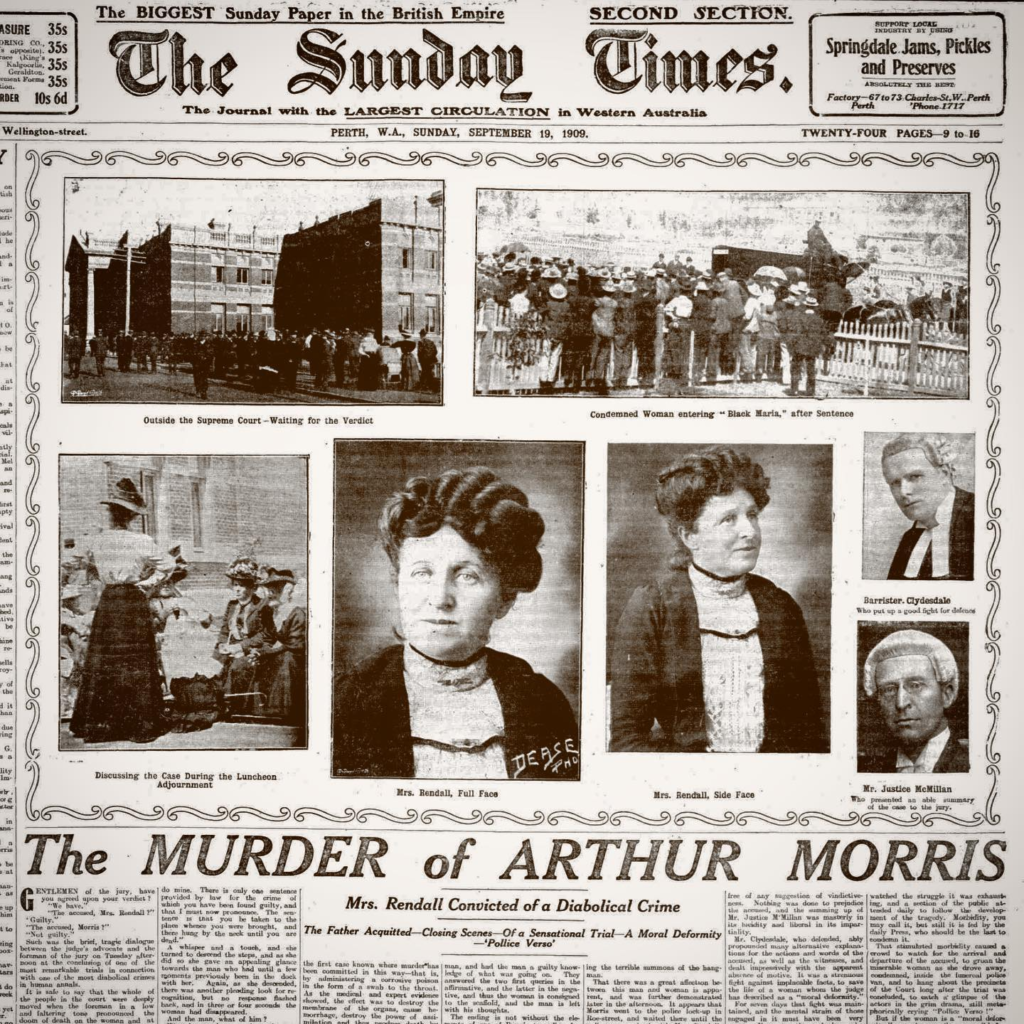
The trial of Martha Rendell and Thomas Morris opened in the Supreme Court of Western Australia on September 7, 1909, before Justice McMillan. The prosecution charged Martha with the willful murder of Arthur Morris. The press had already reached its verdict. Newspapers called her a “scarlet woman” and the “wicked stepmother.” One editorial described her as representing a reversion to the primitive stage of humanity.
Neither accused called evidence in their defense.
The prosecution argued that Martha had seen the children only as a burden standing between her and the life she had crossed the country to build. As her relationship with Thomas soured under the pressure of isolation and financial strain, and as the children grew old enough to resist her punishments, her cruelty reportedly escalated into something far worse. With the children gone, she would have had Thomas entirely to herself.
The evidence against her was not airtight. Forensic science in Western Australia was in its infancy. Detecting hydrochloric acid in decomposed tissue pushed the limits of what was possible with the methods available at the time. No documented case existed of the substance being used as a murder weapon in this manner before. Some researchers have since argued that diluted spirits of salts had in fact been used as a recognized home remedy for throat infections, making deliberate poisoning nearly impossible to distinguish from well-intentioned treatment with hindsight’s clarity.
Thomas Morris was acquitted. The jury accepted that he had purchased the acid without knowing what Martha was doing with it, though members had wanted to find him guilty as an accessory after the fact. The judge told them the law did not permit it. After the verdict, Thomas proclaimed to the press: “I say fearlessly before God I was innocent and so is Martha Rendell. She may have appeared hard outwardly but no woman ever had a more tender heart than she.”
The Verdict
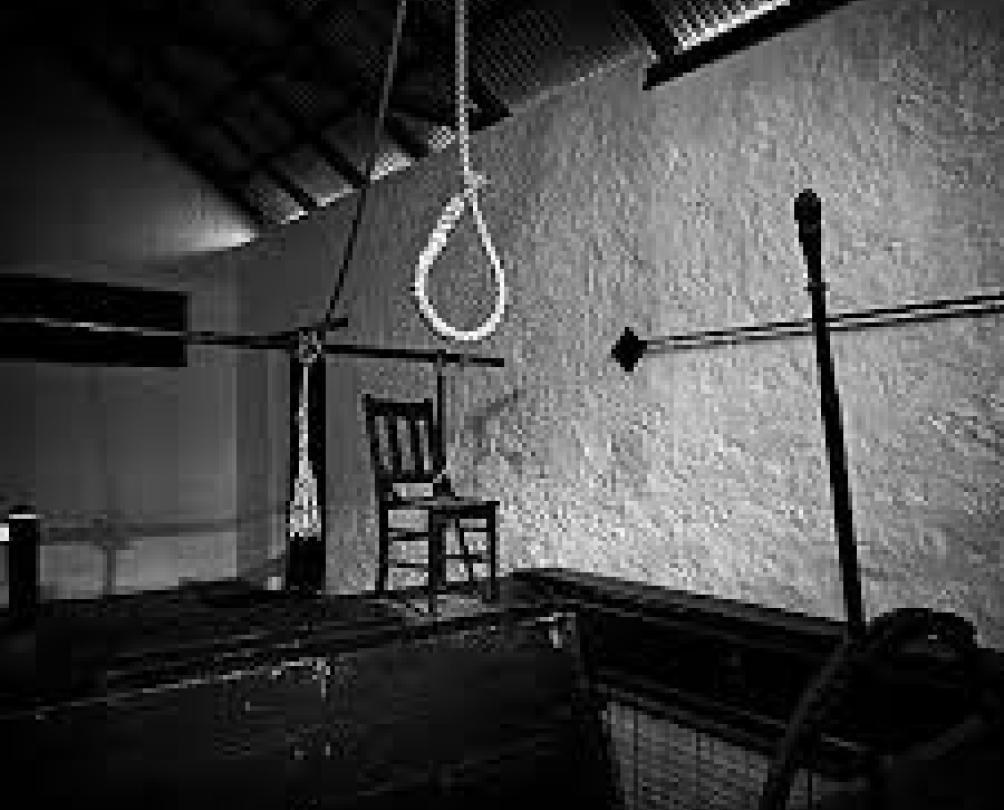
On September 14, 1909, the jury found Martha Rendell guilty of the willful murder of Arthur Morris. Justice McMillan sentenced her to death. She was hanged at Fremantle Prison twenty days later, at 8 AM on October 6, 1909, exactly a year after the date of Arthur’s death. Twenty-five people witnessed the execution, the largest number ever to attend a hanging at Fremantle Prison.
She proclaimed her innocence to the end. Her last words, before the trapdoor opened, were: “I will die brave.”
Martha Rendell was the third and last woman executed in Western Australia, and one of only two executed in the country during the entire twentieth century. She is buried at Fremantle Cemetery. At the Fremantle Prison heritage site, a plaque describes her as a stepmother who was callous and cruel to her stepchildren. A legend persists among visitors that her face appears in the stained glass of the prison chapel, visible only from the outside, watching over the yard where she was hanged.
Whether Martha Rendell was a calculated child killer or a woman condemned by circumstance, prejudice, and forensic evidence that modern science would scrutinize far more carefully remains an open question. The Morris children, Annie, Olive, and Arthur, died slow and agonizing deaths. That part of the record is not in dispute.

She may not have killed those children at all! We’ll never know.