
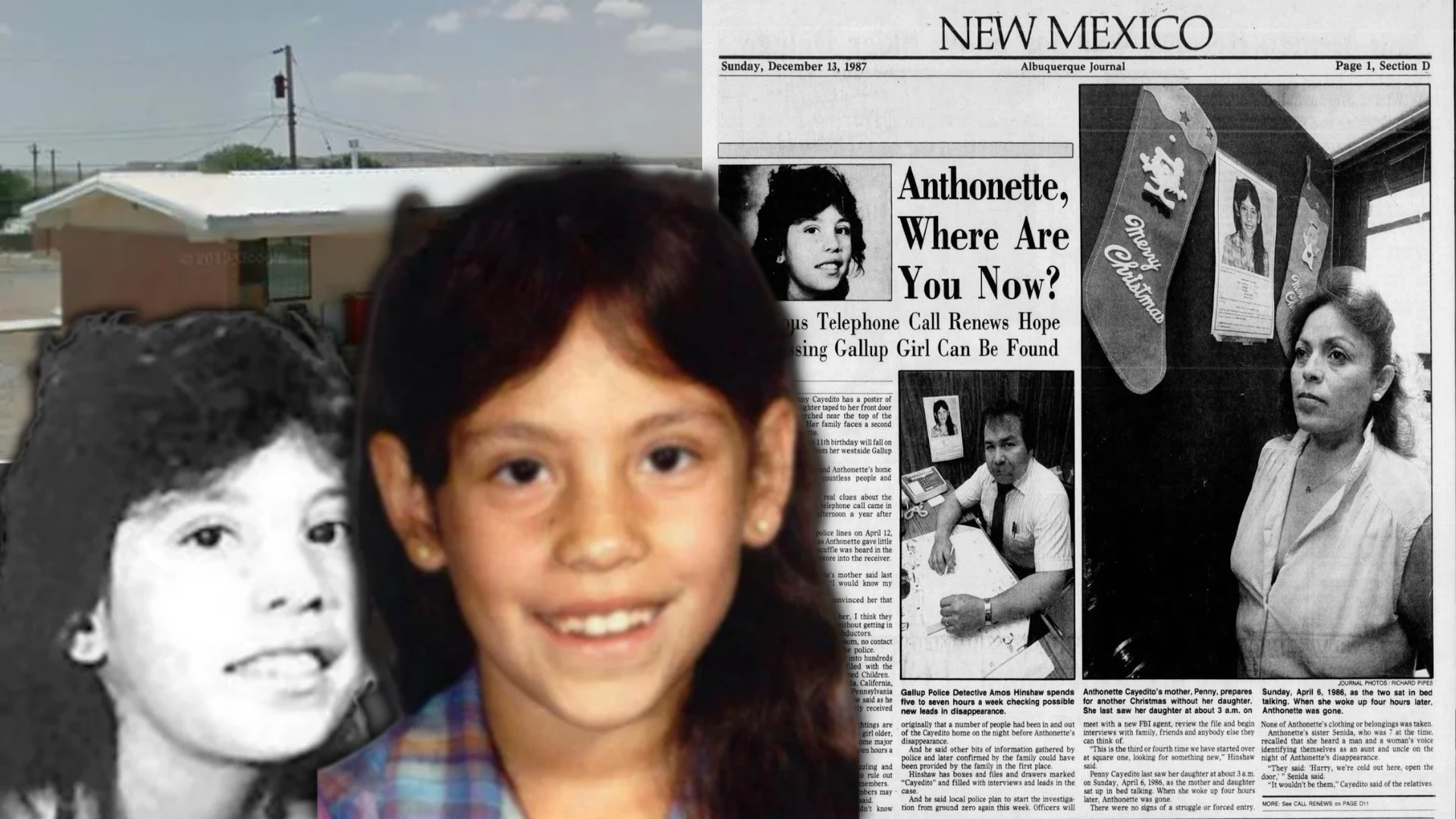
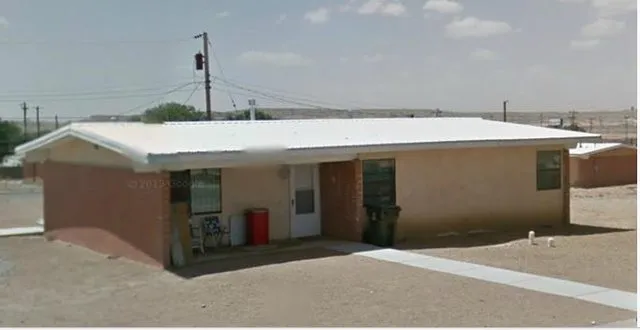
On the morning of April 6, 1986, nine-year-old Anthonette Cayedito went to answer a knock at the front door of her apartment at 204 Arnold Circle in Gallup, New Mexico. It was somewhere between 3:30 and 4 in the morning. Her mother was asleep in the back room. Her two younger half-sisters were in their bedroom. A male voice on the other side of the door said he was their Uncle Joe.
She opened it.
Two men grabbed her, dragged her out of the apartment, and forced her into a brown vehicle parked outside. As they sped away into the dark, Anthonette’s voice cut through the night. “Let me go!” she screamed. “Let me go!”
Five-year-old Wendy watched from the hallway, frozen. She did not wake her mother. She was five years old, and she did not fully understand what she had just seen. She went back to bed.
Anthonette Christine Cayedito has never been found.
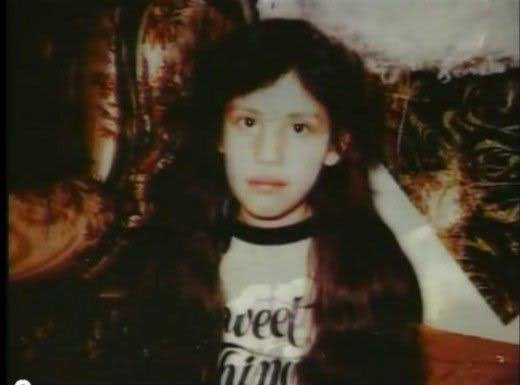
Anthonette was nine going on fifteen
Anthonette was born on December 25, 1976, in Gallup, New Mexico. Her mother, Theresa “Penny” Cayedito, was a member of the Navajo Nation. Her father, Larry Estrada, was a carpenter. When her parents separated, Penny raised Anthonette and her two younger half-sisters, Wendy and Senida “Sadie” Montoya, alone in an apartment off Route 66.
From an early age, Anthonette carried responsibilities most children don’t. By the time she was six, she was cooking for her sisters, ironing their clothes, and stepping in to look after them whenever Penny wasn’t around. Her family called her “Squirrel.” Her youngest half-sister would later describe her as having “a caregiver’s heart.” Her father Larry put it plainly: she was nine going on fifteen.
At Lincoln Elementary School, teachers described her as level-headed, fiercely dependable, and exceptionally caring. She had recently won the Presidential Fitness Award in fourth grade. She loved the color purple, listened to Michael Jackson and Ronnie Milsap, and attended weekly Bible study without fail.
She was last seen wearing a pink nightgown.
What happened the night before
On the evening of April 5, Penny arranged a babysitter for the three girls and went out to a local bar with a family friend named Ron Perry. Earlier that same evening, a family acquaintance named Emiliano “Emo” Gardella had stopped by the apartment. It was the third visit in recent days in which Gardella had arrived specifically to bring Anthonette flowers and gifts. During this visit, he had Anthonette sit on his lap. It made her visibly uncomfortable. Seven-year-old Sadie stepped in, grabbed her sister by the hand, and pulled both girls into the bedroom. Gardella left. Penny headed out that night without mentioning the visit to anyone.
At the bar, Penny and Perry got into a loud argument. She came home around midnight, sent the babysitter home, and stayed up with Anthonette. The two of them played cards in the kitchen until about 3 in the morning. That was the last confirmed time Penny saw her daughter.
Not long after, Perry returned and knocked at the front door, then banged on the bedroom window. Penny told the children to ignore him. He walked to a neighbor’s house down the street.
Shortly after Perry left, another knock came at the front door.
This one, Anthonette answered.
The investigation stalled within weeks
When Penny woke at 7 that morning to take the girls to Bible school, Anthonette’s bed was empty. Her clothes were still in her room. Her glasses were on the nightstand. There was no sign of a struggle at the front door, and both the front and screen doors had been left unlocked.
Penny called the Gallup Police Department. Officers told her Anthonette hadn’t been missing long enough to file an official report. She spent the following hours searching the neighborhood herself before police agreed to open an investigation.
State police joined the search and launched a three-day sweep of southwest Gallup and the surrounding terrain using four-wheel-drive vehicles, horses, and motorcycles. Two search dogs could not pick up Anthonette’s scent leaving the apartment. Hundreds of neighbors flooded the area to help. State police Sergeant Bill Johnson later said: “If there were any clues, they were trampled. Everywhere you turn, somebody’s been there already.”
Neighbors told police that a brown van or truck had been seen near the residence at around 3 that morning. A second neighbor reported seeing a similar brown truck with New Mexico plates parked outside between 6:30 and 7 a.m., with a man getting out and walking toward the building. No description was available. No plate number recorded.
Detectives conducted more than three dozen interviews in the first 72 hours. They questioned a maternal uncle named as a possible suspect. He had an airtight alibi and was cleared. Police did not conduct an official search of the Cayedito apartment until four days after the disappearance.
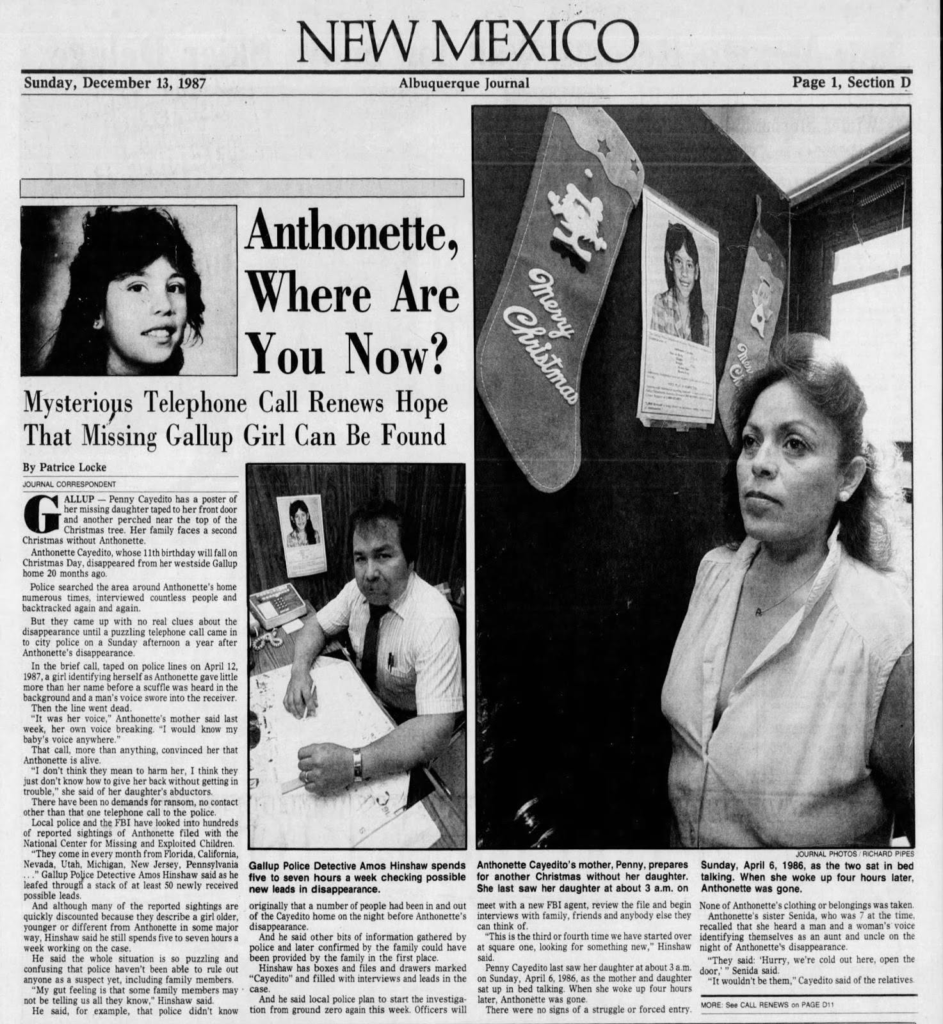
Detective Amos Hinshaw told reporters directly: “My gut feeling is that some family members may not be telling us all they know.”
He was right. Wendy, who had watched two men drag her sister into a vehicle and drive away, said nothing. Penny, who would later admit to the FBI that she had heard the second knock and sent Anthonette to answer it, also said nothing.
The case went cold within weeks.
A 40-second call came in
On the afternoon of April 12, 1987, a frantic phone call came into the Gallup Police Department.
A girl on the line identified herself as Anthonette Cayedito. She said she was in Albuquerque, roughly 140 miles east of Gallup. Before she could give a location or any further detail, an angry adult voice cut in. “Who said you could use the phone?!” A scuffle. A scream. The line went dead.
The call had lasted 40 seconds. It was automatically recorded on tape.
Police played the recording for Penny. She listened to it repeatedly. “It was her voice,” she told investigators. “I would know my baby’s voice anywhere.” She recognized Anthonette in the way she said her surname. She recognized her in the sound of the scream that followed.
Detective Marty Esquibel confirmed the call was too short to trace. The FBI and New Mexico state police swept safe houses, motels, and known criminal locations across Albuquerque. Nothing.
In January 1989, the recording was broadcast over the radio for the first time. It generated a new wave of tips across the Southwest. Every one went cold.

Sightings that led nowhere
In the weeks and months immediately after the abduction, three early sightings were reported: a girl resembling Anthonette spotted in San Antonio on April 8 with a blonde-haired woman; a small voice screaming “Help me, help me” heard from a brown truck at a gas station on April 19; and a girl matching her description seen at a bus depot in El Paso on June 30, accompanied by two men. None could be confirmed.
In November 1989, a Missouri man told police he had recently seen a girl he recognized from missing-person posters at a truck stop off Interstate 70. She was alone, in torn jeans and a dirty white T-shirt, with a red bandana and a large watch. He said she acted “like she was afraid of people” and “like she had been punished for something.” State troopers swept the area and interviewed staff. They found nothing.
Then, in 1991, a waitress at a restaurant in Carson City, Nevada, served a teenage girl matching Anthonette’s description. The girl was seated with an unkempt couple. Throughout the meal, she repeatedly knocked her utensils off the table. Each time the waitress retrieved them, the girl grabbed her hand and held it tightly. The waitress didn’t understand what was happening until she went to clear the table after the group left.
She lifted the girl’s plate.
Underneath it was a napkin. Written on it, in the girl’s own hand, were two messages: “Help me” and “Call the police.”
By the time the waitress found it, they were long gone. Investigators could not trace the three individuals or recover identifiable fingerprints. The lead went cold.
On December 16, 1992, nine days before what would have been Anthonette’s sixteenth birthday, her case was featured on Unsolved Mysteries, Season 5, Episode 14. Police received 120 calls from viewers by March 1993. Not one produced a viable lead.
What Penny confessed in 1994
Five years after the abduction, Wendy, now ten years old, gave investigators her account of what she had witnessed that night for the first time. A voice claiming to be Uncle Joe had knocked at the door. Anthonette answered it. Two men she didn’t recognize grabbed her sister, dragged her out of the apartment, and forced her into a brown van. Wendy had stayed silent for five years, she explained, out of fear of upsetting her mother and of not being believed.
When detectives cross-referenced Wendy’s account with Sadie’s, the stories didn’t align. Sadie wasn’t sure a second knock had even happened. Penny had still made no mention of it to anyone.
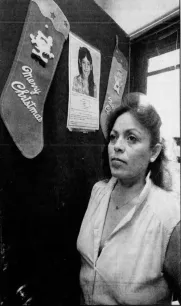
That changed in 1994, during an intensive FBI interrogation. Penny finally admitted she had heard a knock between 3:30 and 4:30 in the morning and had told Anthonette to answer it. “I told her to go ahead and answer it,” she said. “I laid there for a period of time, maybe thirty minutes, and Anthonette never came back. I got up to see where she was, but I couldn’t find her.” This directly contradicted her 1986 statement, in which she claimed to have slept through the night undisturbed and found Anthonette missing only when she woke at 7 in the morning.
Then Penny asked the agents a question. “What if me and Emo did this, would we both go to prison?”
She told investigators that she and Gardella had gotten together on a plan before the abduction. She wanted to know where and when it would happen. Gardella told her she was better off not knowing. But on the night of April 6, when the second knock came, Penny said she knew exactly who had come and why.
Gardella denied everything. He refused to cooperate. Prosecutors determined that Penny’s statement, delivered partially as a hypothetical question and while she was in severe substance withdrawal, was legally insufficient to secure a conviction without corroborating physical evidence. No charges were ever filed against either of them.
Penny Cayedito died on April 18, 1999, in Tucson, Arizona, from liver cirrhosis and cardiac complications. She was 46 years old. The FBI had intended to interview her on her deathbed. She died before they arrived.
In August 2024, KOB 4 journalist Crystal Gutierrez reported on the case and conducted an interview with Ron Perry, by then one of the only living persons of interest still reachable, who was serving time in Ohio on unrelated sexual battery charges. Perry admitted to being the first person to knock on the apartment door that night in April 1986. He said he did not personally hear explicit plans to harm or traffic Anthonette, but that Gardella and Penny had had ample time and opportunity to plan the abduction during the hours they were out together.
In 2016, Wendy Montoya spoke about what the disappearance had taken from her. “It just broke my whole family up,” she told the Albuquerque Journal. “It was a very dark and dysfunctional time.” She described years of addiction and gang involvement before turning her life around around 2007, eventually moving to Bakersfield, California. She has not given up. In June 2022, her half-sister Sadie Acevedo gave her own interview to KOAT-TV and addressed Anthonette directly. “She has a family that loves her,” Sadie said. “She has sisters. We haven’t given up.”
Forty years after she disappeared from that doorway in Gallup, there is still no confirmed trace of Anthonette Christine Cayedito. The FBI keeps her case file open and has released multiple age-progressed photographs over the decades. She would be 49 years old today.
Somewhere out there, Wendy Montoya is still waiting to be proven wrong.
