
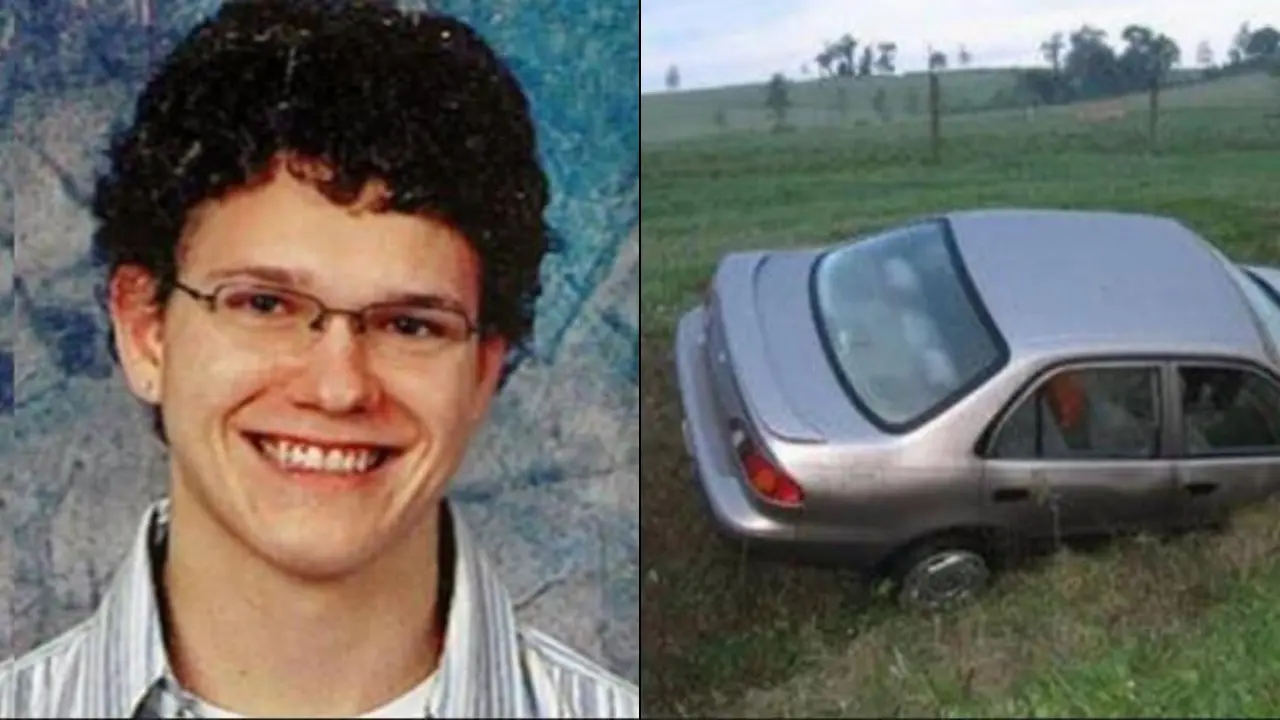
Just before 2 AM on May 14, 2008, a 19-year-old college student called his parents from a dark gravel road outside Marshall, Minnesota. He had driven his car into a ditch. He was unhurt, calm, and certain he knew exactly where he was. He was wrong on that last point. Within two hours, he would be gone entirely.
The semester ended in Canby
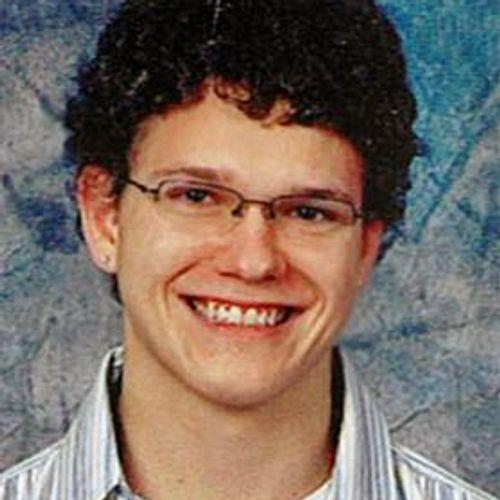
Brandon Swanson was born on January 30, 1989, in Marshall, a city of roughly 13,000 people in Lyon County, in the southwestern corner of Minnesota. He graduated from Marshall Senior High School in 2007 and enrolled at the Canby campus of Minnesota West Community and Technical College, thirty miles northwest of home, where he studied wind turbine technology. His teachers later told investigators he was succeeding academically and well-liked across the campus.
By spring 2008, he had bigger plans. Brandon had arranged a transfer to Iowa Western Community College in Council Bluffs, Iowa, more than 250 miles away. He would never make it there.
Classes at Minnesota West ended on May 13, 2008. Brandon stayed in Canby that evening to celebrate with fellow students, attending two separate parties. Friends who were with him that night told investigators he had been drinking, but that he had not appeared intoxicated by the time he left for home before midnight. He was in a good mood. The semester was over. The transfer was lined up. He got in his car and pointed it toward Marshall.
The car went into the ditch
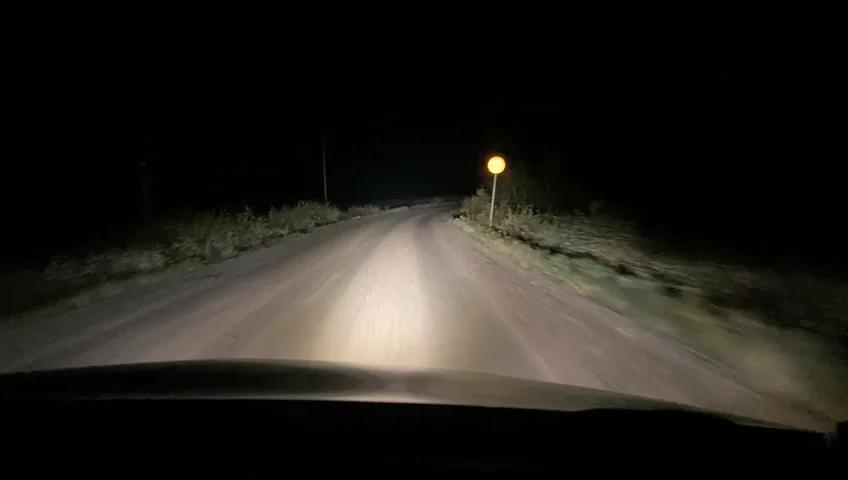
The direct route home was Highway 68. Brandon did not take it. Instead he turned onto the rural gravel roads that run parallel to the highway through the flat, largely empty farmland between Canby and Marshall. Why he made that choice was never confirmed. Some investigators believed he may have been concerned about being stopped by law enforcement after drinking. Others noted that Brandon was legally blind in his left eye, and that navigating pitch-black farm roads in the early hours of the morning without a GPS device would have been genuinely difficult for anyone.
Whatever the reason, by just before 2 AM his Chevrolet Lumina had slipped off a maintenance road and into a steep-sided ditch. The wheels lifted entirely off the ground. The car was not going anywhere.
Brandon called his parents.
He told Brian and Annette Swanson that he had gotten stuck, that he was unhurt, and that he believed he was near Lynd, a small town roughly seven miles southwest of Marshall. Brian and Annette got in their pickup truck and drove toward Lynd, keeping Brandon on the phone. Brandon tried to signal them by flashing his headlights on and off. They saw nothing. They tried the same. Brandon saw nothing either.
The problem was that Brandon was not near Lynd at all.
His phone was pinging off a cell tower near Minneota, along Highway 68 to the northwest. Brandon was stranded on a gravel road near the village of Porter, in Lincoln County, approximately 25 miles from where he believed himself to be, in a completely different direction. Whether he was aware of this discrepancy during the phone calls, investigators were never able to establish.
The frustration of searching blindly in the dark led to an argument. Brandon hung up on his mother. When Annette called back to apologize, he told his parents to meet him at a bar parking lot near Lynd. He would walk there. Brian drove Annette home to Marshall, then headed for the bar, keeping Brandon on the line.
The call went silent at 3 AM
The final phone call began at approximately 2:23 AM. It would last 47 minutes.
Brandon described his surroundings to his father as he walked: a fence line, flat open ground, the sound of rushing water nearby. He believed he could see lights in the distance and was moving toward them. Brian Swanson recalled that his son did not seem confused or disoriented during the call. He was walking and talking normally, describing the terrain around him as he went.
At approximately 3:10 AM, Brandon suddenly cried out an expletive. The call went silent.
Brian called his son’s name repeatedly into the phone. There was no answer. He ended the call and redialed, again and again. Each time, the phone rang several times before routing to voicemail. Brandon Swanson has not been seen or heard from since.
Searchers found the car, not Brandon
Annette Swanson contacted the Lyon County Sheriff’s Department at 6:30 AM. The initial response was dismissive. Officers told her it was not unusual for a 19-year-old to stay out all night after the last day of college and that Brandon, as an adult, had what one officer described as “a right to be missing.” The family was told to wait 24 hours before filing a report.
Brian bypassed this response by contacting the sheriff’s office directly. A search began.
Using Brandon’s cell phone records, investigators traced his last known location to the area near Porter and Taunton, northwest of Marshall along Highway 68. The discovery shocked the Swanson family and law enforcement alike. Brandon’s Chevrolet Lumina was found abandoned off a gravel road along the Lincoln County line, one mile north of the highway. The car sat perched on a steep incline, its front wheels lifted entirely off the ground. The doors were open. The keys were gone. There was no blood, no sign of a struggle, and no trace evidence of any kind. The gravel and surrounding fields had yielded no footprints in any direction.
Lyon County Sheriff Joel Dahl noted that from where the car sat, a red warning light atop a grain elevator in Taunton was visible in the distance. He believed that the light Brandon had been walking toward, the one he thought was Lynd, had most likely been that grain elevator beacon. Brandon had been walking toward a town. Just not the right one, and not from the right side of it.
The trail led to the river
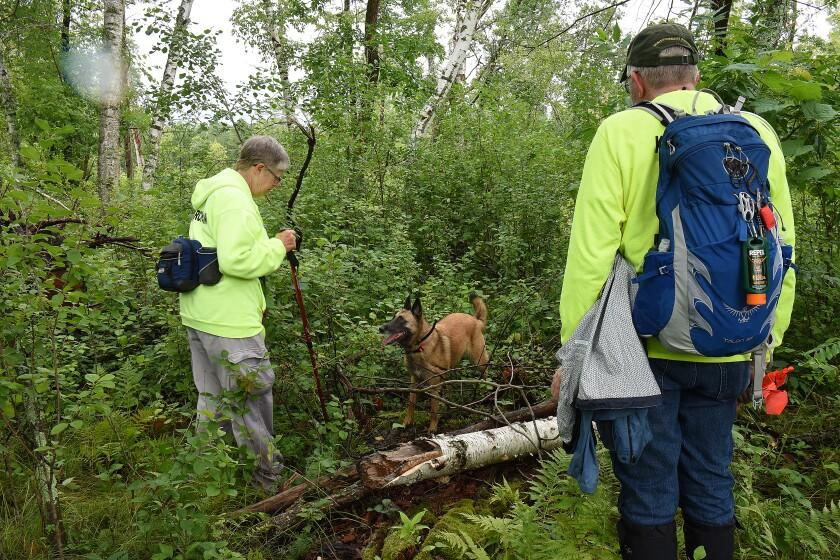
Lincoln County Sheriff Jack Vizecky brought search dog teams to the scene. Most of the dogs struggled to find any workable scent on the gravel roads and open fields surrounding the car. One team did not struggle.
A bloodhound tracked a scent trail southward from the vehicle, then turned east for approximately three miles, arriving at the banks of the Yellow Medicine River. At the water’s edge, the trail appeared to enter the stream. But the dog did not stop there. It crossed to the far bank, continued north along the riverbank, and eventually reached a gravel road, where the scent ended completely.
The Yellow Medicine River was running well above its normal level that week. In some sections it reached depths of 10 to 15 feet, and the current was strong. Search and rescue boats from the state Department of Natural Resources swept the river. Gates were installed downstream. Sheriff Vizecky walked the two miles of river in that area himself every day for 30 days. Nothing came up. No clothing, no items, no body.
Annette Swanson never believed her son had drowned in the river. The dog’s behavior, she pointed out, suggested Brandon had gotten out the other side.
Searches continued through 2011. By that point, 122 square miles had been covered by land teams, aircraft, horses, all-terrain vehicles, and over 40 professionally trained search dogs. In 2010, the Minnesota Bureau of Criminal Apprehension took over as lead agency and opened a tip line that had collected 90 reported leads by 2015. None produced Brandon.
The area of focus eventually shifted north to Mud Creek, a tributary of the Yellow Medicine, several miles north and northwest of Porter. Jeff Hasse, a professional search manager who documented the investigation through a public blog called The Search for Brandon Swanson, reported that cadaver dogs had registered multiple strong positive hits in the Mud Creek drainage. “We’ve got huge amounts of scent in there,” Hasse wrote. “More than I’ve ever seen in any other search.” Whether those signals indicated Brandon’s remains or decomposition from another source entirely has never been confirmed. His phone was never recovered. None of his clothing was ever found.
Foul play has not been ruled out. Sheriff Vizecky acknowledged to reporters that someone could theoretically have been waiting in the darkness of those rural roads, though no evidence of any kind has ever supported that possibility. The circumstances of the final 47-minute call, and particularly the abrupt expletive, have led most investigators to conclude that something sudden and physical happened to Brandon near the river. What, exactly, remains open.
Brandon’s Law changed Minnesota forever
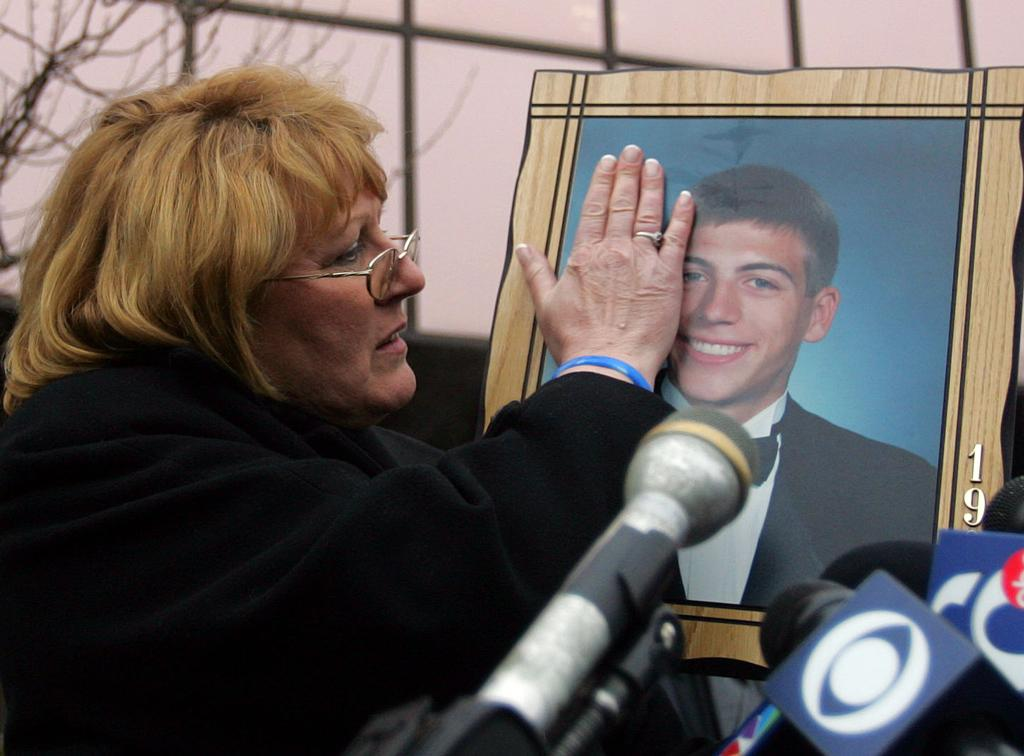
Annette Swanson could not let go of the moment the police had told her that her son had “a right to be missing.”
She and Brian began lobbying the Minnesota state legislature. They met with Marty Seifert, then minority leader of the state House of Representatives, whose district included Marshall. Seifert introduced a bill called Brandon’s Law that amended Minnesota’s existing Missing Child Program by changing the word “child” to “person,” requiring law enforcement to immediately begin an investigation into any reported missing adult without delay based on age, elapsed time, or the possibility that the person had left voluntarily. A companion bill was introduced in the State Senate by Dennis Frederickson.
Both chambers passed the legislation. The House vote was unanimous. In May 2009, Governor Tim Pawlenty signed Brandon’s Law into effect, with Brian, Annette, and their daughter Jamine present at the ceremony. The law took effect in July 2009. Four other states have since enacted similar legislation.
Marty Seifert kept the pen Pawlenty used to sign the bill. He later said he considered Brandon’s Law one of the most significant pieces of legislation he authored in 14 years in the Minnesota House.
What happened to Brandon Swanson in the 47 minutes between his last normal word and his father’s first unanswered callback has never been established. The Yellow Medicine River, swollen and fast-moving that May, remains the explanation most investigators find most likely: a 19-year-old in total darkness, legally blind in one eye, wearing a hoodie and a sweater in near-freezing temperatures, walking toward a light he had mistaken for a familiar town. But the bloodhound came out the other bank. And the phone rang for two days.
Brian and Annette Swanson left their porch light on every night for at least five years after Brandon disappeared.
