
On December 30, 1976, a camper from Lake Worth, Florida, reported something unusual to the Monroe County Sheriff’s Office. He and a friend had been camping near Grassy Key when a man with what the camper described as a “hippie type appearance” approached them with an offer: for a quarter, he would show them a human skeleton.
The camper paid. Using the camper’s directions, Detective Richard Roth found the bones within minutes, scattered in a heavily wooded area at the 55.5-mile marker of US Highway 1, near a local spot called the Gaines Rock Pit, partially obscured by Spanish moss, leaves, and vines. Nearby lay a single item of clothing: a black T-shirt with a colorful Tiffany lamp design, knotted so tightly that strands of hair were tangled inside the knot.
Detective Roth photographed everything in place before collecting the remains. He would spend the next 28 years trying to find out whose bones they were.
A free spirit from Boca Raton
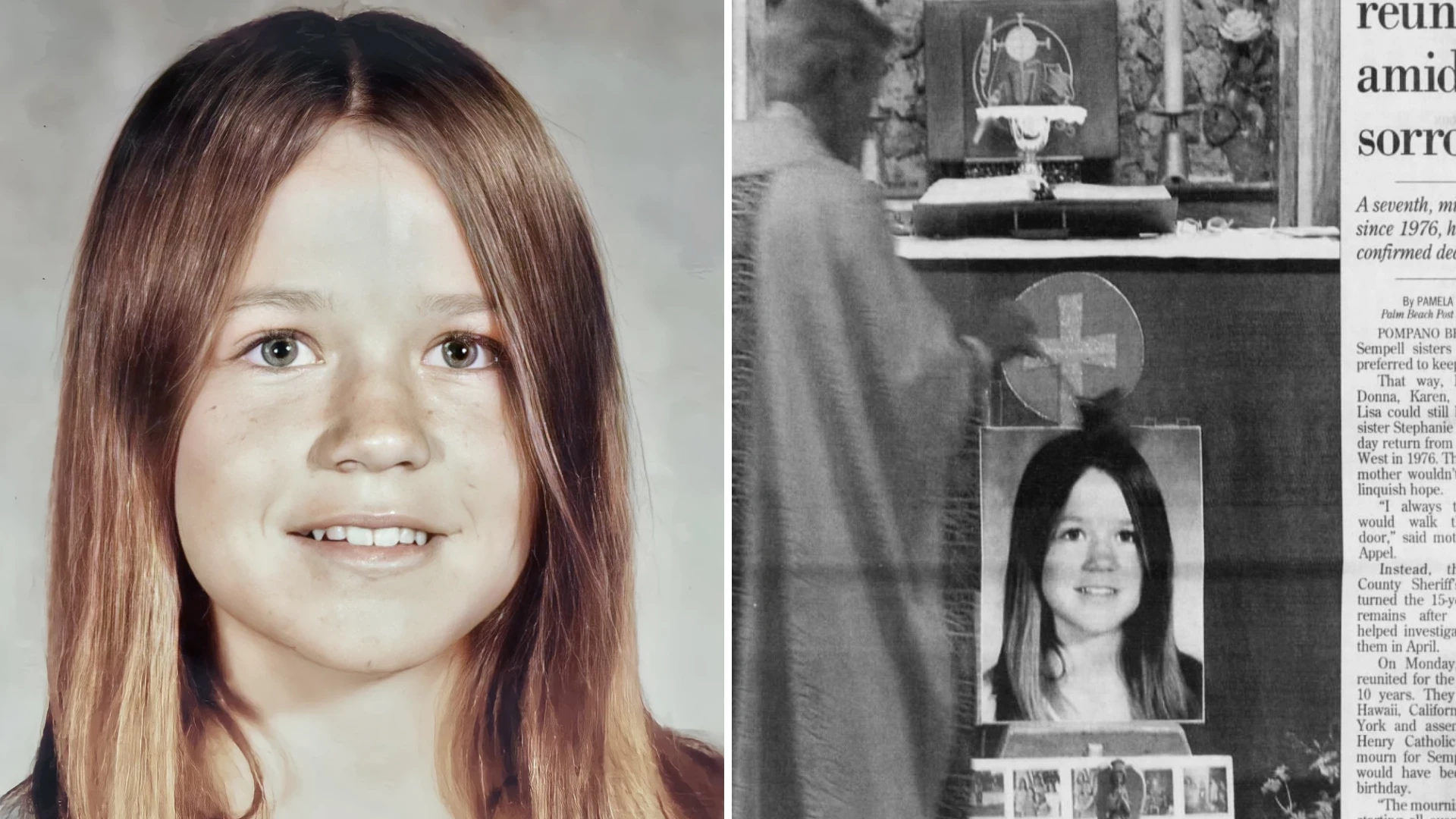
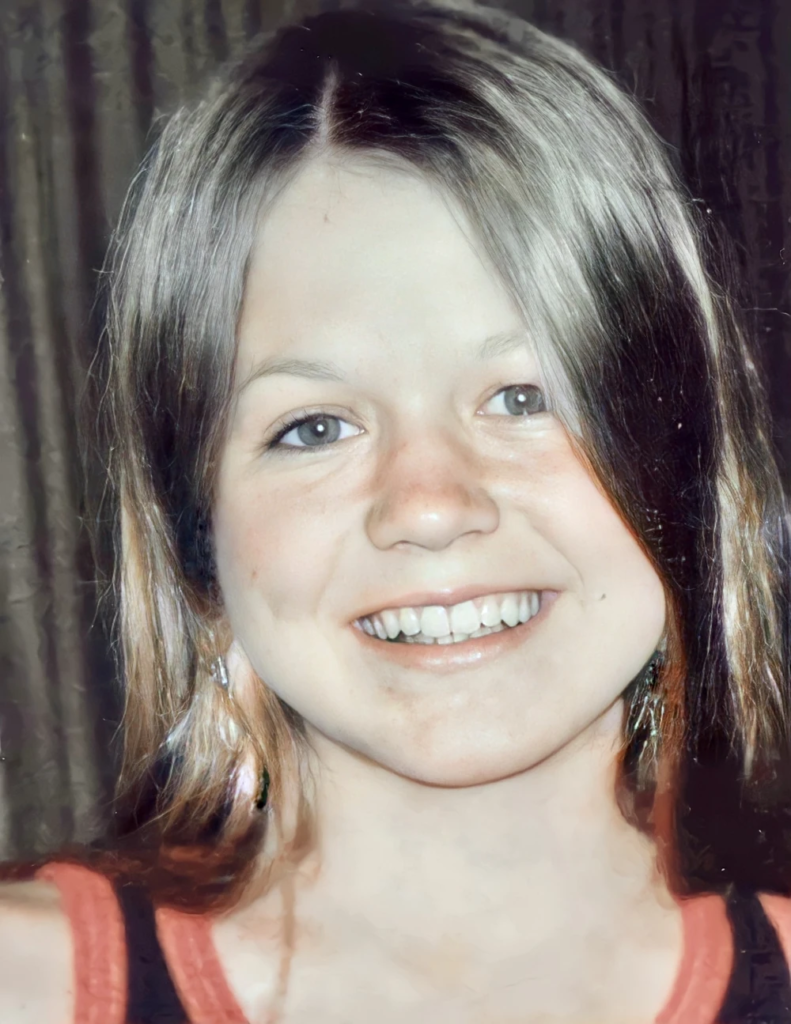
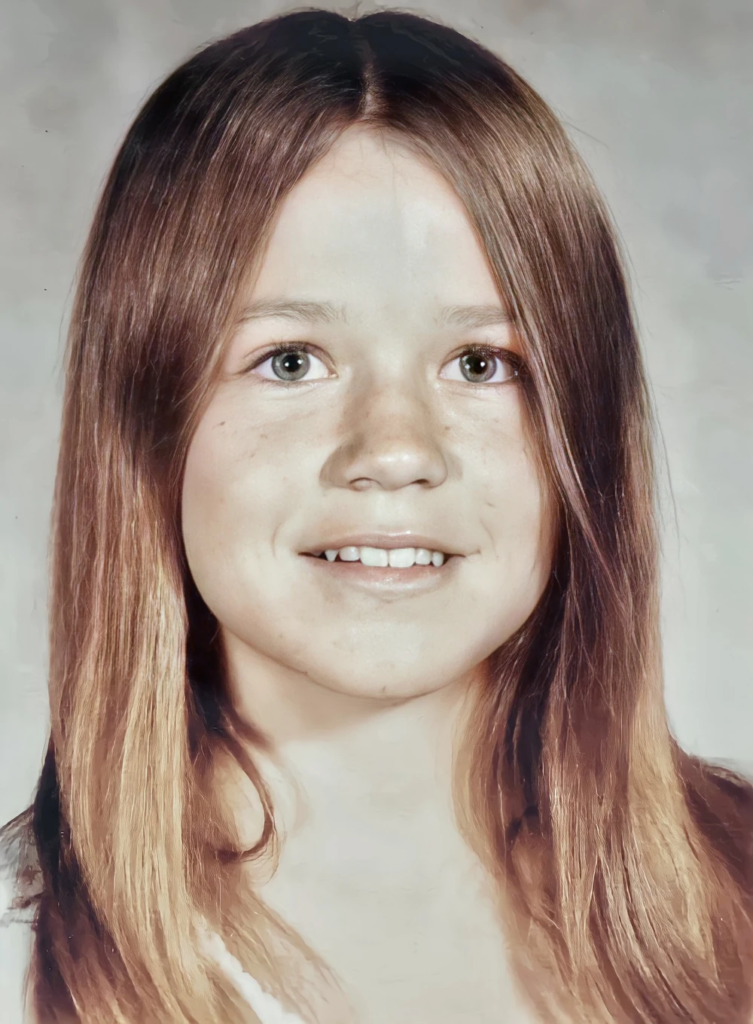
Stephanie Sempell was born on November 8, 1960, in Boca Raton, Palm Beach County, Florida, the seventh of eight children. The family, including six sisters and one brother, lived in a waterfront home in Boca Raton. By her early teens Stephanie had become someone her family struggled to keep close. She was restless in the way that alarmed the people who loved her most: prone to taking off on spontaneous trips with friends, sometimes traveling as far as California, coming back with stories and, on one occasion, a peacock tattoo on the underside of her arm.
In the summers she traveled north to Queens, New York, to help out at a family-owned hardware store and earn extra money. She was, by every account, generous and impulsive in equal measure.
Her younger sister remembered her plainly. “She grew up fast,” she said. “She had a big heart and she trusted everybody.”
That last part would matter.
She left for Key West
In March 1976, Stephanie Sempell was 15 years old. She told her mother, Dorothy Appel, that she planned to spend a couple of days with friends in Key West. Her family had concerns about her circle of acquaintances and had advised against the trip. Stephanie went anyway, leaving with a male companion whose identity has never been established. She did not return as expected.
Days passed with no word. Her parents, Dorothy and Richard Sempell, who had recently separated, reported her disappearance to authorities. The Sempell family believed the report had been filed. They had no reason to think otherwise.
Nine months later, a stranger offered to show her bones for a quarter.
The discovery on Grassy Key
The location where the remains were found was not isolated. The Gaines Rock Pit at the 55.5-mile marker of US Highway 1 on Grassy Key was a known gathering spot for campers and partygoers. The bones had been there for months. Medical examiner Dr. A.J. Fernandez examined each one carefully. He found no gunshot wounds, no knife lacerations, no fractures consistent with blunt force trauma. The cause of death was classified as unknown. Officially, the case had no confirmed manner of death.
Detective Roth did not accept that conclusion. The T-shirt was the only clothing found at the scene. It had been knotted around the victim’s head, with strands of her reddish-brown hair tangled inside the knot. In Roth’s view, that was not a coincidence. He always suspected foul play. The physical evidence, however, could not prove it.
Jane Doe was estimated to be between 17 and 19 years old, standing approximately 5 feet 3 inches to 5 feet 5 inches tall and weighing around 100 to 120 pounds. She was, in fact, 15. A forensic artist from the National Center for Missing and Exploited Children created a facial reconstruction based on an original sketch. Her dental records were entered into multiple national databases. No match was returned. The bones were placed in a cardboard box at the Monroe County Sheriff’s Office in Key West. There they remained for more than two decades.
The report that never existed
In 1997, Kim Quinn, Stephanie’s older sister, was living in New York when she decided to look into her sister’s case. What she found stopped her.
There was no official missing person report for Stephanie Sempell. Not a misplaced one, not a damaged one. No record of one ever having existed. The Sempell family had believed for 21 years that a report was on file. It was not. Because it was not, Stephanie’s name, age, and physical description had never been entered into any law enforcement database. Because they had never been entered, no one had ever been able to run a comparison against the unidentified remains on Grassy Key. The bones in the cardboard box and the girl in Boca Raton had been sitting nine months and 130 miles apart from one another, and nothing had ever connected them.
Quinn filed a new missing person report. The family, desperate after years of uncertainty, even sought help from psychics. Stephanie’s data was finally entered into the national system.
A phone call from Quantico
In November 2001, the case briefly resurfaced. The mother of a girl who had gone missing in the Florida Keys in 1974 became convinced the Grassy Key bones were her daughter’s. At her insistence, detectives extracted DNA from the bones and compared it against a sample from the mother. The test failed. The remains were not her daughter’s. But the process had a significant secondary result: the mitochondrial DNA extracted from the bones was entered into the FBI’s Mitochondrial DNA Missing Person Database, Unit II, in Quantico, Virginia. The box went back on the shelf.
In December 2003, Gerry Nance from the National Center for Missing and Exploited Children called Detective James Norman of the Monroe County Sheriff’s Office. Nance reported a possible hit: Stephanie Sempell’s newly filed missing person report had matched against the Grassy Key Jane Doe in the database.
Cold case detective Jim Giumenta of Palm Beach County and FBI Agent Chuck Wilcox traveled to obtain a DNA sample from Dorothy Appel. The sample was compared against DNA extracted from Stephanie’s thigh and rib bones. It matched. In August 2004, Sheriff Rick Roth, the same man who had collected those bones on a December morning 28 years earlier, announced the identification publicly.
“New technologies, better networking between law enforcement databases, and a caring family have allowed us to finally identify this body as that of Stephanie Sempell,” Roth said in a prepared release. “This investigation is still active, and now that we have an identification, we hope we can go on to find out why Stephanie was found dead on Grassy Key 28 years ago.”
A killer still unknown
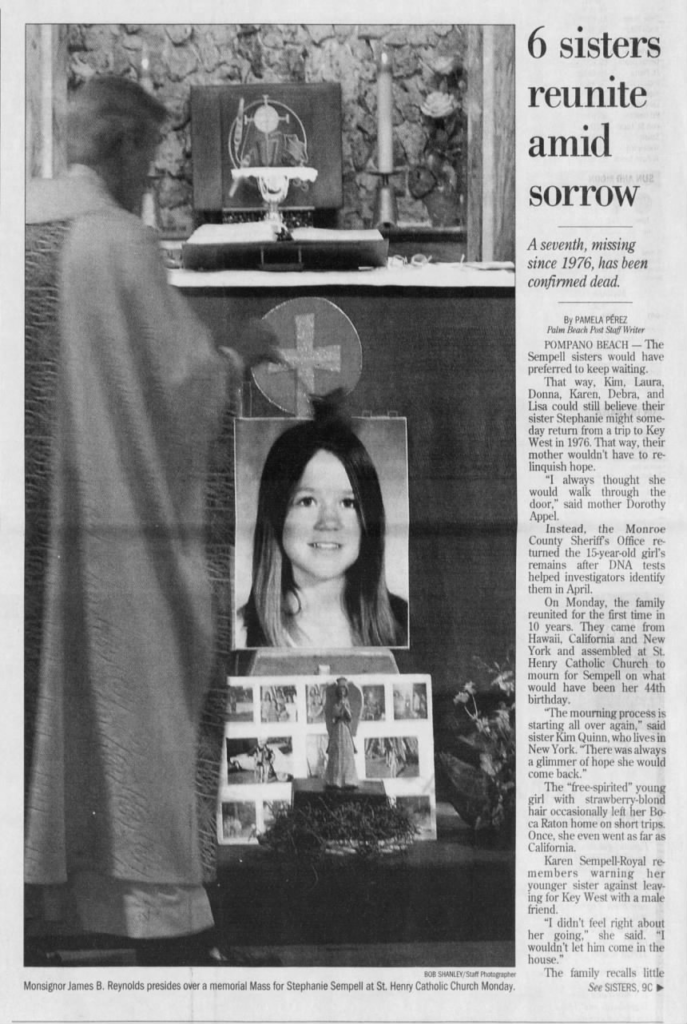
Stephanie’s remains were returned to her family on November 8, 2004, what would have been her 44th birthday. A memorial service was held at St. Henry’s Church in Pompano Beach. She was buried at the Boca Raton Municipal Cemetery.
The cause of her death has never been established. Investigators believe the manner was homicide. The knotted T-shirt, the only piece of clothing found anywhere near her bones, suggests she was restrained or blindfolded. Despite extensive questioning of everyone known to have been in Stephanie’s life, no one has ever been able to identify the male companion she left Boca Raton with in March 1976. That person, or those people, knew where she was going. Investigators believe at least one of them knows what happened to her.
Detective Sergeant Patricia Dally, who headed the Monroe County Sheriff’s Office Homicide Division, said it plainly: “Somebody knows her and knows what happened to her back in 1976. We want that person or those people to call us. A young girl lost her life, and both she and her family deserve to have some type of explanation for that. We’d like to give it to them.”
Stephanie Sempell was 15 years old. She had a big heart, a peacock tattoo, and a habit of trusting the wrong people. She left for Key West one afternoon in March 1976, and whoever she was with when she died has never been found.
