
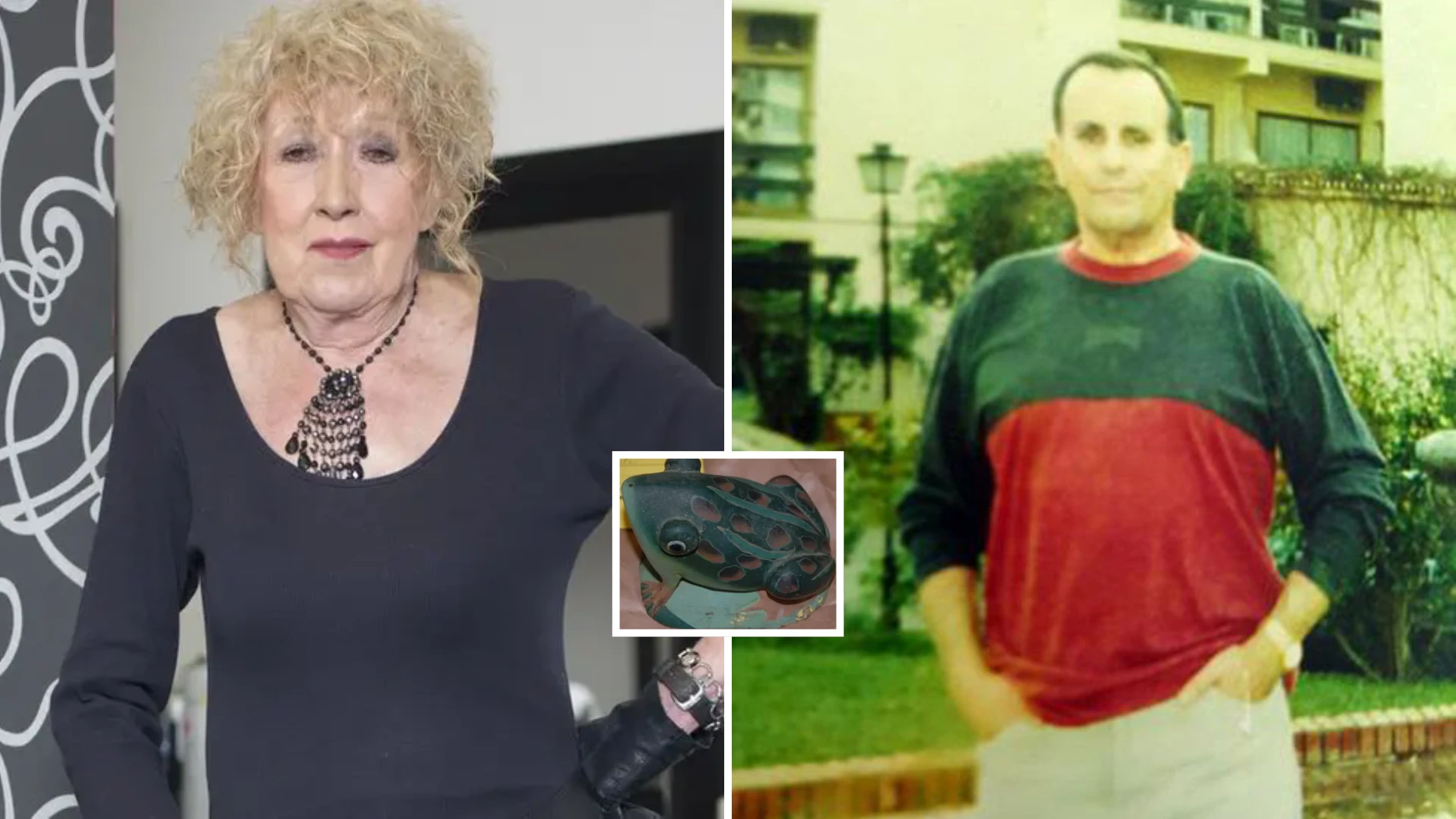
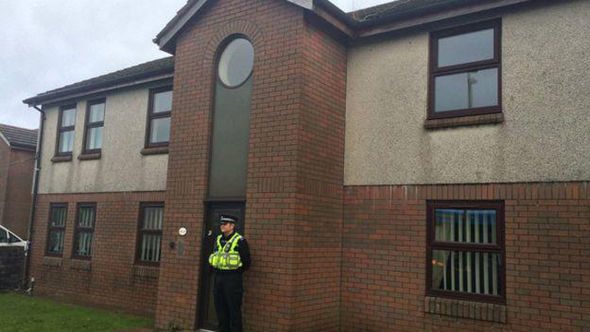
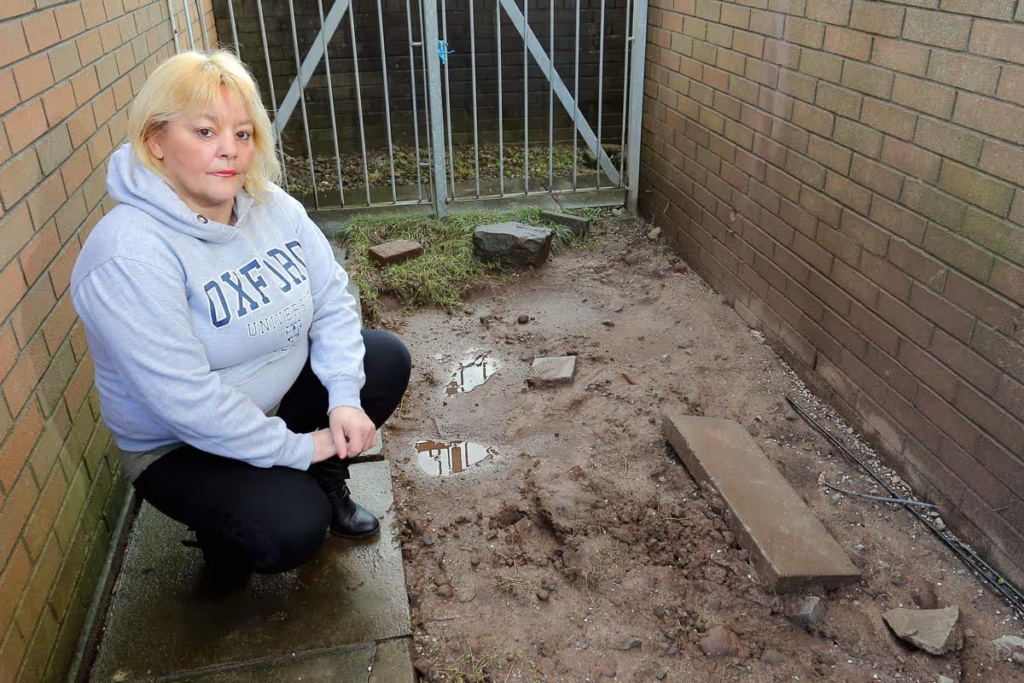
On the afternoon of November 24, 2015, neighbors Michelle James and Rhian Lee made their way into the communal garden of Trem-Y-Cwm House flats in Beddau, Pontypridd. Among the belongings left outside after the recent death of 74-year-old Leigh Ann Sabine sat a large, tightly wrapped package. Leigh had told Michelle for years that it contained a medical skeleton from her nursing days, the kind of thing that might make a decent prank on another neighbor. They cut through the outer layers. A foul liquid ran across the pavement. A smell rose that stopped them both.
Inside, wrapped in 40 layers of polythene sheeting, was the mummified body of a man.
Leigh’s husband, John Sabine, had not been seen alive since 1997.
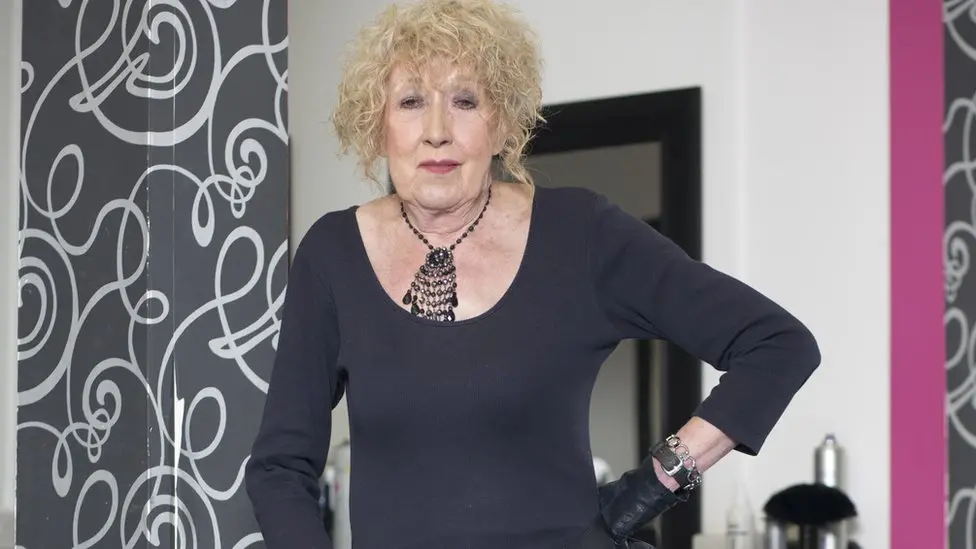
Mad Leigh
To almost everyone in Beddau, Leigh Ann Sabine was simply “Mad Leigh” — an entertaining eccentric who held court in the communal gardens of Trem-Y-Cwm and regularly invited local youths into her flat. She was vivid and talkative, the sort of woman who made an impression. Her accent was peculiar, somewhere between Welsh and something more foreign, with a faint trace of New Zealand that she never explained. Her flat was nearly bare of personal photographs, save for one: a black-and-white image of herself performing as a nightclub singer in Australia, which she kept as a kind of monument to a career that had never quite materialized.
She told different stories to different people, and none of them matched. To one neighbor she had been a supermodel. To another, the ex-wife of a millionaire. To others, a once-celebrated cabaret star whose name had meant something in Sydney. She mentioned, in passing, that she had five children somewhere. Nobody in the village ever saw or heard from them. Her husband, she explained when anyone asked, had left her for another woman years ago.
Lynn Williams, who worked as Leigh’s carer in her final years, recalled that Leigh had asked her repeatedly to move a wrapped package sitting in the communal garden, always insisting it was the medical skeleton from her nursing days. One afternoon, the two women sat together over tea and Leigh brought it up again. Williams laughed and said she hoped it was not a real one.
Leigh looked at her and said: “You never know, Lynn.”
Sometime before her death, Leigh visited her local hairdresser and told him that people were going to talk about her after she was gone. That she might be famous. He asked why. She told him: because of the body in the bag.
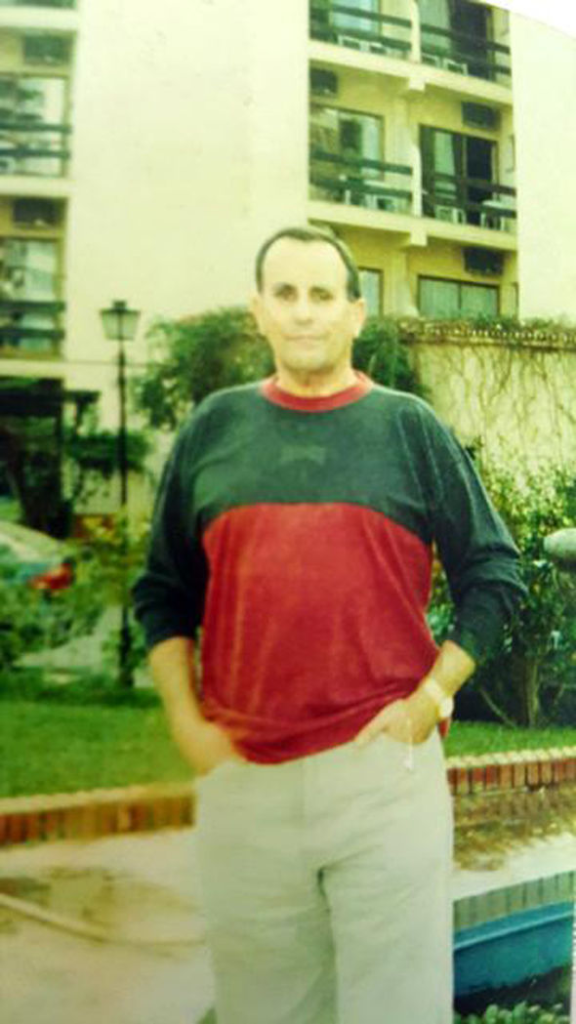
A Marriage Built on Lies
Leigh Ann Sabine was born in Wales, a fact she never disclosed to a single person in Beddau. She had been abandoned by her own mother as a child, passed between relatives and state-run care homes, and carried that history across decades without ever acknowledging it. It was, perhaps, the most honest thing about her and she kept it entirely hidden.
She met John Sabine in a London hospital in the late 1950s. She was 17. John was 29, a Korean War veteran and accountant, already married with two children from a previous relationship. When Leigh fell pregnant, the couple left together. They married in 1960 and went on to have five children of their own: Susan, Steven, Martin, Jane, and Lee-Ann.
The family they built rested on instability from the start. In 1969, Leigh and John drove their five children to a nursery in Auckland, New Zealand, told them they would be back, and did not return. The children ranged in age from 11-year-old Susan to 2-year-old Lee-Ann. For the next decade, they drifted through foster homes, facing instability and abuse, carrying the particular weight of having been walked away from by both parents simultaneously.
Disturbingly, Leigh and John had not simply disappeared. They had relocated to Sydney, Australia, where Leigh pursued the cabaret career she had always wanted. The story made headlines across New Zealand. When the couple resurfaced in the early 1980s, claiming they had only just earned enough money to return and were eager to reunite the family, hope briefly appeared. It was quickly extinguished. People who had known the Sabines during the 1970s came forward to confirm the couple had been living under the surname Martin at the southern tip of the North Island the entire time, directly contradicting Leigh’s account.
The Second Abandonment
In 1984, Leigh and John expelled their two youngest children from the family home. Nineteen-year-old Jane faced arrest over allegations of abuse, with Leigh expected to testify as the key witness against her own daughter. The case collapsed when Leigh vanished weeks before the trial was due to begin. Shortly afterward, the couple told neighbors they were heading north on a holiday.
They did not come back. They had abandoned their children for the second time.
The following year they reappeared in the United Kingdom, and in 1997, they settled in Beddau, bringing their eldest son Martin with them. Martin remained empathetic toward his parents and held on, for years, to the quiet belief that the family might still come together. In time, he accepted that it would not. He never saw his siblings again. The children still in New Zealand had lost contact with their parents by the mid-1990s. John, according to those who knew the family in those final years, had grown increasingly regretful about what they had done to the children. Leigh had not.
John Vanished
John Sabine signed the lease on the Trem-Y-Cwm flat in February 1997. He was 67 years old. In April, he was due to collect a repeat prescription from the local GP. He never collected it. Leigh told anyone who asked that he had left her for another woman and started a new life elsewhere. In 2000, during a phone call with her daughter Jane, Leigh disclosed that John had died, then offered nothing further.
But John’s name remained on the electoral roll at the Beddau address. His pension continued to be collected for years after he vanished. On the day his body was discovered in the garden outside her flat in November 2015, he was still listed as a resident of Trem-Y-Cwm House.
He had been there the whole time.
The Investigation
Michelle James was brought in for questioning. Police found nothing to link her to the crime and released her. She returned to the village and was accused of murder by residents who refused to believe her. The council eventually rehoused her. She has since been diagnosed with PTSD.
Identifying the body proved far harder than investigators expected. Dental records and a serial number on a hip replacement yielded no matches from local hospitals or surgeries. Then, among the possessions Leigh had given to neighbors in the weeks before her death, police found a formal death certificate for John Sabine. It stated he had died of an illness. Officers used it to rule John out as the victim entirely.
On closer examination, the date on the certificate conflicted with John’s official date of birth. It was a forgery. Meanwhile, forensic analysis of the victim’s clothing pushed the timeline back considerably. The pajamas found on the body bore a St. Michael label, a brand discontinued by Marks and Spencer in 1999. A Tesco bag found within the wrapping was also dated to the late 1990s. The death had not occurred recently.
A DNA sample was obtained from Chris Sabine, a farmer from Northamptonshire, a son John had fathered during his first marriage in England. The Sabine children in New Zealand had never known he existed. The match was confirmed. The body was John Sabine. Leigh was now the prime and only suspect. She had been dead for one month.
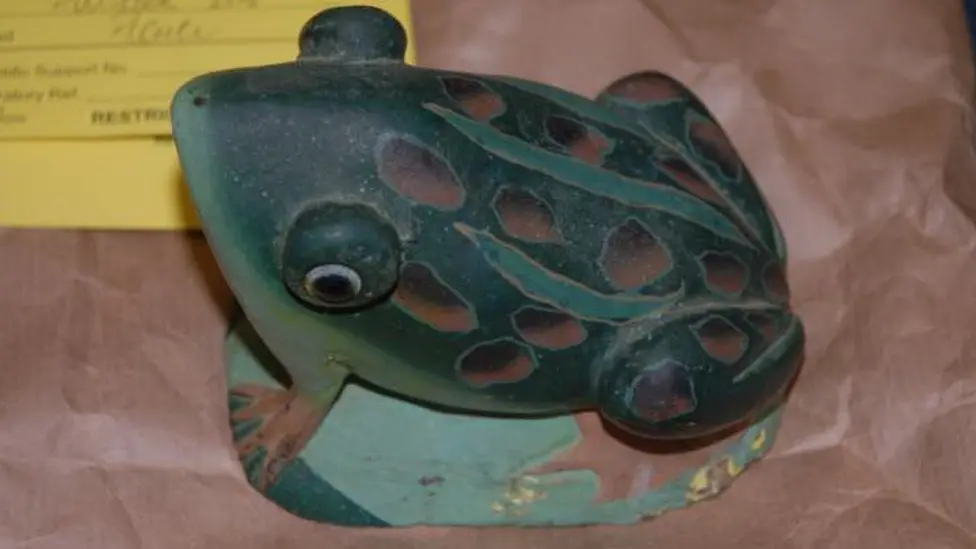
Police recovered the ornamental stone frog Leigh had kept beside the bed in the flat. She had given it to a neighbor in the weeks before her death, along with other possessions she had quietly distributed around the building. Analysis of the frog found traces of John Sabine’s blood on its surface. It also carried Leigh’s fingerprints.
A former acquaintance then came forward with a detail she had held for 18 years. She recalled a phone call with Leigh in 1997, not long after John had disappeared. During that conversation, Leigh told her she had battered John with the stone frog because he was getting on her nerves. The woman had not known what to make of it at the time. She had known Leigh to exaggerate, to fabricate, to perform. She had said nothing.
Forensic pathologist Dr. Richard Jones determined that John had died from severe blunt force trauma to the head. The shape of the frog’s protruding eye and hind leg aligned precisely with the pattern of fractures in John’s skull. Officers concluded that Leigh had struck John while he slept. The working theory for motive was straightforward: John’s growing guilt over the five children they had abandoned had, over time, become something Leigh could not live with.
“A lady with no previous convictions for violence, no domestic violence recorded, who died in October 2015, had killed her husband some 17, 18 years ago,” Detective Inspector Stephen Fairclough told ITV Wales. “It’s quite remarkable.”
Justice Never Came
Coroner Andrew Barclay of the Glamorgan Valleys recorded a verdict of unlawful killing. He noted there was no documented history of domestic violence between Leigh and John Sabine and no evidence that Leigh had acted in self-defense. The full circumstances surrounding John’s death, he concluded, would never be established. Leigh Ann Sabine had died on October 25, 2015, less than a month before her husband’s remains were found in the garden she had looked out at every day. She faced no trial. She gave no account.
In 2014, the year before her death, Leigh wrote a letter to her daughter Jane and enclosed a picture of a phoenix.
“Like the phoenix, I will arise from the ashes, and sleep will obey me and visit thee never. For my eyes are upon thee forever and ever. I have served my life sentence of shame and blame. Now it is your turn to do the same. Your nemesis, Lee Sabine.”
Jane Sabine had been 2 years old when her parents left her in an Auckland nursery and never came back. She had spent a decade in foster homes, been expelled from her parents’ house at 19, and had never received an explanation for any of it. She gave one statement about the case.
“I have no doubt my mother was capable of murder,” she said.
Martin Sabine, who had crossed an ocean to follow his parents to Wales and spent years waiting in quiet hope for a family that was never going to come together, took his own life in February 2000. He was 35 years old.
