
In April 1962, doctors at a psychiatric hospital in North Carolina made a decision they believed was medically justified. They separated identical twin sisters who had spent their entire lives together. By early the next morning, both women were dead.
Bobbie Jean and Betty Jo Eller were born on August 19, 1930, in Purlear, a small mountain community in Wilkes County, North Carolina. They were originally part of a set of triplets. Their brother, Billie, died shortly after birth, leaving the two girls as the surviving children.
Their father, Reverend A. W. Eller, was a minister in the Blue Ridge Mountains. The family was well known in the area, and the twins grew up in a close, religious, and tightly knit community. From early childhood, Bobbie Jean and Betty Jo were rarely seen apart. Neighbors later told reporters that the girls appeared unsettled when separated, even briefly.
They were physically alike in ways that went beyond genetics. Both were petite, with round faces and dark hair, which they styled the same way throughout their lives. When differences appeared, they corrected them. When Bobbie Jean began wearing eyeglasses because of poor vision, Betty Jo adopted the same frames, despite not needing them for her eyesight.
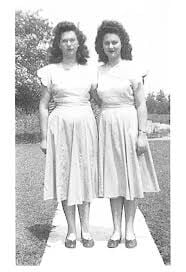
Their similarity extended into physical health. Family members described instances in which the twins became ill at the same time, even when the condition was not contagious. On one occasion, Bobbie Jean developed a painful dental abscess. Shortly afterward, Betty Jo complained of pain in the same tooth.
As long as they remained together, the twins functioned normally. They sang together in their father’s church choir, played piano, and were described as polite and well behaved. There were no early reports of emotional disturbance or psychiatric concern.
In September 1951, when the twins were twenty-one years old, they decided to leave their family home and move to Winston-Salem, North Carolina. The decision was made jointly. They secured the same job at a cigarette factory and rented a single room together in a boarding house.
Their father drove them to the city and helped carry their belongings inside. He watched as they unpacked side by side, excited by what they viewed as their first step toward adulthood. Although uneasy, he took comfort in the fact that they were still together.
For nearly two years, the arrangement held. The twins lived and worked together without incident. Then the pattern broke.
One weekend, their father opened the door expecting both daughters. Only Bobbie Jean stood outside. She was carrying luggage. Betty Jo was not with her.
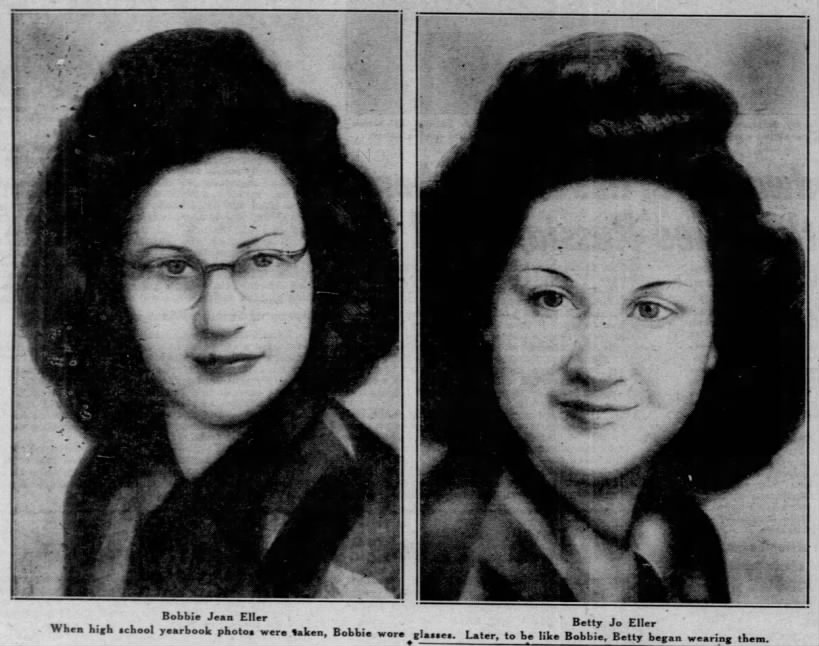
Bobbie Jean said she had quit her job and was coming home permanently. She said she hated the work but did not explain why. Betty Jo, she said, had chosen to remain in Winston-Salem.
That night, Bobbie Jean declined dinner and went directly to her bedroom. In the days that followed, she rarely left it. She did not look for work. She did not reconnect with friends. She avoided questions about the factory and spoke very little.
Betty Jo remained in Winston-Salem and continued working. She appeared to function independently.
There was one consistent exception to Bobbie Jean’s withdrawal. When Betty Jo returned home for weekend visits, Bobbie Jean’s behavior changed immediately. She ate meals, spoke freely, and appeared animated. When Betty Jo left, the withdrawal returned just as quickly.
This pattern continued for nearly two years.
Eventually, Betty Jo returned home as well. She quit the factory and moved back in without advance notice. Her parents were relieved, believing the reunion might restore balance. Instead, the twins withdrew together.
They confined themselves to a single bedroom. They slept in the same bed. When they left the room, they moved in step, shoulders touching. They entered every space together. Their behavior became rigid and ritualized.
Soon after, they stopped eating.
When their father knocked on the bedroom door to call them to meals, it would open only slightly. Both faces would appear. Both would answer at the same time, using the same words. Days passed. Then weeks. The weight loss became visible.
A psychiatrist evaluated both women and diagnosed schizophrenia. Antipsychotic medication was prescribed, consistent with treatment standards of the time. Their parents ensured the medication was taken exactly as directed. The treatment produced no improvement.
By early 1961, the situation could no longer be managed at home. The twins were involuntarily committed to Broughton Hospital in Morganton, North Carolina, one of the state’s oldest psychiatric institutions. They were kept together, monitored closely, and required to eat.
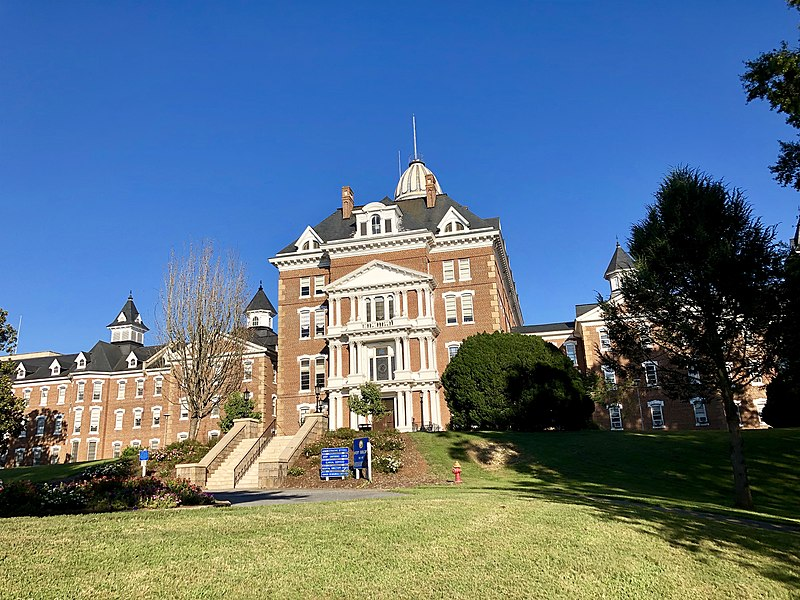
Within weeks, they regained weight. Their physical condition improved. Staff noted partial stabilization. After several weeks, they were discharged.
The collapse was immediate. Once home, the twins withdrew again and resumed refusing food. Over the next year, the cycle repeated. Each hospitalization produced improvement. Each discharge was followed by relapse.
By April 1962, physicians began to question whether the illness itself was the sole problem. Some believed the twins’ extreme dependence on one another was sustaining their decline.
On April 11, 1962, Bobbie Jean and Betty Jo were admitted to Broughton Hospital once again. This time, the approach changed. Without consulting them, staff separated the sisters. Bobbie Jean was placed in one ward. Betty Jo was moved to another, on the opposite end of the hospital.
Staff later reported that both women became frantic. They cried and begged to be reunited. The separation continued.
Shortly before 1:00 a.m. on April 12, a night attendant found Bobbie Jean unresponsive in her bed. She was pronounced dead at 12:55 a.m.
A doctor immediately went to check on Betty Jo. She was found dead as well, approximately five minutes later.
Autopsies were conducted by Dr. John C. Reece, the Burke County coroner. He found no anatomical explanation for either death. There was no evidence of trauma, poisoning, disease, or overdose. Toxicology tests conducted by the North Carolina State Bureau of Investigation and later reviewed by the FBI returned negative results.
The death certificates for both women listed the cause as “Ill-Defined and Unknown Cause of Morbidity and Mortality — North Carolina.”
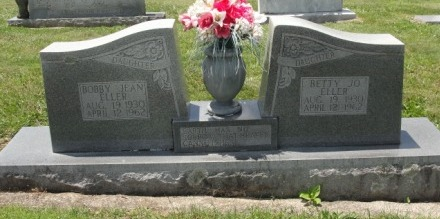
Bobbie Jean and Betty Jo Eller were buried side by side at Arbor Grove Methodist Church Cemetery in Purlear, near the mountain community where they were born.
One detail stood out after the fact. Both sisters were found lying at an unusual angle across their beds. When the layout of the hospital wards was considered, staff realized that if the walls between the rooms were removed, the twins would have been oriented facing one another at the moment they died.
The case closed without answers.
