
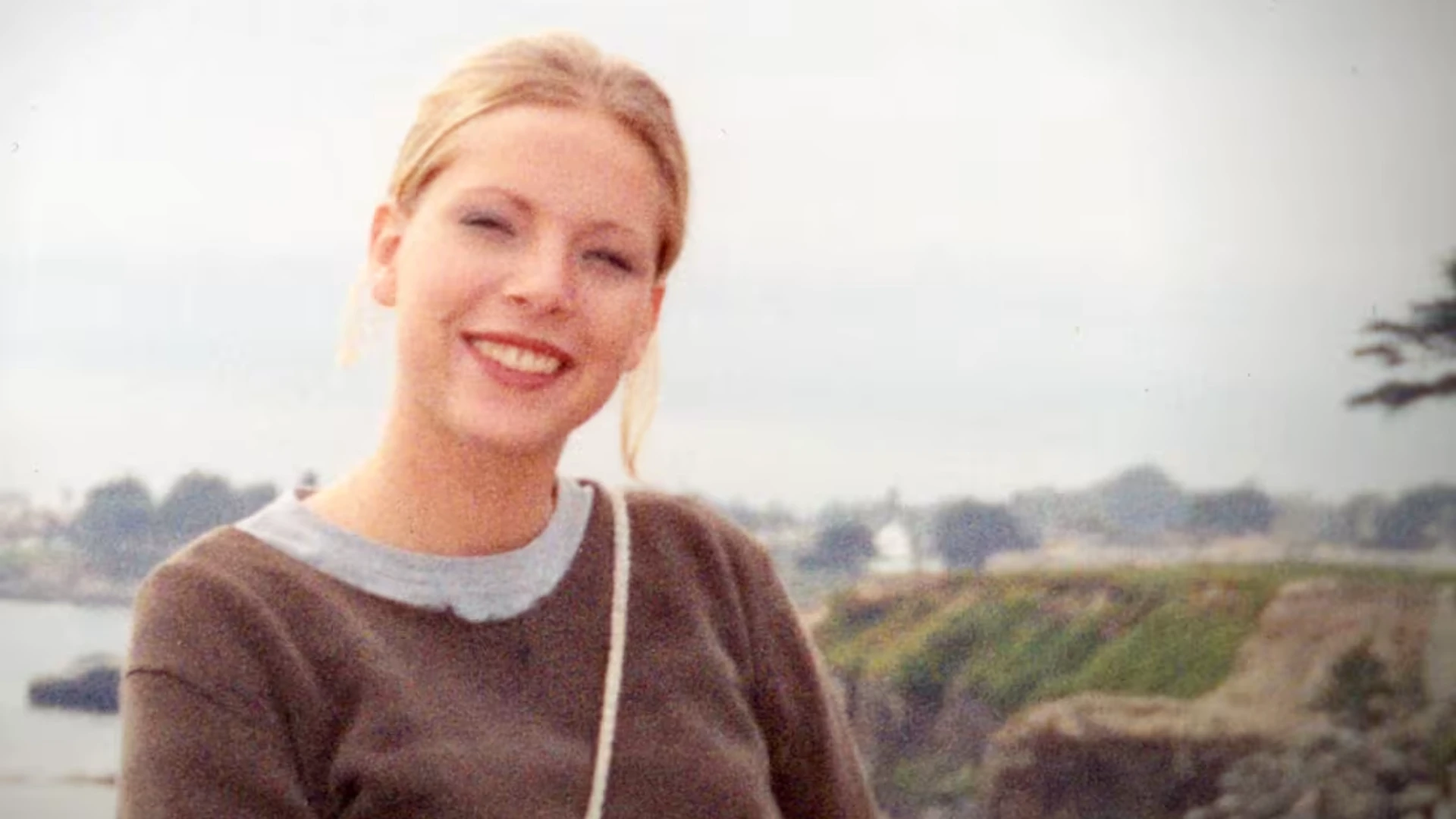
On February 15, 2003, 21-year-old Kristi Johnson stood in her Santa Monica apartment and modelled an outfit for her roommate Carri. Black miniskirt. Sheer nylons. A crisp white men’s dress shirt. Brand-new stilettos she had bought that afternoon on the precise instructions of a man who had told her she was going to be the next Bond girl. She was beaming. The audition in Beverly Hills was a formality, he had said. The job was already hers.
Kristi Johnson had grown up in Saugatuck, Michigan. She had always wanted to work in film, initially behind the camera doing makeup, and after landing a job as an assistant on the Sandra Bullock film Murder by Numbers, she moved to Los Angeles with her headshots and her ambition.
She worked part-time at a phone company. She attended every audition she could arrange. She had recently booked a music video, and she emailed her father Kirk to tell him: “I was so nervous when I first got down here, but I knew this is what I wanted, so I stuck with it, and now I’m on my way.”
She packed herself into her white 1996 Mazda Miata that evening and drove toward the Hollywood Hills. Along the way, near Wonderland Avenue, she pulled over and asked celebrity photographer Douglas Kirkland for directions. He pointed her up the hill and watched the Miata disappear around the bend. Another aspiring actress, he thought. Good luck to her. At 5:32 p.m., her phone pinged a cell tower above Laurel Canyon. Within days, Kirkland saw her face on the news.
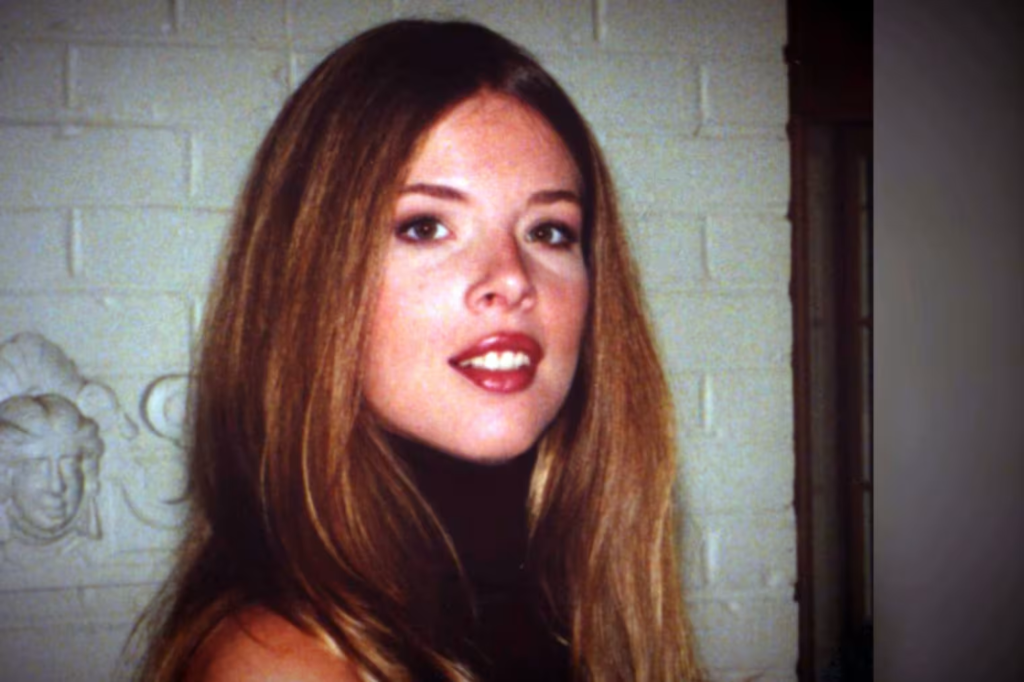
She never came home
When Kristi did not return that evening, Carri assumed the meeting had run late. The two women had shared the apartment for only a couple of months and did not yet know each other’s routines well enough to recognise when something was wrong. When Kristi missed her Monday work shift, her mother Terry called the Santa Monica Police Department. Detectives did not wait.
Mall cameras had captured Kristi buying the miniskirt alone. There was no footage of her with the man who had approached her. Her debit card showed no activity from the moment she drove away. Her phone had gone dark after that single ping above Laurel Canyon.
February 26, 2003 was Kristi Johnson’s 22nd birthday. She had been missing for eleven days. Her family held a candlelight vigil.
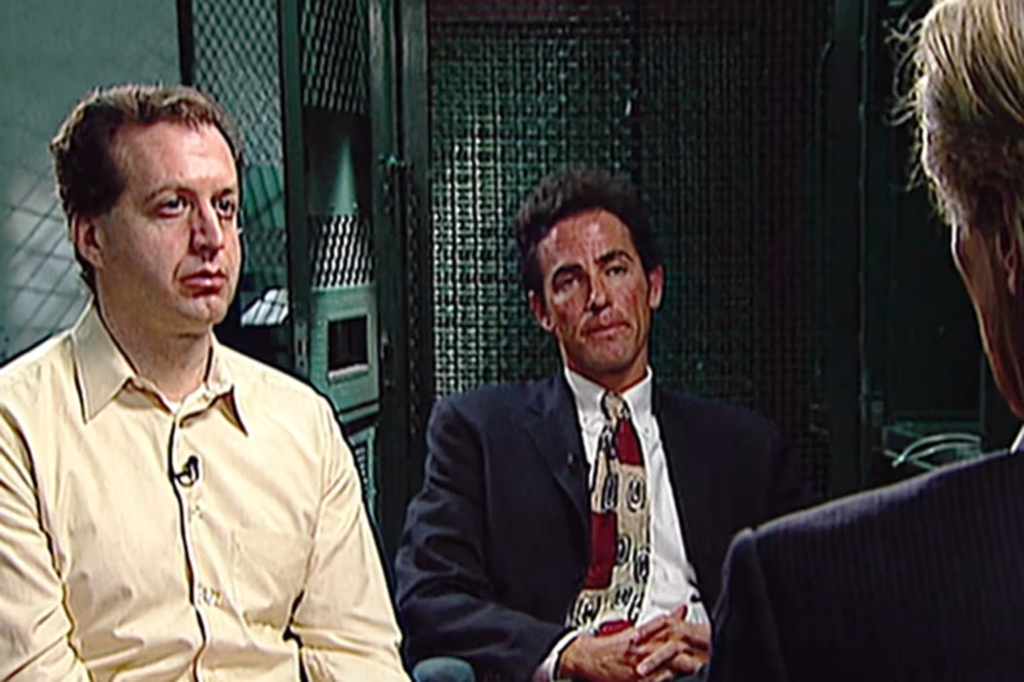
Victor Paleologus
The man who told Kristi he was a Bond film casting agent had introduced himself to other women as a Columbia Records executive, a Disney movie producer, a top Hollywood photographer. He was none of these things. Victor Lawrence Paleologus was a failed restaurant owner who had once run an Italian place on La Cienega Boulevard. He had no connection to the film industry. He was 40 years old, divorced, and had been released from state prison 26 days before he walked up to Kristi at the Century City Shopping Center.
Paleologus had been running the same scheme since 1989. He targeted women in their twenties, usually aspiring actresses, at malls, bars, and parking lots. He offered them a role in a Bond or Disney production. He told each of them to wear the same specific outfit: a black miniskirt, sheer nylons, a white men’s dress shirt, and stiletto heels. He brought a necktie to every meeting. He always found somewhere secluded. He always had rope.
In 1989, he told a 21-year-old named Christine Kludjian he was an executive at Columbia Records, introduced himself as John Maroni, and invited her to a party at the Bonaventure Hotel promising she would meet Madonna. He had hidden ropes behind the headboard before she arrived. She escaped by biting him. He was charged with attempted rape, assault, and false imprisonment.
The jury deadlocked. He pleaded guilty to false imprisonment by violence and received three years’ probation. Not a single day in custody. Kludjian sat on the stand and said: “This guy’s done this before. He’ll do it again, and he will kill someone, because he almost killed me.” He walked out of the courthouse and disappeared back into Los Angeles.
In August 1998, he approached a 24-year-old named Heather Maher at the Sky Bar in Hollywood, told her he was a Disney producer scouting for a Bond film, and asked her to meet him at the Ritz-Carlton in the same specific outfit. He produced fake contracts, then suggested they move to a second location he called his office. He tied a cord around her ankles, pinned her to the floor, and attempted to rape her. She broke free and drove herself to a police station. He was convicted and sent to state prison.
He was released on January 20, 2003. Twenty-six days later, he approached Kristi Johnson.
In the weeks between his release and that afternoon, a real estate agent named Paul Cady had been showing him properties in the Hollywood Hills. Paleologus had one requirement at every house: somewhere soundproof. Somewhere, Cady later told police, where no one could hear you scream. One of those properties was on Skyline Drive. It stood several hundred yards from where Kristi Johnson’s body would later be found.

The women came forward
Five days after Kristi disappeared, a woman named Susan Murphy spotted a small article in the Los Angeles Times about the missing woman and felt her stomach drop. Just weeks earlier, the same man had approached her at the same mall, calling himself Victor Thomas, with the same Bond girl pitch, the same outfit instructions, the same address. Murphy had brought her boyfriend and left him waiting in a car down the street. When she asked for ID, the man spotted the boyfriend, told her she was not right for the part, and ran. Murphy worked with a sketch artist. The tip line received nearly 1,000 calls.
One of those calls came from Cathy DeBuono, an actress with a recurring role on Star Trek: Deep Space Nine. She recognised the sketch from an encounter years earlier, where a man calling himself Brian from Disney had run the same pitch and given her the same outfit instructions. DeBuono was the daughter of a New York City detective. She had listened carefully, taken note of every inconsistency, and brought a male friend to the audition location. Paleologus had never come out of the building.
A dancer named Alice Walker had also come forward. She had met him at the restaurant where she worked inside the Century City Mall, gone to his West Hollywood location in the specified outfit, and kept her thumb wedged under the necktie knot the entire time so it could not tighten. The last she heard from him was February 15, the afternoon Kristi disappeared. He had called her repeatedly, frantic and out of breath. She never called back.
A parole officer who saw the sketch recognised the face immediately. Victor Paleologus. He had been released from prison 26 days before Kristi Johnson disappeared. Police found him at the county jail, arrested two days after Kristi vanished for trying to steal a BMW from a Beverly Hills car dealership during a test drive. Detectives interrogated him. He said nothing about Kristi. Every time they directed him toward her, he changed the subject. Without physical evidence, they could not hold him on murder.
Then Kristi’s Miata turned up at the valet stand of the St. Regis Hotel, right next to the Century City Mall, a man having simply handed the attendant the keys. The car had been wiped clean of everything except one fingerprint. It belonged to Kristi. Susan Murphy was brought to a lineup and pointed at Victor Paleologus without hesitation. By that point, at least 13 women had come forward with encounters involving the same man, the same script, the same rope.
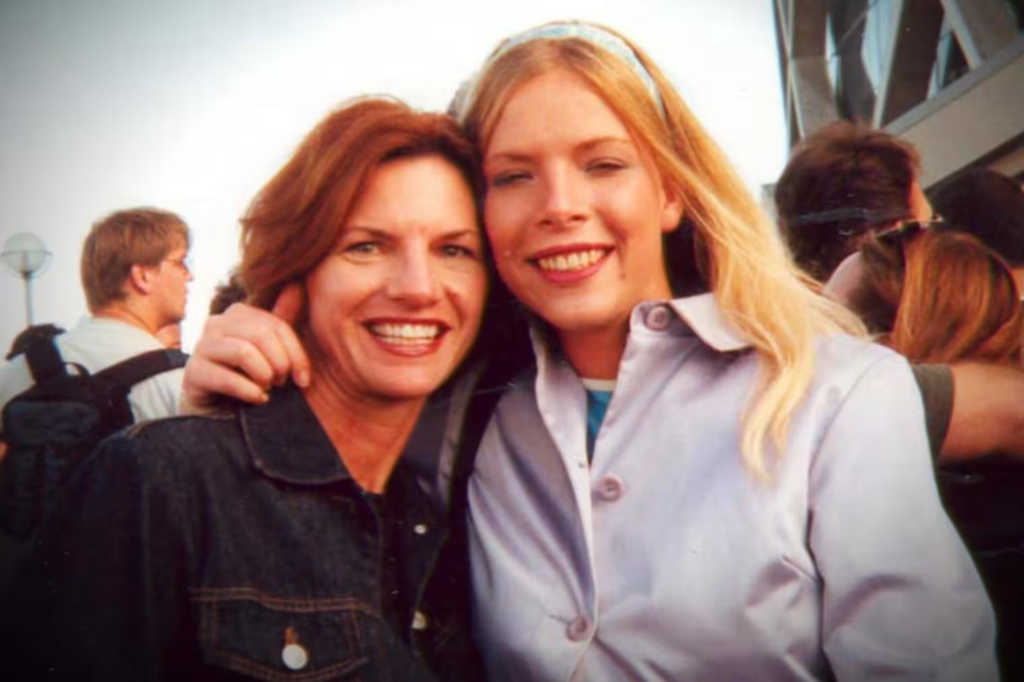
Found in the ravine
On March 3, 2003, hikers moving through a steep ravine near Skyline Drive in the Hollywood Hills spotted the badly decomposed remains of a young woman nearly 100 feet below them. Detective Virginia Obenchain asked to be lowered into the ravine herself, by rope, sixteen days after Kristi had disappeared. She needed to see it through.
The hibiscus tattoo on the young woman’s lower back identified her. Kristi Johnson was partially clothed, covered in a sleeping bag, her hands and ankles bound. She had been strangled. There was a radiating fracture to her skull. The medical examiner believed she had been thrown into the ravine while still alive. Weeks of heavy rain had washed every trace of forensic evidence from the scene.
The trial
Paleologus was charged with first-degree murder. His defense noted correctly that there was no DNA, no hair samples, and no witnesses. Prosecutor David Walgren did not dispute it. He argued instead that the testimony of the women, each describing the same man, the same pitch, the same outfit, the same rope, was evidence too precise and consistent to dismiss. “Without them,” Walgren said, “we most likely would not have had a case.”
The trial began in July 2006. Woman after woman took the stand. Thirteen days in, Paleologus changed his plea to guilty. At sentencing, he stood and apologised to Kristi’s family, taking full responsibility for her death.
Three days later, he told NBC’s Keith Morrison that the only thing he regretted was accepting the deal.
Kirk Johnson addressed the court before sentencing. He said: “Victor Paleologus has been allowed the freedom to let the evil in his life escalate, resulting in the heinous murder of Kristi, my beloved young daughter, a beautiful young woman on the threshold of her life.” Paleologus was sentenced to 25 years to life. He submitted a handwritten eleven-page letter the same day asking to withdraw his plea. The judge denied it. A 2008 appeal to the California Supreme Court was denied as well. He is currently incarcerated at the California Institution for Men in Chino, with a parole hearing scheduled for November 2025.
Cathy DeBuono went on to become a licensed clinical psychologist, spent years building a case against Paleologus’s eventual release, and in 2017 visited him in prison to collect his DNA from a soda can and a hug. She founded justiceforkristi.org. Christine Kludjian, who watched the entire trial from the gallery, said afterward: “One had to die for us to pay attention? One had to die for us to look at a situation and say, what is going on with our laws in this country that put repeat offenders out on the street again and again?” She had said as much in 1989. Nobody had listened.
Susan Murphy said of Kristi: “She didn’t make a mistake. She didn’t do anything wrong. Sometimes it’s hard to spot the bad ones. He’d been honing his scheme for years. She didn’t stand a chance.”
Kristi Johnson was 21 years old. She had moved to Los Angeles chasing something that millions of people chase, and she was already doing better at it than most. She booked a music video. She emailed her father to tell him she was on her way. On February 15, 2003, she drove toward a meeting that did not exist. She never drove back.
