
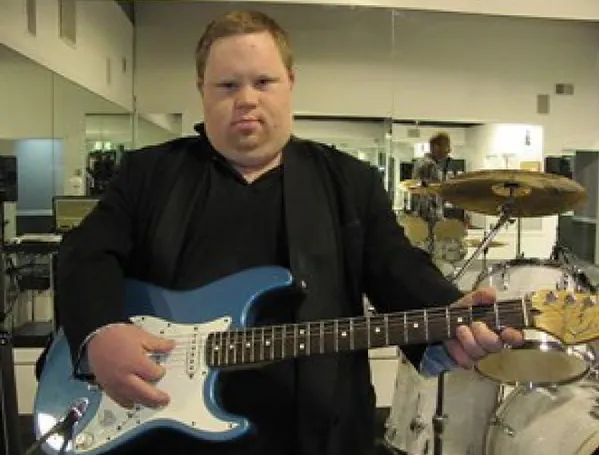
On the evening of January 12, 2013, 26-year-old Robert Ethan Saylor sat in his seat at the Westview Regal Cinemas in Frederick, Maryland, and watched the end of Zero Dark Thirty. He had loved it. His caregiver later told investigators that when the credits rolled, Ethan had clapped.
Then his caregiver stepped outside to bring the car around. Ethan got up, walked back through the entrance, and took his seat for the next showing.
He would never leave that theater alive.
A Regular at the Movies
Robert Ethan Saylor was born with Down syndrome. His IQ was measured at 40. He stood five feet and six inches tall, weighed 294 pounds, and used a wheelchair. His family called him Ethan, and his mother, Patti Saylor, later described him as having “such a big personality.” He lived in New Market, in Frederick County, Maryland, not far from the Westview Promenade Mall. He had reportedly seen hundreds of films at the Westview Regal Cinemas over the years. He was known to the Frederick County Sheriff’s deputies who worked security at the mall. He had visited their department and helped wash their patrol cars. His mother had brought them cookies to thank them for being kind to her son.
He did not like to be touched by strangers. His caregiver, an 18-year-old named Mary Crosby who had been caring for Ethan for three months, knew this well. The evening had already been difficult before the film ended. When Crosby asked Ethan, outside the theater, whether he was ready to go home, he began cursing and punched a storefront window. Frightened, she called Patti Saylor. He had calmed down by the time they went inside.
With an IQ of 40, Ethan did not have the capacity to understand that watching a film a second time required buying another ticket. He had loved Zero Dark Thirty. When Crosby stepped out to bring the car around, he simply walked back in. For him, the Westview Regal was as familiar as anywhere in his life. The idea that returning to his seat was a trespass would not have registered.
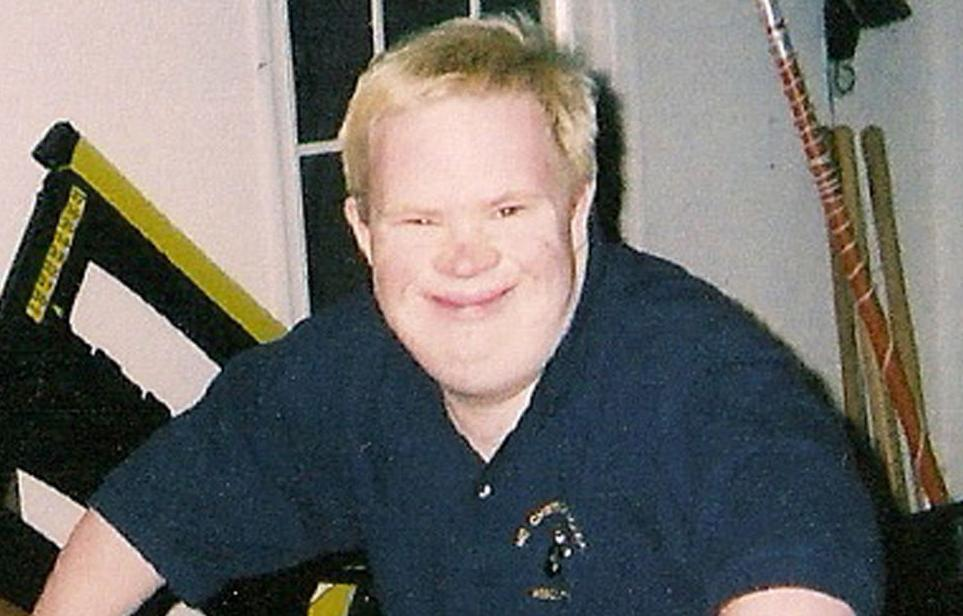
The Deputies Moved In
The theater manager called security when Ethan returned to the auditorium without buying a ticket for the next showing. Three off-duty Frederick County sheriff’s deputies responded. All three had been moonlighting as private security guards at the Westview Promenade Mall. They were Lt. Scott Jewell, Sgt. Rich Rochford, and Deputy 1st Class James Harris.
Crosby was back inside the lobby when the deputies approached. She told them that Ethan had Down syndrome. She warned them not to touch him, explaining that he would “freak out” if they did. She asked them not to speak to him directly. She told them his mother would prefer they “wait it out,” and made the offer directly: “Why don’t you just let me go in there? Give me a few minutes with him. I’ll just give him a big hug and he’d be right out.” Ethan’s mother, Patti Saylor, was already driving to the theater. According to a sworn written statement Crosby later provided to investigators, she told one of the deputies explicitly: “Please don’t touch him. He will freak out.”
The deputies moved in anyway.
According to the lawsuit subsequently filed by Ethan’s parents, two of the three deputies grabbed him, one by each arm, and dragged him from his seat. They told him he was going to jail. As they neared the rear of the auditorium, the deputies handcuffed him with his hands behind his back.

Screaming for His Mother
Witnesses in the theater heard Ethan scream. He cried “Mommy! Mommy!” and “It hurts!” as the deputies forced him toward the back of the auditorium. Beyond the rear wall, witnesses could no longer see what was happening. They could only hear the struggle.
Then it went quiet.
Ethan had ended up on the floor, face down and handcuffed. Sheriff Charles Jenkins later confirmed this detail in his own public account. According to a witness statement cited in the coroner’s report, at least one deputy placed a knee on his back. During the struggle, according to the family’s lawsuit, his larynx had been fractured. The deputies noticed he had gone still. They rolled him over and removed the handcuffs. Chest compressions brought him back to shallow, snoring unconsciousness. One of the deputies asked Crosby if she could rouse him. She tapped him and said, “Wake up, Ethan.” Ethan did not respond. Paramedics arrived and worked to revive him. He never regained consciousness. He was pronounced dead at a nearby hospital.
The Maryland state medical examiner’s office ruled his death a homicide by positional asphyxia, a condition in which a person’s body position prevents them from breathing adequately. In Ethan’s case, being held face down, restrained, and compressed on the floor had made it impossible for him to breathe. The autopsy noted that Ethan’s Down syndrome, obesity, and cardiovascular disease were contributing factors to his death. The attorney representing the Frederick County Sheriff’s Office cited those conditions to argue that the deputies bore no primary responsibility. The autopsy was clear on one point that undermined that argument: Ethan Saylor would not have died had the deputies not intervened.
His larynx bore damage that the autopsy report did not fully explain. The sheriff’s department’s attorney further speculated that the fracture may have been caused by paramedics inserting a breathing tube. Crosby rejected that explanation.
Homicide, No Charges
Frederick County Sheriff Charles Jenkins told reporters that his deputies had been “professional” and that, “by all accounts, there was no excessive force.” The department’s internal affairs division investigated and cleared all three deputies of wrongdoing. In March 2013, a Frederick County grand jury declined to indict them. All three returned to duty.
The Maryland state medical examiner had already ruled the death a homicide.
Ethan’s sister, Emma Saylor, launched an online petition calling on Governor Martin O’Malley to order an independent investigation. It gathered more than 300,000 signatures. O’Malley declined to launch the investigation. He did establish the Governor’s Commission for the Effective Community Inclusion of Individuals with Intellectual and Developmental Disabilities, the first of its kind in the state.
The Case That Followed
In October 2013, Ethan’s parents, Ronald and Patricia Saylor, filed a federal civil rights lawsuit. The defendants named were Lt. Scott Jewell, Sgt. Rich Rochford, Deputy 1st Class James Harris, Regal Cinemas Inc., Hill Management Services Inc., and the Frederick County Sheriff’s Department. The suit alleged that the deputies had fractured Ethan’s larynx during the struggle, charged that Maryland authorities had failed to adequately train law enforcement personnel to handle people with disabilities, and claimed that his treatment that night constituted a violation of the Americans with Disabilities Act.
In October 2014, U.S. District Judge William M. Nickerson ruled that the lawsuit would proceed to trial. In his 54-page ruling, Nickerson wrote that “a man died over the cost of a movie ticket.” He noted that the deputies could have waited for Ethan’s caregiver or mother to coax him from his seat. They could have bought him a ticket for the next showing and let him stay.
In April 2018, five years after Ethan’s death, the Saylor family settled. The total settlement was $1.9 million: the three deputies paid a combined $800,000, the Maryland Board of Public Works approved a $645,000 state payout, and Hill Management Services contributed $455,000. No criminal charges were ever filed against any of the three men.
Patti Saylor did not stop after the settlement. She won the National Down Syndrome Society’s Advocate of the Year award and in April 2014 testified before the U.S. Senate Judiciary Subcommittee on the Constitution, Civil Rights, and Human Rights at a hearing titled “Law Enforcement Responses to Disabled Americans.” She joined the Ethan’s Law Workgroup, a coalition of disability organizations pushing for mandatory police training in Maryland. In 2015, Maryland passed the Ethan Saylor Alliance for Self-Advocates as Educators, a law establishing a formal body within the Maryland Department of Disabilities to train law enforcement officers with people with intellectual disabilities as the educators. She also began training law enforcement officers herself. “We know something the police don’t know,” she said. “My son did not deserve to die on the floor of a movie theater calling my name because he didn’t understand, or was not understood.”
Patti Saylor told reporters she would give every dollar of the settlement back for one more day with her son.
Robert Ethan Saylor was 26 years old. He had reportedly watched hundreds of films at his local cinema. His mother had brought cookies to the security staff because they had been kind to him. On the night he died, he had clapped when the credits rolled. He only wanted to see it again.
