

On September 11, 2024, a young content creator named Yoon Ji-ah stood on the coastal path of Yeongjong Island in Incheon, South Korea, talking to her audience the way she always did: warm, unhurried, like she had all the time in the world. She thanked her viewers before signing off. Thirty minutes later, she was dead.
Her body was found that same evening by rescue teams on a remote mountainside in Muju County, North Jeolla Province, roughly 300 kilometers from where she had last been seen alive. She had bruises across her face and arms. A deep mark ran around her neck. An autopsy later confirmed she had died of asphyxiation due to neck compression. The mountainside was not where she had been killed. It was where someone had driven three hours to dump her.
The man who killed her had been sitting in her audience for nearly a year. He had spent the equivalent of $70,000 to get close to her. He had told her he was a successful tech executive. He had told her he could make her a star. Every part of that was a lie. And when she finally tried to walk away from him, he followed her live stream to find out where she was.

The Woman Behind the Stream
Yoon Ji-ah was in her 20s at the time of her death, with over 300,000 followers across TikTok and the Korean live-streaming platform AfreecaTV. By any measure, she was building something real. Her comedy skits, day-in-the-life content, and outdoor live streams had attracted a loyal audience, and those who knew her described her the same way: hardworking, genuine, funny in a way that felt effortless rather than performed.
What set her apart from the noise of Korean social media was not spectacle but sincerity. During live broadcasts, she talked to her viewers as if they were in the same room, reading out their comments, responding to questions, laughing at their jokes. It was a small thing that made a large difference. Hundreds of thousands of people felt, in whatever way people feel these things through a screen, that they actually knew her.
She was also working toward something beyond streaming. Ji-ah saw her platforms as a proving ground rather than a destination. She wanted to become an actress. Friends described her as disciplined and ambitious, someone who took her aspirations seriously. Her audience was growing. Her opportunities were expanding. She had every reason to believe things were about to get better.

How AfreecaTV Works
To understand what happened to Yoon Ji-ah, it is necessary to understand the platform at the center of her career. AfreecaTV, which rebranded as SOOP in 2024 in an attempt to shed years of accumulated scandal, is South Korea’s dominant live-streaming platform, with over 1.26 million monthly users and hundreds of millions of views. On the platform, streamers are called BJs, short for Broadcasting Jockey, and they earn money primarily through a virtual gift system built around units called star balloons.
Each star balloon is worth approximately 110 South Korean won, less than ten cents. On its own, one balloon means nothing. But the platform’s most committed viewers send them in volumes that convert into significant sums. According to platform data, an estimated 30 billion won worth of star balloons change hands on the platform every month.
The platform takes a cut of 30 to 40 percent of all donations, a structural feature that creates deep financial dependency between streamers and their most generous supporters. The more balloons a streamer receives, the more the platform earns. There is no structural incentive to examine where the money comes from or what it demands in return.
The platform maintains a public fan ranking system that displays the cumulative total each viewer has spent on a given streamer’s channel. Reaching the upper tiers of this ranking requires spending staggering amounts of money. According to industry insiders, reaching level 46 out of 50, the tier Choi eventually attained in Ji-ah’s channel, required a minimum spend of approximately 100 million won, roughly $70,000.
These top spenders are formally designated as VIPs, a classification that carries real social weight inside each channel. VIPs influence the atmosphere of broadcasts, moderate comments, and, in practice, acquire a degree of proximity to the creator that ordinary viewers do not have. On a platform built around intimacy between streamer and audience, that proximity is enormously valuable, and in the wrong hands, it becomes leverage.
The Arrival of Black Cat
Sometime in 2023, a username began appearing consistently in Yoon Ji-ah’s live streams. The account called itself Black Cat. At first, its presence was simply financial: star balloons arriving in rapid succession, donation alerts cascading across Ji-ah’s screen. Before long, Black Cat had become a fixture of every broadcast, always present, always contributing, always praising. He engaged with her content, offered suggestions for improving her streams, and positioned himself as someone with a genuine professional interest in her success.
In late 2023, Black Cat introduced himself by his real name. He was a man surnamed Choi, and he told Yoon Ji-ah he was the CEO of a successful IT company. He told her he had connections in the entertainment industry and experience developing talent. He spoke to her about business partnerships, acting opportunities, and strategies for growing her audience.
Ji-ah’s father later confirmed to media that Choi presented himself to multiple rising influencers as a mentor figure, someone within the streaming world who described himself as a talent broker and was known informally as the ‘godfather’ of streamers, a man with the power to make or break careers. For a young creator trying to break into one of the most competitive media markets in Asia, his attention felt like exactly the kind of break she had been working toward.
She agreed to meet him. She let him into her professional life. She began treating him as a business partner.
The Man Behind the Alias
The CEO was a fiction. When investigators eventually established the truth about Choi, a man in his 50s, none of it resembled what he had told Ji-ah. He was not a technology executive. He had no company. His finances had not merely declined but collapsed. His home had been seized through a forced auction. He was being pursued by creditors.
The 100 million won he had spent on Ji-ah’s live streams was not discretionary wealth. It was borrowed money, spent not on a hobby but on a calculated investment in a fantasy where he positioned himself as her manager and business partner, riding her rising fame to recover everything he had lost.
According to Seoul Broadcasting System’s investigative program Curious Story Y, which aired its investigation into the case on October 3, 2024, Choi had gambled his entire remaining future on Ji-ah’s success. The theory emerging from the program’s producers was that if her career broke through, he would be there as the man who made it happen. His spending on her stream had already made him visible, respected inside her community, and influential in ways that his real life could not provide. In a world where he had failed at everything, being Black Cat was the only version of himself that worked.
Behind his generosity was a system of control that expanded steadily once Ji-ah accepted him into her life. Choi set scheduling demands for her streaming calendar and expected her to follow them. He pushed instructions on her content. According to people close to her, he reportedly pressured her to install a location-tracking application on her phone, a practice investigators noted was not unheard-of between top-spending VIPs and their streamers on Korean platforms, where the financial relationships between creators and their biggest donors had long since crossed into territory the platform made no effort to regulate.
Ji-ah’s family later confirmed she had spoken to them about his behavior, describing it as coercive and exhausting, and that she had expressed fear about what leaving might cost her.
She Tried to Leave
By mid-2024, Yoon Ji-ah had made her decision. She told friends she wanted out. The donations, however significant, no longer justified what she was being required to give in exchange, which was not merely gratitude or professional deference but something closer to obedience. She began pulling back from Choi, reducing contact and making clear she no longer wanted to maintain the partnership.
The reaction from Choi was not acceptance. For a man whose entire sense of status and identity had been constructed around his access to Ji-ah, her withdrawal threatened to dismantle everything at once: his VIP position in her channel, his standing in the streaming community he had cultivated, his fantasy of a future built on her success, and the last functioning context in which he mattered to anyone.
In the days before September 11, surveillance footage captured him confronting Ji-ah on multiple occasions. The messages he sent her in that period were reportedly frantic, swinging between begging and demanding, unable to accept what she had made clear.
Investigators later established that Choi had prior criminal history involving violence against women. Less than a year before Ji-ah’s murder, he had been investigated for illegally detaining another female streamer. That case had not produced a sentence severe enough to remove him from circulation. The system had encountered Choi before and let him continue.
September 11, 2024
Ji-ah traveled to Yeongjong Island in Incheon that morning to film outdoor content. Outdoor live streams were a recognizable part of her format, and she went live as normal, walking along the coastline, talking to her audience, thanking her supporters. Nothing in her demeanor suggested anything was wrong. At approximately 3:00 p.m., she signed off as she always did.
Choi had used her live stream to track her location. He was already on the island when she ended the broadcast.
CCTV cameras near her filming location recorded what happened next. The footage shows Choi approaching Ji-ah and the two entering what appeared to be a tense confrontation. Then it shows Choi dropping to his knees on the ground in front of her, his body frantic, pleading. Witnesses later described the same scene. Ji-ah did not give in. At 3:27 p.m., a second camera captured Choi grabbing her and forcing her back into her car. Multiple witnesses reported seeing the car door slammed shut as she tried to get out.
Investigators believe she was killed inside that vehicle sometime in the thirty minutes that followed the end of her final broadcast. The autopsy confirmed asphyxiation due to neck compression. The violence left bruising across her face, her arms, and her throat.
Eight Stops on the Way to the Mountain
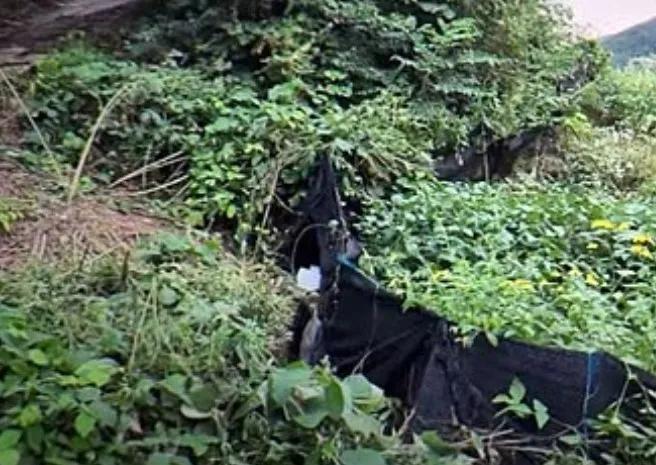
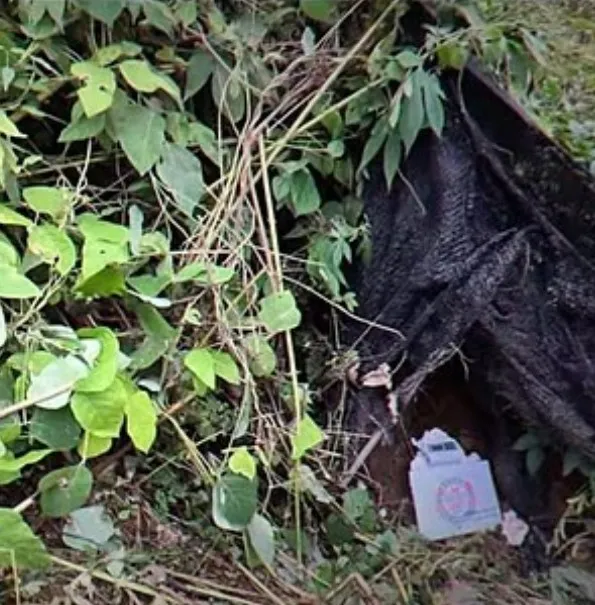
Choi had arrived on the island with a large suitcase. After Ji-ah was dead, he loaded her body into it, placed it in the car, and began driving toward Muju County in North Jeolla Province, roughly three hours away. Muju is a rural area known primarily as a destination for hiking and skiing, the kind of remote terrain where mountain roads empty out and other cars become scarce.
During the drive, surveillance cameras captured him making eight separate stops in towns along the route, pulling off highways, changing direction, pausing for no apparent reason. Each stop was a deliberate attempt to fragment the timeline investigators would later reconstruct. He believed he was buying confusion. What he was actually doing was generating additional footage of himself, in the car, making unexplained stops, with a large suitcase in the back.
By the time he reached the mountainside and carried the suitcase into the grassy clearing after dark, Ji-ah’s family had already reported her missing. Police already had surveillance footage of the abduction on Yeongjong Island. Choi had been named a suspect before he made it home. Rescue teams reached the clearing on a call about an unresponsive woman in a remote location and found her body the same evening she disappeared. Given the distance and terrain, that she was found so quickly was, as investigators noted, remarkable.
The Arrest and Confession
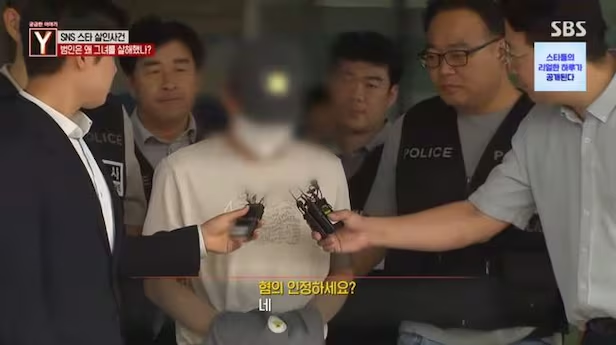
Choi was arrested on September 13, 2024, approximately 12 hours after Ji-ah’s body was discovered. He denied any involvement. Then investigators told him her body had been found, that the mountainside clearing had been located, and that the suitcase had been recovered. He broke down and confessed on the spot.
According to a police statement, Choi said he could not accept her rejection. He described the killing as the product of emotional collapse in the moment rather than premeditation, a claim that prosecutors and the public received with skepticism given the suitcase he had brought to the island, the three-hour drive to a remote dumping site he had apparently already identified, and the eight deliberate stops designed to mislead investigators.
South Korea’s reaction was immediate and furious. News coverage named him the Black Cat Killer. The hashtag JusticeForYoonJiah spread widely across Korean social media. Other female streamers began coming forward publicly with accounts of their own top-spending VIPs who had made demands, issued ultimatums, and pushed against professional boundaries in ways they had previously stayed silent about. The picture that emerged was not of an isolated incident but of an industry-wide pattern the platforms had declined to address.
A System That Failed Her
Calls for reform grew loud and specific. Women’s rights groups and streaming communities demanded stricter legal protections against digital stalking and coercive financial relationships between creators and their donors. They demanded faster police responses to reports of threatening fan behavior.
They demanded that platforms implement oversight mechanisms for large-scale donations, including the ability to flag or limit payments that investigators might later identify as instruments of control rather than support. They demanded mental health resources for streamers navigating obsessive audiences. Amidst the public anger, an AfreecaTV official’s statement to The Korea Herald in 2024 resurfaced: asked about the behavior of top donors when streamers were not broadcasting, the platform had said it had no control over what creators did outside their streams. The answer now read differently.
What was not mentioned often enough in the public debate was what Ji-ah’s family had known before she died. She had told them. She had told them that Choi was controlling her, that his demands had become impossible to meet, that she was afraid of what leaving would mean. She had confided in the people who loved her that something was wrong. And then she had gone to the island anyway, because walking away from a man who had spent $70,000 to get close to her and built his entire identity around that proximity was not simple, even when you had decided it was necessary.
As of the time this article was written, Choi has confessed to the killing and his trial remains ongoing in South Korea. Prosecutors have announced they will seek the harshest sentence available under Korean law.
What She Leaves Behind
Yoon Ji-ah was a young woman in her 20s who talked to strangers on the internet like they were her friends, who dreamed of becoming an actress, and who had a growing audience that suggested the future she wanted was not as far away as it once seemed. She had recognized the danger in front of her. She had tried to get out from under it. On a coastal path on a September afternoon, she held her ground against a man who was on his knees in front of her, begging her to stay, and she refused.
She never made it home.
