
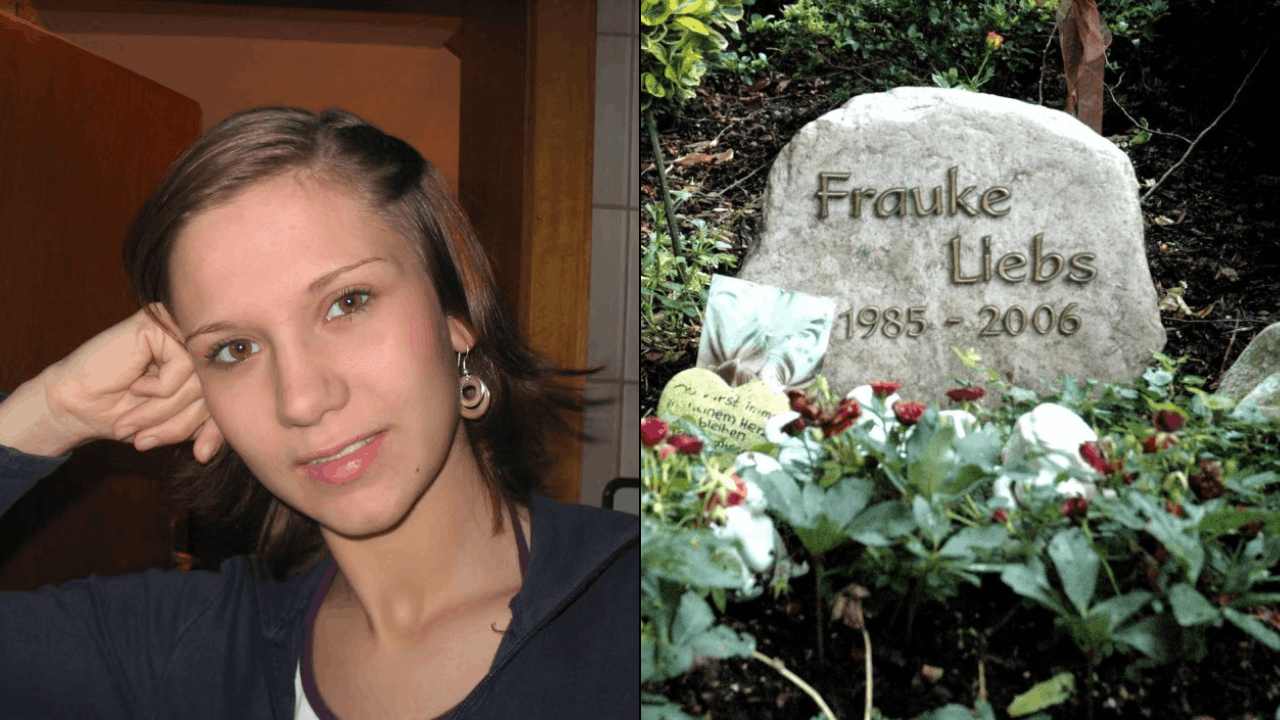
At 12:49 in the morning on June 21, 2006, Christos Karaoulis read a text from his roommate. The game was fun, she wrote. Germany had not ended up facing England. She was coming home a bit later. He stayed up waiting. She never came through the door.
A Life Just Starting
Frauke Liebs was born on February 21, 1985, in Lübbecke, a small Westphalian town in northern Germany where her father, Klaus, practiced dentistry and her mother, Ingrid, served as deputy mayor. She had a brother named Frank and a sister named Karen. She was, by every account, the kind of person who made herself useful before she thought to ask anything in return.
After passing her Abitur, Frauke trained as an educator and spent her recognition year working at Burg Wittlage, a residential facility for people with disabilities in Bad Essen. She wanted to stay in that field. No positions opened. So she redirected: on October 1, 2005, she began a nursing apprenticeship at St. Vincenz-Krankenhaus in Paderborn, about an hour from home.
She did not make the move alone.
Christos Karaoulis, her ex-boyfriend and close friend since secondary school, had enrolled in teacher training in Paderborn at the same time. They decided to share a flat to keep costs down. The romantic side of their relationship had ended more than a year earlier, and none of it had left visible damage. They kept separate social lives and separate friend groups. They cooked together occasionally. They went grocery shopping as a matter of course.
Frauke had been building a life online for years. She spent hours on ICQ and IRC chat platforms under the screen name Sweet Corey, accumulating a wide circle that included people she had never met in person. Her mother described her as someone who always had a phone in her hand, texting as a primary language. She was also, according to everyone who was asked, consistent about certain limits. She was not known to leave a bar with someone she had only just met.
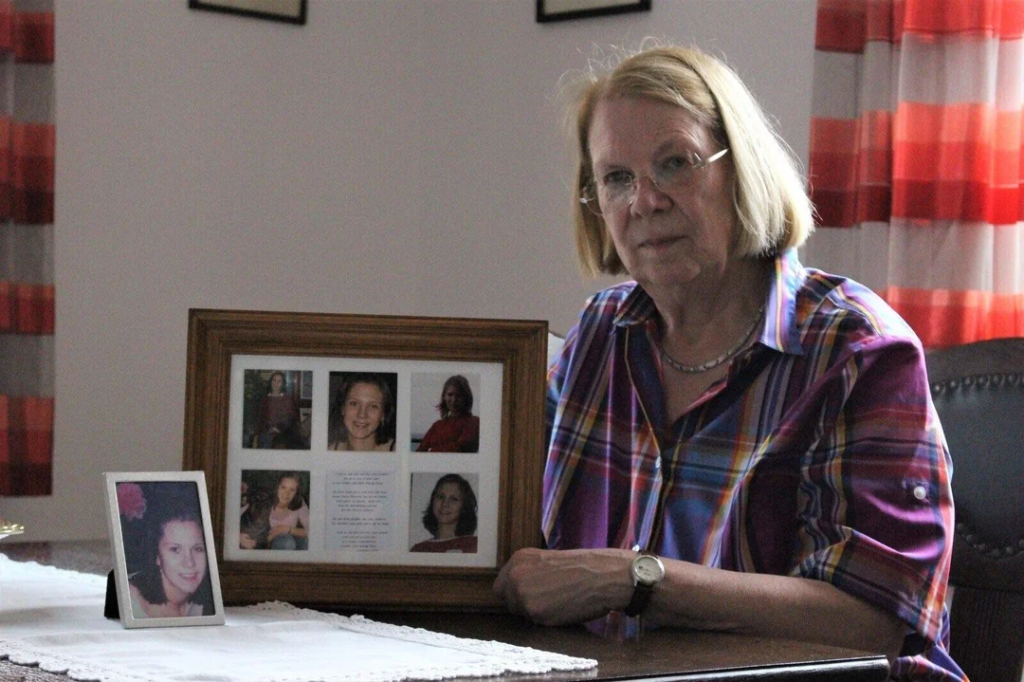
The Night Germany Won
June 20, 2006 began as a normal day. Frauke’s mother drove to Paderborn to have dinner with her. Christos joined them. Germany had beaten Ecuador 3-0 that morning at the Olympic Stadium in Berlin, goals from Miroslav Klose and Lukas Podolski carrying the hosts into the knockout round. That evening, a second match was on: Sweden versus England, Group B, with a spot in the round of 16 still to be decided.
Frauke’s classmate Isabella reached her by text during dinner. A group was watching the England-Sweden match at the Old Triangle Irish pub on Leostrasse in Paderborn’s city center. Did Frauke want to come? She did. Ingrid drove home to Lübbecke. Christos went back to the apartment, having borrowed Frauke’s key for an early morning.
At the pub, Frauke noticed her phone battery was dying. She borrowed the battery from a friend’s identical Nokia handset, used it for the match, and returned it before leaving. She walked out of the Old Triangle at around 11 p.m. with a near-dead phone, a wallet containing only a few euros, and roughly 1.5 kilometers between her and home.
Paderborn was safe and walkable. The streets were still busy with World Cup crowds. Her friends thought nothing of it.England and Sweden drew 2-2. Both sides advanced. Germany would face Sweden in the round of 16, not England. That match was still two weeks away. For that night, everything felt fine.

She Left on Foot
Nearly two hours after the match ended, at 12:49 a.m., Christos received the text. Police would later establish it had been sent from Nieheim, a small city about 35 kilometers northeast of Paderborn. By car, that journey takes roughly 40 minutes. Frauke had been walking home on foot when she disappeared. Someone had transported her out of the city, and she appeared not to know it yet. The tone of the text was hers, easy and punctuated with an emoticon. She said she was coming home a bit later.
Christos waited. He had left the building’s outer door unlocked for her. Hours passed. He tried calling. The call either rang through without answer or went to voicemail. Sometime before morning, he fell asleep with his bedroom door open.When Isabella arrived for their 8 a.m. class and Frauke was not there, she called Christos. He called the hospitals. He called Frauke’s family.
Ingrid contacted the Lübbecke police, who referred her to Paderborn. The Paderborn police checked for traffic accidents. Finding none, they considered the situation well in hand.
Frauke’s family and friends did not. They printed and posted missing person flyers across Paderborn and Lübbecke that same day.
Seven Calls, No Address
On the evening of June 22, nearly two full days after Frauke disappeared, her phone called Christos. She said she was fine and would be home soon. She asked him to tell Mom and Dad and the others. Then she hung up without responding to a single question. Christos said she sounded monotone. She was animated when she spoke.
And she had never called him Christos, not in that flat register. She only used his full name when she was angry, and this did not sound like anger. It sounded like someone reading from a card.Frauke’s family drove to Paderborn and waited in the apartment overnight. She did not come home.
What followed over the next five days was a series of contacts that gave no usable location and no coherent explanation. On June 23, a text arrived saying she was in Paderborn and coming home that day. Her brother Frank called back immediately. Frauke answered. She said she could not say where she was.
Frank said she sounded controlled, as if someone nearby was watching her. On June 24, a call came in the middle of the afternoon. She repeated the words “I’m in Paderborn” three times in succession. Her mother later described her voice as blurry. On June 25, she called again and told Christos she would explain everything when she got home. She hung up before he could ask anything further.
The final call came on June 27. Karen was present. Frauke asked to speak with her. She told her sister she was very tired, that she could not say where she was, and that she wanted everyone to know she loved them. When Christos took the phone and asked directly whether she was being held, she answered with a barely audible yes, then immediately said no, louder, as if correcting herself.
She repeated her mother’s name three times when asked where she was. Then she said ciao and was gone.Investigators later worked back through the calls using cell tower data. The initial text, sent from Nieheim, was the only contact consistent with Frauke’s natural voice and punctuation.
Every call that followed came from industrial areas around Paderborn, consistent with someone driving her close to the city for each call, then returning her to a location near Nieheim.Police concluded that she was likely held in or around Nieheim throughout, with the Paderborn calls a deliberate effort to keep the search focused on the wrong area.
Suspects and No Answers
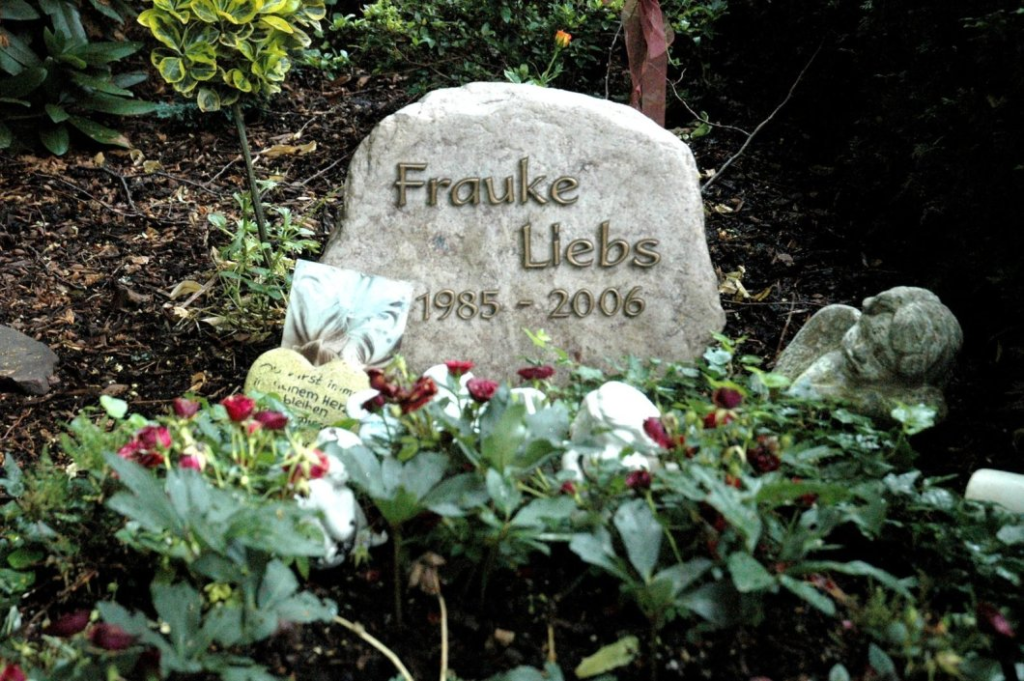
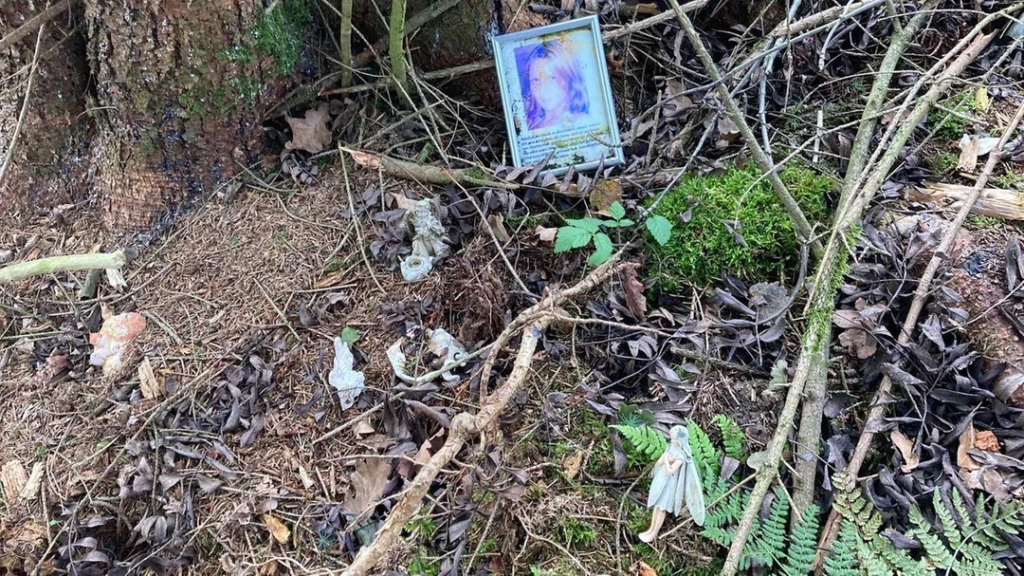
On October 4, 2006, a hunter found skeletal remains in the Totengrund, a forested hollow near Herbram in the municipality of Lichtenau, about 20 kilometers south of Paderborn. The body was clothed in what Frauke had worn to the pub: a red T-shirt, blue jeans, white Adidas sneakers. A small silver cross lay near the remains. Her family said it was not hers. Her Nokia handset, Fossil watch, wallet, and black purse were not found and have never been recovered.
The condition of the remains made it impossible to determine when or how she died. No stab wounds. No gunshot wounds. No drugs detectable in what was left. Investigators believed the site had been selected in advance and that whoever left her body there knew the area well. She had been killed elsewhere. There were no signs of a struggle at the scene.
Over the months that followed, more than 900 people were questioned. Investigators produced a list of five initial suspects. All five were eventually cleared on the basis of alibis. Christos and Niels, the friend Frauke had been texting the night she disappeared, were both investigated and ruled out.
In April 2016, a couple from the Höxter district east of Paderborn was arrested after their car broke down while they were transporting a severely injured woman. She died in hospital. The pair, Wilfried Wagener and his former wife Angelika Wagener, had been luring women through personal newspaper ads for years, entrapping at least eight victims at their home in Höxter-Bosseborn.
Two of those women died as a result of sustained abuse. Angelika admitted that a 33-year-old victim died in 2014 and that she and Wilfried dismembered the body and burned the remains in their fireplace. In October 2018, Angelika Wagener received a 13-year prison sentence. Wilfried Wagener was sentenced to 11 years in a psychiatric facility.
Investigators examined whether the Wageners were connected to Frauke’s disappearance. The geographic overlap was noted: Höxter-Bosseborn sits between Paderborn and Nieheim. Wilfried had reportedly confiscated victims’ mobile phones and used them to contact their families. But Frauke had not responded to a classified ad, and none of her belongings were recovered from the couple’s house. No direct evidence linking them to her case has been established, and no charges related to her death have been filed.
In August 2022, Bielefeld criminal investigators searched the homes of two brothers from the Lichtenau and Paderborn area. In October 2023, the Paderborn prosecutor’s office announced those proceedings had been discontinued. DNA testing and phone records produced no connection to Frauke. In November 2024, police conducted a further search at another suspect’s home. No public outcome has been reported.
A cold case unit in North Rhine-Westphalia, staffed by retired investigators and tasked with reviewing unsolved murders going back to 1970, has listed Frauke’s case as one of 403 priority investigations. Advances in DNA analysis unavailable in 2006 may yet produce something. A 13-episode podcast series from Stern generated more than 150 new tips and was nominated for the German Audiobook Prize in 2024.
Frauke’s family has offered a private reward of €30,000 for information leading to the identification of her killer.Frauke Liebs was 21 years old when she disappeared. She had spent eight months in Paderborn, building friendships and making herself indispensable to the people around her, working toward a career in nursing because she found meaning in caring for people she did not yet know.
Someone took that from her on the walk home from a World Cup match, kept her alive for a week of carefully staged phone calls, and has not been identified in nearly two decades. The case is still open.
