
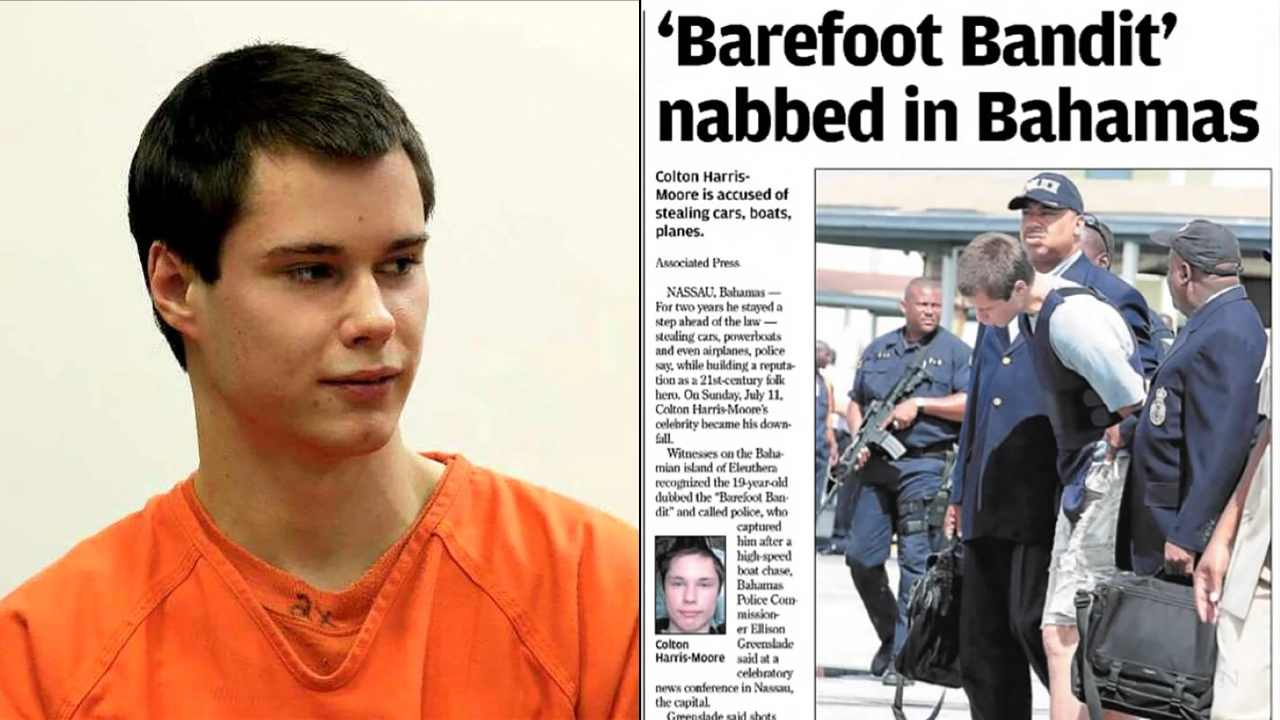
On July 11, 2010, a stolen skiff ran aground on a sandbar just off Harbour Island in the Bahamas. Bahamian police closed in from the water, shouting at the man behind the wheel to cut the engine. He was 19 years old. He had spent the last two years stealing cars, boats, and five aircraft across nine states while the FBI, the Department of Homeland Security, and dozens of local agencies failed to catch him. When officers ordered him to raise his hands, he put a gun to his own head instead. They talked him down in the predawn dark. The run of Colton Harris-Moore was finally over.
A hard start on Camano
Colton Harris-Moore was born on March 22, 1991, at Skagit Valley Hospital in Washington, to Pamela Kohler and Gordon Moore. His father left when Colton was a toddler, reportedly struggling with drug and alcohol abuse, and never paying child support. Kohler raised her son alone on Camano Island, in a ramshackle single-wide trailer, where she battled alcoholism of her own. It was not a stable home. Neighbors later recalled the language Kohler directed at Colton as the kind that would make any child want to leave as early as possible.
By the age of 7, he was regularly running away. He spent days at a time in the nearby forests, breaking into vacation homes to steal food and camping supplies. His first conviction for stolen property came when he was 12. Within a year, he was cycling through juvenile-detention centers. He attended Stanwood Middle School, then transferred to Lincoln Hill Alternative School for disciplinary reasons, and eventually stopped going to school altogether, dropping out in the 9th grade.
On July 14, 2006, after he failed to appear for a mandatory court date, authorities issued a warrant for his arrest. Harris-Moore went into the woods. He set up hidden camps deep in the Camano Island forests and continued breaking into vacation homes, now targeting their computers as well. He taught himself identity theft, ordering credit cards in homeowners’ names and using them to buy night-vision goggles and other survival gear.
He was caught on February 9, 2007, at 15 years old, facing 23 criminal charges. He pleaded guilty to three of them and was sentenced to three years at Green Hill School, a high-security juvenile detention facility in Chehalis, Washington.
Escape from Griffin Home
Harris-Moore proved a model inmate at Green Hill. On February 14, 2008, he was transferred to Griffin Home Residential Treatment Center in Renton, a minimum-security halfway house designed to transition troubled youth back into society. Those who knew him suspected his good behavior was a calculated move. They were right. On April 29, 2008, he slipped through an unlocked window and disappeared.
He was 17 years old and free for the first time in three years.
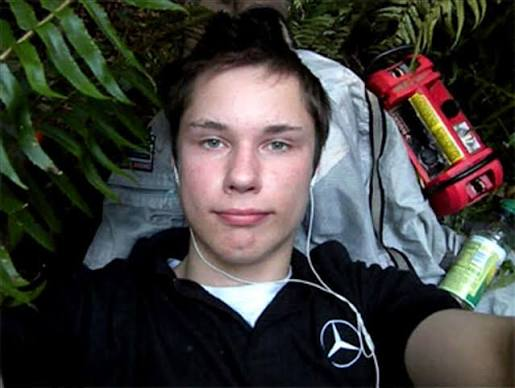
He stole a car, returned to Camano Island, and picked up where he had left off. Local authorities mounted an aggressive campaign for his capture. The media took notice. On July 18, 2008, sheriff’s deputies gave chase to a black Mercedes driving erratically on the island. The driver jumped out and ran into the woods. Inside the car, police found stolen credit cards, cell phones, and a digital camera containing self-portraits. One image showed Harris-Moore lying on his back in a forest, looking straight up at the lens. The photo spread across the internet and made him a minor celebrity overnight.
It also gave him his name. He had a habit of committing crimes barefoot, sometimes leaving footprints at crime scenes. His growing online following started calling him the Barefoot Bandit.
He relocated to Orcas Island in late 2008 using a stolen boat. Almost immediately, the San Juan County Sheriff’s Office began receiving a wave of sophisticated burglary reports. By October 2, 2008, the situation had grown serious enough that the Orcas Island Chamber of Commerce held a special meeting to address it. Harris-Moore had disabled security cameras, cracked open safes with crowbars, and broken into a grocery store where he used a stolen credit card to order flight manuals, had them shipped to the same store’s address, and returned later to collect them. He was planning something.
He taught himself to fly
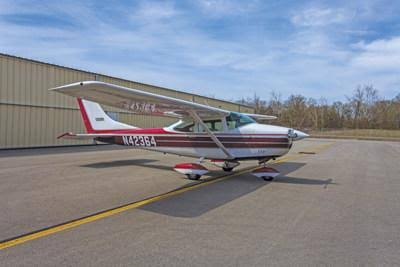
As a child on Camano Island, Harris-Moore had been obsessed with aircraft. He drew planes, hung pictures of them in his room, and could reportedly identify a plane’s make, model, and engine size by ear before he was a teenager. While hiding on Orcas Island, he stole flight manuals, watched instructional DVDs, and spent hours on Microsoft Flight Simulator. Then, on the night of November 12, 2008, he broke into a hangar on the island and stole a Cessna 182.
He had never received a single hour of formal aviation training.
He managed to take off from Orcas Island and fly the plane approximately 300 miles east, crash-landing on the Yakama Indian Reservation. He disappeared into the brush before authorities arrived. Inside the cockpit, investigators found barefoot prints. The stolen plane belonged to Bob Rivers, a radio host on Seattle station KZOK-FM. A year later, with Harris-Moore still at large, Rivers told listeners: “I don’t buy this folk-hero stuff. I was furious that something like this could happen. I really want him caught.”
Across social media, his fanbase kept growing. T-shirts appeared. Songs were written. Facebook pages dedicated to him accumulated thousands of followers. Law enforcement grew alarmed enough that agencies began consciously avoiding linking his name to new crimes, fearing further attention would only accelerate the mythology. It did not work. For a predictable slice of the public, a teenager who had grown up in poverty, taught himself to fly, and then vanished into the wilderness while federal agencies came up empty was exactly the kind of story people wanted to follow.
Harris-Moore stole his second plane, a Cirrus SR22, from the San Juan Island public airport on September 11, 2009, landing it on Orcas Island and then escaping by boat to Point Roberts. His third came on September 29, 2009, a Cessna 182 taken from a hangar in Bonners Ferry, Idaho. He flew it 260 miles west before it ran out of fuel and he was forced to crash-land near Granite Falls. Across Camano Island, his mother Pamela Kohler was asked by reporters what she made of her son stealing planes. “I’m proud of him,” she told them. “I was going to send him to flight school, but I guess I don’t have to.”

The national manhunt grew
By early 2010, the FBI and the Department of Homeland Security were both involved. Coast Guard cutters patrolled offshore waters. A Black Hawk helicopter swept the islands. Harris-Moore stole his fourth plane, a Cirrus SR22, from the Anacortes Airport on February 10, 2010, and landed it on Orcas Island. The following day he broke into Homegrown Grocery, stole more than $1,000 in cash, and used chalk to draw a trail of cartoonish bare footprints up and down the aisles. Where the prints ended, he had written: C-Ya.
On May 31, 2010, a handwritten note and $100 in cash appeared at a veterinary clinic in Raymond, Washington. “Drove by, had some extra cash,” the note read. “Please use this money for the care of animals.” He signed it with his full name and alias. It remains one of the stranger details in an already strange case.
In June 2010, with law enforcement pressing in from every direction, Harris-Moore drove a series of stolen vehicles east across the country. He was heading for Cuba, drawn by its lack of extradition treaties with the United States. On July 4, 2010, he stole a Cessna from an airport in Bloomington, Indiana, his fifth stolen aircraft, and flew it approximately 1,200 miles south to the Bahamas, crash-landing near Great Abaco Island. He survived for several days by stealing food from local stores.
The FBI posted a $10,000 reward for information leading to his arrest.
Captured in the Bahamas
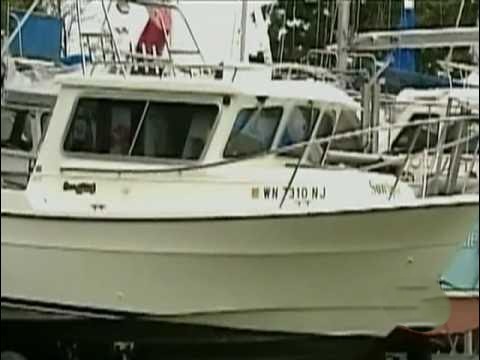
Local residents on Harbour Island recognized him. Tips reached Bahamian police. Harris-Moore, apparently unwilling to simply hide, approached people and announced who he was. He pulled into a marina on a stolen boat, declared himself the Barefoot Bandit, and asked the men there to call the FBI. “I want to get chased,” he told them. “I’m bored.”
On the night of July 10, 2010, police moved in from multiple positions. Harris-Moore stole another boat and tried to run, but grounded the vessel on a sandbar just offshore. Officers shot out the engine. With nowhere left to go, he pressed a gun to his own head and said he could not go back. They talked him down. The Royal Bahamian Police Force had done what the FBI could not.
He was extradited from Nassau to Miami on July 13, 2010, and transferred to the Federal Detention Center in SeaTac eight days later. The accounting was substantial: approximately 100 thefts across Washington, Idaho, and Canada, involving cars, boats, and five aircraft. On January 27, 2012, a federal judge sentenced him to six years in prison, telling him from the bench that it was “time for a new life flight plan.” His county, state, and federal sentences were consolidated. He sold the rights to his story to 20th Century Fox for $1.4 million, all of which went toward restitution per the terms of his sentencing.

After the run ended
Harris-Moore was released on September 2, 2016, at 25, and took a part-time clerical job with John Henry Browne, the Seattle attorney who had represented him at trial. That December, he launched a GoFundMe page seeking $125,000 for flight school, writing that he was ready to fly legally. Federal courts shut the page down. He still owed $129,000 in restitution and was not permitted to fundraise until that balance was cleared. The $1,600 raised before the page was taken down went toward the debt. He wrote on Twitter: “I feel like my dream has been crushed. What a terrible feeling.”
His mother, Pamela Kohler, had been diagnosed with stage-four lung cancer earlier that year. He set up a separate GoFundMe seeking $230,000 to have her body cryogenically preserved, hoping future medical advances might one day revive and cure her. She died on May 17, 2016. He had raised $2,170.
His last public appearance came in May 2019, when he sat for a radio interview in Seattle. He spoke about the night he first flew, that stolen Cessna lifting off from Orcas Island in the dark. “It’s something that you have dreamt about and waited for your entire life,” he said. “And out of all the possibilities of that moment, no matter what scenario or situation you could find yourself in, that one moment, you were exactly where you were supposed to be, and I wonder if I’ll ever feel that again.” He added, quietly, that he did not believe he would ever have a normal life.
Since that interview, he deleted his social media accounts and removed himself from public view. His current whereabouts are unknown.
