
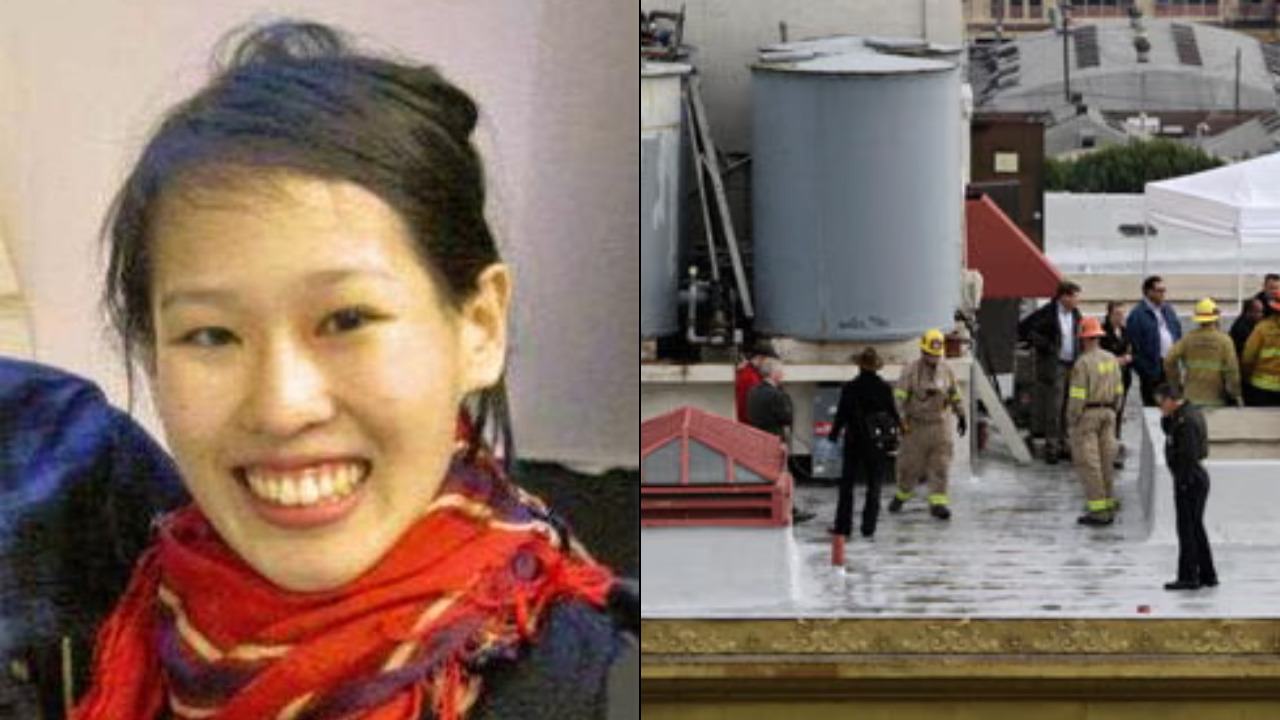
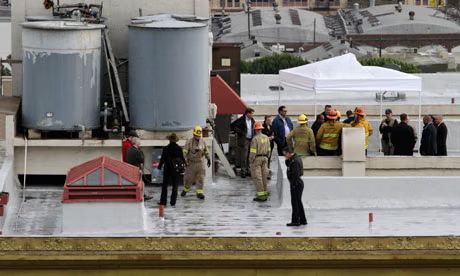
On the morning of February 19, 2013, a maintenance worker at the Cecil Hotel in downtown Los Angeles climbed to the rooftop to investigate a guest complaint. Taps in dozens of rooms had been running dark. The water pressure was low. When he lifted the hatch on one of four 1,000-gallon tanks and looked inside, he found Elisa Lam floating face up in the water.She had been missing for 19 days.
Her parents had flown from Vancouver to search for her. The LAPD had held press conferences and posted flyers. An elevator surveillance video of her behaving strangely on January 31 had accumulated three million views in China alone. And now it was over.The tank had to be drained and cut open. The maintenance hatch was too small to accommodate the equipment needed to recover her body.
A student on the road
Elisa Lam, also known by her Cantonese name Lam Ho-yi, was born on April 30, 1991, in Vancouver, British Columbia. Her parents, David and Yinna Lam, had immigrated to Canada from Hong Kong and ran a restaurant in Burnaby. Elisa was known among family and friends as outgoing and talkative, with a love of reading, video games, and travel. Her family knew her as kind and nurturing. They also knew her as someone who struggled.
After enrolling at the University of British Columbia, she fell behind in her coursework. She compared herself to classmates and felt unable to keep up. She was diagnosed first with depression, then with bipolar disorder. By her third year of enrollment, she had completed enough credits for only a single academic year.
She wrote about it on a blog she called Ether Fields. In a January 2012 post titled after a Chuck Palahniuk quotation, she described a relapse at the start of term that had forced her to drop two of three courses: “It is a weariness that keeps me at a standstill.” She worried her transcript would look suspicious. She worried about graduate school. She worried she was wasting her life.
In early 2013, she made a decision. She would take a break from university, travel alone down the West Coast of America, and try to find some perspective. Her parents were wary. As a compromise, she promised to call them every day.
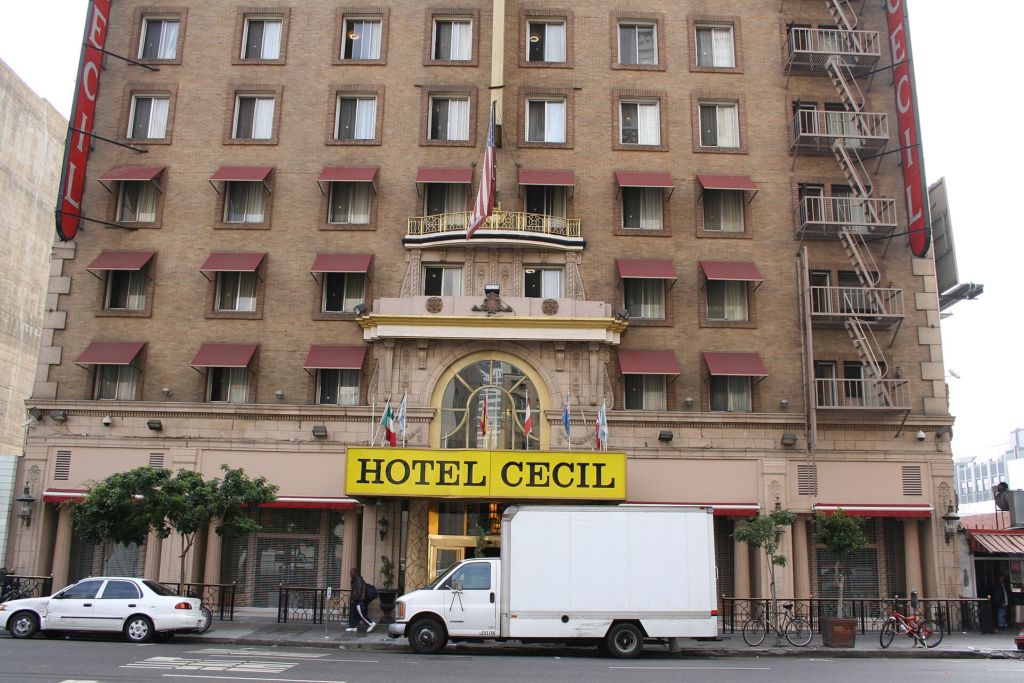
She left Vancouver in January, traveling by Amtrak and intercity bus. She visited the San Diego Zoo and posted photos to social media. She was headed to Santa Cruz. On January 26, she arrived in Los Angeles and, two days later, checked into the Cecil Hotel at 640 South Main Street.
The hotel’s long dark history
The Cecil Hotel was built in 1924 and intended, originally, for international businessmen and social elites. By the time Elisa Lam arrived, it had been accumulating a body count for the better part of a century.At least 16 murders, suicides, and unexplained deaths had occurred on the premises or been linked to it over the decades. In the mid-1980s, Richard Ramirez, the serial killer known as the Night Stalker, had lived on the hotel’s 14th floor while terrorizing Los Angeles.
After killing, he would reportedly discard his bloodied clothes in the alley dumpster behind the hotel and return to his room. In a neighborhood defined by Skid Row’s density of shelters, street crime, and open drug use, this passed without remark.In 1991, Austrian serial killer Jack Unterweger checked into the Cecil while on assignment for an Austrian magazine to report on crime and prostitution in Los Angeles. Unterweger had already served 15 years in Austria for murdering a woman, and had been released on the strength of a celebrated prison memoir and the advocacy of several Nobel Prize winners who believed he was reformed.
He was not. During his five weeks at the Cecil, three women were killed. Shannon Exley, Irene Rodriguez, and Peggy Jean Booth were each strangled with their own bras, an exact echo of Unterweger’s original conviction. He was eventually caught in Miami, extradited, tried, and found guilty of nine murders. He killed himself in his cell on the night of the verdict, using the same ligature method he had used on all of his victims.By the 2010s, the hotel had rebranded part of its premises as Stay on Main, a hostel targeting budget travelers. That was the side Elisa Lam checked into.

Gone on checkout day
Elisa was initially assigned a shared room on the fifth floor. Within two days, her roommates complained to staff about what the hotel’s lawyer would later describe in court documents as “certain odd behavior.” She was moved to a private room. A few days before she disappeared, she attended a live taping of Conan in Burbank and was escorted from the building by security for being disruptive.She continued calling her parents daily through the end of January.
On January 31, the day she was scheduled to check out and continue on to Santa Cruz, her parents did not hear from her. They contacted the LAPD. Her family flew to Los Angeles.When police searched her room, they found her belongings largely intact. Her computer, medication, wallet, and most of her clothes remained. The room appeared disorganized. Sniffer dogs were deployed throughout the building, including across the rooftop, but detected no trace of her. The floor where Elisa had been staying had no security cameras.
The one person who saw her that day outside the hotel was Katie Orphan, manager of The Last Bookstore on South Spring Street. Orphan told CNN that Elisa had been buying books and music to take home to her family in Vancouver. “She was outgoing, very lively, very friendly,” Orphan said. “Talking about what book she was getting and whether or not what she was getting would be too heavy for her to carry around as she traveled.”She seemed, in that moment, like someone with plans to go home.
The elevator footage went viral
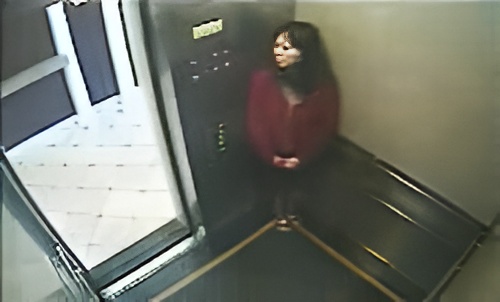
On February 6, the LAPD posted flyers across the neighborhood and online, drawing media coverage. On February 13, with no new leads and Elisa still missing, the department released a surveillance video from one of the Cecil’s elevators showing her final recorded appearance.The footage runs approximately two and a half minutes. Elisa enters wearing a red hooded sweatshirt over a grey t-shirt. She presses multiple buttons on the panel. She steps out into the corridor and looks in both directions.
She returns. She presses more buttons. The elevator doors remain open. She walks partially into the hallway, moves in an erratic pattern, makes unusual gestures with her hands, and eventually walks away from the frame. The doors finally close.Worldwide, the video was watched tens of millions of times. On the Chinese platform Youku alone, it accumulated three million views and 40,000 comments within its first 10 days. Theories multiplied: she was running from a pursuer. She was on ecstasy. The video had been tampered with before release. The elevator footage, published in the hope of generating leads, generated something else entirely.
Found in the water tank
Through the first half of February, guests at the Cecil began reporting low water pressure. Some said their tap water was running black and tasted wrong.On February 19, the maintenance worker sent to check the rooftop tanks saw Elisa through an open hatch. She was naked. Floating face up. The clothing she had worn in the elevator footage was also in the tank, coated in what the coroner’s report described as a “sand-like particulate.” Her watch and room key were with her. The coroner estimated she had been in the tank for approximately two weeks.
The full coroner’s report, released in June 2013, ruled the cause of death accidental drowning, with bipolar disorder listed as a significant contributing factor. There was no evidence of physical trauma. No evidence of sexual assault. Toxicology found no illegal drugs in her system. The non-prescription medications Sinutab and ibuprofen were present, along with traces of prescription antidepressants. But her antipsychotic medication, quetiapine, was not detectable at all. The overall level of her prescription medications in her system was well below any expected therapeutic range.
According to her family, this had happened before. On previous occasions when Elisa stopped taking her bipolar medications, she had suffered hallucinations severe enough to cause her to hide under her bed. She had been hospitalized at least once for one of these episodes.Investigators determined that the hotel’s fire escape could have provided access to the rooftop without triggering an alarm. Elisa’s scent trail, tracked by the police dogs in February, had ended near a window connected to that fire escape. After her death, a video posted online showed the rooftop to be easily accessible via that route and confirmed that two of the four water tank lids were unlocked and open.
No evidence of foul play was found. The case was ruled accidental. In September 2013, Elisa’s parents filed a wrongful death lawsuit against the hotel. It was dismissed in 2015.In 2021, Netflix released the four-part documentary Crime Scene: The Vanishing at the Cecil Hotel, which examined both the case and the years of internet speculation that had grown around it, much of which outran what the evidence actually supported.
Elisa Lam was 21 years old. She had taken a break from university to travel the West Coast alone, trying, as she put it in her blog, to stop the weariness from keeping her at a standstill. On the last afternoon anyone saw her alive, she was buying gifts for her family at a bookstore on South Spring Street, debating whether the books she had chosen would be too heavy to carry. She had every intention of going home.
