
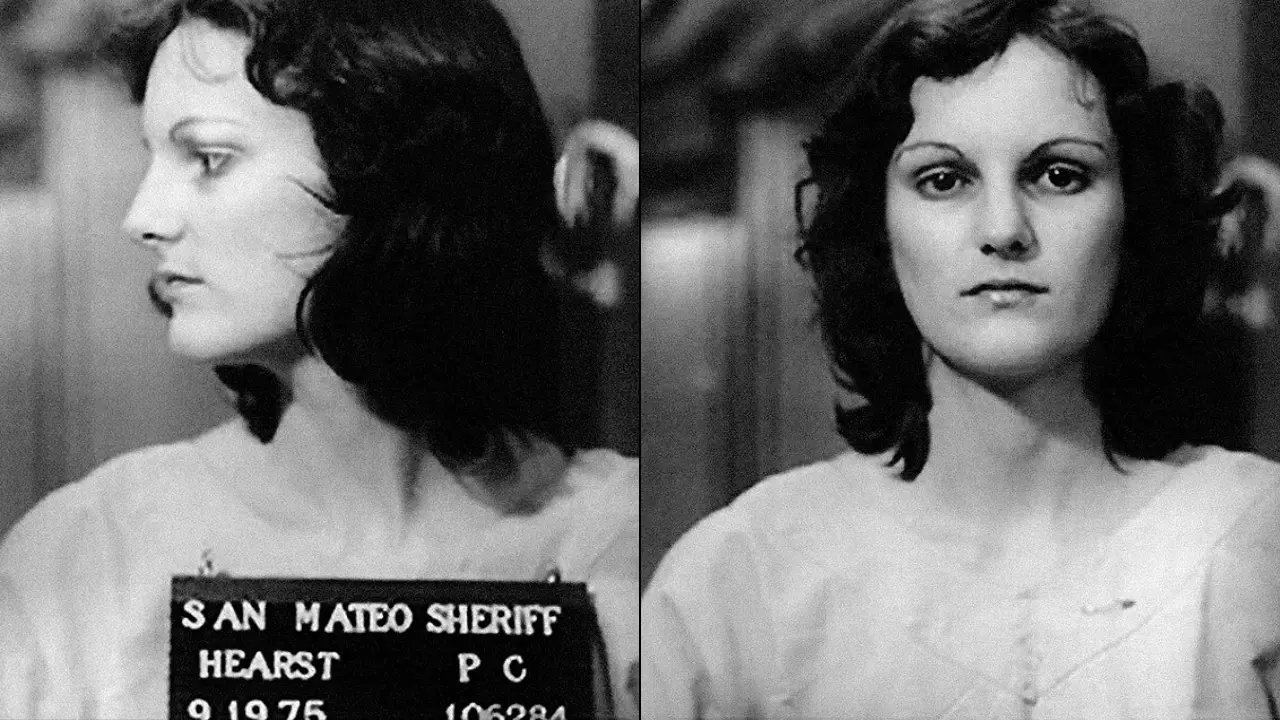
Just before 9 p.m. on February 4, 1974, a woman and two armed men forced their way into apartment 4 at 2603 Benvenue Avenue in Berkeley, California. Inside was 19-year-old Patricia Campbell Hearst, a UC Berkeley sophomore studying art history, and her fiancé, Steven Weed. The intruders beat Weed unconscious and tied up a neighbor who tried to intervene, then dragged Hearst outside blindfolded as she screamed and shoved her into the trunk of a stolen car. Two months later, Hearst would be caught on camera holding a gun of her own, robbing a bank alongside the same people who had kidnapped her.
A kidnapping demanded impossible ransom
The group responsible called itself the Symbionese Liberation Army, a small band of self-described urban guerrillas led by Donald DeFreeze, an escaped convict who went by the nom de guerre “Cinque.” Three months earlier, SLA members had assassinated Marcus Foster, Oakland’s first Black school superintendent, over his support for student identification cards the group believed targeted Black students.
Two members, Joseph Remiro and Russell Little, had been arrested for the killing and sentenced to life in prison. Kidnapping Hearst, the SLA calculated, would give them leverage to trade a Hearst family fortune for their freedom.When the state refused to release the men, DeFreeze raised the price instead.
Hearst’s family would have to give away $70 worth of food to every needy person in California, a bill that would have run to roughly $400 million. Randolph Hearst borrowed against the family’s assets and financed a $2 million food giveaway called People in Need. It descended into chaos within weeks. The SLA kept his daughter anyway.

She announced she had joined them
Hearst later testified that she spent the following weeks blindfolded in a closet, hands tied, while DeFreeze told her the group’s “war council” was debating whether to kill her. She said she was raped by SLA members William Wolfe and DeFreeze during her captivity.
On April 3, 1974, an audiotape surfaced in which Hearst announced she had adopted a new identity: Tania, named for a guerrilla fighter who had died alongside Che Guevara in Bolivia.A term for what may have happened to her already existed. Six months earlier, four hostages in a Stockholm bank robbery had defended the men holding them, giving psychologists a name for the phenomenon: Stockholm syndrome.
Hearst’s case would go on to become its most famous example. Whether her transformation reflected genuine belief or a hostage’s survival instinct became the question that defined the rest of her life, and it was never fully settled, not by the jury that convicted her and not by the historians who have studied her case since.
Surveillance filmed her robbing banks
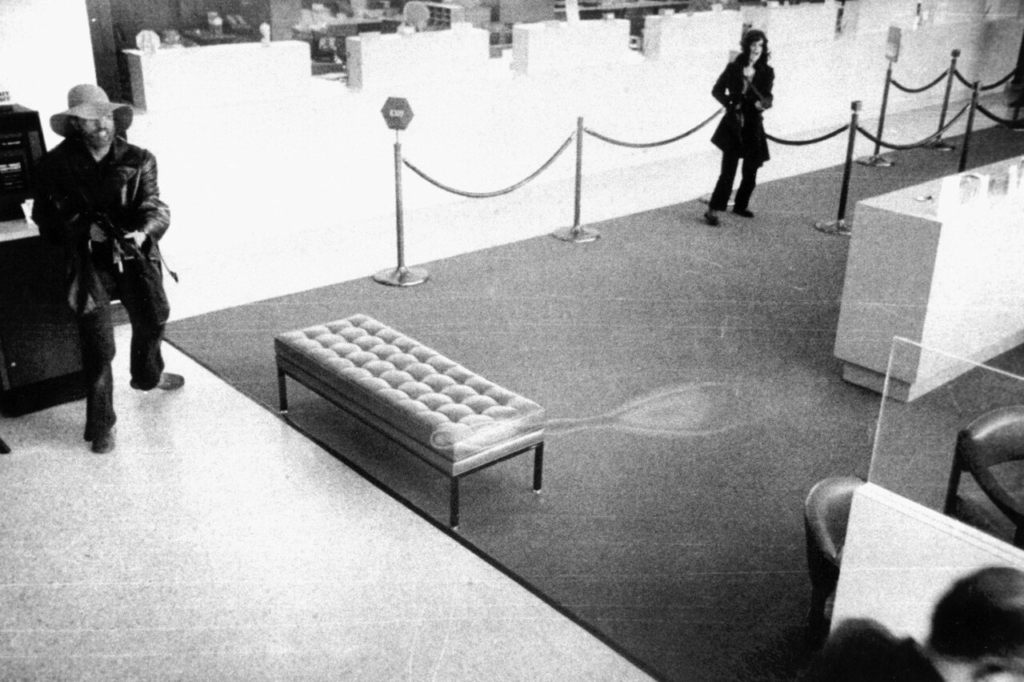
On April 15, 1974, security cameras at the Hibernia Bank’s Sunset District branch in San Francisco recorded Hearst wielding an M1 carbine as SLA members robbed the vault. “I’m Tania,” she shouted at customers. “Up, up, up against the wall, motherfuckers!” A month later, on May 16, she emptied a full magazine into the storefront of Mel’s Sporting Goods in Inglewood after William Harris was caught shoplifting and a scuffle broke out.
She did not run. She did not surrender. She reloaded.The following day, Los Angeles police surrounded an SLA safe house. A gun battle broke out, a fire consumed the building, and six members died inside, DeFreeze among them by his own hand. Hearst was not there. For a brief period, authorities weren’t sure whether she had died in the blaze at all.
The FBI hunted her for months
Hearst spent the next sixteen months as a fugitive. She helped build improvised explosives that SLA members used in two failed attempts to kill police officers in August 1975. She also drove the getaway car in an armed robbery of a bank in Carmichael, California, in which Emily Harris, wearing a mask, shot and killed Myrna Opsahl, a mother of four who had simply come in to make a deposit. Hearst was never charged in Opsahl’s death.
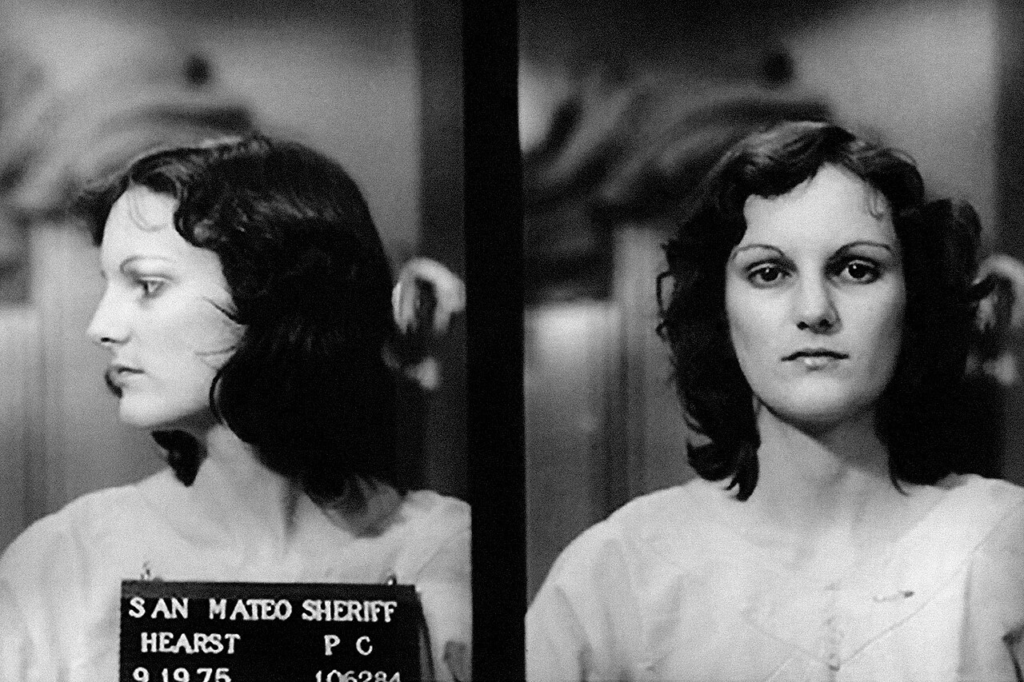
Investigators appear to have treated her as a potential witness against Harris rather than a co-defendant in a killing that could have carried a capital charge, though the full reasoning behind that decision was never made public.On September 18, 1975, after watching a San Francisco house for two days, FBI agents moved in. Hearst opened the door herself alongside fellow fugitive Wendy Yoshimura. She surrendered without a fight.
A jury rejected her defense
At trial, prosecutors argued Hearst had acted willingly. Dr. Harry Kozol testified she was “a rebel in search of a cause.” Dr. Joel Fort told the court she showed no fear during the Hibernia robbery. Defense psychiatrists countered that she fit every clinical marker of a coerced hostage. The dispute turned on a small object: Emily Harris told a magazine from jail that a stone carving Hearst had kept from William Wolfe proved a romantic relationship, not a rape.
Hearst said she believed it was a pre-Columbian artifact. Jurors later said the carving, waved in front of them by the prosecution, convinced them she was lying. A bomb exploded at Hearst Castle in the middle of the trial, a reminder that the SLA’s sympathizers hadn’t gone away.
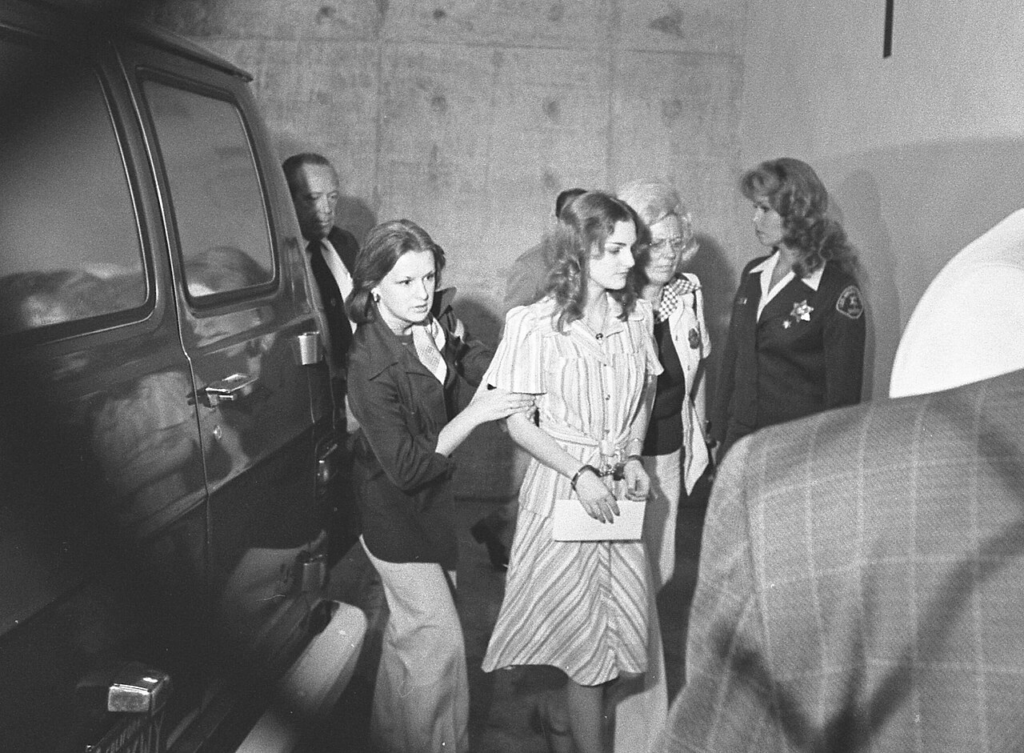
On March 20, 1976, Hearst was convicted of bank robbery and sentenced to the maximum of 35 years. Judge Oliver Carter, who presided over the trial, died before he could finalize a lesser sentence, and his replacement, Judge William Orrick, reduced it to seven years, calling her a “rebellious young” adult who had “voluntarily” broken the law. William and Emily Harris were later convicted of simple kidnapping for holding Hearst captive and served eight years each.
Hearst served 22 months before President Jimmy Carter commuted her sentence in 1979, freeing her eight months before her first parole hearing. On January 20, 2001, his last day in office, President Bill Clinton granted her a full pardon. Two months after her release from prison, Hearst had married Bernard Lee Shaw, the police officer once assigned to guard her.
