
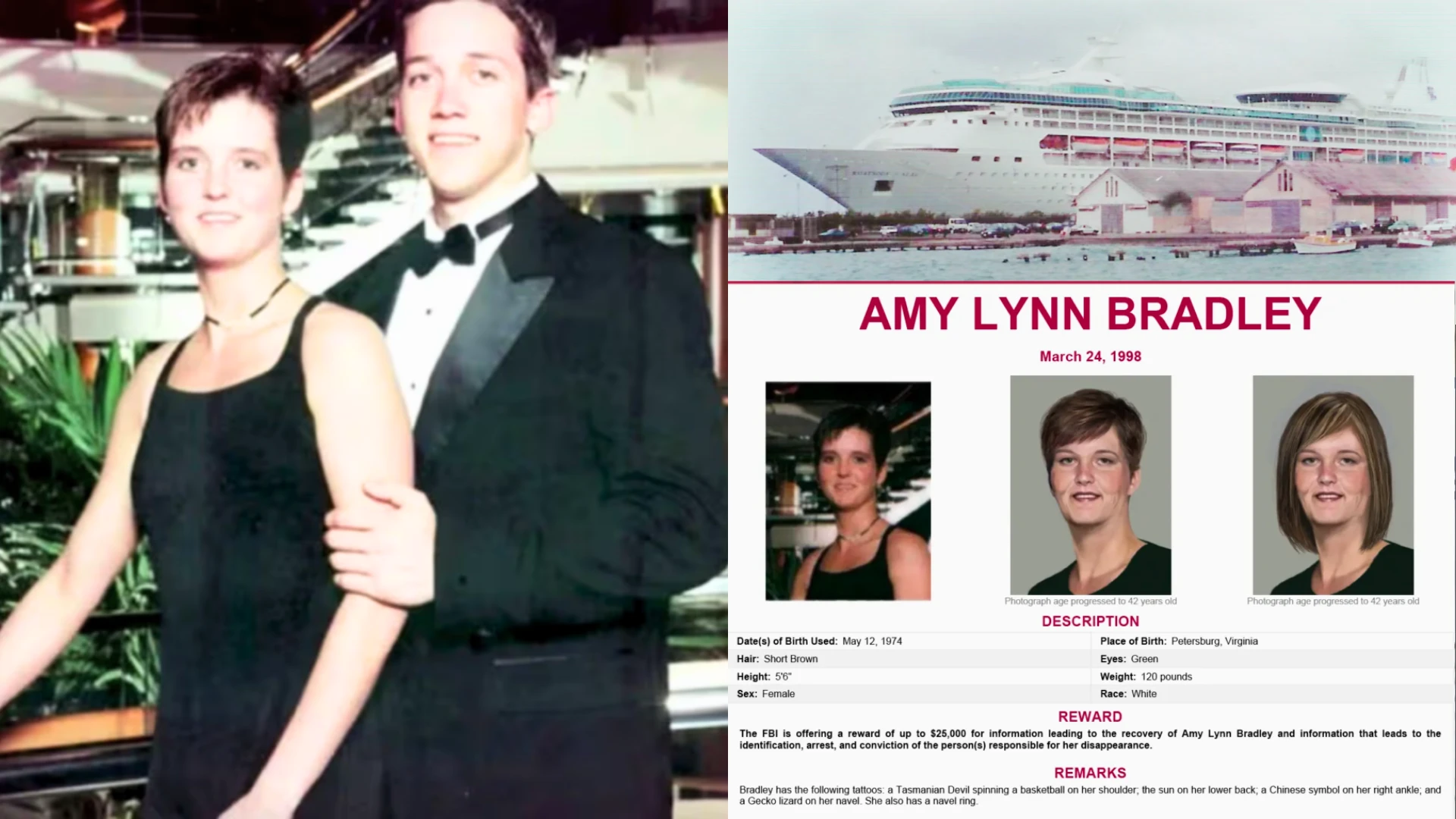
At 5:30 a.m. on March 24, 1998, Ron Bradley woke in his cabin aboard the Rhapsody of the Seas and looked out at the balcony. His daughter Amy was there, stretched out on a lounge chair, cigarette somewhere nearby, seemingly asleep. He went back to bed. Thirty minutes later he looked again. She was gone.
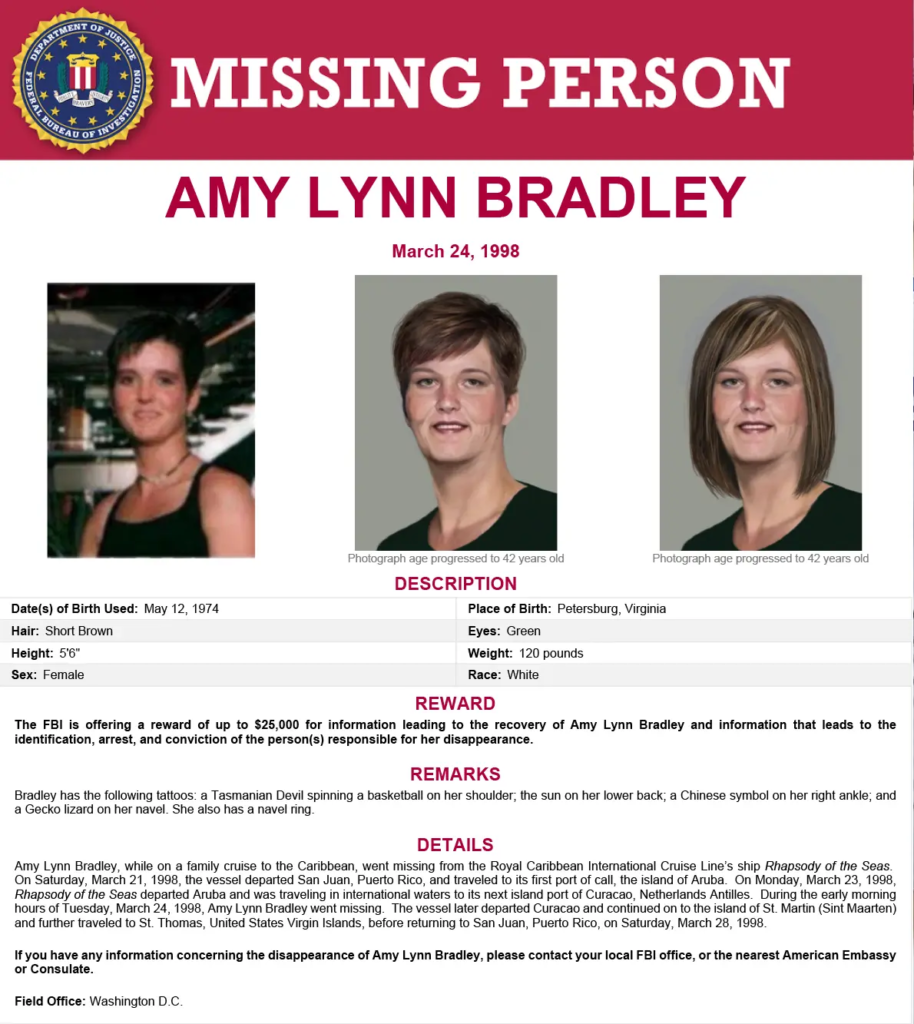
The ship was forty miles from Curaçao. Amy Lynn Bradley was 23 years old, 5 feet 7 inches tall, a trained lifeguard, and a college athlete who had spent her life in the water. She was wearing no shoes. She left behind her sandals, her passport, her wallet, and every plan she had made for the life waiting for her back home. She has not been seen since.
A Life Built for the Future
Amy Lynn Bradley was born on May 12, 1974, in Petersburg, Virginia, and grew up in Chesterfield County, about 25 miles south of Richmond. At L.C. Bird High School she was already a standout athlete. Longwood University recruited her on a full basketball scholarship, and she graduated in December 1996 with a degree in sports psychology. She was planning to pursue a master’s degree when the cruise was booked.
By the spring of 1998, Amy was working at Ruth’s Chris Steak House but had reduced her hours in anticipation of starting a new position at a computer consulting firm. She had lined up an apartment. She was taking in a dog named Daisy. She bought 15 rolls of film for the trip, planning a collage when she returned, and mailed postcards to friends from the ports. She was not a woman on the edge. She was a woman accelerating into something.
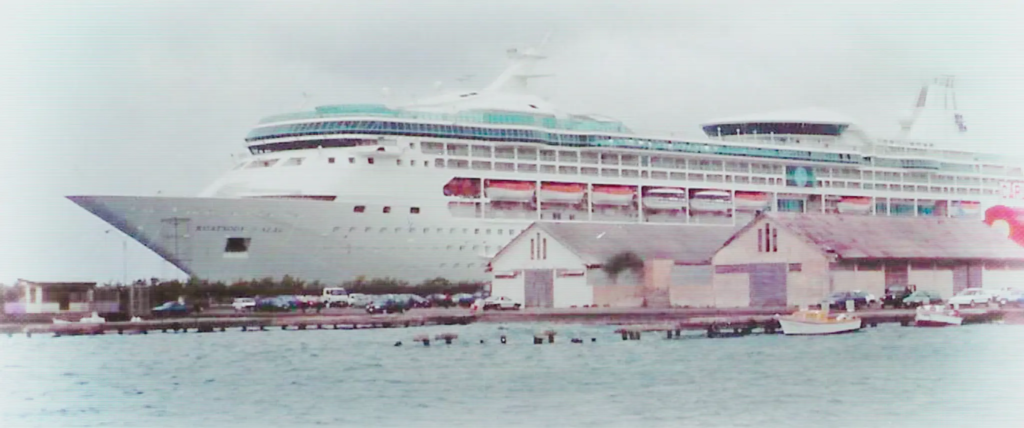
Her father, Ron, an insurance executive, had won an all-expenses-paid Caribbean cruise from his employer. On March 21, 1998, the family, Ron and Iva Bradley and their adult children, Amy and her 21-year-old brother Brad, flew to San Juan, Puerto Rico, and boarded the Rhapsody of the Seas. The ship was bound for Aruba and then Curaçao. Amy had a known fear of heights and was initially apprehensive about the size of the vessel and the open ocean. She boarded anyway, in part because Brad had just come home from college and she was glad to have him there.
The Last Night
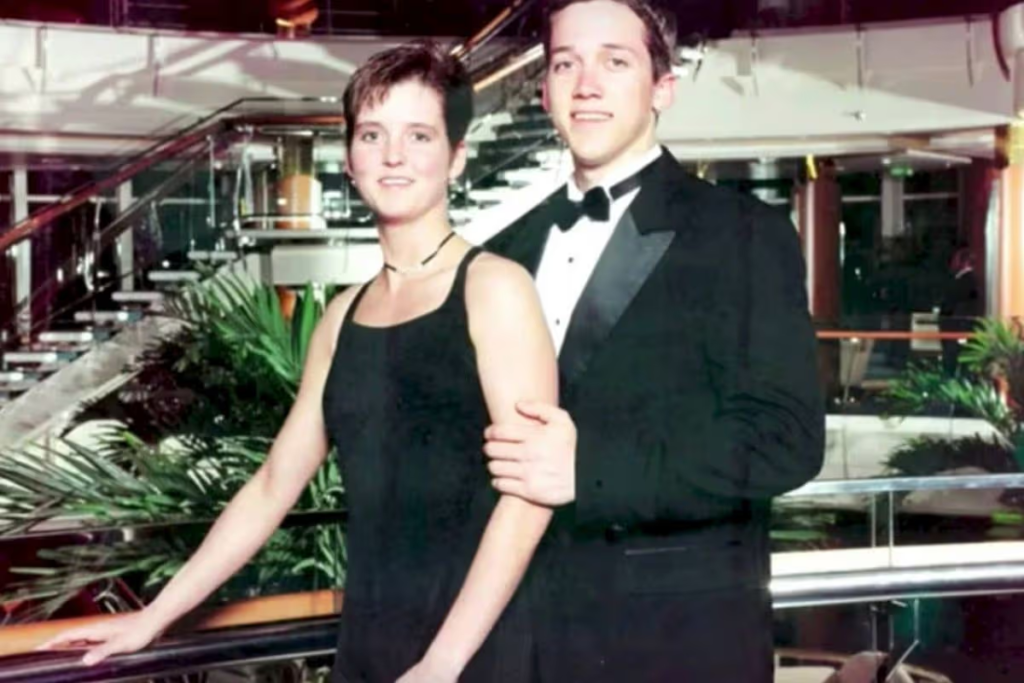
On the evening of March 23, the ship departed Aruba and sailed toward Curaçao. Amy and Brad spent the night at a Mardi Gras-themed disco on the ninth-floor deck, drinking and dancing with the ship’s onboard band, Blue Orchid. The ship’s videographer, Chris Fenwick, captured footage of the night. In it, Amy appears loose and happy, dancing close with Blue Orchid’s bass player, Alister Douglas, known to the band and crew as Yellow.
Douglas later told investigators he had left the party at approximately 1:00 a.m. The footage contradicted that account. Three separate witnesses would later place him with Amy on the upper deck between 5:30 and 5:45 a.m., after the ship had begun its approach to Curaçao. Those witnesses said they saw Douglas hand Amy a drink. They saw the two of them arrive at an elevator together. Then they saw Douglas leave the upper deck alone, shortly after 6:00 a.m.
Brad had returned to the cabin first. The ship’s computerized door lock system recorded him entering at 3:35 a.m. Amy followed five minutes later, at 3:40. The two of them sat on the balcony and talked for a while. Brad went to sleep. Amy stayed up. That is the last anyone in her family saw of her.
The Search That Started Too Late
When Ron Bradley could not find his daughter at 6:00 a.m., he searched the common areas of the ship before waking the rest of the family at 6:30. They went immediately to the purser’s office and pleaded with the crew to stop disembarkation and make a shipwide announcement. The purser’s office told them it was too early for that.
The announcement finally came at 7:50 a.m.: ‘Will Amy Bradley please come to the purser’s desk?’ By that point, a majority of the ship’s 2,000 passengers had already disembarked onto the docks of Curaçao. A ship-wide search conducted between noon and 1:00 p.m. found nothing. Investigators and family members have since identified the delay as a critical failure, one that may have closed the window in which Amy could have been found.
Before any announcement had been made, Brad Bradley was approached by Alister Douglas. According to Brad, Douglas said, ‘Hey man, I’m sorry to hear about your sister.’ No one outside the immediate family knew yet that Amy was missing. Brad later told investigators the timing was suspicious. The FBI interviewed Douglas and administered a polygraph. Royal Caribbean reported that he passed. Ron Bradley watched Douglas emerge from that interview smiling, thumbs up to his band members. ‘I knew he had been with Amy,’ Ron told reporters.
The Dutch Caribbean Coast Guard launched a four-day search involving three helicopters and a radar plane, ending on March 27. Royal Caribbean chartered a private vessel to continue looking after the official effort concluded. No trace of Amy was found in the water. No body. No clothing. No physical evidence of any kind.
Sightings Across the Caribbean
One month after the disappearance, the Bradley family returned to Curaçao on their own. A cab driver approached them and claimed he had seen Amy on the morning of March 24, running through the parking lot near the dock, apparently looking for a phone. He remembered her distinctive green eyes, which matched the reward poster. His account was never corroborated by authorities.
In August 1998, two Canadian divers reported seeing a woman they believed to be Amy at Playa Porto Marie, a diving beach on Curaçao. Witness David Carmichael said the woman was with two aggressive men, one of whom matched Alister Douglas’s physical description. When Carmichael spoke English to a friend nearby, the woman reportedly turned and began walking toward him. The man resembling Douglas then stepped into view and steered her back toward the beach bar. Carmichael said the woman kept looking at him and then looking down, as though trying to signal something without being seen doing it. He and his companion were two feet away and accurately described both her eye color and her tattoos. Carmichael later flew to Virginia to meet the Bradley family. The FBI investigated and could not corroborate the sighting.
In January 1999, U.S. Navy Petty Officer William Hefner reported that a woman had approached him at a brothel in Curaçao, identified herself as Amy Bradley, and told him she was being held against her will. She reportedly told Hefner she had left the ship to seek drugs and had not been able to leave since. Hefner stayed silent for three years, until after his retirement from the Navy, out of concern about how the nature of his visit would affect his career. He contacted the Bradley family in May 2002. The FBI investigated; the brothel had since burned down. No evidence could be recovered.
In March 2005, a woman named Judy Maurer said she encountered someone she believed to be Amy in a department store restroom in Bridgetown, Barbados. Maurer said the woman entered with four men, spoke quietly about a ‘deal,’ and at one point asked the men if they could ‘stop and see the children.’ When the men stepped out, the woman told Maurer her name was Amy and said she was from West Virginia, close enough to Virginia that investigators took note. Composite sketches were released. No arrest followed.
In April 2003, witnesses in San Francisco claimed to have spotted a woman matching Amy’s description watching a street musician, flanked by two men. When the witnesses apparently recognized her and made eye contact, the men seized her and left. The woman reportedly cast what witnesses described as a pleading look as she was taken away. The FBI released composite sketches of both men. The case remained open.
The Photograph
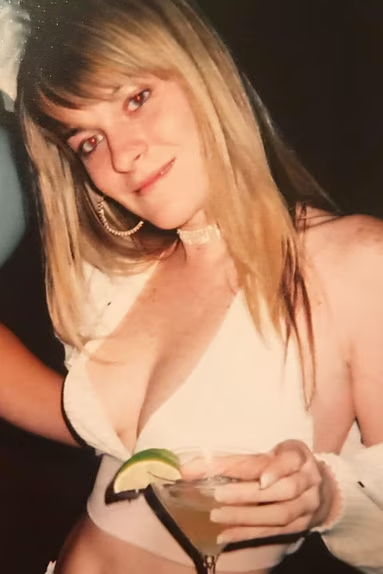
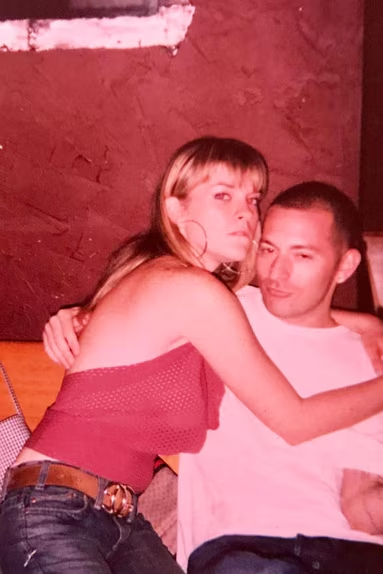
In 2005, two photographs surfaced online. They had been discovered by a member of an organization that monitors websites featuring sex workers. The images showed a woman listed under the name ‘Jas.’ The woman appeared, according to those who viewed the photographs, distraught and despondent. The Bradley family received copies. The images were shown on a November 2005 episode of Dr. Phil, alongside the family’s account of Amy’s disappearance.
FBI Special Agent Erin Sheridan confirmed the bureau investigated the photographs but acknowledged the difficulty: digital alteration was common and hard to detect. A facial recognition analyst later reviewed the images independently and concluded, according to investigators on the case, that the woman depicted was likely Amy Bradley. The FBI could not confirm it. The origin of the photographs was never established.
Exploitation and a Legal Death
The Bradley family’s desperation made them a target. In the fall of 1999, they were contacted by a man named Frank Jones, who claimed to be a former U.S. Army Special Forces officer with a team capable of extracting Amy from where she was allegedly being held. Jones told the family he had confirmed sightings of Amy at a compound in Colombia, guarded by armed personnel. He provided accurate descriptions of her tattoos. He repeated, word for word, the lullaby that Iva Bradley used to sing to her daughter. The family sent Jones a total of $210,000 over several months.
The rescue never came. Federal prosecutors in Richmond charged Jones in February 2002 with defrauding the Bradleys of $24,444 and the National Missing Children’s Organization of $186,416. Jones pleaded guilty to mail fraud in April 2002 and was sentenced to five years in federal prison.
In 2010, a human jawbone washed ashore in Aruba. It was initially examined in connection with the 2005 disappearance of Natalee Holloway, but testing ruled out that connection. The remains were consistent with a Caucasian woman. No DNA testing was performed to determine whether the bone could have belonged to Amy Bradley. On March 24, 2010, exactly twelve years after she vanished, a court declared Amy Lynn Bradley legally dead in absentia. No body had been recovered. No definitive cause of death had been established. No one had been charged with anything.
What Investigators Believed
By November 1998, FBI Special Agent James Weber told reporters: ‘We’ve pursued every angle, from whether there was foul play, a suicide or an accident, and we have basically not gotten anywhere.’ The early official theories, that Amy had fallen overboard or taken her own life, were never supported by evidence. Investigators stated publicly that there was ‘no evidence that Amy, a trained lifeguard, fell overboard, was pushed, or committed suicide.’
The theory that has persisted longest, and that the Bradley family has consistently advocated, is that Amy was abducted from the Rhapsody of the Seas and trafficked into sexual slavery in the Caribbean, possibly with the involvement of ship personnel. The evidence supporting it is fragmentary and unconfirmed, but its individual pieces have never fully collapsed: the sightings at Playa Porto Marie, Hefner’s account at the brothel, the Barbados encounter, the photographs sent to the family. The FBI’s Caribbean-region theory was summarized by Amy’s mother in her public writing: ‘It is believed that there are certain individuals in the Caribbean, and possibly even in South America, who have knowledge of Amy’s disappearance.’
A separate line of suspicion has focused on the ship itself. The professional photographer aboard printed photos from throughout the cruise for sale at a ship stall. The Bradley family could not find a single photograph of Amy anywhere in the collection. They came to believe the photos had been removed deliberately. A ship waiter had also, on multiple occasions during the voyage, approached other family members asking them to pass notes to Amy, inviting her to meet him for drinks once they reached shore. Neither detail was ever connected to the disappearance by investigators.
In July 2025, Netflix released a three-part documentary series, Amy Bradley Is Missing, revisiting the evidence and the family’s decades-long search. The release generated hundreds of new tips to the FBI. According to a source cited by The Hollywood Reporter, three of those tips were considered ‘very significant’ by investigators, providing new structure to the trafficking theory. The FBI, as of the documentary’s release, maintained an open case file. The agency offers a $25,000 reward for information leading to a resolution. The Bradley family separately offers $250,000 for information leading to Amy’s safe return, and $50,000 for confirmed information about her current location.
Amy Lynn Bradley was 23 years old, 15 rolls of film in her bag, a dog waiting at home, a new job starting the week she got back. She had her whole future arranged. Whatever happened on that ship in the early hours of March 24, 1998, took all of it from her, and took it so completely that after 27 years, the people who love her most still do not know where she went.
