
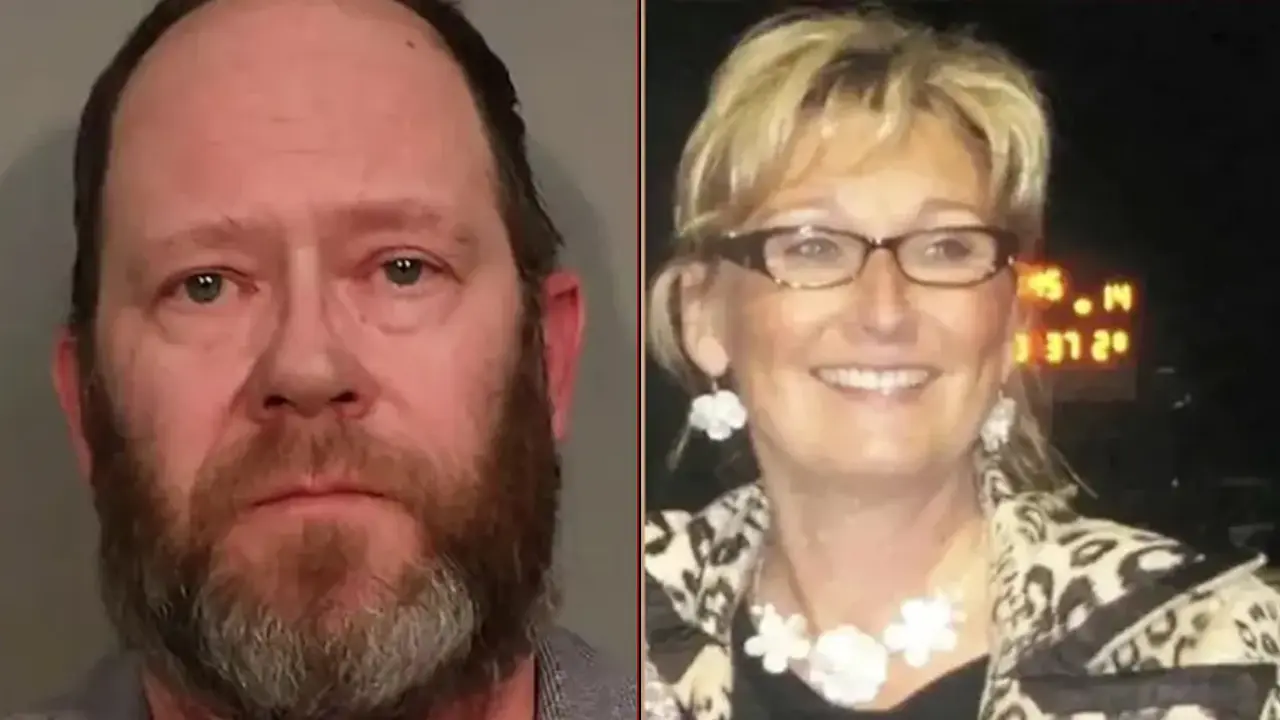
On the morning of April 25, 2021, Rikkell Bock drove the half-mile from her house to her mother’s farm in Franklin Township, Michigan, for their weekly Sunday breakfast. Both of Dee Warner’s cars sat in the driveway. The kitchen was empty. Dee’s phone went to voicemail. Bock would later tell investigators that her mother treated her phone like an extension of her hand. A missed call was not something Dee Warner did.
She would never come home.
The marriage was falling apart
Dee Ann Warner, 52, had spent the last weeks of her life in an increasingly volatile household. She and her husband, Dale Warner, ran three businesses from their Lenawee County property: a trucking operation with roughly 15 employees, a crop farm, and a chemical company that sold fertilizer and seed. By April 2021, the partnership was fracturing. Daily arguments over money and alleged infidelity had corroded what remained of the marriage.
Dee had told her children she wanted a divorce and was ready to sell the family businesses. Dale, a prominent Tecumseh farmer who had been married to Dee since 2006, had responded by spying on her. Police would later find handwritten notes he had compiled tracking his wife’s activities, opinions, and private text conversations.
The night before Dee disappeared, the couple fought again. Dee had discovered that Dale told one of their workers she was taking Xanax, a depressant. Her son Zack Bock testified that she had threatened divorce before but now seemed especially resolved. The divorce was not a threat anymore. It was a plan.
Dale told police he last saw his wife asleep on the sofa when he left for work at 6 a.m. He said he was not alarmed because her makeup bag and hair dryer were gone, and because she had left after arguments before. His attorney would later maintain he had no involvement in her disappearance and had told police as much, repeatedly.
No one who knew Dee Warner believed that.
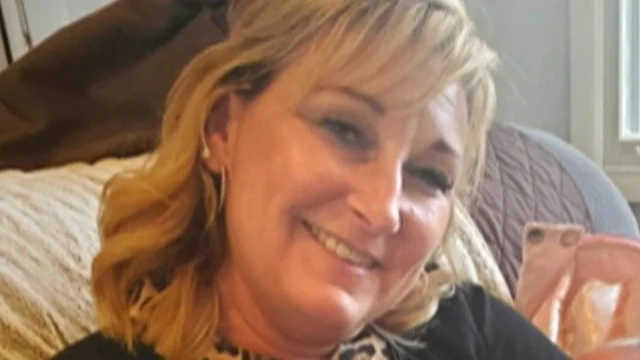
The family began to search
Rikkell Bock called the Lenawee County Sheriff’s Office on the day her mother failed to appear. A deputy came to the farm and spoke with Dale, who repeated the story about the fight and the missing makeup bag. Dee’s phone records showed no activity after the night of April 24. Her bank account had no transactions. No security camera on the property captured her leaving.
Dee’s brother, Gregg Hardy, organized a foot search of the surrounding farmland the following weekend with roughly 50 volunteers. Hardy told CBS News that when Dale showed up on a four-wheeler that day, he did not participate. That gut feeling hardened into certainty over the following weeks. Hardy says he confronted Dale about six weeks after Dee disappeared, accusing him of lying. Dale told him the investigation felt a little slow but acceptable. Hardy vowed publicly to prove what had happened.
Law enforcement searched the Warners’ properties multiple times. Dale spoke voluntarily with police on repeated occasions and allowed the searches. No physical evidence of violence was found.
The campaign for justice grew
With no arrest and no body, Hardy began building public pressure. In the fall of 2021, he organized a vigil at his farm and publicly accused Dale of fabricating the story about Dee leaving on her own. That winter, his wife Shelley Hardy was watching a “48 Hours” episode about a no-body murder case when she heard attorney and investigator Billy Little Jr. tell the camera that you do not get to get away with murder because you are good at disposing of bodies.
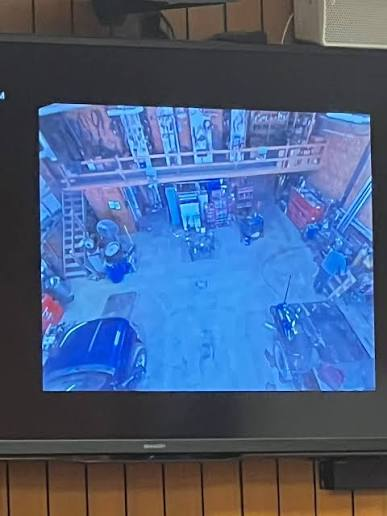
Hardy tracked down Little and brought him to Lenawee County. Little walked properties, interviewed potential witnesses, and flew drones over the farmland. He also advised Hardy on media strategy. Together, they funded a billboard at a busy intersection near the Warner farm that read: “Help Dale Find Dee.” The sarcasm was deliberate. So was the pressure.
“Justice for Dee” signs spread across Lenawee County. In August 2022, the Michigan State Police took over the investigation from the county sheriff at the sheriff’s own request. The FBI had been assisting since earlier in the case.
In November 2023, with no body and a largely circumstantial case, state police arrested Dale Warner and charged him with open homicide and tampering with evidence. He pleaded not guilty.
Police found Dee’s body
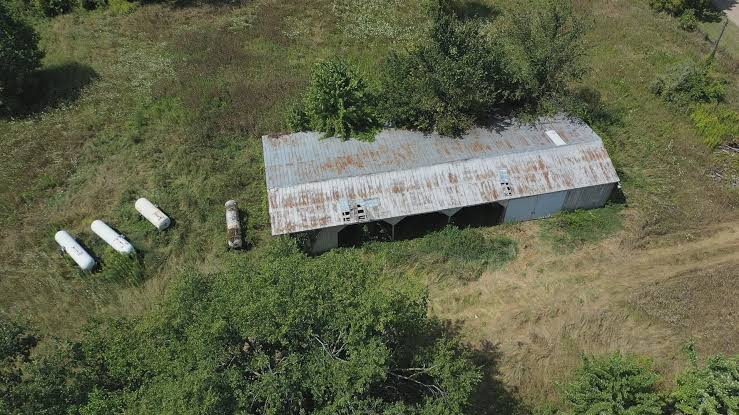
Nine months after the arrest, in August 2024, investigators executing a search warrant on a Warner farm in Tipton, several miles from the main Munger Road home near Tecumseh, made a discovery inside a storage building. A fertilizer tank designed to hold anhydrous ammonia had been cut open, resealed, and repainted. A tag had been affixed to it reading “Do not use.” Inside was Dee Warner. She was dressed in her pajamas, wrapped in a tarp, with duct tape across her face and neck.
Dental records confirmed the remains were hers.
A medical examiner testified that Dee Warner died from strangulation and blunt force trauma to the head. Prosecutors would later tell the jury that Dale killed her, moved her body with farming equipment, and welded her inside the tank. He had hidden her less than two miles from where they lived.
The trial lasted five weeks
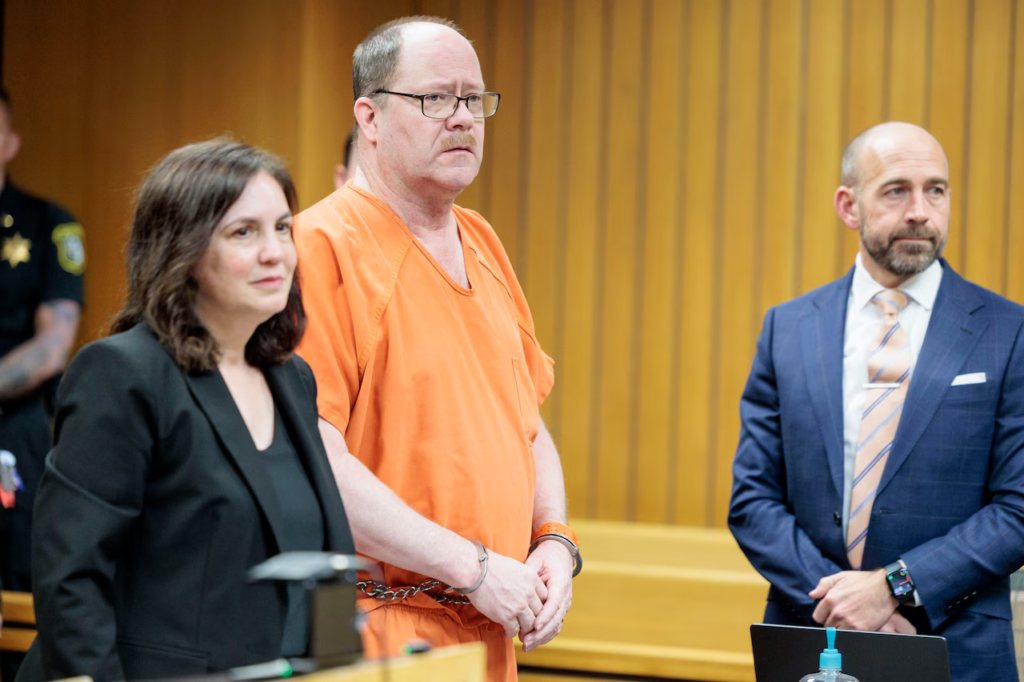
Dale Warner’s trial opened in Lenawee County Circuit Court in Adrian on February 12, 2026. Prosecutor Jacqueline Wyse presented a case built on circumstantial evidence: the tank, the dental records, the pattern of domestic violence, the surveillance notes, the financial motive, and the absence of any credible account of Dee leaving on her own.
Massage therapist Stacey Brodie testified that she had observed bruises on Dee’s body eight to ten times, including a mark on her hip that resembled a handprint. Dale had told police the marital arguments would get loud but never physical. Rikkell Bock testified that her mother had described the relationship as extremely toxic and had expressed fear about what Dale might do. Zack Bock testified that in the hours before she vanished, Dee had texted him about the trucking business: “I’m done with this. I’m signing everything over to you.”
Defense attorney Mary Chartier argued there was no physical evidence directly tying Dale Warner to his wife’s death. She urged the jury to consider whether the investigation had overlooked other relevant information and whether the case against her client rested on theory rather than proof.
A jury of seven men and five women deliberated for nine hours across two days.
The jury returned a verdict
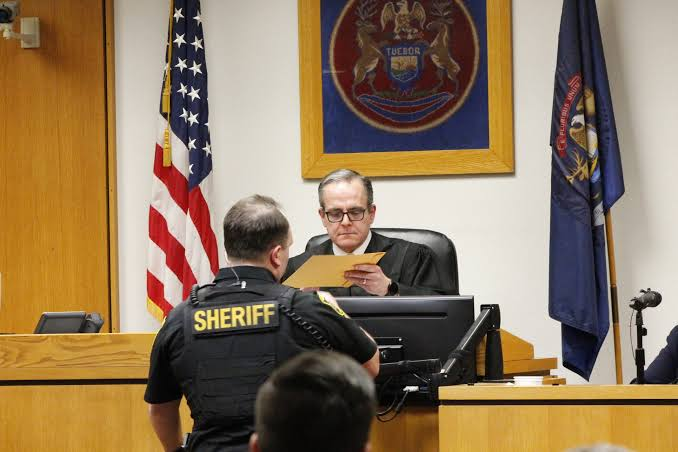
On March 10, 2026, Lenawee County Circuit Judge Michael Olsaver read the verdict in court in Adrian. Dale Warner buckled slightly and looked down as the clerk announced the finding: guilty of second-degree murder and guilty of tampering with evidence. Defense attorney Chartier put a hand on his arm as he became teary-eyed.
In the gallery, Dee Warner’s family quietly cried and held each other.
Gregg Hardy spoke to reporters outside. He had spent nearly five years organizing vigils, funding billboards, lobbying state police, and refusing to let his sister’s disappearance fade from public attention. He said he was sometimes close to despair when the investigation seemed stalled. “I fought every day for five years,” he said. “It was very difficult to get validation. It took nearly to the very end.”
He said he now felt exuberant. He called the verdict a victory for Dee.
Hardy said he was disappointed Dale was not found guilty of first-degree murder.
Dale Warner received 70 years
On May 7, 2026, Judge Olsaver sentenced Dale Warner to 60 years in prison for the murder of Dee Warner and an additional 10 years for tampering with evidence, with the sentences to run consecutively. At 58 years old, Dale Warner will not be eligible for parole for 33 years.
“Unfortunately, this is one of those tragedies where the chapter doesn’t always end,” Olsaver said before announcing the sentence.
Dale Warner’s son, Jaron Warner, had been arrested in March 2025 on charges of tampering with evidence and accessory after the fact, raising questions about whether someone had helped conceal or protect evidence. Those charges were dropped in May 2025, leaving Dale as the only defendant convicted in his wife’s death.
Dee Warner’s estate, represented by Rikkell Bock, filed a lawsuit under Michigan’s Wrongful Death Act in May 2025, arguing that approximately 4,000 acres of Lenawee County land and the couple’s multiple businesses did not belong to Dale at the time of Dee’s death.
Dee Ann Warner was 52 years old. She was a businesswoman described by people who knew her as tough, generous, and hardworking. She had five children. On Sunday mornings, she made breakfast for her daughter.
