
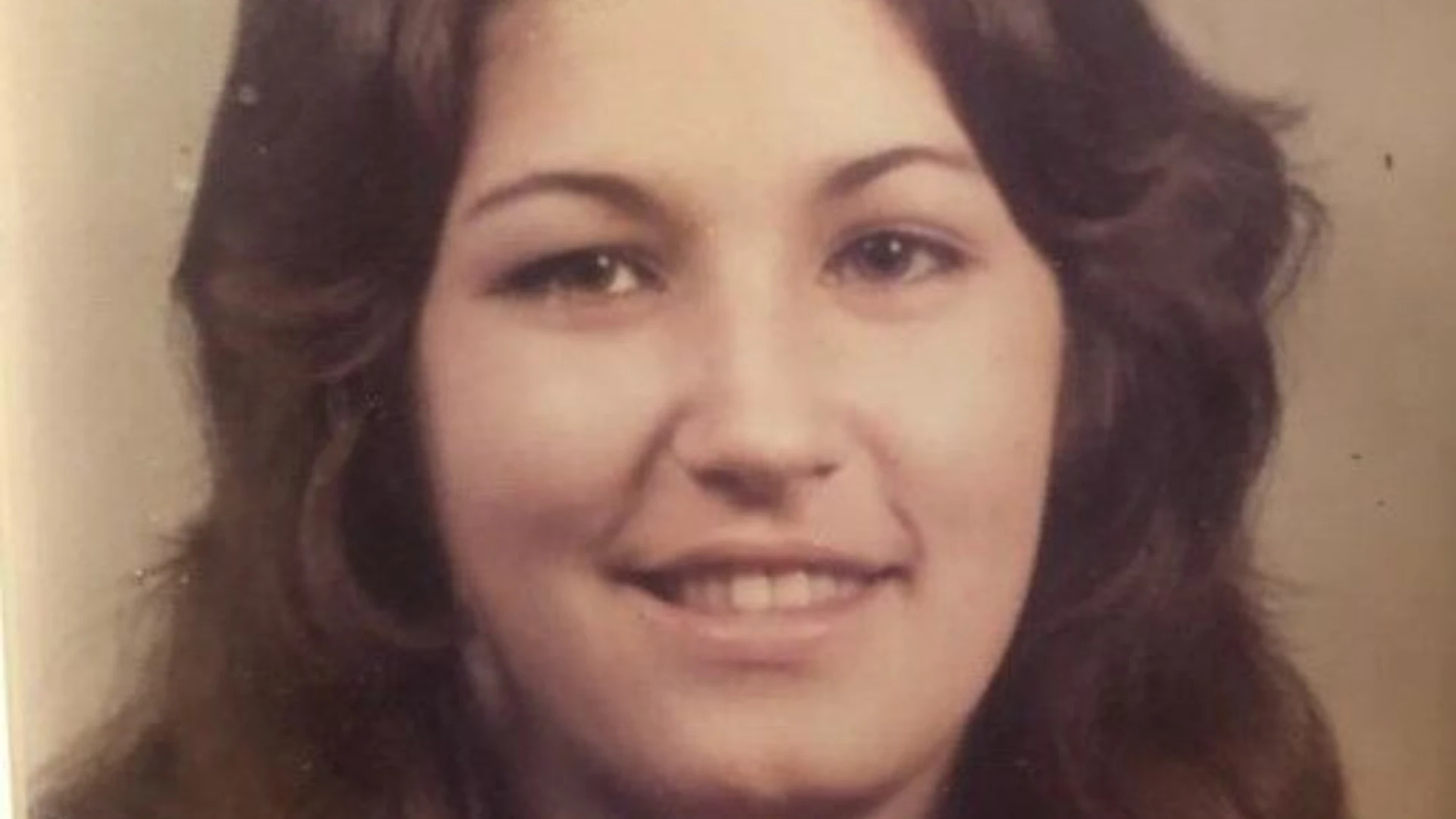
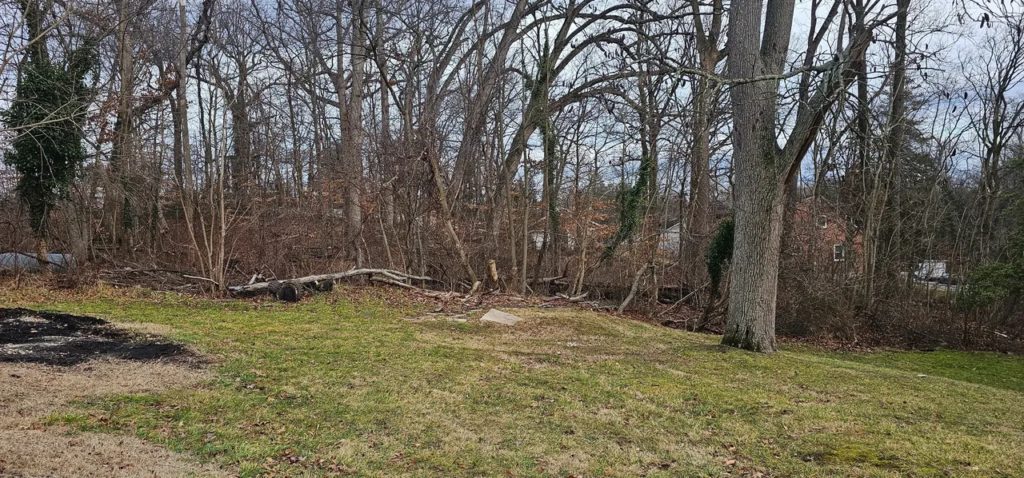
On the morning of September 12, 1976, a woman and her young son drove along Dogwood Road in Woodlawn, Maryland, toward church. They passed a van parked on the roadside and continued on without thinking much of it. Less than a mile away, near the back gate of Lorraine Park Cemetery, someone had left a body wrapped in a white sheet.
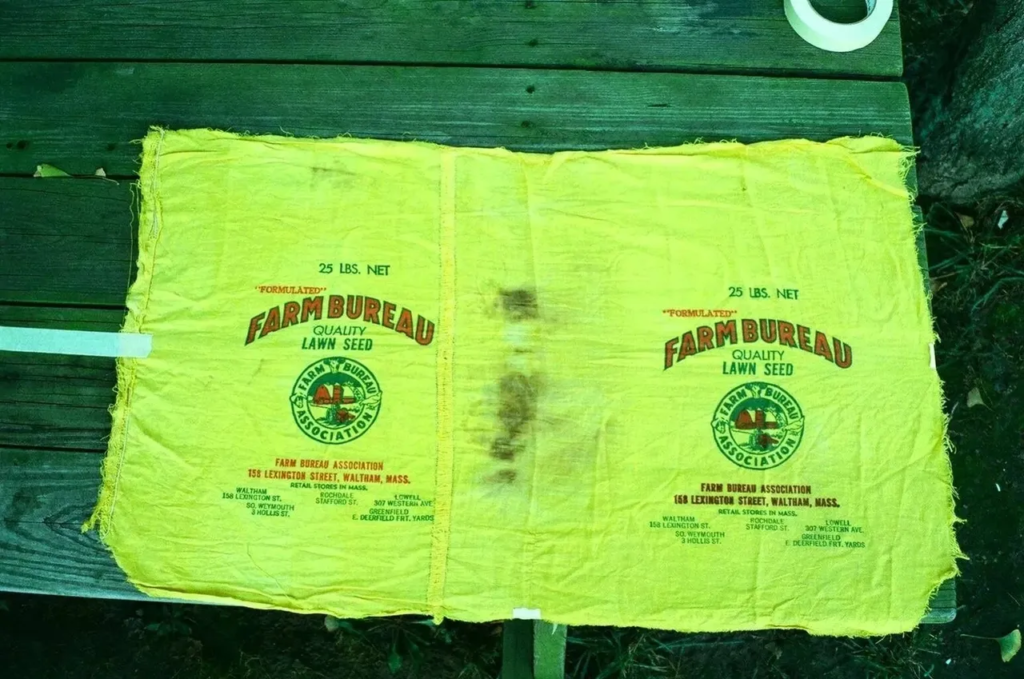
Police received the call at 10:20 a.m. What they found was a young woman, hands tied behind her back with medical bandage material in noticeably high-quality knots, her head encased in three layers of cloth. She had been beaten, strangled, and raped with enough violence to cause bleeding through her clothing. A piece of the grass seed bag covering her face had been forced into her throat. She had almost certainly been killed somewhere else and driven to this spot. She carried no identification.
For the next 45 years, no one knew her name.

The Scene on Dogwood Road
Investigators worked the scene carefully. The outermost layer covering the victim’s head was a yellow lawn seed bag printed with the words “Farm Bureau Association Grass Seed, Lexington, Massachusetts,” produced by the Beamus Bag Company in Buffalo, New York. That bag had been exclusively distributed to five locations in Massachusetts and had been discontinued in 1974. Beneath it was a dark blue and white paisley bandana, then an orange and white bandana with holes cut for the eyes and nose. All three had been secured at the back of her neck with a square knot.
The woman and her son who had seen the van told police it was parked there at approximately 9:20 a.m. Her son, a car enthusiast, identified it as a Ford Econoline. Witnesses who had traveled Dogwood Road before that time reported no vehicle and no body. The van had almost certainly carried the killer.
A postmortem examination established that the victim had been dead for roughly 24 hours before she was found, placing her death on the evening of September 11, 1976. She was between 5 feet 6 inches and 5 feet 9 inches tall, weighed between 149 and 159 pounds, and had brown eyes and wavy, dark brown to black shoulder-length hair with an olive complexion. Her blood type was O positive. Toxicology found an extremely large amount of chlorpromazine in her stomach. The drug is used to treat schizophrenia but also functions as a powerful tranquilizer, and the quantity found in her system led investigators to theorize a connection to a mental institution. The white sheet she had been wrapped in was consistent with linens used at inpatient psychiatric facilities.
Evidence Without a Name
The physical evidence painted a picture without giving a face. The victim wore tan-yellow jeans, a white and tan short-sleeve shirt, a white bra, striped knee-high socks in brown, maroon, and cream. Near her body was a single light tan moccasin with twine used as laces and a rubber sole, believed to have been worn by her. Around her neck was a rawhide string with a small turquoise bead. Attached to her clothing with a safety pin were two brass keys, one stamped “DB 9212” and manufactured in Fitchburg, Massachusetts, one designed for a night latch and one appearing to be a standard house key.
Her dental work included the removal of three molars and fillings in the remaining five teeth. The quality of that work led detectives to conclude she was not from a poor background. One other tooth was crooked. On her left arm was a poorly tattooed pair of letters, likely initials, believed to be JP, SS, JB, or a similar combination. She had her ears pierced, a widow’s peak on her forehead, and a scar on her upper right thigh.
Forensic pollen analysis of the items found with the body pointed toward a densely populated area, Boston or New York City. Cedar and hemlock pollen suggested she had spent time somewhere like the New York Botanical Garden or near Harvard University. The Massachusetts origins of both the seed bag and one of her keys reinforced a possible connection to New England. And yet the body had been left in Baltimore County, Maryland, more than 100 miles from Alexandria, Virginia. No one could say why.
A Family in Alexandria
Margaret Ann Fetterolf was born on December 27, 1959, in Japan, to Sergeant John Edwards Fetterolf and Noo Yoshida Fetterolf. The family settled in Alexandria, Virginia. She had two brothers, Edward and Leo. At the time of her disappearance she was a student at Hayfield Secondary School.
According to her younger brother Edward, Margaret had been running away from home since she was 12 years old. When her behavior became unmanageable, she was placed in foster homes. She ran away from those too. The family’s experience became, in Edward’s words, “a revolving door.” She would beg to come home, her parents would relent, and she would disappear again.
In the late summer of 1975, Margaret ran away once more. She was 15. At first her family expected her to reappear, as she always had. Birthdays passed. Holidays passed. The expectation became hope. The hope became dread. The family never heard from her again. No one in the immediate Fetterolf family, still living in Alexandria, ever connected the news coverage of Woodlawn Jane Doe to their missing daughter and sister. The case had been covered on crime shows, including a 2010 episode of America’s Most Wanted, and in public campaigns. Somehow, it never reached them.
Thirty Years of Dead Ends
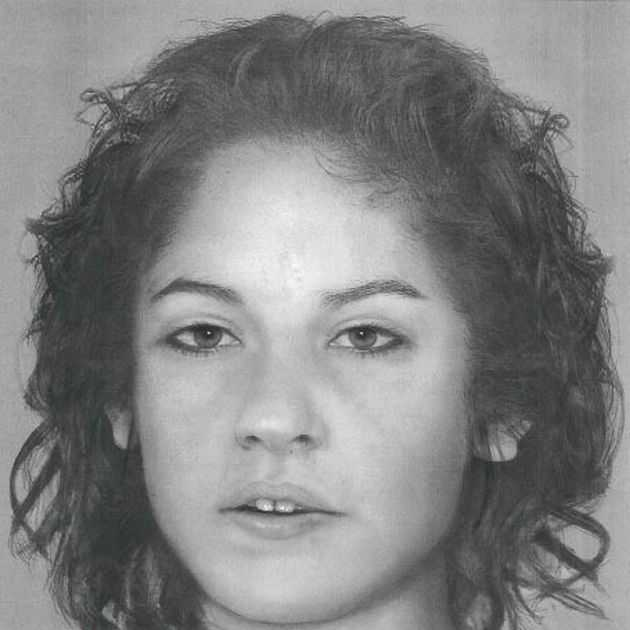
The investigation stalled almost immediately. Over the following decades, police released multiple facial reconstructions of the victim, hoping recognition would come. The National Center for Missing and Exploited Children produced three separate versions. A local forensic artist named Eve Grant created an age-regression image in case someone had known Margaret at a younger age. Numerous missing women from across the United States were identified and ruled out. A notable case was that of Maria “Mia” Anjiras, a teenager who had run away from her Connecticut home in February 1976. A cash reward of two thousand dollars was offered for information. No productive leads emerged.
In June 2006, biological testing of an article of clothing detected semen. The material was submitted for analysis. It was not enough to identify a victim or a suspect. The case went cold again.
In 2015, with the assistance of the National Center for Missing and Exploited Children, pollen testing pointed Baltimore County detectives toward the Boston area. The following year, the National Center released a new facial reconstruction and put forward a possible identification: a girl known as Jasmine or Jazzy who may have immigrated from Central or South America and lived in Jamaica Plain, Boston. The lead was consistent with the physical evidence. It was never confirmed.

DNA Breaks the Case
In February 2021, working with the National Center for Missing and Exploited Children, Bode Technology, a forensic DNA firm based in Lorton, Virginia, extracted DNA from evidence that had been preserved from the original crime scene. The sample was degraded. Bode sent it to Othram, a DNA laboratory in Texas, which used a method called Forensic-Grade Genome Sequencing to build a genealogical profile from the compromised material. Othram returned the profile to Bode, whose genealogists began tracing family trees using public records and DNA matches uploaded to consumer genealogy databases.
Shannon McAdoo, a former bookkeeper living in Erie, Pennsylvania, had submitted her DNA to 23andMe. She had no idea her results would close a 45-year-old homicide. The profile Bode’s genealogists were building included her as a match. Working through the family tree, investigators traced a line back to a missing teenager from Alexandria, Virginia. They interviewed relatives, collected additional DNA samples, and confirmed what the genetic evidence had indicated. The Woodlawn Jane Doe was Margaret Fetterolf. She was 16 years old when she was killed.
Baltimore County Police announced the identification on September 15, 2021. Edward Fetterolf called Shannon McAdoo to thank her. She later told The Washington Post: “I know people are concerned about the whole DNA genetic information thing. I get it. But I just think it’s important to encourage people to upload their DNA because we don’t know how many other people are out there waiting for an answer.”

The Murder Remains Unsolved
The identification answered one half of the mystery. The other half remains open. Investigators still do not know why Margaret was in the Baltimore area when she was killed. They do not know who the Ford Econoline van belonged to. They do not know who sedated her, beat her, forced material into her throat, strangled her with a ligature, wrapped her in an institutional sheet, and left her near a cemetery gate on a Sunday morning in September 1976.
As of 2025, no suspects have been identified or arrested. The case remains open and active. Baltimore County Police continue to seek anyone with information about Margaret’s life in the period before her death. No detail, investigators have said, is too small.
Margaret’s father passed away in 2018, never knowing what happened to his daughter. She is survived by her mother, her brothers Edward and Leo, their wives, and their children.
Anyone with information about the murder of Margaret Fetterolf is asked to contact Baltimore County detectives at 410-307-2020.
Margaret Fetterolf was 16 years old. She had been missing for a year before someone killed her and left her near a gate that led into a cemetery. It took the world 45 years to learn her name.
