
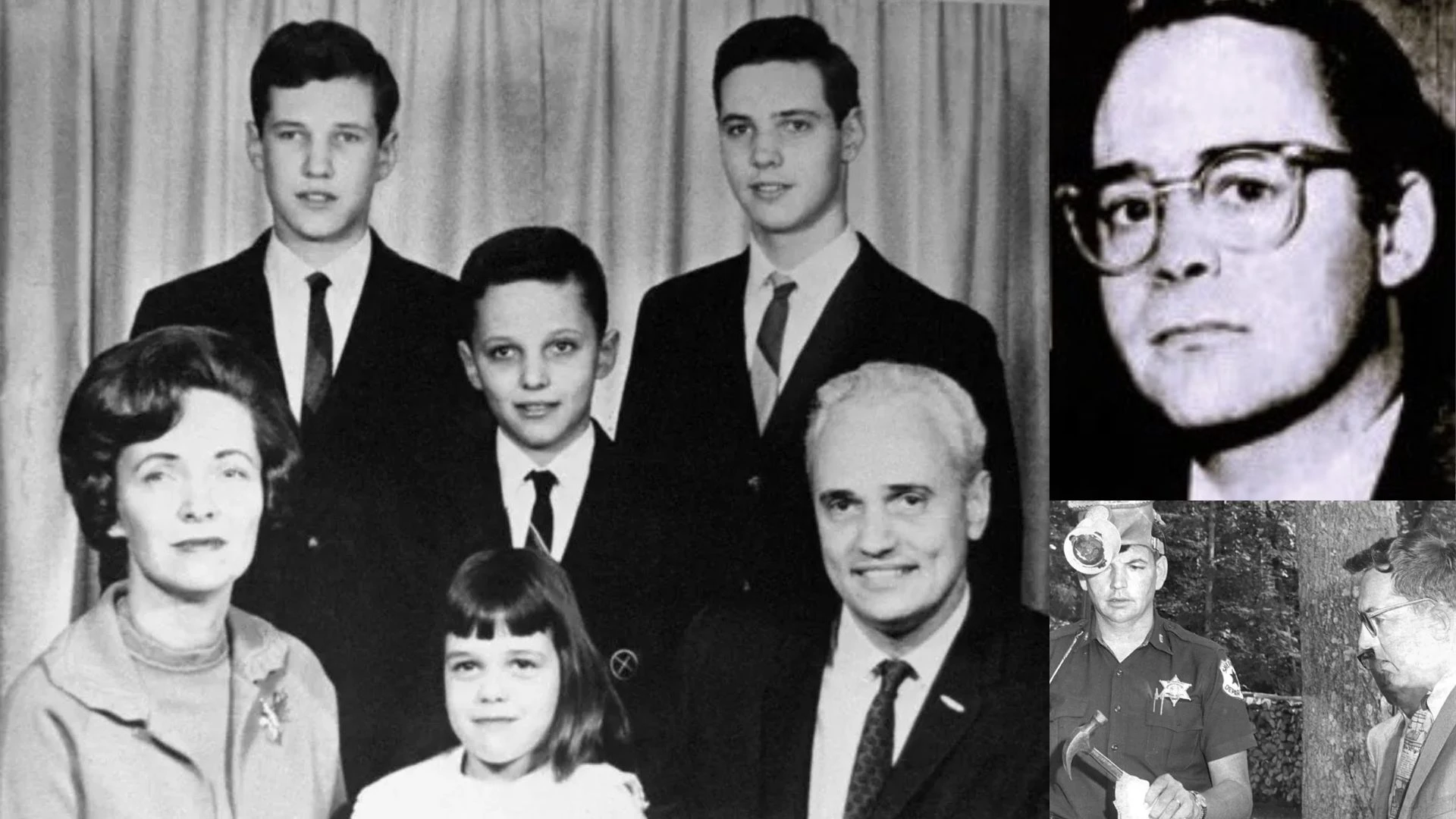
June 25, 1968 — Good Hart, Michigan. A folded paper towel pinned to a cottage door read, Be back by 7–10. Robison. It fluttered slightly in the lake breeze and gave no hint of what waited inside.
For nearly a month, no one questioned the note. The Robison family was known to travel and silence was common in the days before cell phones and email.
On July 22, the smell reached the neighbors. A group playing bridge at a nearby cottage noticed a heavy odor drifting through the pines and called caretaker Chauncey Bliss to investigate.
Bliss forced a window open and stepped inside. Moments later, he staggered back out, pale and speechless. Six members of the Robison family lay dead inside the summer home they called Summerset.
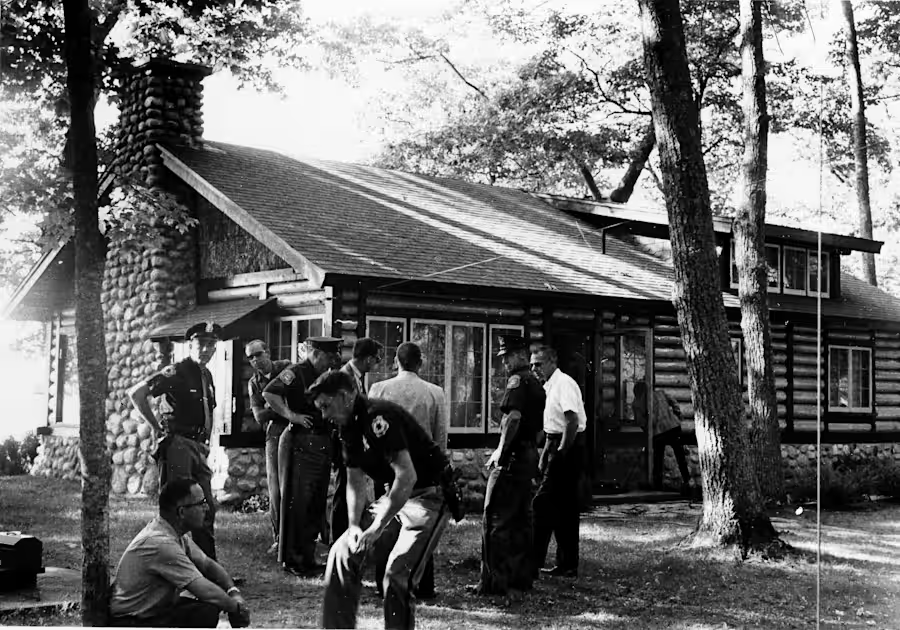
Police arrived within hours. Furniture was overturned, bullet holes cut through the windows, and a furnace burned in the middle of summer. The handwritten note still hung on the door.
The murders ended the peace of a place where people once left their keys in their cars. In Good Hart, the silence that followed would last for decades.
The Robison Family’s Summer Begins
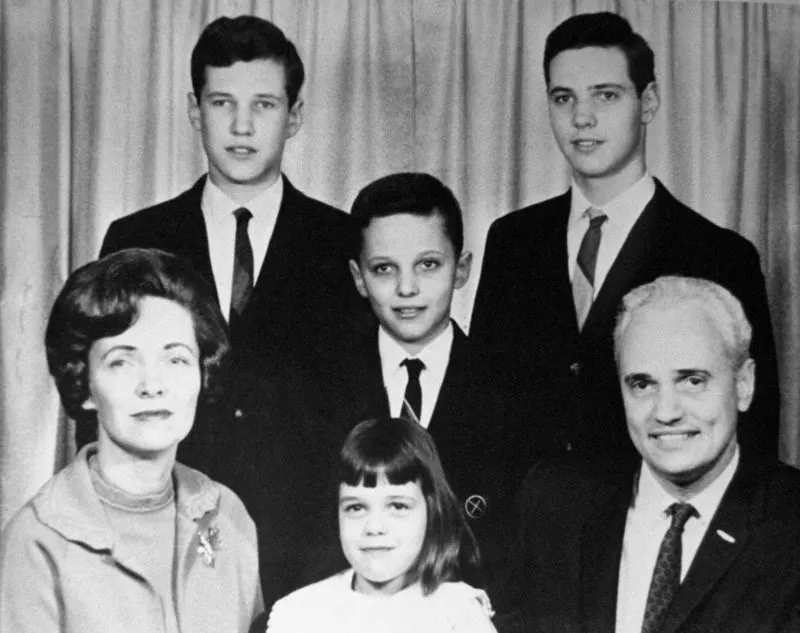
Richard Carl Robison was 42, a Detroit advertising executive who ran RC Associates and published the arts magazine Impresario. He and his wife, Shirley, lived in Lathrup Village with their four children Richard Jr., 19; Gary, 16; Randall, 12; and Susan, 7.
By 1968, their prosperity had bought them a second home on Lake Michigan, a cedar-shingled cottage called Summerset. On June 16, the family packed their station wagon and drove 280 miles north to Good Hart for a summer meant to mix work and rest.
Richard planned to manage his business remotely. Letters recovered later show he expected to review company finances and address irregularities while staying at the lake.
In Good Hart the family settled into routine shopping in Harbor Springs, church on Sundays, and regular visits with caretaker Chauncey Bliss, whose teenage son had recently died. Locals described them as polite and ordinary, the kind of family people waved to across a dock.
By late June, Richard was again calling Detroit about “missing checks.” On the afternoon of June 25, several workmen trimming trees near Summerset saw the family leaving around 4:30 p.m. That was the last verified sighting of any of them alive.
The Night of Violence
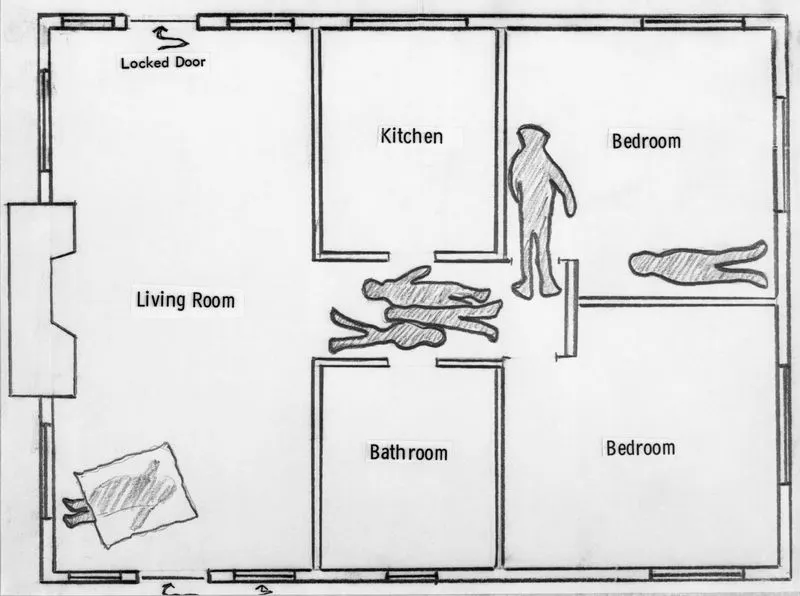
Investigators later reconstructed the attack through the evidence left inside the cottage. Sometime after the family returned on June 25, shots from a .22-caliber rifle pierced the rear window, striking Richard Robison and possibly one of the boys.
The shooter then entered through an unlocked lakeside door and moved through the rooms with a .25-caliber pistol. Each victim suffered multiple gunshot wounds to the head and chest at close range.
Richard and seven-year-old Susan also bore wounds from a claw hammer found at the scene. Detectives believed the extra blows were deliberate, meant to mislead or exaggerate the brutality for investigators.
There were no signs of forced entry or sexual assault. Shirley Robison’s body was partially unclothed and positioned apart from the others, a detail police later concluded had been staged to suggest robbery or assault.
The rest of the house showed a brief struggle. A chair was overturned, an ashtray still half-filled, a deck of cards scattered across the floor. Drawers were pulled open and a ring missing from Shirley’s finger, yet nothing else of value was taken.
Before leaving, the killer drew the curtains, taped cardboard over the bullet-riddled window, and switched on the furnace despite the June heat. The action accelerated decomposition and disguised the time of death.
On the front door, a note written on a paper towel read, Be back by 7-10. Robison. The doors were locked behind him.
The Grisly Discovery
For nearly four weeks, the cottage at Summerset sat quiet above Lake Michigan. Neighbors assumed the Robisons were traveling long absences weren’t unusual in 1968, when phone calls were costly and letters slow to arrive.
Mail began to pile up on the porch. The grass grew high. Then, on July 22, guests at a nearby bridge party noticed a foul odor drifting from the woods. They described it as thick and sweet, “like something dead under a porch.”
Caretaker Chauncey Bliss went to check the house. Finding the doors locked, he peered through a window and saw swarms of flies pressed against the glass. When he pried the frame open and climbed inside, he stopped almost immediately.
“The worst thing I ever saw,” he told police later. The bodies of Richard, Shirley, Richard Jr., Gary, Randall, and Susan lay inside, decomposed beyond recognition by weeks of summer heat and the running furnace.
Within hours, word reached town. Reporters, locals, and police converged on the property, drawn by the horror of the scene. Some entered the house before investigators could stop them.
By nightfall, the silence of Good Hart was broken by traffic, camera flashes, and whispered speculation. What had once been a family’s summer home had become Michigan’s largest crime scene.
A Contaminated Investigation
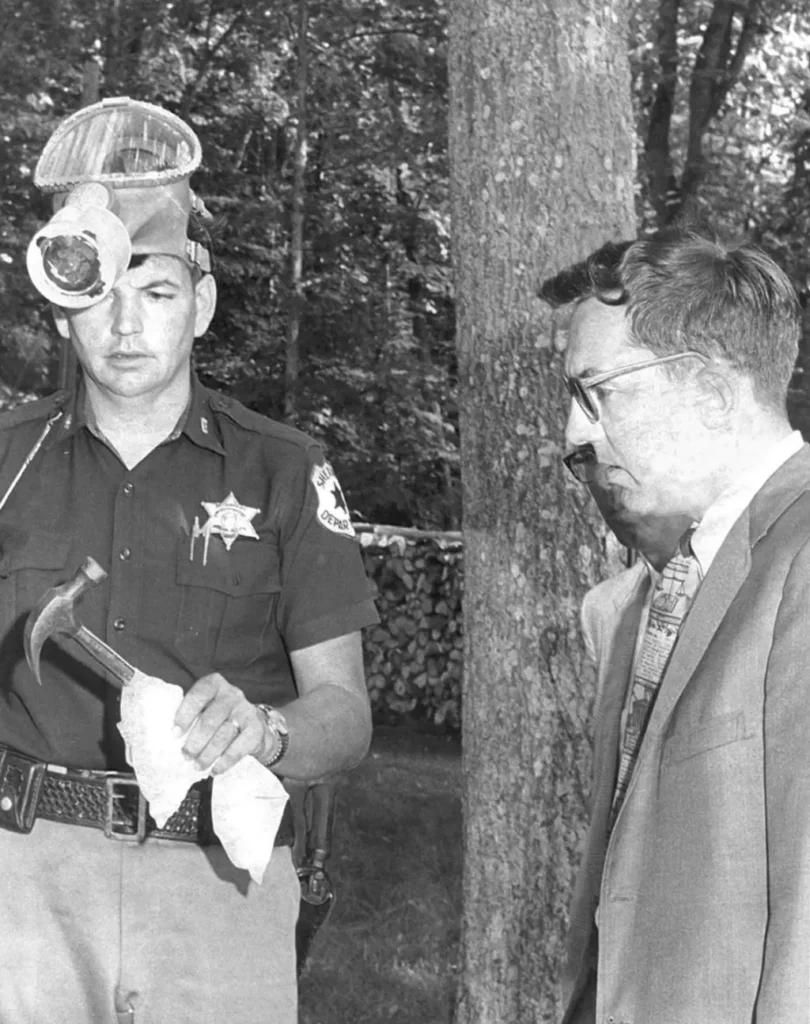
When law enforcement arrived, the investigation was already compromised. Sheriff John Flis was on his first vacation in eight years, leaving an undersheriff with one month of experience to manage the worst mass murder in Michigan’s history.
By the time state police reached Summerset, nearly twenty people had entered the cottage. Curious locals, reporters, and first responders had walked through the rooms, smearing fingerprints and overlapping footprints.
One deputy, trying to preserve the hammer used in the killings, wiped it clean of blood and any possible prints. The heat running inside the house had warped wood and destroyed trace evidence.
Despite the contamination, officers catalogued what remained fifteen spent shell casings, a bloody boot print near the hallway, and the paper-towel note still pinned to the door. They photographed bullet holes through the glass and the taped cardboard covering them.
Witness interviews began immediately. Several residents recalled hearing what sounded like “popping” or “firecrackers” on the night of June 25 but thought nothing of it. No one reported seeing strangers or unusual vehicles in the area.
The initial theories ranged from robbery to a traveling drifter. Some speculated about caretaker Chauncey Bliss, simply because he had discovered the bodies. He cooperated fully with police, passed polygraph tests, and was cleared.
Within days, investigators realized the evidence was fading faster than they could document it. The cottage’s heat, decay, and human interference had already erased most of what could prove who fired the shots.
The Suspect — Joseph Raymond Scolaro III
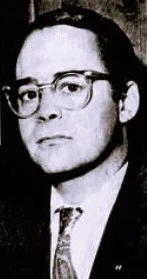
Joseph Raymond Scolaro III was thirty years old, employed as Richard Robison’s office manager in Detroit. He handled finances for both RC Associates and Impresario, giving him direct access to company accounts and checks.
Police learned that by the summer of 1968, over sixty thousand dollars was missing from Robison’s business. Auditors traced the loss to forged signatures and duplicate ledgers. The trail led back to Scolaro.
He was known as confident, restless, and meticulous. Former coworkers described him as ambitious and skilled with firearms, a hobbyist marksman who owned multiple guns, including a .22-caliber AR-7 rifle and a .25-caliber Beretta pistol.
When detectives examined the timeline, they found Scolaro had left his Detroit office around 10:30 a.m. on June 25 and could not be accounted for until late that night. The drive to Good Hart and back fit neatly inside those missing twelve hours.
Scolaro submitted to three polygraph tests and failed all of them. The examiner concluded he either committed the murders or knew who had. His responses became increasingly evasive when questioned about the missing funds and the Robisons’ final day.
Ballistic tests later linked shell casings found at Summerset to casings recovered from a private shooting range used by Scolaro and owned by his father-in-law. The extractor marks were identical.
Investigators also discovered a matching boot tread between the print found near the bodies and a new pair owned by Scolaro. He was known to buy duplicates of his possessions two of the same suits, two of the same guns, two of the same shoes. The worn pair was missing.
The combination of motive, means, and opportunity placed Scolaro squarely at the center of the case. Detectives concluded he fit every available fact, though the evidence remained circumstantial.
The Case Unravels in Courtrooms That Never Open
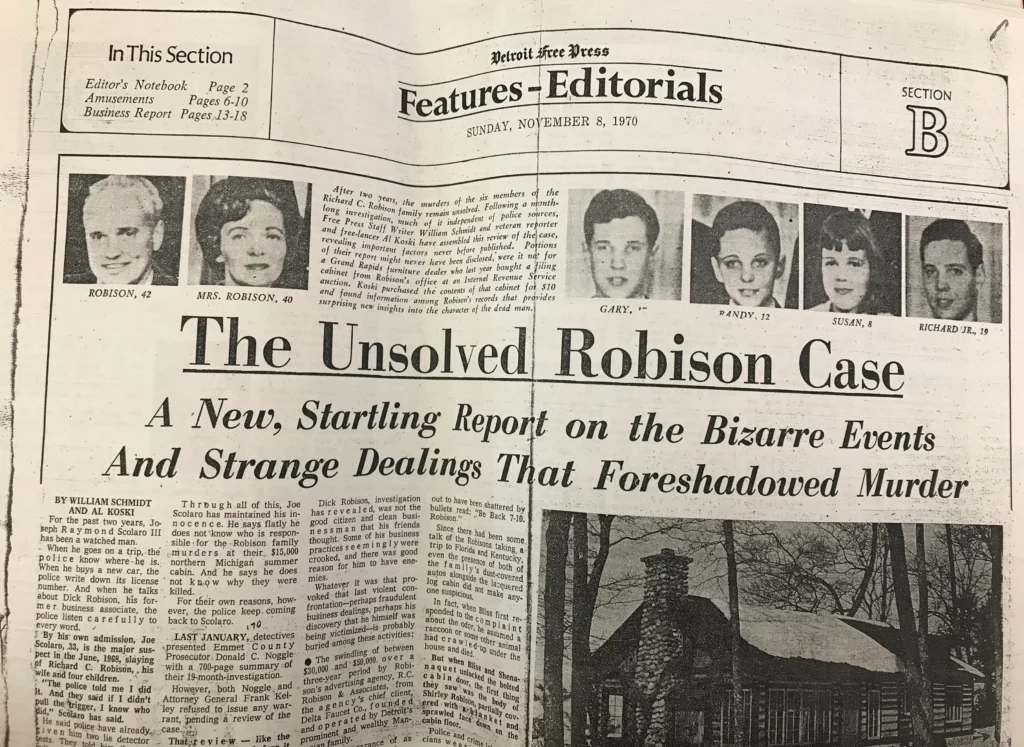
By late 1969, investigators from the Michigan State Police and the Emmet County Sheriff’s Department had compiled a 700-page report. It outlined Scolaro’s motive, his financial theft, his unverified alibi, and the ballistic link between his weapons and the shells at Summerset.
The report requested a warrant for Scolaro’s arrest and prosecution for six counts of first-degree murder. Detectives believed the evidence was sufficient. The Emmet County prosecutor, Donald C. Noggle, did not agree.
Noggle concluded the case was too circumstantial. Without the actual guns, eyewitnesses, or fingerprints, a conviction seemed uncertain. Local politics and budget pressure deepened his hesitation a full murder trial would bankrupt the small county.
The case stalled. The file sat on Noggle’s desk for months, unread beyond his initial review. Officers who had worked the scene were left waiting for an indictment that never came.
State police detectives argued that similar homicide cases had been won with less. One former prosecutor said later, “They had motive, means, and opportunity. The only thing missing was courage.”
In 1970, when another set of shell casings from Scolaro’s firing range again matched the Robison bullets, investigators renewed the push for charges. Still, Noggle declined. He feared losing a trial would close the case forever.
Frustrated officers turned the report over to Oakland County, where Scolaro lived. There, prosecutors reopened the financial crimes as a possible path to a murder indictment. Word of the renewed investigation soon reached him.
Suicide
On the morning of March 8, 1973, police in Birmingham, Michigan, responded to a report of an unattended car outside an office building. Inside, they found Joseph Raymond Scolaro III dead from a self-inflicted gunshot wound.
Beside him lay a .25-caliber Beretta pistol the same model used in the Robison murders. A typed letter on his desk admitted to financial fraud and forgery but denied involvement in the killings. The handwritten postscript read, P.S. I had nothing to do with the Robisons. I’m a cheat but not a murderer.
Investigators who had pursued him for five years viewed the denial as one final lie. His financial crimes were proven the murders fit every trace of evidence left behind. His death, they said, saved the courts what the bullets had already decided.
With Scolaro’s suicide, the case effectively ended. Without a living suspect, prosecutors could not file charges. No trial, no verdict only a permanent gap where justice should have stood.
To the detectives who built the case, the conclusion was bitter but certain. “He was our man,” retired Sheriff John Flis later said. “He had the motive, the guns, the knowledge and in the end, he proved it by what he did.”
Aftermath
The Robison family was buried on July 26, 1968, in a joint service attended by hundreds. A year later, their cottage at Summerset was demolished at the request of the estate. The land overlooking Lake Michigan was cleared and left empty.
In the years that followed, Good Hart changed. Residents began locking their doors for the first time. Tourists asked to see the “murder house,” though nothing remained of it. The town’s quiet reputation never fully recovered.
The case file stayed open. Each new detective in Emmet County inherited it by default a stack of photographs, autopsy reports, and nearly fifty boxes of evidence. None found a reason to shift the focus away from Scolaro.
State police and county investigators repeatedly described the murders as “unprosecuted, not unsolved.” Every alternate theory caretaker, drifter, serial killer, business rival collapsed under scrutiny. What survived was a single, incomplete proof.
Armchair researchers and true-crime writers later revisited the case. They found the same conclusion that investigators had reached decades earlier a trusted employee facing exposure drove north, confronted his employer, and killed everyone inside the cottage.
Technological limits had sealed the outcome. There was no DNA testing, no crime-scene preservation, no modern autopsy facility. The decomposition, the furnace heat, and human interference had erased the trail before science could save it.
Detectives who once worked the case called it a study in lost evidence. For Michigan law enforcement, it became a lesson one contaminated scene can undo every truth that follows.
The Wind at Summerset
Today, the land where Summerset stood is bare, a slope of grass above the waterline, framed by pines. Nothing marks the spot where six people died. The only reminder is the sound of wind moving through the trees.
The case remains technically open. Each new generation of detectives inherits the same evidence, the same unanswered questions, and the same name at the center of it. No court will ever hear testimony, and no verdict will ever close the file.
For those who worked it, the truth was simple. Joseph Raymond Scolaro III had motive, means, and time. His suicide ended the search for proof, but not the story.
Fifty years later, the Good Hart murders stand as both tragedy and warning a case where every fact survived but justice did not.
