
On the morning of February 19, 1993, Renee Converse drove her daughter 200 yards up a winding lime rock driveway to wait for the school bus near their mailbox in rural Pasco County, Florida. It was their daily ritual, a few quiet minutes carved out before the day pulled them apart. That morning they talked about mathematics.
When the bus arrived, twelve-year-old Jennifer Odom climbed aboard, took her usual seat at the back, and turned to watch through the rear window until her mother’s car disappeared around the bend. Renee turned left toward work. Jennifer never came home.
A Life in St. Joseph
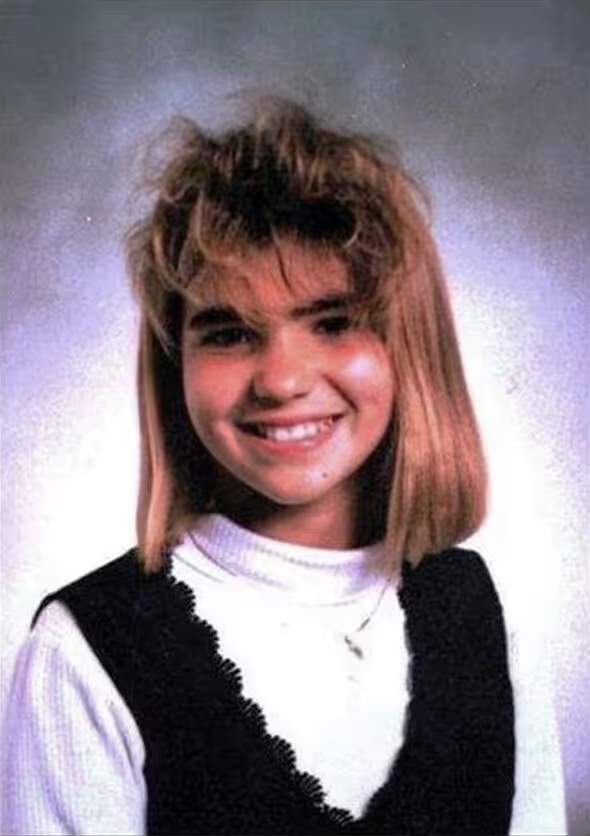
Jennifer Renee Odom was born on August 25, 1980. She grew up on a 15-acre property in the St. Joseph community of northeastern Pasco County, just west of Dade City, with her mother Renee, her stepfather Clark Converse, and her younger sister Jessica. The rural neighborhood was dotted with orange groves and occupied mostly by extended family. Renee later recalled that Jennifer and Jessica were as much friends as they were sisters. Together they built forts, rode four-wheelers, and spent summer afternoons swimming in the creek behind the house.
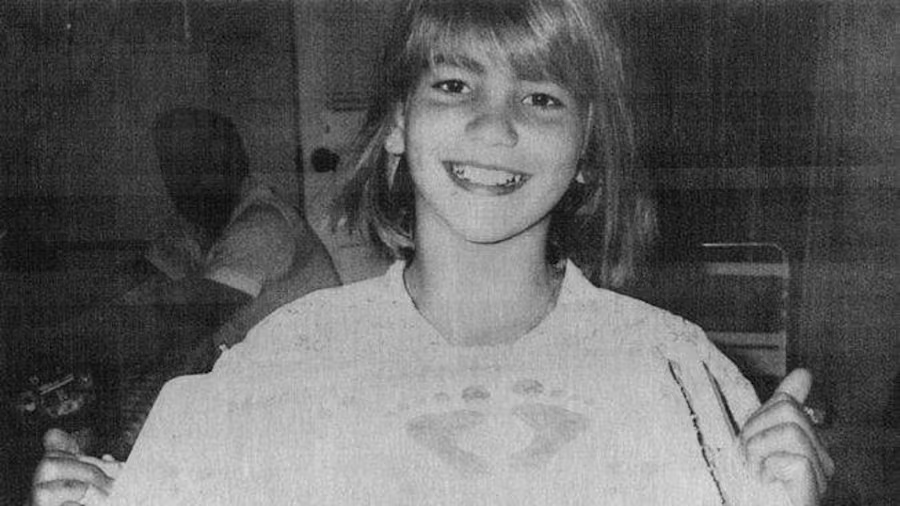
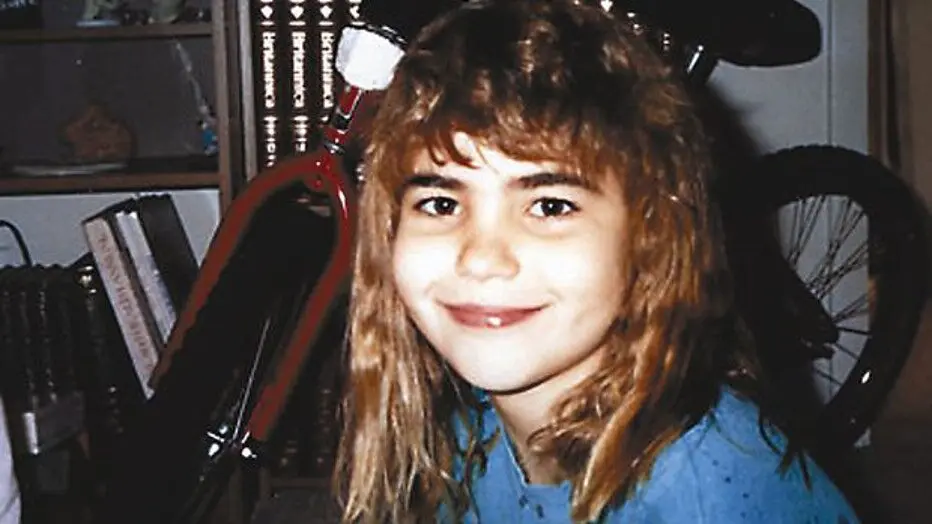
Brown-eyed with shoulder-length chestnut hair, Jennifer was not a child who blended into the background. She competed in barefoot water-skiing and had been ranked seventh in the country for her age group. She practiced archery, maintained honor roll grades, and played the clarinet in the Thomas E. Weightman Middle School band. Three days before she disappeared, she had marched in a band event. At home she kept a rabbit named Beanie and a spaniel named Gypsy. Her mother would later say that she adored every animal she encountered.
On the morning of her disappearance Jennifer dressed in white jeans and a white turtleneck. She pulled a red cashmere sweater, a gift from her grandmother, over her head, laced up a pair of black boots, and got into the car with her mother. The two drove up the driveway together, talked, and waited for the bus.
She Did Not Arrive
Jennifer and Jessica usually came home on separate buses. Jennifer typically arrived first, at around 3 p.m. On February 19, Jessica stepped off her bus at around 4 p.m. and found the front door locked. Her first thought was that Jennifer was playing a joke, something the sisters had done to each other before. She waited. Jennifer did not appear. Nine-year-old Jessica walked to her grandmother’s house to collect the spare key. Jennifer was not there either. That was when Jessica called her mother.
Clark and Renee rushed home from work. Renee phoned Jennifer’s best friend Michelle, who confirmed she had watched Jennifer step off the bus that afternoon at their stop. Something had happened to Jennifer within that 200-yard stretch of road between the mailbox and the front door. The Converses called authorities.
Students who had been on the bus gave investigators one consistent detail. A faded blue pickup truck had been moving slowly along the road in the direction Jennifer was walking. The driver was described as a white male in his forties with shoulder-length brown hair. Neither the truck nor the man behind the wheel was ever located.
The Search Began
Law enforcement deployed police dogs, and hundreds of volunteers joined the effort. Over the following days they scoured 60 square miles of rolling groves, pastures, and woods surrounding Dade City. The search turned up nothing.
On February 25, 1993, six days after Jennifer vanished, a man and a woman searching an abandoned orange grove in southeast Hernando County found her body. She was naked, face down, and severely decomposed, approximately 600 feet off Powell Road, around 10 miles from the family home. Jennifer was identified through fingerprints and through the jewelry she had been wearing: two rings and a gold chain with a half-heart charm engraved with the words “best friends.” Her parents were too distraught to identify her themselves.
The medical examiner ruled her death a homicide caused by blunt force trauma to the head. Detectives believed she had died in that orange grove not long after she was taken. The precise details of what was done to her have never been released to the public.
Jennifer’s red cashmere sweater, her white Hooters zip-up jacket, her white jeans, her black boots, and her brown purse were not with her body. They have never been recovered.
Evidence Left Behind
On January 5, 1995, almost two years after the abduction, a couple searching for scrap metal found Jennifer’s black clarinet case and her backpack in a thicket behind Oak Hill Hospital in Spring Hill, in western Hernando County. Inside the backpack, on the front cover of a textbook, was her name written in her own hand. Fingerprints lifted from both items did not match Jennifer, her family, or the couple who discovered them. They did not match anyone on record.
Investigators interpreted the location and concealment of the items as significant. The manner in which they had been hidden suggested someone with knowledge of the rural back roads, someone familiar with how to make things disappear in that landscape. It pointed to a local. The case was featured on Unsolved Mysteries in 1994, generating a surge of tips. None led anywhere.
In June 2013, authorities and FBI agents converged on a two-story home at 12714 Pompano Street in San Antonio, Florida, and searched the waters of Lake Juvita directly behind the property, located just four miles from where Jennifer was abducted.
The sheriff’s office confirmed only that investigators were searching for a vehicle. No further details about the search were ever made public. The home was owned by Al Kieffer, who was 46 at the time of Jennifer’s murder and a member of a prominent Dade City family that had operated a downtown pharmacy and other local businesses. Kieffer was questioned in connection with the case. Nothing came of it.
Over the following three decades the Hernando County Sheriff’s Office collected nearly 1,000 pieces of evidence, conducted hundreds of interviews, fielded thousands of tips, and built a case file 75,000 pages thick. The National Center for Missing and Exploited Children scanned every page. By 2013, a detective had been assigned full-time to Jennifer’s case. Investigators stopped hundreds of blue trucks across the country, posted billboards, and offered cash rewards. Multiple persons of interest were examined and cleared.
The case stayed cold.
DNA Broke the Case
The story of what eventually caught Jennifer’s killer actually begins thirteen months before she was abducted. In January 1992, a 17-year-old girl in north-central Pasco County was attacked after stepping off her school bus. She was sexually assaulted, suffered severe injuries to her head and skull, and was left for dead. She survived. Biological material was collected at the scene and preserved.
In 2015, investigators obtained a full DNA profile from that evidence and ran it through national databases. The search returned no direct match. The Florida Department of Law Enforcement then applied familial DNA searching, comparing the profile against local samples looking for close relatives of an unknown suspect. They found one: a son. The son’s DNA led investigators to his father, Jeffrey Norman Crum. Crum, then 53 years old, was arrested and charged with sexual battery and attempted murder in the 1992 attack. In 2019 he was convicted and sentenced to two consecutive life terms.
The similarities between the 1992 attack and Jennifer’s abduction were, in the words of Hernando County Sheriff Al Nienhuis, “almost identical.” Both victims were girls abducted after stepping off a school bus in Pasco County. Both were taken to a remote location and sexually assaulted. The 1992 victim survived. Jennifer did not. Crum had lived in northern Pasco County at the time of both incidents. He drove a blue truck. Once detectives connected him to the 1992 case, Nienhuis said, Crum “almost instantaneously became our number one suspect” in Jennifer’s murder.
Court documents revealed that Crum had spoken about Jennifer’s murder to several people over the years. He reportedly told his son that “he sees demons at night,” admitted to killing Jennifer, and confessed to at least one other murder. According to the documents, he told a woman he later kidnapped and raped that he had taken Jennifer, held her at his home for one to two days, and killed her after something angered him on the second day. Multiple witnesses stated that Crum had spoken openly of having murdered the twelve-year-old girl.

Crum Was Charged
On July 24, 2023, a grand jury indicted Jeffrey Norman Crum on one count of first-degree murder, one count of kidnapping, and one count of sexual battery in the death of Jennifer Odom. He was arrested three days later. He was 61 years old, already imprisoned for life, and appeared expressionless as the charges were discussed at his first court appearance. He requested a public defender and was held on no bond. Prosecutors announced they would seek the death penalty.
“This is every parent’s nightmare,” Fifth Judicial Circuit State Attorney Bill Gladson said at a press conference in Brooksville. Sheriff Nienhuis described Crum as “a bad guy who is very violent, who enjoyed violence and enjoyed hurting people,” and urged anyone who had encountered him during the 1980s or 1990s to come forward. Authorities stated their belief that Jennifer was not his only victim.
As of this writing, Crum’s trial for Jennifer’s murder has not yet concluded. Prosecutors are seeking the death penalty. He will never leave prison regardless of the outcome.
Outside the Odom family home, beneath a large oak tree, a post still bears four names: Clark, Renee, Jennifer, Jessica. Nearby stands a magnolia tree, given to Renee in the week her daughter disappeared. Jennifer Odom is buried at Sacred Heart Cemetery in Dade City, not far from where she lived. She was twelve years old. She was ranked seventh in the country in barefoot water-skiing. She played the clarinet three days before she was taken. Every morning she sat in the back row of the school bus so she could watch her mother drive to work until the road curved and carried them apart.
