
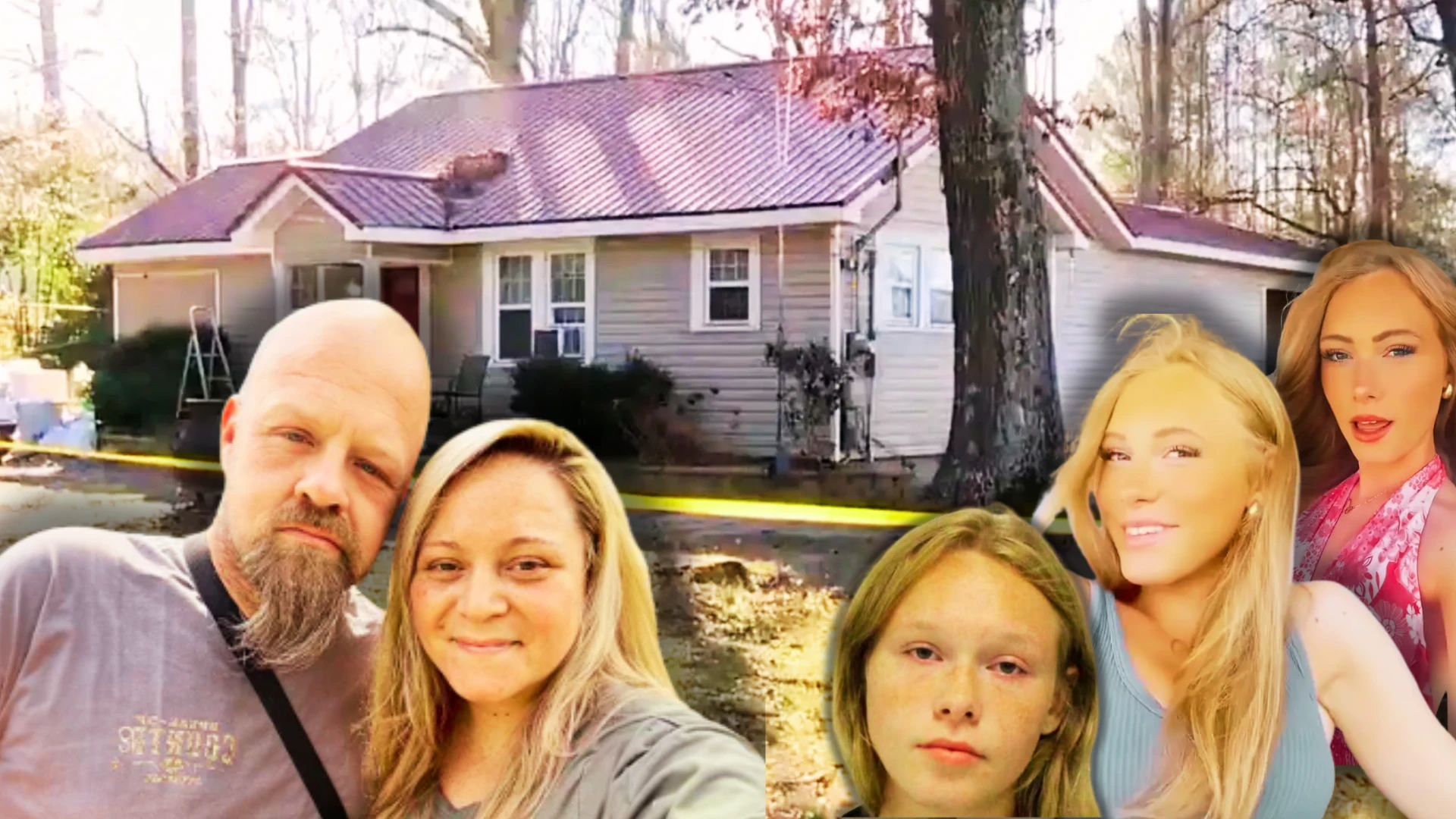
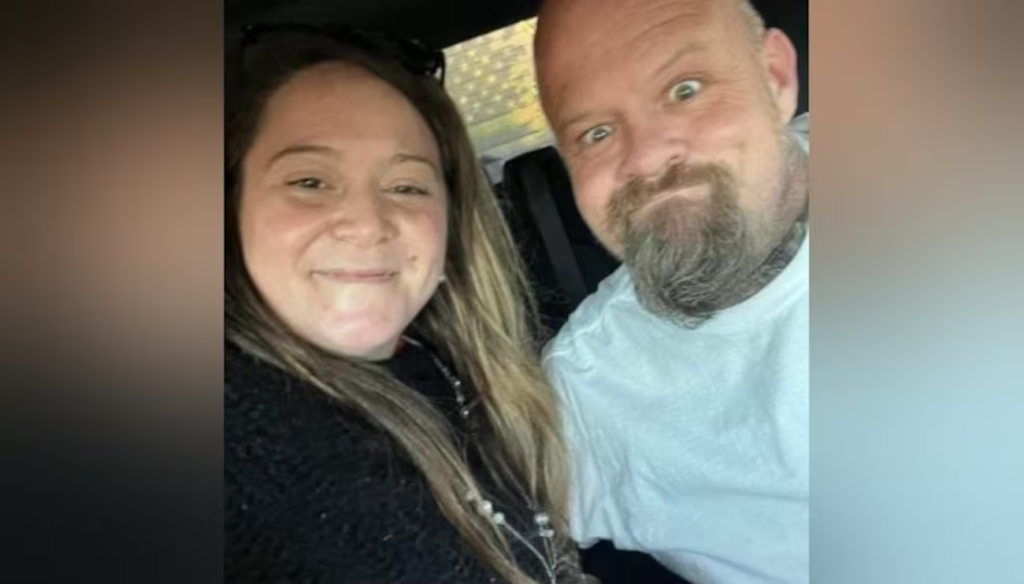
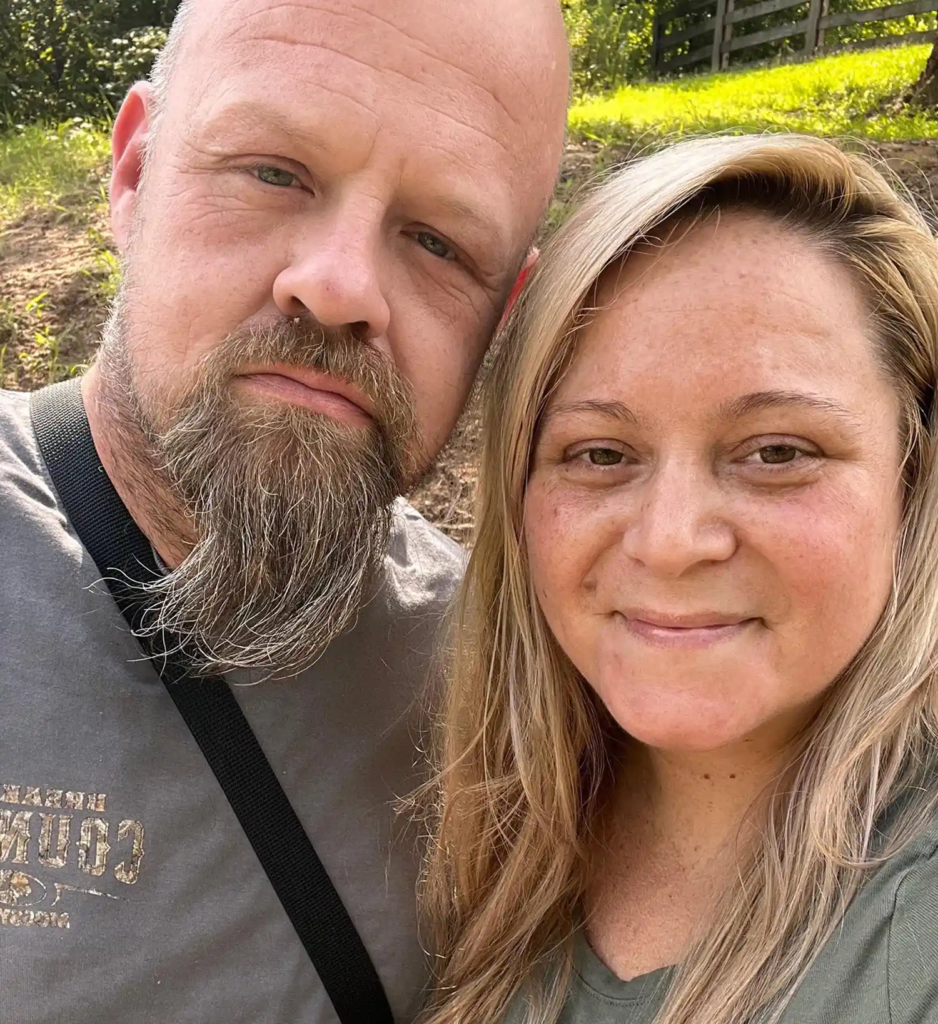
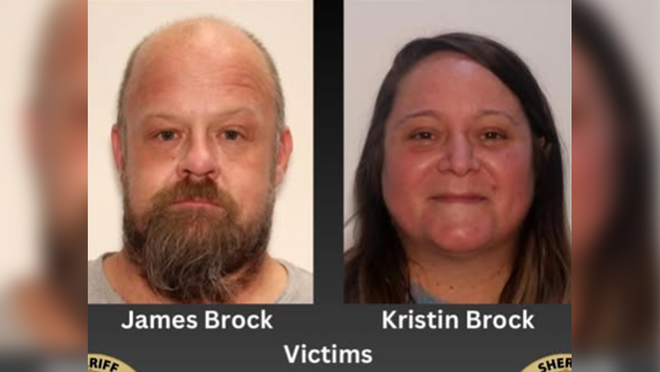
On the morning of February 20, 2025, a five-year-old girl named Jay walked into her parents’ bedroom in a quiet, rural home in Carrollton, Georgia, to wake them up. Kristen Brock and her husband James were in their pajamas. They had been shot dead in their bed.
Jay ran from the room screaming. The person she ran to was her 16-year-old half-sister, Sarah Grace Patrick. Sarah called 911. Then, within days, she opened TikTok and began building a narrative.
A Very Small House
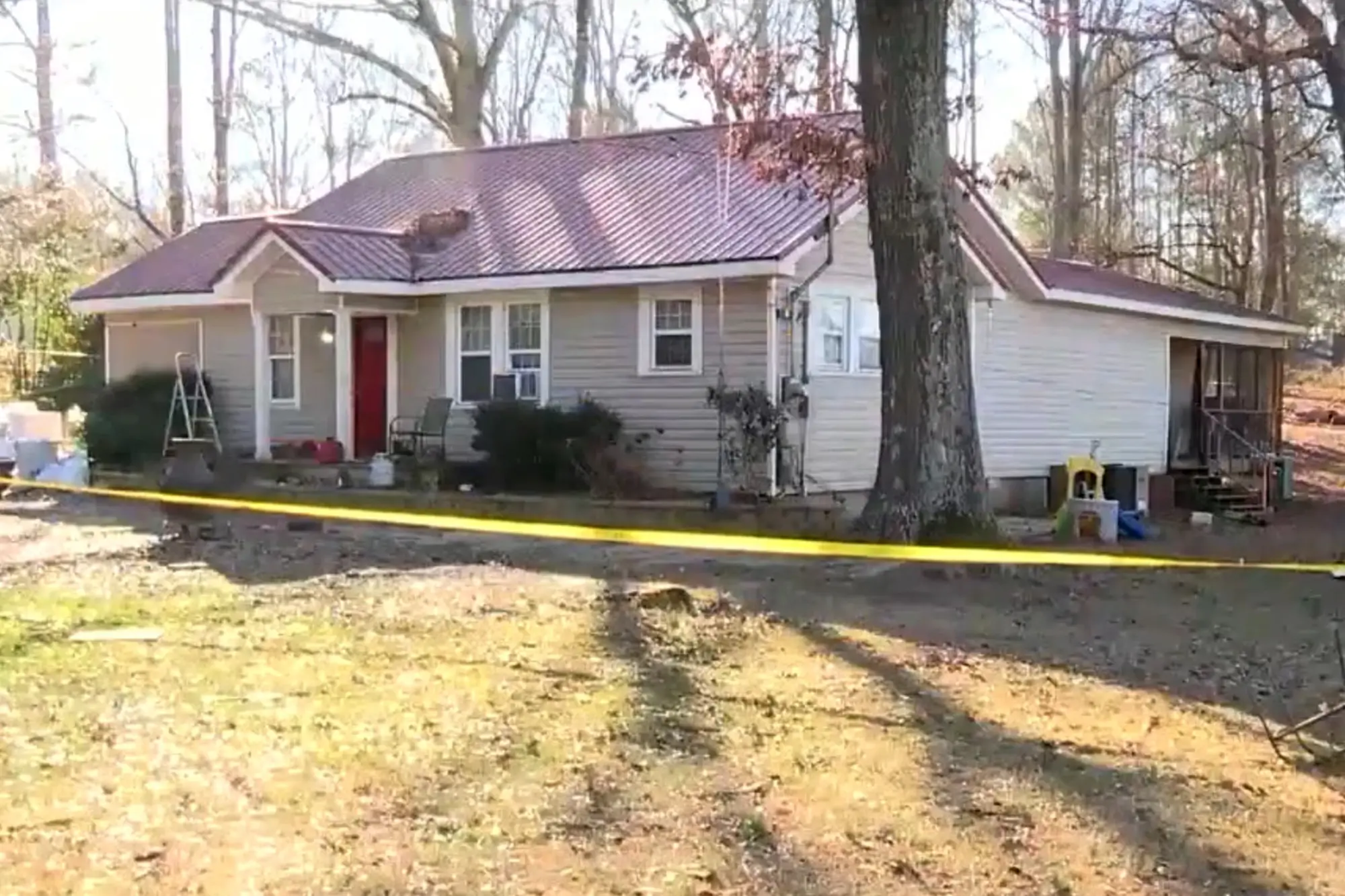
The Brock home was not large. Investigators and experts who reviewed the case repeatedly described it as a very small house in a quiet rural area with no ambient traffic. There was no forced entry. No kicked-in doors, no broken windows, no blood trail leading outside. Nothing had been taken from the home. Kristen and James had been executed in their sleep, and whoever did it left no visible point of entry or exit.
James Brock was in poor health. He had undergone heart surgery and relied on a left ventricular assist device — an LVAD pump, a mechanical heart assist — to keep him alive. The pump beeped. It beeped when it needed attention. That detail would matter.
James’s niece, Kristen Data, told reporters that the couple did not own a gun. “If there was a gun in that house,” she said, “that would be shocking to me.”

Sarah’s Version
Sarah told police she had been watching television late into the night on February 19. She said she went to bed around midnight. She told investigators she heard the faint beeping of James’s LVAD alarm in the darkness.
She said she heard no gunshots.
Experts who reviewed the case found that claim difficult to reconcile with the physical layout. One analyst noted the obvious problem plainly: “It wasn’t a mansion where this happened.” Another added a more specific observation: “I have a kid who’s almost four, and it just seemed like a lot of steps for someone who’s five to go through to then alert the teenager.” Meaning: if a kindergartner could navigate a horror scene and find her way to Sarah’s room, the sounds that preceded it should have been audible to anyone awake in the same building.
There was also the question of Jay herself. She had found two dead adults, processed what she was seeing, left the room, and located her older sister. A five-year-old. In a very small house. And Sarah, by her own account, had heard nothing until the child appeared.
March 18: The First Tiktok
Less than a month after the murders, on March 18, 2025, Sarah Grace Patrick posted a video of herself crying on TikTok. The caption read: “Please send prayers for healing and a break from everything.”
Her follower count grew. The comment section filled with hearts. Strangers who had never met Kristen or James Brock told Sarah they couldn’t imagine what she was going through.
More posts followed. She published a Mother’s Day tribute to Kristen, calling her her best friend. She posted a TikTok reel using old footage of her parents, adding a caption that read: “They don’t know it, but a year from now, me and my five-year-old sister would find them wrongfully shot dead in our home and won’t get to watch me graduate high school, see me walk down the aisle, and couldn’t even say goodbye.” She posted healing journey videos about trauma and sleepless nights. One caption read simply: “This can’t be real. On the way to my parents’ funeral.”
She confessed to her audience she felt unable to cope without her mom. Every post added followers. Every post was also being collected.
Pitching The Case
In June 2025, true crime TikTok influencer Janice, from the account “Allegedly,” received a direct message. It read: “Search up Brock case.” When Janice asked for more context, the user responded: “They’re my parents. Someone came in and shot my parents brutally, leaving them for me and my little sister to wake up to.”
Then, a follow-up message: “News coverage of this case would be a really big hit.”
Janice said later that the exchange felt like someone digitally reliving the crime. She described it as disturbing not because of what was being said, but because of what was not: no grief, no desperation, no need for answers. Just a pitch.
Sarah did not stop there. She began commenting on Janice’s TikToks as the creator discussed the Brock case publicly, responding to users who speculated about whether the killer had known the house. One of Sarah’s replies: “Most definitely was, since they knew the house.”
She was describing herself.
The Eulogy
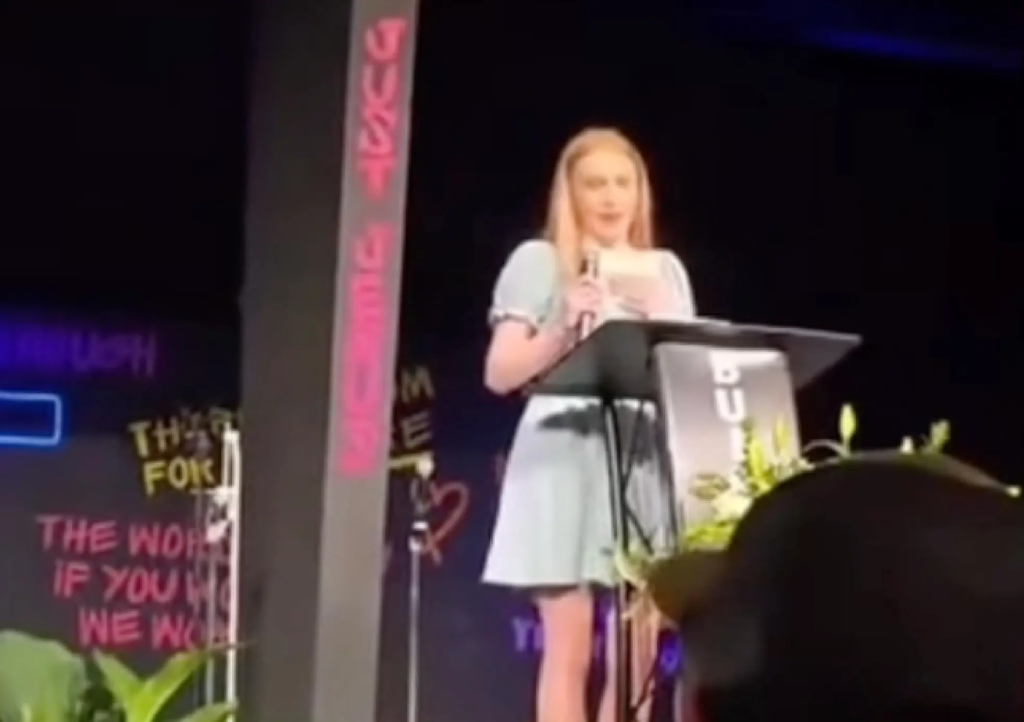
At the funeral, Sarah Grace Patrick stood at the front of the room before family, police, and an entire community shattered by the deaths of Kristen and James Brock. Behavioral analyst Scott Roose, who has trained with the FBI and U.S. military intelligence, reviewed the footage afterward. He described what he saw as chillingly rehearsed and noted that the speech may have been AI-generated, based on its unusual phrasing and structural choices.
His primary observation was not about what Sarah said. It was about what she did not do. “We’re not seeing upheavals of emotion,” Roose said. “We’re not seeing those gasps of breath, like when a little child is crying and they take those really quick deep breaths. That happens to adults, too.” Her voice did not tremble. Her face did not twitch. She took no visible pause to collect herself.
She opened with two contradictory statements delivered within seconds of each other: “I don’t know if I’m going to be able to do this” — and then, moments later, “I’m really happy to get to do this.”
She thanked her family with an oddly constructed phrase: “And lastly, you could take on not taking people for granted. I want to thank my family.” The syntax was not grief-scrambled. It was something else.
The line investigators focused on was this one: “Although there’s nothing we can do to bring them back, we still have control over how we treat people.” Carroll County Communications Director Ashley Hustley said it aloud in a press briefing. What did control over how we treat people have to do with two people shot to death in their beds?
She ended the speech with two words: “I’m sorry.”
“She may have been sorry because she was showing emotion,” Hustley said. “But she also could have said it meaning something deeper. We just may never know exactly what she meant by that. But it did raise my eyebrows.”
What James Said
Several people who knew the Brock family told investigators that James had warned them about Sarah. Not once. Multiple times. His niece recalled the words he used: “You don’t know the real Sarah. She’s not the sweet Sarah that you guys see. She’s not who she puts online.”
Kristen had always defended her daughter. She reportedly dismissed James’s concern the way parents often do: teenage girls in the TikTok era are not easy to raise. But James kept saying it.
He was right. His wife did not live to know it.
Who Sarah Was
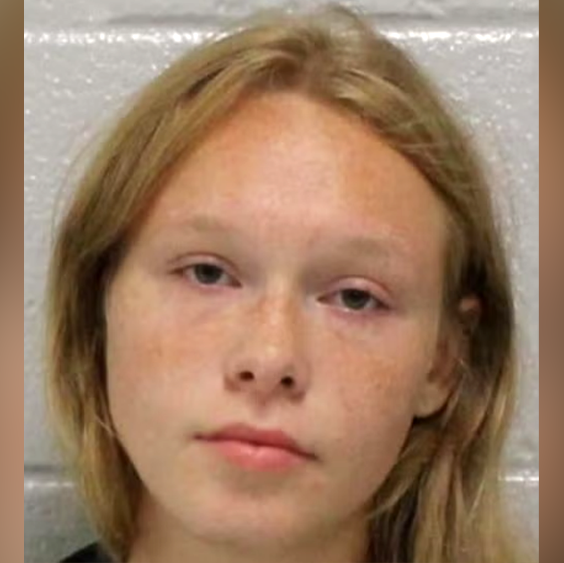
Sarah Grace Patrick was born in 2008 and grew up in Carrollton, Georgia, a quiet Southern town roughly an hour southwest of Atlanta. She split her time between her mother’s home and her biological father’s — her father, who was still involved in her life, would be the one to drive her to the sheriff’s office on the day of her arrest.
By all visible accounts, she had a functional life. She had a job. She had a boyfriend. She was weeks from graduating high school. There was no known history of abuse in the Brock household, no documented instability, no hospitalizations, no medication. Her grandfather, Dennis Nolan, told reporters she had never shown signs of mental illness and that she and her mother had, as recently as the weeks before the murders, a great relationship.
“Every time I was around her, she was very sweet,” a family acquaintance recalled. “Very open to talk to whoever was around.”
James Brock saw something no one else wanted to see.
Five Months Later
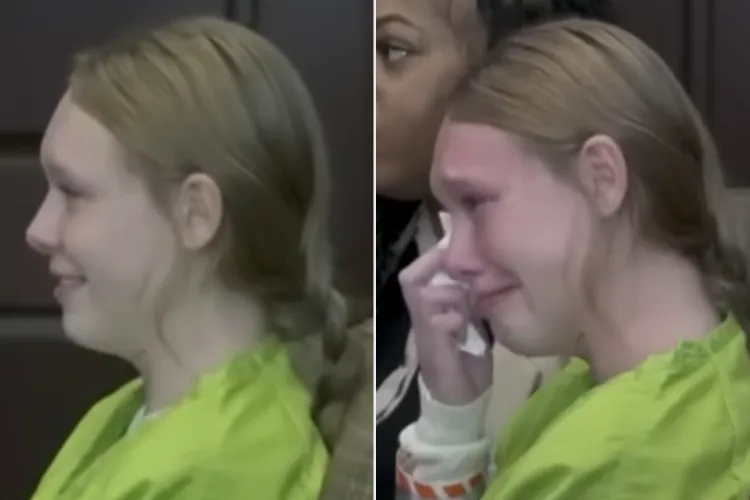
For five months after the murders, while Carroll County investigators built their case in silence, Sarah Grace Patrick continued to reach out to James’s family. She called and texted. She said she was sorry for their loss. She said she missed James. She said she wanted to help. James’s family received every message. “It was all fake,” one family member said flatly.
On the day she was arrested, in July 2025, law enforcement stated they had assembled what they described as a mountain of evidence: five months of surveillance, digital forensics, phone records, behavioral analysis, and witness interviews. They charged Sarah Grace Patrick, then 17, with two counts of murder and two counts of aggravated assault.
They would not confirm whether the gun had been recovered. They would not confirm a motive. They would not confirm whether she had confessed. They confirmed only that the investigation was not finished. “We are interviewing potential suspects and anyone that we feel may have information,” a spokesperson said. Other arrests, they indicated, remained possible.
Unanswered Questions
The gun used to kill Kristen and James Brock has not been publicly located. A motive has not been confirmed. Sarah’s grandfather Dennis Nolan, who has publicly defended her, told reporters in one unguarded moment that James had a history involving a convicted felony and a motorcycle gang planting, however gently, the possibility that someone else had wanted him dead. Law enforcement has not confirmed that claim or indicated it is relevant to the investigation.
Sarah Grace Patrick is awaiting trial. She has retained a public defender.
Jay is six years old now. She was five on the morning she walked into her parents’ bedroom and found them there. She will always have been the one who found them.
