
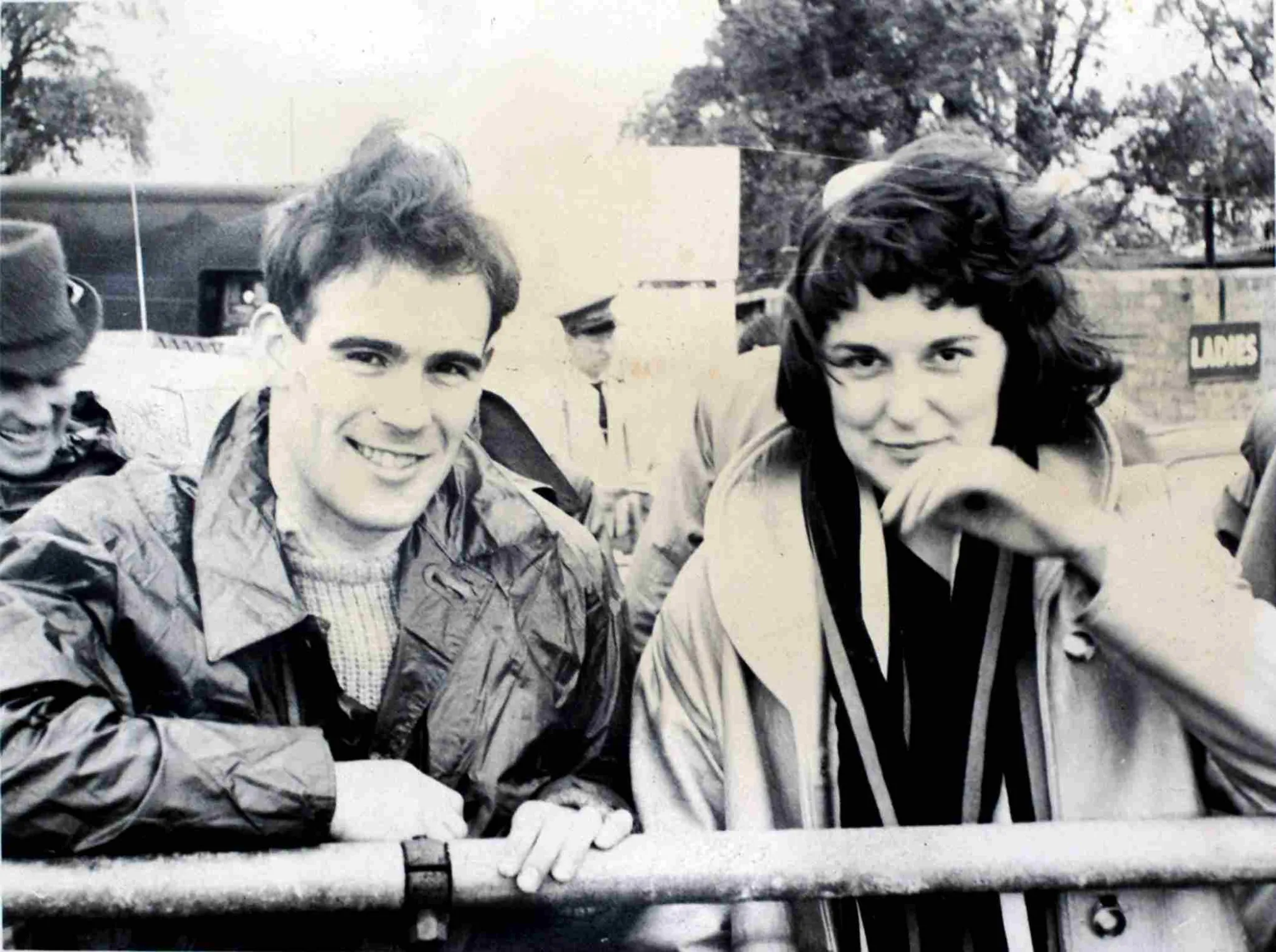
On September 12, 1973, at approximately 12:40 p.m., Wendy Sewell walked into her boss’s office at the Forestry Commission in Bakewell, Derbyshire, and handed him a note. She was going out for some fresh air. She would be back after lunch.
She never came back.
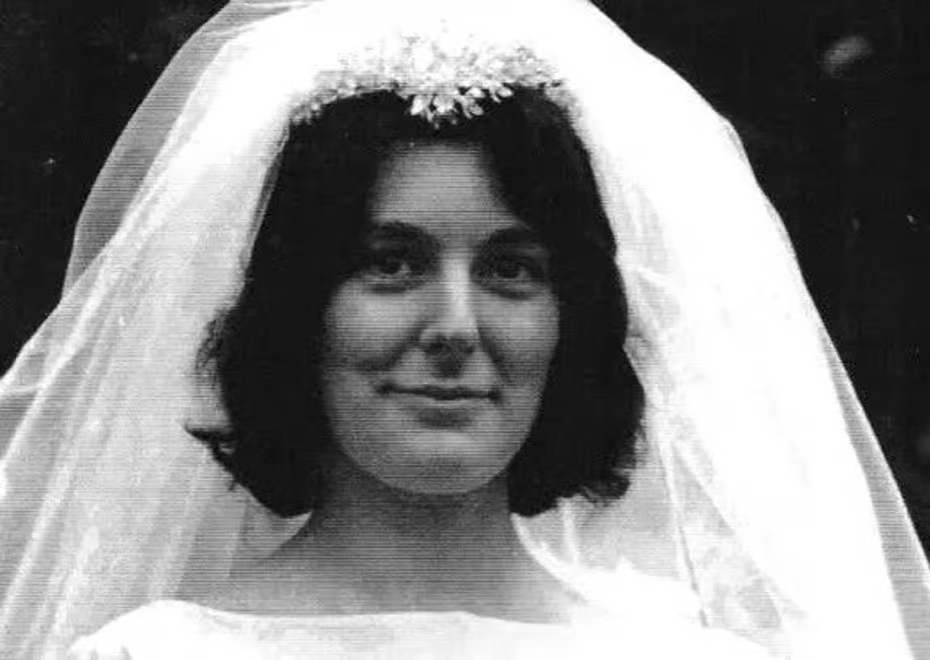
Wendy’s life in Bakewell
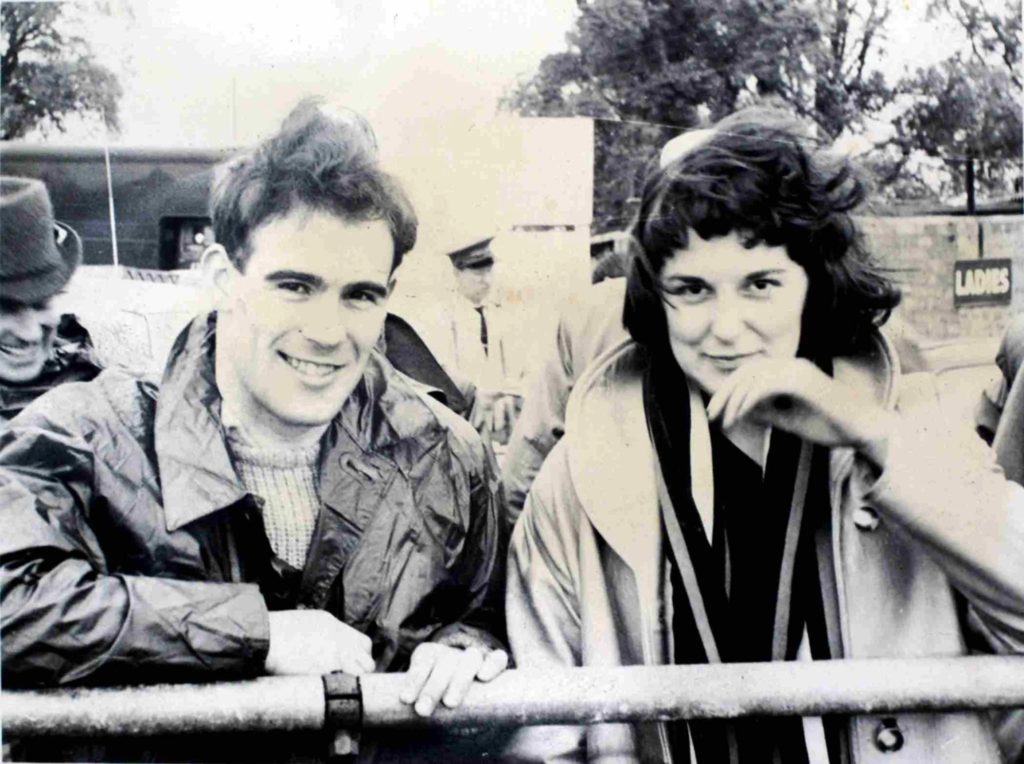
Wendy Sewell was 32 years old, a legal secretary who lived with her husband David in the village of Middleton-by-Wirksworth, five and a half miles from Bakewell. The marriage had broken down and been repaired several times. Wendy maintained a number of relationships outside of it, making no effort to conceal them from neighbors or colleagues.
In 1968, she gave birth to a son fathered by a local man named John Marshall and placed the child for adoption. She and David reconciled in the years that followed, and by September 1973 they were living together again.
On the morning she died, Wendy arrived at her desk and told coworkers she had quarreled with her boyfriend the night before. At around midday, her boss heard raised voices near her desk.
According to colleagues, the phone call she made that morning was with someone who was not her husband. At 12:40 p.m., she handed her boss a note saying she was going out for some fresh air and would be back after lunch. A friend who spoke with her on the way up confirmed she was in good spirits. She was heading to the cemetery to make things right after the argument.
She entered the cemetery
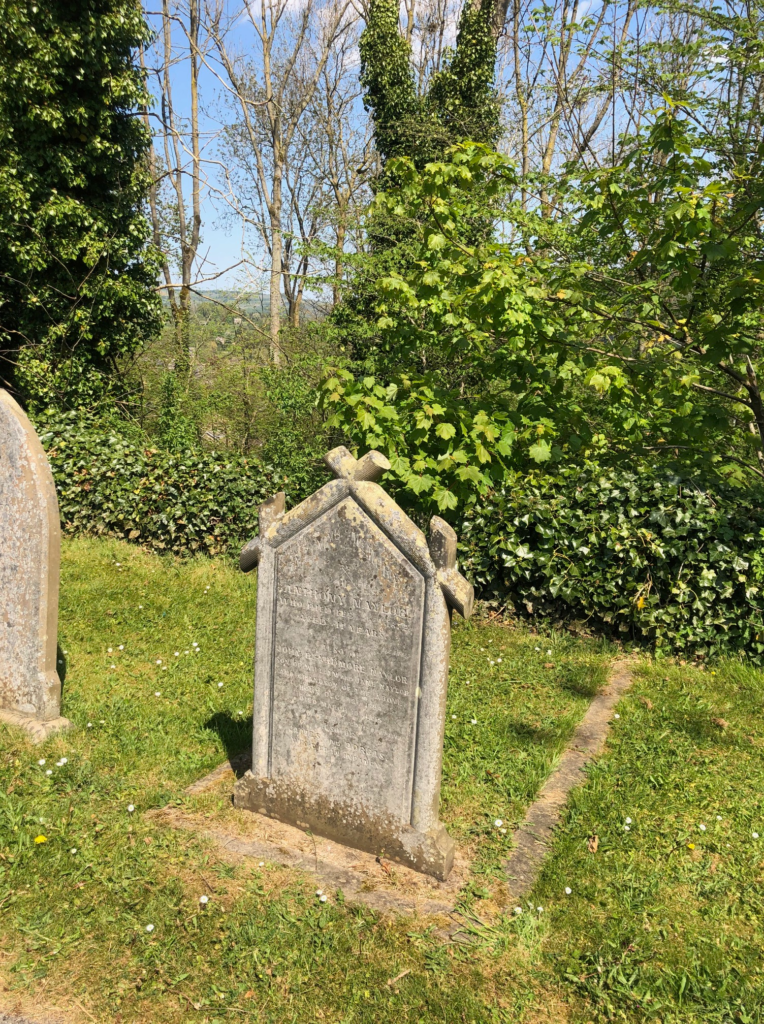
A witness named Charles Carman saw Wendy pass through the gates of Bakewell Cemetery at approximately 12:50 p.m. The graveyard sat on a small hill above the town.
What happened inside those gates in the minutes that followed has never been officially established.
She was found beaten around the head with the handle of a pickaxe, struck seven times, with severe head injuries and fractures to her skull. Her trousers, underwear, shoes, and parts of her bra had been removed. Wendy Sewell died at Chesterfield Royal Hospital two days later, on September 14, 1973. She died without ever being able to identify who had attacked her.
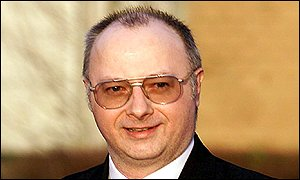
Downing discovered her
Stephen Downing was 17 years old. He had been off sick with a cold for two days before September 12, returning to work that morning against his mother Juanita’s advice. He worked as a groundskeeper at Bakewell Cemetery for the local council, and lived a few minutes’ walk from the gates with his parents, Ray and Juanita, and his younger sister Chrissy. He kept two rescued baby hedgehogs in the garden shed. He had a reading age of 11, no qualifications, no prior convictions, and no romantic history.
According to Downing, he had spotted Wendy while smoking a cigarette outside the unconsecrated chapel, thought nothing of it, collected his soft drinks bottle, and headed home for his lunch break. Multiple witnesses reported seeing him leave through the cemetery entrance at his usual unhurried pace. He returned around 20 minutes later and stopped at the garden shed to feed his hedgehogs.
What he found in the cemetery grounds that afternoon would consume the next 27 years of his life.
Wendy Sewell was lying among the gravestones, beaten and barely conscious. Downing tried to administer first aid and ran to the nearby workmen’s building for help. According to later accounts, while Downing was gone, someone who had been hiding in the cemetery dragged Wendy to a second location among the older gravestones.
That was where police found her when they arrived. Downing led officers directly to the scene and pointed out the pickaxe handle lying on a nearby path. He explained that the blood on his clothing had transferred when Wendy shook her head as he tried to help her. He asked if he could wash his hands.
Officers arrested him on the spot.
Nine hours, no solicitor
By that point, police had already settled on their suspect. They brought Downing to Bakewell police station at approximately 2 p.m., a teenager in severe shock who had spent his lunch break trying to save a dying woman. He asked for a solicitor multiple times. Officers refused him each time. His parents arrived at the station. Officers turned them away. Across the building, officers placed bets on whether the teenager would confess.
The questioning lasted nine hours. Police administered no formal caution before taking any of Downing’s statements and allowed no legal representative into the room throughout. When Downing began to fall asleep from exhaustion, officers shook him and pulled his hair to keep him awake.
By 11:10 p.m., after nine hours without food, without counsel, and with officers physically forcing him to stay conscious, Downing signed a written confession. Police had composed it for him. He later said he had not understood much of what it contained. He signed it, he would later explain, because he believed Wendy would survive and correct the record herself.
He retracted it almost immediately. It made no difference.
The trial and conviction
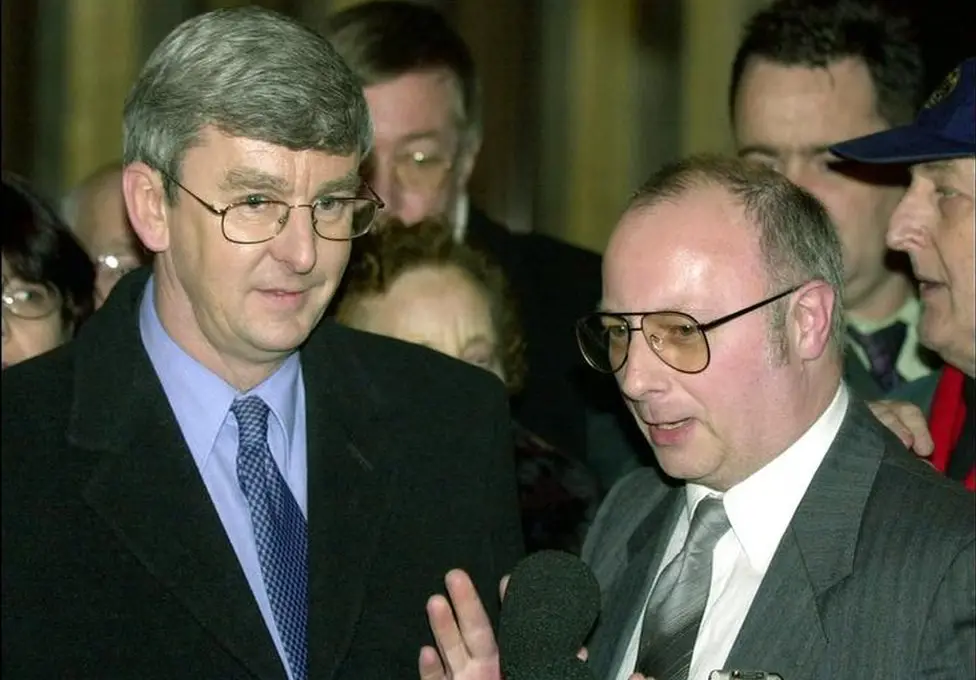
Downing stood trial at Nottingham Crown Court between February 13 and 15, 1974, before Mr. Justice Nield. Because Wendy had still been alive when police first charged him, the original charge had been assault, elevated to murder after she died. At trial, Downing pleaded not guilty to murder but admitted to indecently assaulting Wendy as she lay injured in the cemetery. In summing up, the judge specifically drew the jury’s attention to that admission.
The prosecution’s forensic case rested on the testimony of scientist Norman Lee, who told the court the blood staining on Downing’s clothing was “a textbook example which might be expected on the clothing of the assailant.” The jury deliberated for one hour.
Unanimous guilty verdict. Downing was sentenced to be detained indefinitely at Her Majesty’s pleasure, with a minimum term of seventeen years.
Sickeningly, one piece of physical evidence never reached the jury at all. Downing had been wearing gloves during his work in the cemetery that day. The gloves had no blood on them whatsoever. Nor did the jury hear that Wendy’s relationships outside marriage had been withheld from them, or that Downing had learning difficulties. They returned their verdict without any of that information.
Downing’s first appeal came in October 1974, when a witness came forward claiming to have seen him leave the cemetery and then spotted Wendy alive after his departure. The court rejected her testimony. Trees had obstructed her line of sight and she was shortsighted. The appeal failed. By 1991, Downing could have walked free on parole. Parole required an admission of guilt. He refused and remained in prison, insisting he had not killed Wendy Sewell.
Three decades behind bars
Stephen Downing spent 27 years in a British prison system that classified him as a convicted sex offender. Fellow inmates stabbed him, scalded him with boiling water, and sexually assaulted him. He moved between prisons eight times, serving portions of his sentence at Dartmoor, Parkhurst, and Wakefield among others. Prison officers reportedly urged him repeatedly to simply confess and end the abuse. He refused every time.
Back in Bakewell, Ray and Juanita Downing spent those same 27 years campaigning for their son. His sister Chrissy grew up with her brother behind bars. David Sewell, Wendy’s husband, had been at work on the day of the attack and was eliminated from inquiries early. He lost his wife to a killer who was never caught, then watched her name reduced to a tabloid punchline for the next five decades.
Disturbingly, the campaign to free Downing came at a cost to Wendy’s memory. As Hale and others searched for alternative suspects, Wendy’s personal life was publicized and exploited. The press coined the phrase “Bakewell Tart.” She became defined not by who she was but by what could be used to explain her death. She had been murdered. Then she was blamed for it.

Don Hale took the case
In September 1994, Ray and Juanita Downing wrote to Don Hale, the editor of the local newspaper, the Matlock Mercury. They had received an anonymous letter claiming new information could prove their son’s innocence. Hale had reservations. He took the case anyway, spending the next six years working through witness statements, court records, and physical evidence.
What he found contradicted the prosecution at nearly every turn.
The signed confession had been examined by a handwriting expert, who concluded it appeared to have been tampered with. The language was far beyond what someone with Downing’s reading level could have produced. The forensic evidence was where the case came apart entirely. Downing’s confession stated he had struck Wendy twice.
The forensic evidence established she had been struck seven times by a right-handed assailant. Downing was left-handed. The same forensic findings had also determined that no sexual assault had occurred, meaning the stated motive of the crime had no basis in the physical evidence. Wendy’s clothing appeared to have been removed by Wendy herself.
The jury had been told neither of these facts.
The evidence collapsed
Hale located the murder weapon. The pickaxe handle had been placed on display at Derby Museum. A modern forensic examination found Wendy Sewell’s DNA on it, found no fingerprints matching Downing, and found a bloody palm print belonging to an as yet unidentified person.
In the days after the attack, witnesses had come forward to report seeing at least three other men in the area around the time of the murder, including one man covered in blood. Police had not pursued them. A woman living in a house overlooking the cemetery told Hale that on the day of the murder she had watched a van park outside the entrance and seen a man and his two colleagues acting suspiciously near the gate.
She had written the vehicle’s registration on a cigarette packet and taken it directly to police. Officers told her it was likely nothing to worry about and sent her away. She kept the cigarette packet for nearly 30 years before handing it to Hale. He traced the registration to a man known to Wendy Sewell.
In his book “Town Without Pity,” Hale named three key suspects as Mr Red, Mr Blue, and Mr Orange. One individual identified as Mr Orange allegedly boasted of “finishing Wendy Sewell off” after she had been attacked. A witness named Mary Hadfield reported seeing Mr Blue running up Yeld Road toward the school shortly after the attack. Mr Red held an alibi placing him at a sheep sale in Shropshire on the day of the murder. All three were examined during Operation Noble and cleared.
Before long, the investigation was carrying a personal cost. Vehicles nearly struck Hale on two separate occasions. An anonymous caller warned him he had two weeks to live if he refused to drop the story. Two lorries struck his car in separate incidents. Police gave him a mirror on a stick to check beneath his vehicle each morning for explosive devices and advised him, for his own safety, to walk away.
He did not.
Downing walked free
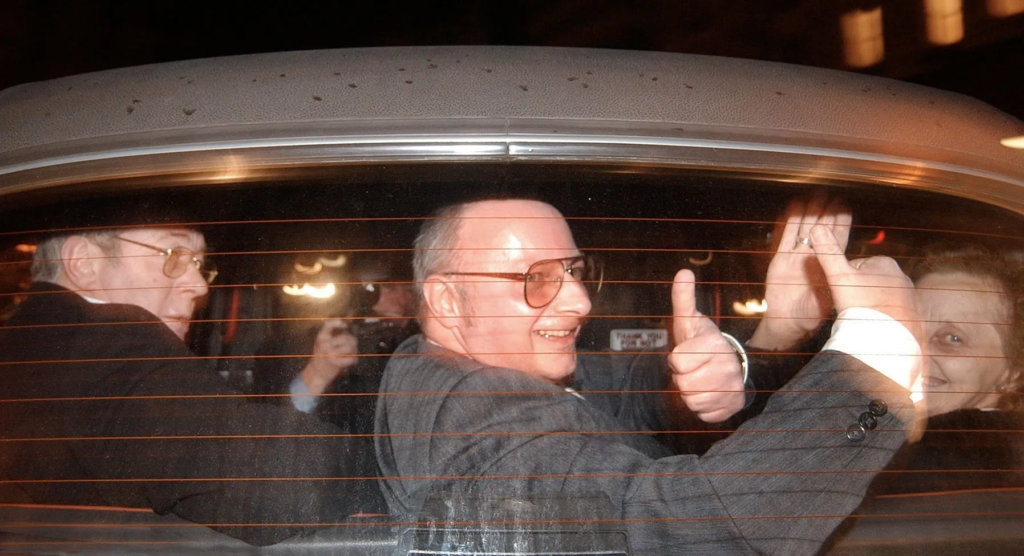
In 1997, Hale submitted his case file to the Criminal Cases Review Commission. That same year, more than 3,500 Bakewell residents signed a petition demanding Downing’s release and presented it to Parliament. The case reached the Court of Appeal.
Downing was released in 2001 from Littlehey Prison in Cambridgeshire, pending the outcome of the appeal. He had been in prison for 27 years. On February 14, 2002, the Court of Appeal quashed his conviction. Lord Justice Pill stated that the court could not be sure the confessions were reliable and that the conviction was therefore unsafe.
Two forensic scientists who testified at the appeal stated that the blood staining on Downing’s clothing was as consistent with innocence as with guilt, directly contradicting Norman Lee’s original evidence. The court found that police had administered no formal caution before taking Downing’s statements, had denied him legal representation throughout nine hours of questioning, and had physically prevented him from sleeping during the interrogation. The confession, the court ruled, should never have been placed before the jury.
Downing received an interim compensation payment of £250,000, with a final undisclosed settlement said to be less than £500,000. He took work as a trainee chef at a Bakewell restaurant, using skills developed in prison kitchens. The BBC described his release as “a triumph for campaigning journalism and an end to one of the worst miscarriages of justice in English legal history.” A 2004 BBC drama, “In Denial of Murder,” told the story with Jason Watkins as Downing and Caroline Catz as Wendy Sewell. He was 45 years old.
The case never closed
Derbyshire Police relaunched the investigation under the name Operation Noble, interviewing 1,600 witnesses at an estimated cost of £500,000 and examining 22 alternative suspects, many of them surfaced during Hale’s campaign. Downing provided his fingerprints for elimination but refused to be re-interviewed on his lawyers’ advice. Officers cleared every one of the 22. In February 2003, police announced their findings. Downing, they stated, remained the only suspect their reinvestigation could not eliminate.
When double jeopardy laws changed in England in 2005, Derbyshire Police applied to the Crown Prosecution Service to retry Downing. The CPS reviewed the material through 2005 and 2006. As of 2022, Downing had not been retried.
In 2015, authors Chris Clark and Tim Tate published “Yorkshire Ripper: The Secret Murders,” arguing that Peter Sutcliffe may have been responsible for Wendy’s death, with a documentary of the same name airing in 2022.
Derbyshire Police dismissed the theory. In 2014, Clark had also claimed to have uncovered a pathology report he said police had suppressed within days of the 1973 attack, one that revealed bruising to Wendy’s neck consistent with strangulation and would have directly contradicted the confession. Derbyshire Police dismissed that claim as well.
In the years following his release, Downing’s then-girlfriend Christine Smith, described in reports as a self-styled mystic, secretly recorded a conversation in which Downing appeared to admit to killing Wendy Sewell. Around the same time, Downing’s father Ray reported that his son had told him “I did it” while Christine prompted him during a drive to a restaurant together. Downing retracted both statements, saying he had been manipulated into making them.
Wendy Sewell was 32 years old. She was a legal secretary in a Derbyshire market town who walked into a cemetery one September lunchtime to settle an argument with a man she cared about. Her husband lost her.
Her son, adopted years before, never knew her. Wendy died in hospital two days after the attack without ever being able to say who had done this to her. The man she walked into that cemetery to meet has never been publicly named.
The person who struck her seven times with a pickaxe handle has never been charged. The bloody palm print on the murder weapon belongs to someone. The cigarette packet with the van registration is known to exist.
Fifty years on, no one in Bakewell has been made to answer for what happened to her.
