
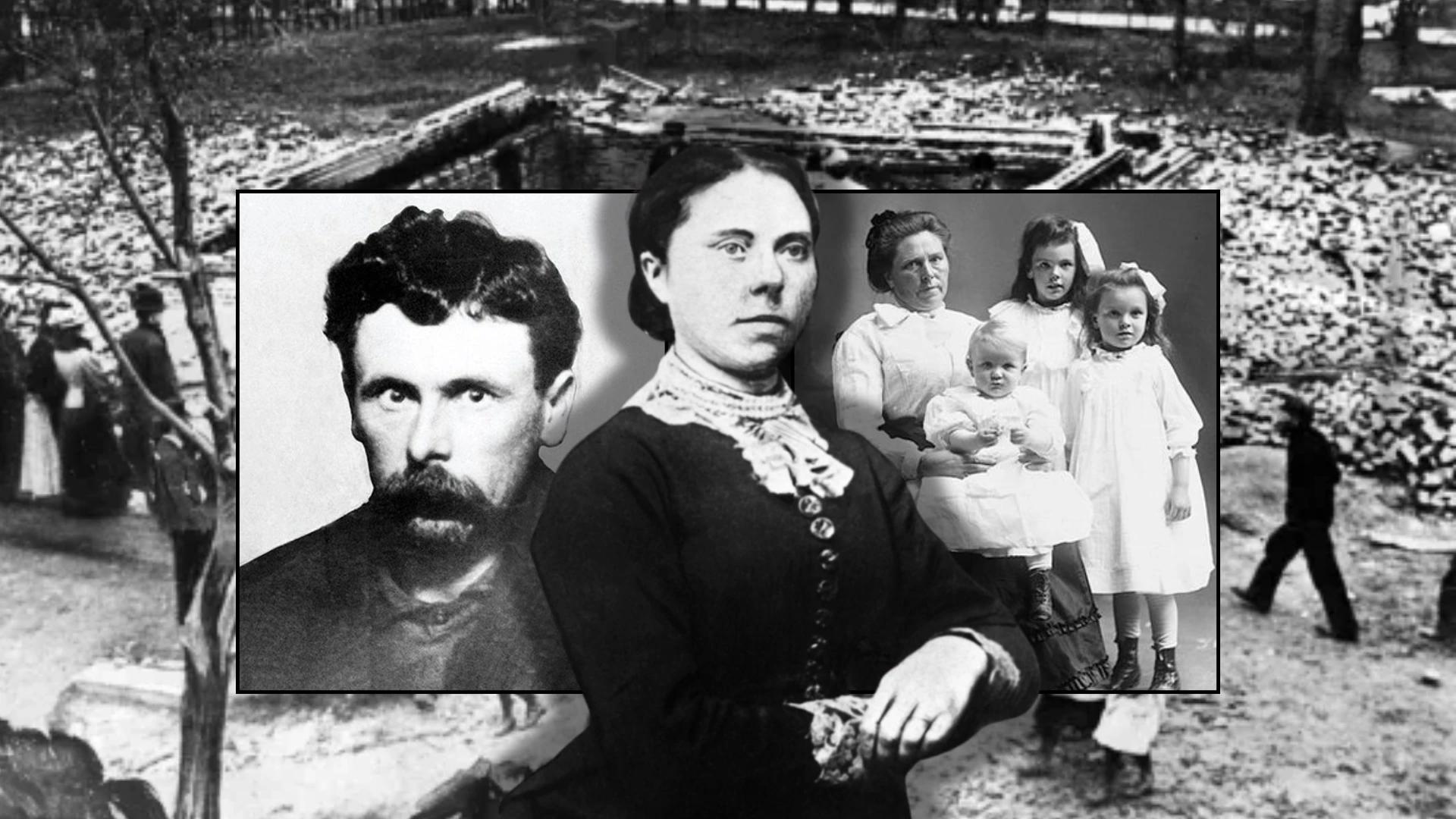
On the morning of April 28, 1908, farmhand Joe Maxson woke at approximately 4:00 a.m. to the suffocating smell of smoke. The farmhouse on McClung Road outside La Porte, Indiana was already burning. He ran for his life, made it out, and then did something that would haunt him: he circled back and checked the windows of the children’s bedrooms. They were empty. The glass reflected only firelight.
By sunrise, investigators had pulled four bodies from the blackened ruins. Three were children. The fourth was a headless woman. Beside her, lying in the ash, was a dental bridge. The coroner held it up, confirmed it had belonged to the farm’s owner, and declared the headless body that of Belle Gunness.
Then Asle Helgelein arrived from out of state, looking for his missing brother. He walked the charred property with investigators, unconvinced by what he was seeing. He pulled one of the farmhands aside and asked a specific question: where on this farm did Belle Gunness dig holes?
The farmhand led him to the hog pen.
What came out of the ground there would rewrite everything investigators thought they knew about a respectable Norwegian-born widow, a beloved community member, and a generous hostess who kept an unusually warm correspondence with dozens of lonely men across the Midwest.
A Poor Girl’s Obsession
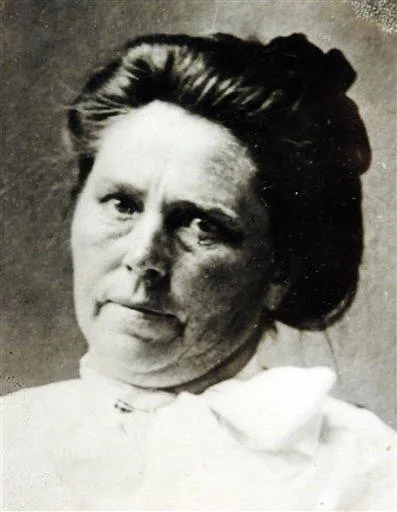
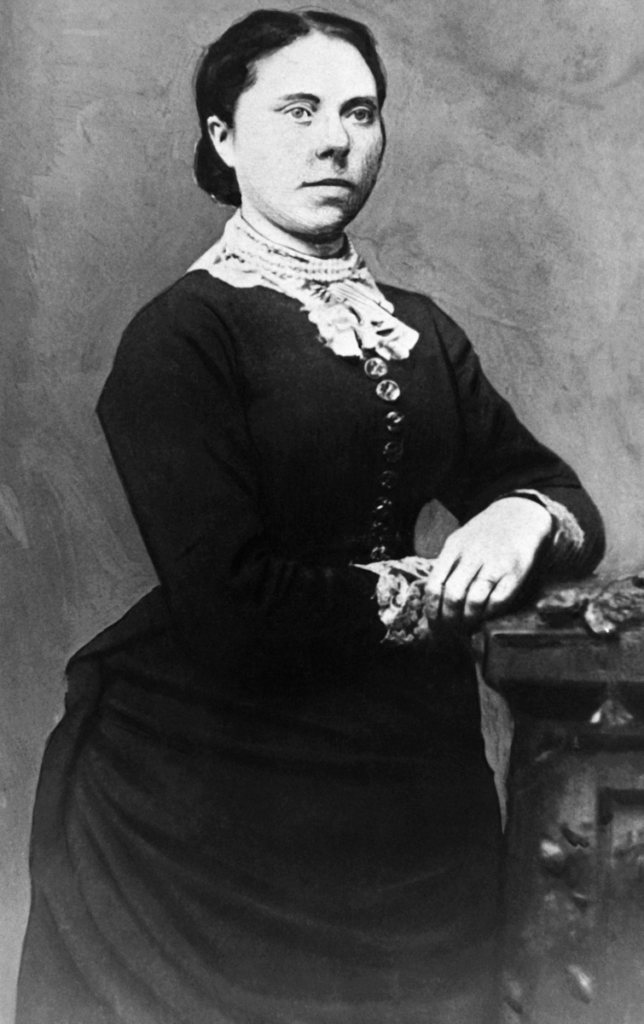
Brynhild Paulsdatter Størset was born on November 22, 1859, in the Norwegian village of Selbu, the youngest daughter of a stonemason whose family could not escape poverty no matter how hard they worked. She watched her parents struggle for every coin. She grew up understanding, with a clarity that most children are spared, exactly what it felt like to have nothing.
It made her want money the way other people want safety. It became the fixed point of her entire existence.
As a young woman she became transfixed by accounts of the American Dream — the idea that a person with nothing in Norway could cross the Atlantic and become someone in the United States. Sometime between 1881 and 1886, she packed whatever she owned and made the crossing. She settled in Chicago, Illinois, and she reinvented herself. Brynhild became Belle. The stonemason’s daughter from Selbu became a woman of ambition, warmth, and considerable personal charm.
She was, by every account of those who knew her during those early Chicago years, delightful company. She was tall and blonde with a wide white smile, and she radiated the kind of capable, self-sufficient warmth that made people trust her immediately. Nobody who sat across a table from Belle Gunness in the 1880s would have believed what she was already becoming.
The Deaths Began
In Chicago, Belle married Mads Sorensen, a fellow Norwegian immigrant. The couple opened a confectionary store. Then the store burned down. They collected the insurance money and moved on. Shortly afterward, two of their children, Caroline and Axel, died in infancy. The attending physicians recorded the cause as acute colitis. Belle collected the insurance on both children and moved on from that, too.
What the coroners missed, and what investigators would only fully understand years later, was that the symptoms Caroline and Axel had displayed before their deaths were almost identical to those produced by strychnine poisoning.
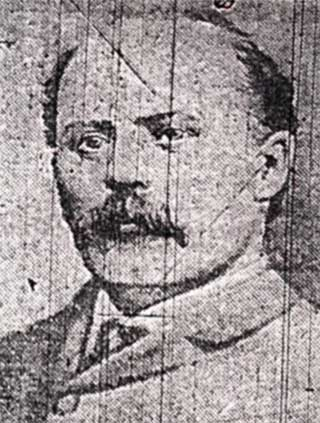
On July 30, 1900, Mads Sorensen died. The first physician to examine him listed strychnine poisoning as the cause of death. A second opinion changed that to heart failure. The revision was convenient for Belle in more ways than one: Mads died on the single day of the year when both of his active life insurance policies overlapped. His family immediately raised the alarm and demanded an inquiry. No charges were ever brought.
Belle walked away from the marriage with the equivalent of two hundred and seventeen thousand dollars in today’s money.
She was forty-one years old. She was just getting started.
La Porte, Indiana
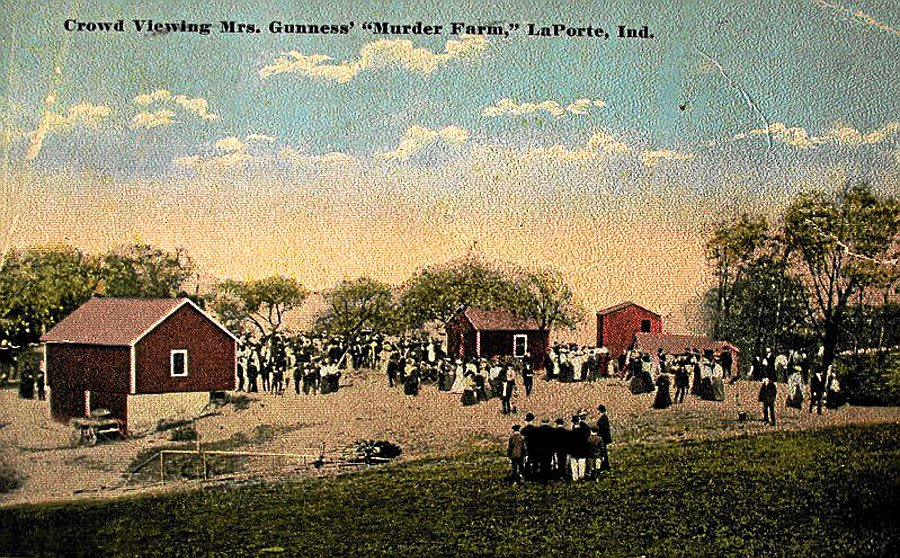
Belle used Mads Sorensen’s payout to purchase a farmhouse on 42 acres of land outside La Porte, Indiana. She moved there in 1901 with her three surviving children, Lucy, Myrtle, and Phillip, and her adopted daughter, Jennie Olson. Part of the farm burned down not long after she arrived. She collected the insurance and rebuilt.
In April 1902, she married Peter Gunness, a Norwegian widower with two daughters of his own. The wedding had barely concluded when Peter Gunness’s infant daughter died at seven months old. Peter kept a careful face, but something in him recognized the shape of what was happening. He sent his surviving daughter, Swanhild, away to live with her uncle. He did not explain why.
He would not live long enough to know that decision had saved her life.
On the night of December 18, 1902, Belle’s adopted daughter Jennie ran to a neighboring house and begged them to come quickly. When the neighbors arrived, they found Peter Gunness sprawled on the kitchen floor, lifeless. Belle was sobbing over him. She told investigators that a meat grinder had fallen from a high shelf and struck him in the back of the head. A coroner’s report found strychnine poisoning. No hard evidence could be recovered. Belle was charged with nothing.
She collected Peter Gunness’s life insurance payout, the equivalent of approximately eighty-one thousand dollars today. Six months after his death, she gave birth to his son, Phillip.
Jennie Olson was sixteen years old and had been present in that house when it happened. She had been present for too much. Her classmates later recalled her saying, quietly and in confidence, that her mama had killed her papa, that she had hit him with a meat cleaver, and that no one should tell a soul.
Nobody believed a sixteen-year-old girl. Or perhaps nobody wanted to.
The Lonely Hearts Columns
Despite two dead husbands, an infant, and insurance money that she spent as quickly as she collected it, Belle Gunness remained relentlessly focused on the single goal she had carried across the Atlantic from Selbu. She wanted more. She turned to the Norwegian-language newspapers of the Midwest and placed personal advertisements in their lonely hearts columns.
She described herself as a widow, prosperous and capable, who needed companionship and some help running her farm. She was specific about the kind of man she was looking for: hardworking, of good character, and financially secure. She invited interested men to write to her. She encouraged the promising ones to visit.
Those who knew Belle Gunness in La Porte during this period described the same woman they had always known: warm, capable, charming, and entirely trustworthy. She was considered a beauty. She stood six feet tall and weighed two hundred and fifty pounds, and she could do every task on a working farm — in the fields, in the dairy barn, in the hog pen. Neighbors found nothing strange about the suitors who came and went from the property. Belle was an attractive widow. Of course men were interested.
They stopped being interested, as far as anyone knew, the moment they arrived.
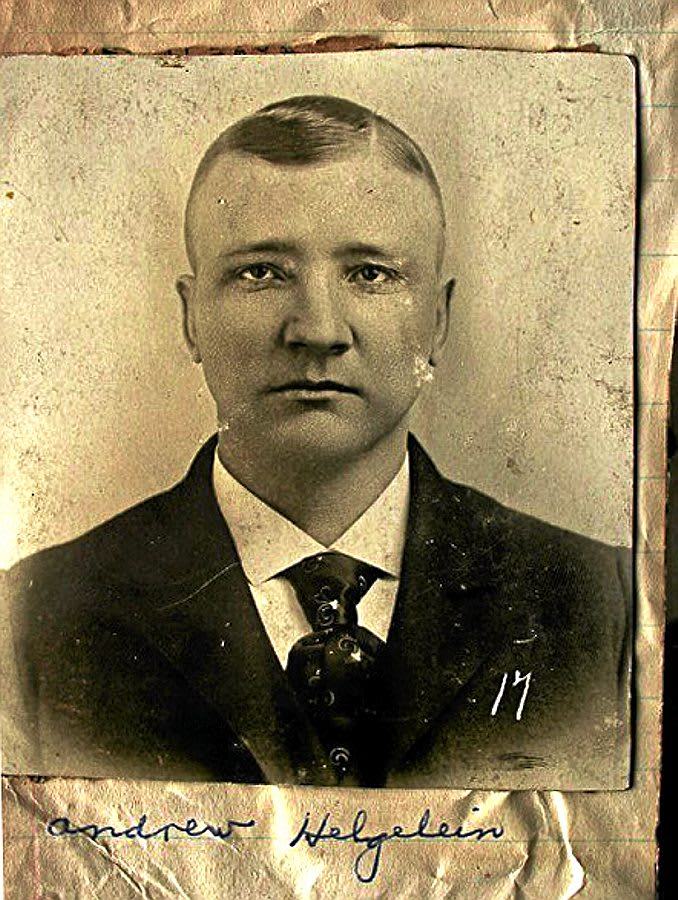
John Moo. Henry Gurholdt. Olaf Svenherud. Ole B. Budsburg. Olaf Lindbloom. Andrew Helgelein. Each of them had corresponded with Belle. Each of them had come to La Porte carrying their savings. None of them were ever heard from again.
Belle’s method, as Ray Lamphere would later confess in detail, never varied. She fed each man a meal and poisoned his coffee. She struck him with the meat chopper. She buried the remains in shallow graves around the property or fed them to the hogs. La Porte’s local bankers noted, with some private puzzlement, how often Belle arrived to cash large sums of money that men had wired to her on her behalf. She always had a reasonable explanation. She was always very pleasant about it.
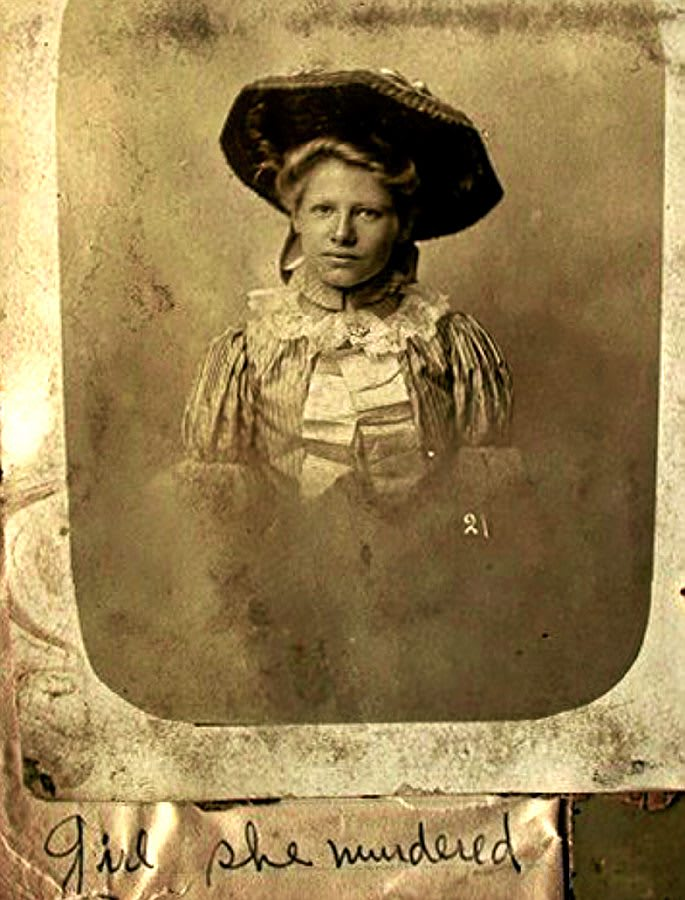
In the autumn of 1906, Jennie Olson disappeared. Belle told neighbors that Jennie had enrolled in a finishing school in Los Angeles, California. She was very pleasant about that explanation, too. Jennie Olson was never heard from again. She was sixteen years old.
Asle Helgelein Wrote
Andrew Helgelein’s brother Asle grew uneasy when weeks passed without a word. He wrote to Belle and asked about Andrew’s whereabouts. She replied that she had never met him and had no idea who he was. Asle Helgelein did not believe her.
He began making plans to travel to La Porte.
He was still making those plans when, in July 1907, Belle hired a new farmhand named Ray Lamphere. Lamphere was eleven years her junior. He fell in love with her almost immediately and grew visibly, obsessively jealous of the men who arrived at the farm and, as far as he understood it, competed for her attention. The relationship between them deteriorated into open conflict. Belle filed harassment complaints against Lamphere with local authorities. Lamphere made insinuations to anyone who would listen, suggesting that something was badly wrong on that farm and that the men who visited never seemed to leave.
Nobody followed up on his insinuations. Ray Lamphere, by that point, had the reputation of a jealous, unstable man in love with a woman who wanted nothing to do with him. His word carried no weight.
In early 1908, Belle hired a second farmhand, Joe Maxson. On April 27, she and Maxson unloaded her weekly groceries from town, including a full can of kerosene. They shared a meal together. Maxson went to bed. Belle Gunness spent the hours that followed doing what she had come to do.
The Fire and the Bodies
Maxson woke at 4:00 a.m. to smoke. He escaped and ran to check the children’s bedroom windows. They were empty. He raised the alarm.
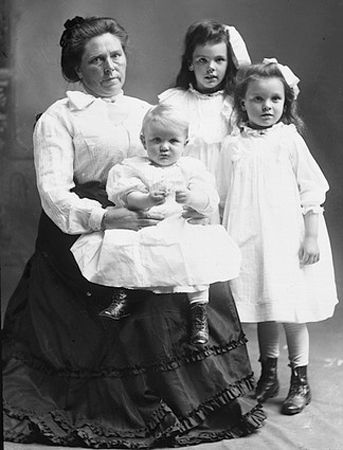
By morning, investigators had recovered four bodies from the ruin: Lucy, Myrtle, and Phillip, and the headless woman. The woman’s body was a puzzle from the moment it was found. The skeleton was measurably smaller than Belle Gunness, who had stood six feet tall. But the dental bridge lying in the ash was hers, confirmed by her dentist. The coroner accepted it as identification and closed that line of inquiry.
Ray Lamphere was arrested and charged with arson.
Asle Helgelein arrived. He spoke with the sheriff and insisted the farm be searched thoroughly. He spoke to Maxson and asked his specific question about where Belle used to dig. Maxson brought him to the hog pen.
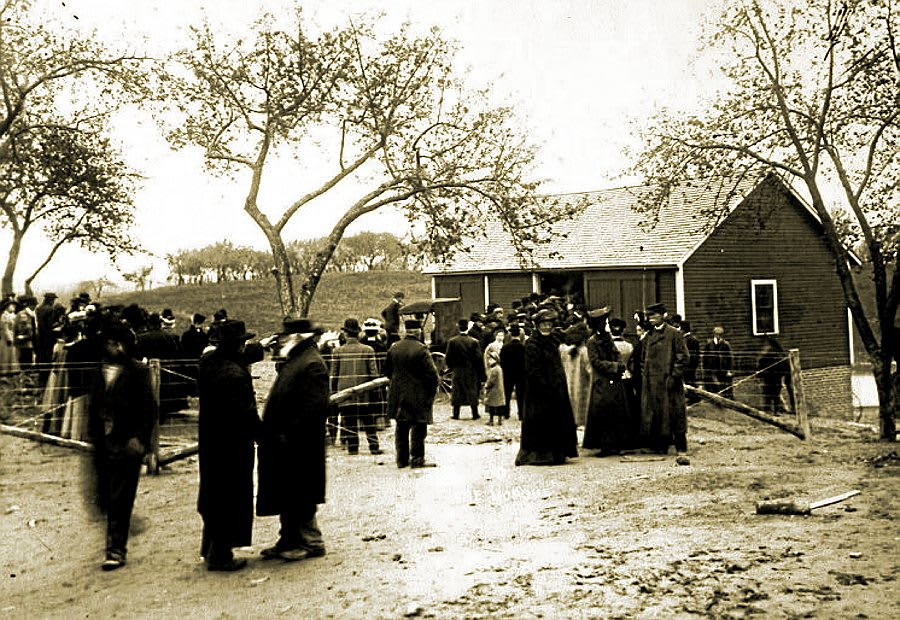
Investigators recovered approximately eleven bodies from the ground near the pen. Asle Helgelein found the remains of his brother Andrew, dismembered and packed into flour sacks. Among the other bodies pulled from the earth was Jennie Olson, the sixteen-year-old girl who had confided in her classmates that her mama had killed her papa. She had been in the ground since 1906.
Sickeningly, many of the other bodies recovered from the fields and surrounding property could not be identified at all. The full count of Belle Gunness’s victims has never been established with certainty.
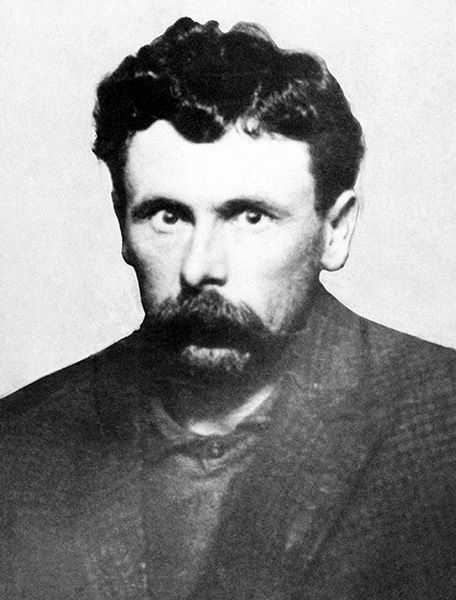
Lamphere’s Confession
Ray Lamphere was convicted of arson and sentenced to prison. He was not charged with murder. Before he died, he gave a full confession.
Days before the fire, Belle had sent him to Chicago on a specific errand: collect the new housekeeper she had hired. He brought the woman back to La Porte. He had no idea what Belle intended.
Belle killed the housekeeper, removed her head, and placed the remains in the farmhouse. She then drugged her three children and left them inside. She set the fire herself. She had already withdrawn her bank deposits. When the farmhouse caught, she was gone.
Lamphere told authorities that Belle had killed approximately forty-two people at the La Porte property. The number has never been confirmed or disproven. He said she fed her victims, poisoned their coffee, struck them with the meat chopper, then alternated between burying them in shallow graves and feeding their remains to the hogs.
Investigators searched for her. Several sightings of a woman matching her description were reported in the Chicago area in the months that followed, but none led anywhere.
She Was Never Found
In 1931, a woman named Elizabeth Carlson, also known as Esther, died in Los Angeles while awaiting trial for the fatal poisoning of a man. Those who saw her noted how closely she resembled Belle Gunness in appearance, build, and age. Among her belongings was a photograph of three children that investigators found striking: the faces looked remarkably like Lucy, Myrtle, and Phillip Gunness.
DNA testing conducted on the headless La Porte corpse decades later returned inconclusive results. Belle Gunness’s death has never been confirmed.
Her children’s deaths were.
Lucy. Myrtle. Phillip. The youngest was born six months after the man who fathered him was found dead on a kitchen floor. They were put to sleep by the woman who had given birth to them, left in their beds while she lit the house around them, and used as props in a crime scene constructed to protect her freedom. She had crossed an ocean chasing the American Dream. She had built a fortune on the bodies of dozens of people. In the end, the only thing she could not afford was to take her own children with her.
