
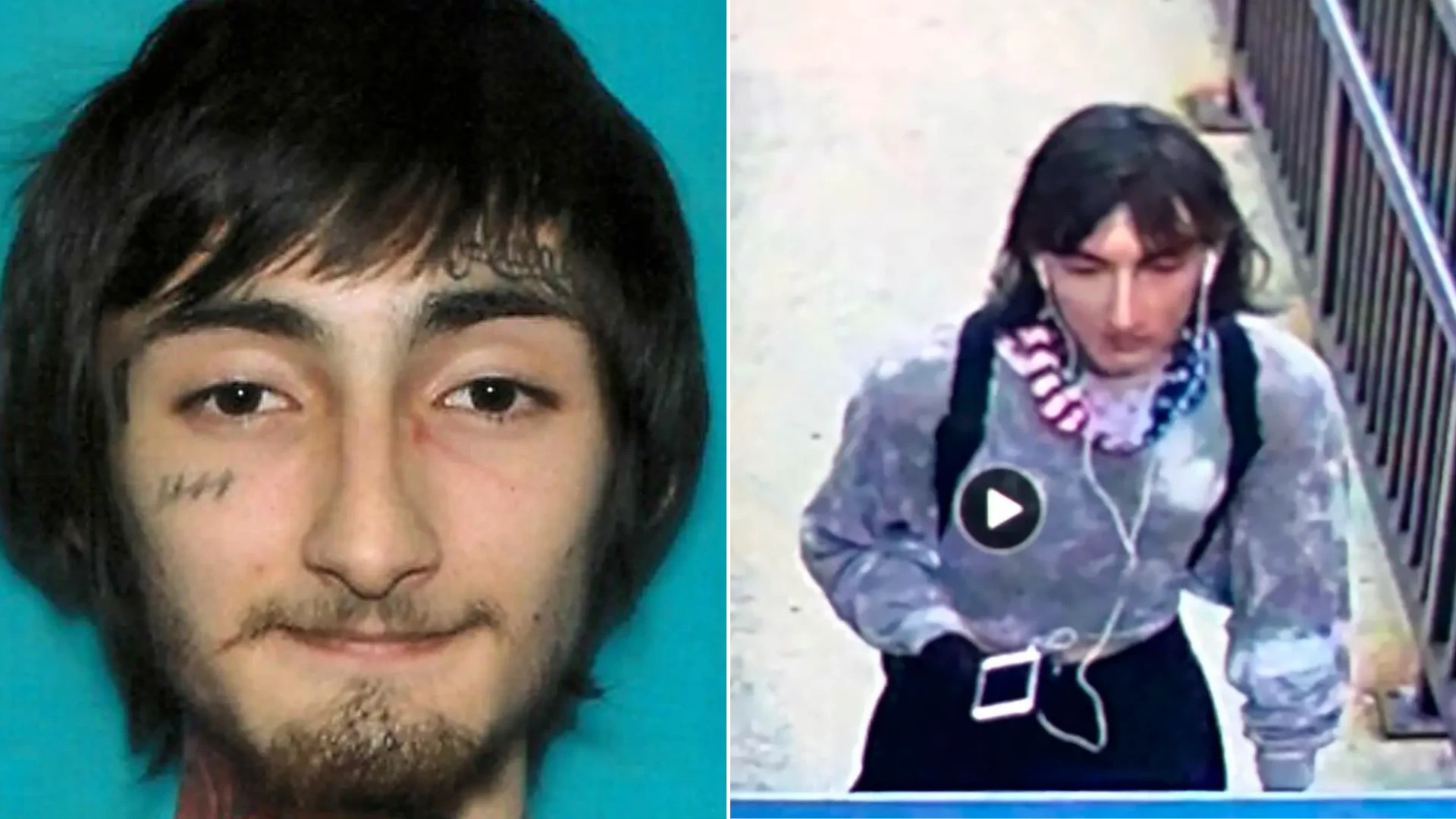
On the morning of July 4, 2022, Highland Park, Illinois was doing what it always did on Independence Day. Central Avenue hummed with marching bands. Kids chased candy along the parade route. Parents settled into lawn chairs with neighbors, pouring coffee in the early heat of a clear summer morning. After two years of COVID cancellations, the town had been waiting for exactly this. The sky was cloudless. Nothing felt wrong.
At 10:14 a.m., Robert Eugene Crimo III opened fire from a rooftop above the crowd. He had been up there for several minutes already, positioned behind a parapet on the roof of an outdoor outfitter with a Smith and Wesson M&P15 rifle. He waited for the marching bands to pass below him. Then he squeezed the trigger.
In the next 40 seconds, he fired 83 rounds into a crowd with nowhere to run. Some people heard the shots and ran. Others stood still, not yet understanding what the sound meant, while the people next to them fell. Seven were killed. Nearly 50 were wounded. An eight-year-old boy named Cooper Roberts was shot through the chest and paralyzed from the waist down. And when the sirens started, Crimo descended the fire escape in a wig and women’s clothing, slipped into the fleeing crowd, and walked away.
A Fractured Childhood
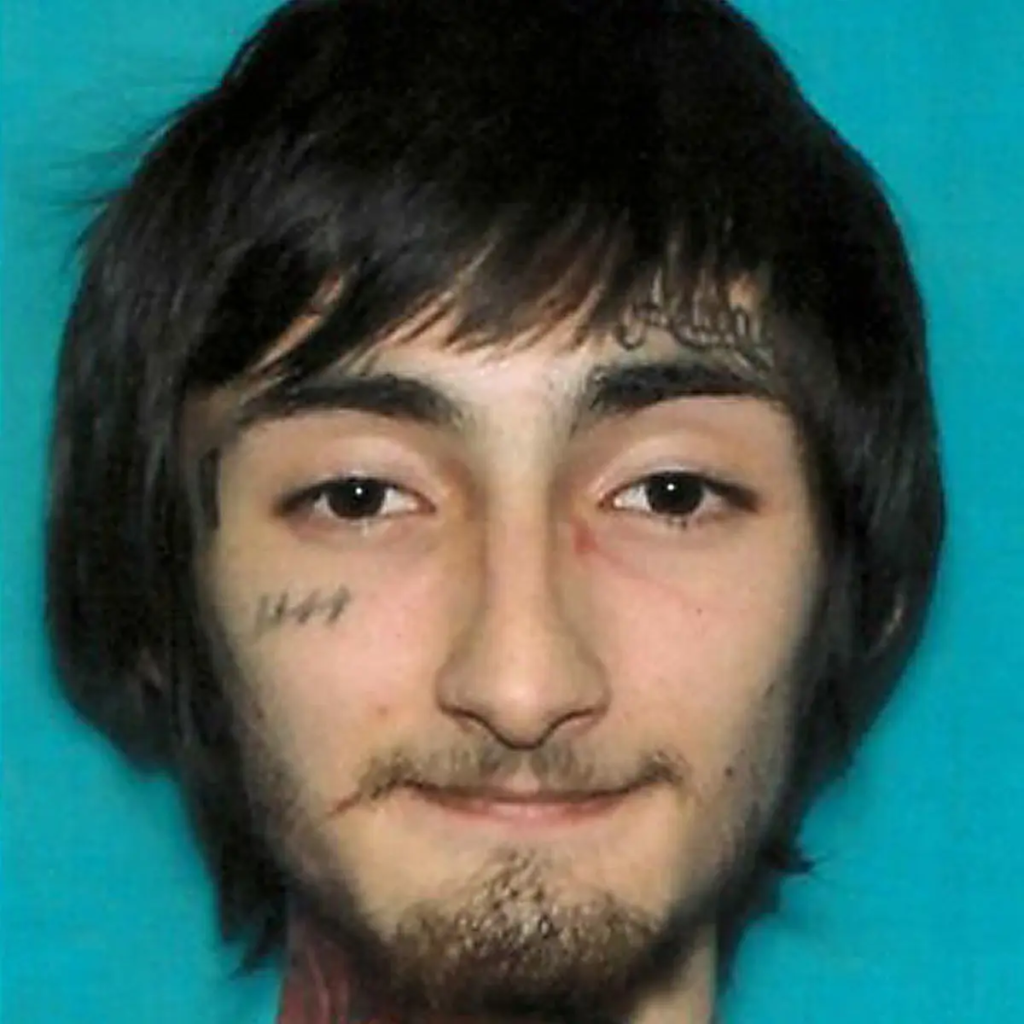
Robert Eugene Crimo III was born in 2000 and grew up only minutes from the parade route he would later turn into a crime scene. On the surface, his family occupied ordinary, even respectable space in Highland Park. His father, Robert Crimo Jr., owned a neighborhood deli that served as a local anchor and once ran for mayor of the town. His mother worked in alternative healing and described herself as a kind of therapist, though as investigators would later establish, she never arranged actual clinical care for her son.
By the time Bobby was two years old, police were already involved. A stranger called to report that his mother had left him sealed inside a hot car for nearly 30 minutes while she went shopping. She was arrested and pleaded guilty to child endangerment. Nothing fundamentally changed at home afterward. Over the following years, officers responded to the Crimo address more than ten times, called by neighbors who described explosive arguments audible from the street and public confrontations between his parents inside the family deli.
At school, Crimo was quiet and withdrawn. He never seemed to smile in photographs. He found a degree of comfort at the local skate park alongside his only real friend, Anthony Laporta. The two called themselves the Handsome Crew and filmed themselves doing tricks in parks around the north shore. Crimo later assembled these videos with nostalgic music and posted them online, and there is a visible warmth in them that appears almost nowhere else in his documented life. He had been uploading music since the age of 11. At the skate park, he looked something close to happy.
In 2017, Anthony Laporta died of a drug overdose. He was a teenager.
Crimo stopped going to school. He stopped leaving the house. He dropped out of his classes, cut contact with almost everyone, and retreated entirely into his bedroom and the internet. He was 17 years old, and the one person who had kept him tethered to the outside world was gone. What followed was not grief that sought support. It was grief that turned inward, and then began to build something.
Awake the Rapper
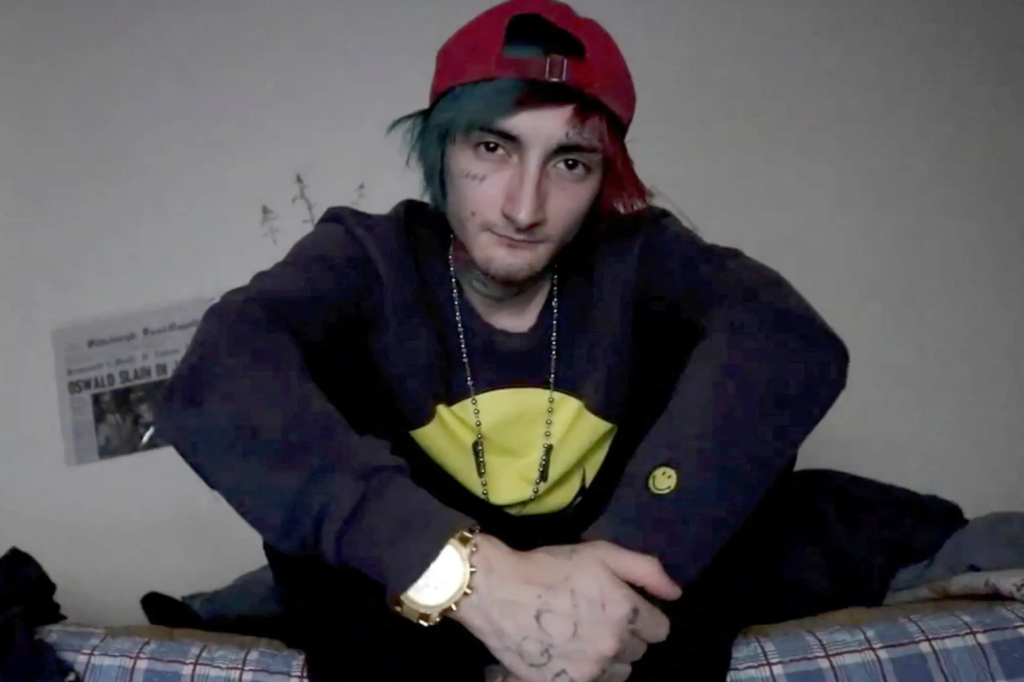
Online, Crimo had been uploading amateur music since childhood. After Anthony’s death, the content darkened steadily and then rapidly. By 18, he had settled on a persona he called Awake the Rapper: a nihilistic hip-hop identity built around face tattoos, violent imagery, and what he described as a kind of inevitable fatalism. He was not performing for the mainstream. He was building something for himself, or for whoever was watching.
He scattered output across multiple platforms simultaneously, maintaining a website, selling merchandise, flooding social media with songs, blog posts, and videos. One animated video, titled “Toy Soldier,” depicted a stick-figure shooter opening fire on a crowd before being killed by police. Another, titled “Are You Awake?”, featured Crimo speaking in a flat, robotic monotone that investigators would later describe as a rehearsal. “Like a sleepwalker, I am breaking through no matter what,” he said in the recording. “My actions will be valiant. I know what I have to do. I need to leave now.” He also had a documented obsession with Call of Duty: Zombies, the theme of which surfaced repeatedly in his videos and imagery. The shooter defending against an undifferentiated horde. An us-and-them logic stripped of ideology.
The fixation with July 4 was already visible in his posts years before the attack. He repeatedly published the number 47, an inversion of 74, the numerical representation of Independence Day. He designed a personal logo that bore a recognized resemblance to a well-known hate symbol. He named a Discord server SS, a direct reference to Hitler’s paramilitary unit. He attended at least two pro-Trump rallies in 2020, dressed as Where’s Waldo at one of them, but investigators found no coherent ideology in his behavior. He was not a political extremist with a cause. He posted government conspiracy content alongside admiration for Lee Harvey Oswald alongside edgelord memes alongside violent fantasy. The through-line was not ideology. It was notoriety.
He filmed himself driving past a local synagogue while muttering at the camera. He filmed himself on Central Avenue, studying the rooftop sight lines, nearly a full year before the shooting. He was already planning. He was already scouting. And he was posting red flags so openly that two separate populations, those who knew him in real life and those who followed him online, each had half the picture and neither had the whole one.
The Warning Signs
In April 2019, police received a report that Crimo had attempted to take his own life with a machete. Officers responded and found him withdrawn but cooperative. He told them he was already receiving mental health treatment. No charges were filed. No further action was taken. He was not, in fact, receiving any treatment at all.
Five months later, in September 2019, a family member called police after Crimo threatened to kill everyone in the household. Officers responded and searched his bedroom. They found 16 knives, a dagger, and a samurai sword. Crimo denied any intent to harm anyone. Officers filed a report formally labeling him a clear threat to both himself and others. Within weeks, a senior review of the file dismissed it. All charges were dropped. The weapons were returned to his father.
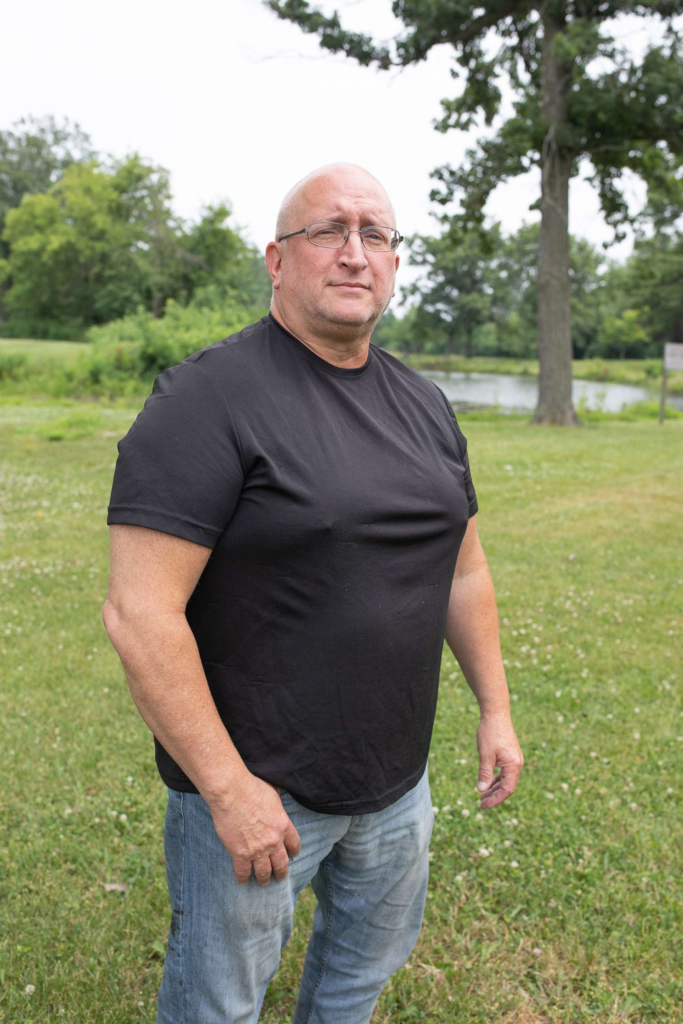
Three months after that, in January 2020, Crimo applied for an Illinois Firearm Owner’s Identification card. He was 19 years old, which under state law required a parental signature from a sponsor. His father, Robert Crimo Jr., signed the form. He would later claim that his son’s prior behavior was nothing more than a teenage outburst and that without a criminal record, the boy should not be treated as a dangerous person. The state of Illinois approved the application without conducting any additional review. It had access to both prior police reports. It approved him anyway.
Between 2020 and 2022, Crimo legally purchased five firearms from licensed retailers: several handguns, a shotgun, and the M&P15 rifle he would carry to the rooftop on July 4. At each transaction, background check systems that had access to two documented prior incidents cleared him automatically. Nobody intervened.
He was living in a small apartment in Highwood by then, in a unit his uncle Paul owned, after being pushed out of the family home. He was unemployed, socially isolated, and spending the near-entirety of his waking hours online. His father’s deli, the neighborhood anchor, had collapsed under more than 1.6 million dollars in debt. The family home was mortgaged beyond its value and heading toward foreclosure. Whatever remained of Crimo’s external world was contracting around him while his internal world, fully documented online, was turning darker by the month.
The Shooting
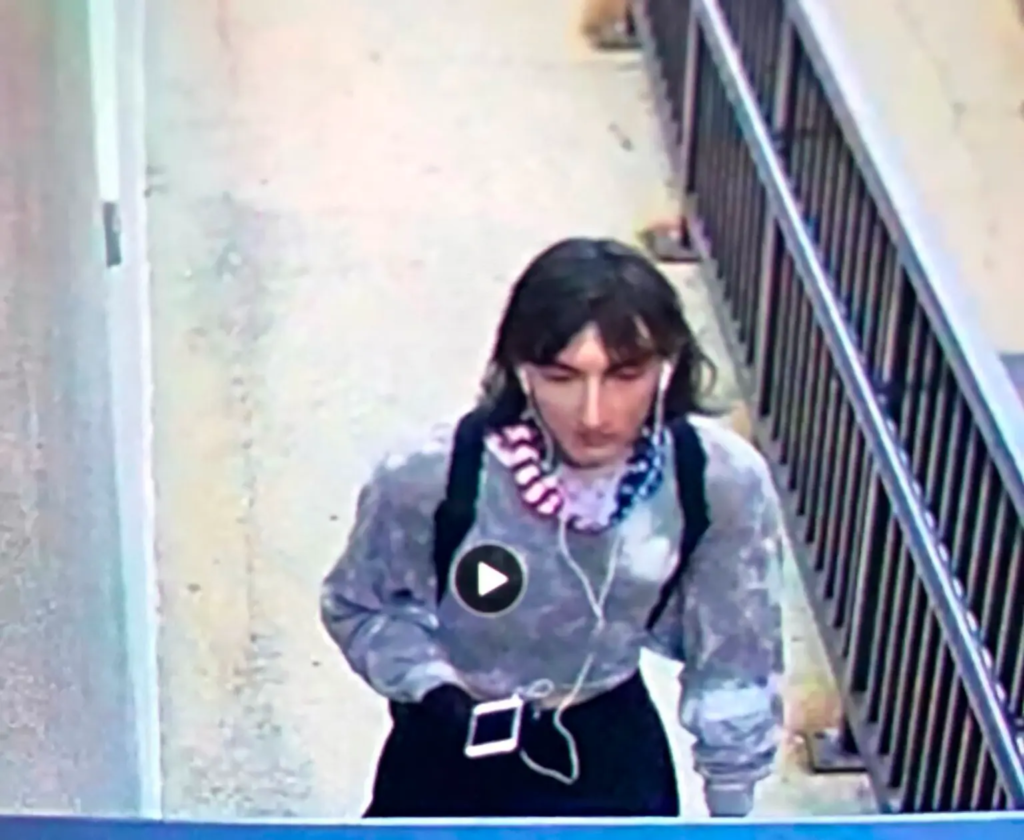
By June 2022, Crimo had chosen his date. He had already scouted the rooftop. He selected a disguise designed specifically to conceal his most identifiable features: his neck and face tattoos, which covered much of his visible skin. In the early hours of July 4, he dressed in women’s clothing, applied makeup, put on a wig, and pulled long sleeves over his arms. He wrapped the M&P15 in a blanket, walked toward downtown, and climbed the fire escape at the back of an outdoor outfitter on Central Avenue. He set up his position and waited.
When the marching bands passed beneath him, he opened fire. In forty seconds, 83 rounds struck the street below.
Stephen Straus was 88 years old. He was at the parade the way he had been every year, out of tradition and habit and love for his community. Nicolas Toledo-Zaragoza was 78, originally from Morelos, Mexico, and had been hesitant to go that morning before his family persuaded him to get some fresh air. Eduardo Uvaldo was 69. Katherine Goldstein was 64, standing next to her daughter when she was shot. Jacquelyn Sundheim was 63 years old. She had spent decades as a beloved preschool teacher at North Shore Congregation Israel and was at the parade to support her community. Kevin McCarthy was 37 and his wife Irina was 35. They were on Central Avenue with their two-year-old son, Aiden. When the shooting started, Kevin and Irina threw themselves over him. Both were killed. Aiden survived. He was found covered in his parents’ blood by a stranger who carried him to safety while bodies were still on the ground around them.
When Crimo heard the first sirens, he dropped the rifle where he stood and climbed back down. He merged into the crowd of people running away from the sound of gunfire. He kept his head down. To anyone around him, he looked like any other terrified civilian. He walked to his mother’s house a short distance away, told her there had been a shooting at the parade, and asked for her car keys. She handed them over. He drove north on I-94 toward Wisconsin, carrying a second rifle and more than 60 rounds of ammunition.
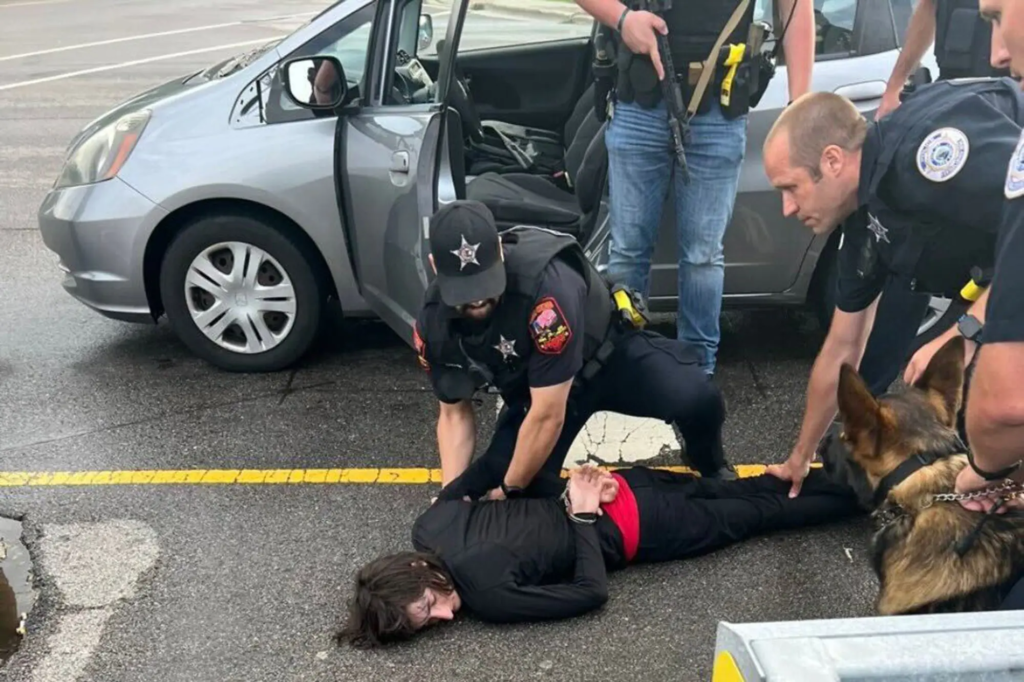
He turned back before crossing the state line. Investigators have never established why. By 6:30 that evening, officers spotted his mother’s Honda Fit five miles from Central Avenue. Crimo was arrested without significant resistance. He stepped out of the car slowly, lay flat on the pavement with his arms outstretched, and surrendered. He showed no distress.
No Answer, No Remorse
In custody, Crimo confessed immediately and without apparent reluctance. He told investigators he had considered staging a second attack in Wisconsin before deciding against it. He expressed no remorse and offered no explanation. He did not ask how many people had died.
As his online archive surfaced in the days that followed, investigators and the public found themselves looking at years of documented warning signs that had been hiding in plain sight. A grand jury returned a 117-count indictment in July 2022, including 21 counts of first-degree murder and 48 counts of attempted murder. His father, Robert Crimo Jr., was separately charged with seven counts of felony reckless conduct for signing the firearm license despite two prior police incidents. He accepted a plea deal, pleaded guilty to a misdemeanor, was sentenced to 60 days in jail, and served 30.
Crimo’s defense team pursued an insanity plea through 2023 and into 2024. Civil suits accumulated against Crimo, his father, and the retailer that sold him the rifle. Illinois launched a review of its red flag law failures. In June 2024, Crimo appeared in court apparently willing to accept a guilty plea. Survivors and victims’ family members who had steeled themselves to hear it accepted watched him reject the deal at the last moment. They had to go home and prepare themselves to do it again.
He never provided a clear motive. His videos and lyrics suggest an obsession with mass violence as a form of self-creation rather than any coherent ideology. He had no manifesto in the conventional sense. What he left behind was a 28-page document he called Arcturus, composed entirely of sequences of numbers that investigators and online followers alike spent months attempting to decode. As of his sentencing, only the first page had reportedly been partially deciphered. The rest remained unreadable.
On March 3, 2025, Robert Crimo III pleaded guilty to 21 counts of first-degree murder and 48 counts of attempted murder, moments before opening statements were set to begin in his trial. He was 24 years old.
He did not attend his sentencing hearing on April 24, 2025. His chair remained empty as more than ten survivors, family members, and first responders delivered impact statements into the space where he should have been sitting. Judge Victoria Rossetti sentenced him to seven consecutive life terms without the possibility of parole, plus 50 additional years for each of the 48 attempted murder counts. Liz Turnipseed, shot in the pelvis and still limited in her mobility nearly three years later, stood and called him a coward. Then she said she was not surprised he had chosen to hide.
Kevin McCarthy was 37 years old. Irina McCarthy was 35. They were at a parade on a sunny July morning with their toddler, doing what families do on Independence Day in a town that had made the Fourth of July its own. When Robert Crimo opened fire, they covered their son with their bodies. Aiden lived. He will grow up knowing what his parents did, and why he is still here, and who made it necessary.
