

On the evening of December 13, 2001, 20-year-old Dustin Wehde drove to the Roberts family home in Early, Iowa. He was a quiet young man who had cut the family’s grass, sat beside them at church, and been helped by the family’s patriarch in finding work. Dustin’s mother, Mona, later testified that Tracey had called her personally and asked that Dustin come by alone, saying she had some paperwork she needed him to help with. He arrived at the house that evening with no reason to be afraid.
Within hours, Early’s police and emergency responders were on the scene. Tracey Roberts, née Richter, was taken to the hospital in shock, barely able to speak. From her hospital bed, she told investigators what had happened: two men had broken into her Victorian home.
They had grabbed her by the ponytail, choked her with a pair of pantyhose until she lost consciousness, and tried to break down the door of the room where her three children were locked. When she came to, she fought her way to the bedroom gun safe, retrieved a handgun, and opened fire. One intruder went down. The other fled into the night. Tracey described herself as the only thing standing between her children and their killers.
Dustin Wehde was found on the floor with nine bullet wounds. Three were to the head. All three had been fired from above.
A Pattern Emerged Early
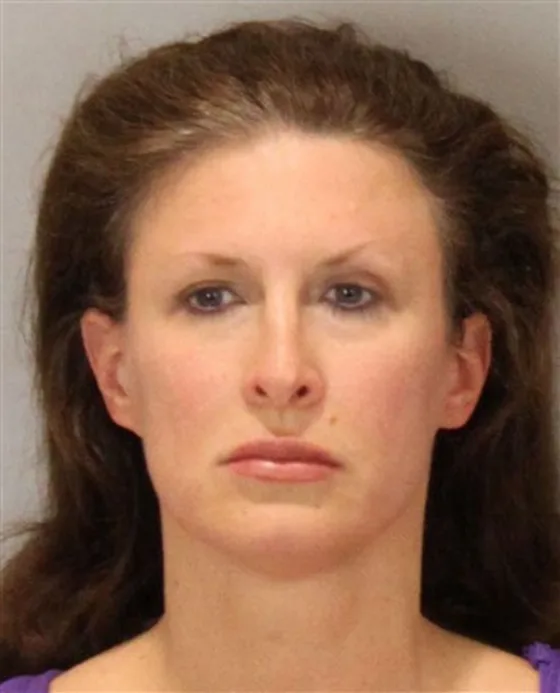
Tracey Ann Richter was born in Chicago in May 1966. She was bright, socially skilled, and capable of presenting an entirely different version of herself to different people. She earned a scholarship to study radiography, and in 1987 she met Dr. John Pitman III, a medical student on his way to becoming a plastic surgeon.
The two became engaged quickly and married in 1988, relocating to Denver, Colorado, where Pitman began his residency. Within months of the wedding, Pitman’s parents reported their credit cards stolen. The investigation pointed to Tracey. John refused to believe it.
The pattern that followed would repeat itself across every significant relationship Tracey had. She steadily isolated Pitman from his own family, manufacturing grievances and positioning herself as the injured party in each dispute. In 1991, the couple had a violent argument that ended with Tracey walking upstairs, retrieving a handgun, and returning downstairs. Pitman ran outside. He heard a single shot.
Tracey came out and told him she had tried to kill herself. Pitman called the police. Tracey was charged with the unlawful discharge of a firearm and ordered into six months of psychological treatment.
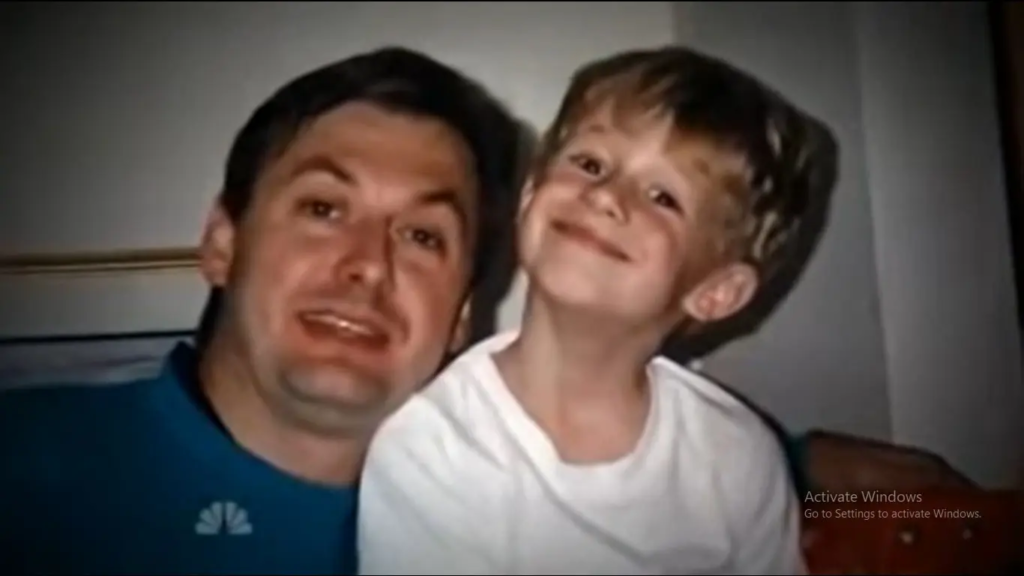
Their son Bert was born in 1990, a pregnancy that resolved nothing between them. Suspicious that Tracey wanted to increase his life insurance policy, Pitman hired a private investigator. The PI confirmed she was having multiple affairs. The couple divorced in 1996. Tracey threw every weapon she had at the custody case, accusing Pitman of sexual abuse and child abuse. Illinois investigators found the accusations to be false. She had also forged Pitman’s signature on a life insurance document. Despite all of it, the courts awarded Tracey custody of Bert. Pitman paid $1,000 per month in child support.
Not long after the divorce, Tracey filed a civil suit against a Chicago-area oral surgeon named Joseph LaSpisa, claiming he had sexually assaulted her while she was under sedation during a dental procedure. She sought $150,000 in damages. The claim was widely disbelieved, but it cost LaSpisa his professional standing. By the late 1990s, the two men who had known Tracey closest were left with fractured finances, shattered families, and no criminal charges against her.
Early Iowa, New Life
Tracey met Michael Roberts, an Australian entrepreneur, through an online service in the late 1990s. The two were so immediately intense in their connection that they married just 18 days after first meeting in person. Roberts relocated from Australia permanently, and the family settled in Early, Iowa, a farming community of roughly 500 people located about 100 miles northwest of Des Moines. They had two children together: a boy named Noah and a girl named Mason. They started an IT company, joined the local church, and became part of the community. Neighbors found them warm and engaged. On the surface, it was the quietest Tracey had ever been.
Beneath it, the custody dispute with John Pitman over Bert was intensifying. By December 2001, a hearing was scheduled for February 2002. Tracey believed she stood at serious risk of losing not only her oldest child but the $1,000-per-month in child support that came with him. She needed something dramatic. She needed someone to blame.
Wehde Died That Evening
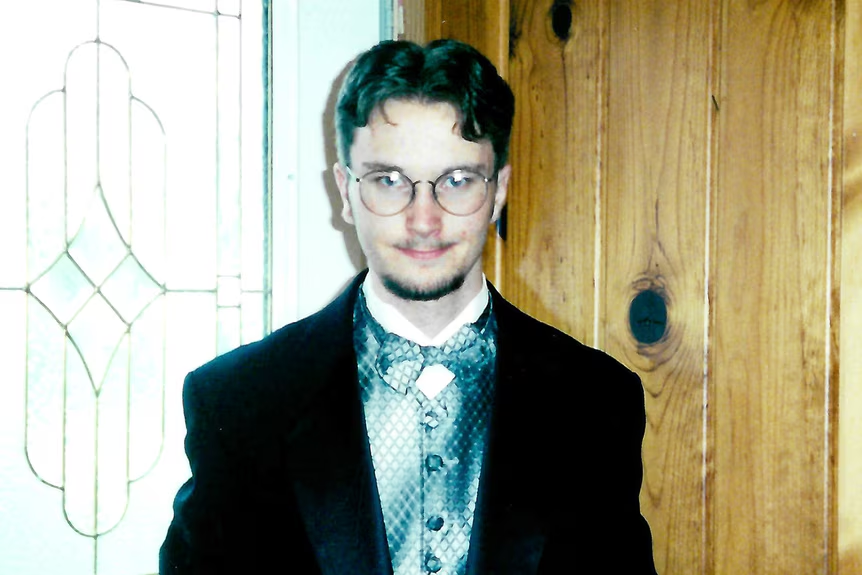
Dustin Wehde was 20 years old and lived near the Roberts home. He was soft-spoken, interested in computers, and trusted by the family. Michael Roberts had tried to help him find employment. Tracey’s account of him to police, delivered from her hospital bed on December 13, 2001, described a man she had never trusted and always found unsettling. But Mona Wehde, Dustin’s mother, testified at trial that Tracey had called her and asked that Dustin come by alone, saying she had paperwork she needed help with.
Prosecutors laid out what they believed actually happened that afternoon. Tracey invited Dustin over in the early hours of December 13. A friend, Marie Friedman, arrived unexpectedly to spend the evening with Tracey, as both their husbands were out of town on business. Tracey and Marie had tea, and Dustin was sent away.
Tracey then convinced her friend to leave, telling her she had to pick Bert up from basketball practice. When Dustin returned later that evening, Tracey forced him at gunpoint to write in a pink spiral notebook.
The entries, in Dustin’s own handwriting, claimed that a mysterious man named John Pitman had hired him to murder Tracey and Bert and stage it as a murder-suicide. The notebook contained details only Tracey could have supplied: the name of Pitman’s divorce attorney, specific elements of the custody dispute, details of Pitman’s surgical practice.
When Dustin had finished writing, Tracey shot him nine times with two separate handguns. Investigators believe she waited approximately ten minutes before firing the final shot to the head, ensuring he was dead before she called the police.
When investigators arrived, Tracey described her injuries as the result of being strangled unconscious with a pair of pantyhose that had been drying on the bannister. The paramedic who examined her noted that the marks on her neck did not match strangulation and appeared to be self-inflicted. There was no forced entry at the Roberts home, whose doors were kept locked, unlike those of most neighbors. There were no signs of struggle or ransacking anywhere in the house. Dustin had entered without weapons.
The pink notebook was recovered from the front seat of Dustin’s car, parked in the driveway. Investigators who found it made a deliberate decision: they told no one. They understood that whoever knew about the notebook’s existence and its specific contents had been directly involved in the death. So they waited. And they watched.
The Investigation Stalled
In the weeks after the shooting, Tracey gave interviews to anyone who would listen. She appeared on national television. She told neighbors, reporters, and church members that she had killed Dustin Wehde to protect her children, that she was a mother who had done what mothers do. Michael Roberts offered a $10,000 reward for information about the second intruder who had allegedly fled. Early’s doors, long left unlocked, began to be locked at night.
But within months, Tracey had already made her first mistake. She told a family friend about the pink notebook, explained what was written inside, and said it would lead directly to John Pitman’s arrest. Investigators had released nothing publicly about the notebook. The friend, who became the prosecution’s star witness at trial, later testified that years afterward, Tracey pulled her aside and told her to forget everything she knew about it.
The case was classified as a justified shooting and closed with no charges filed. Tracey stayed married to Michael Roberts, had more affairs, and the marriage eventually collapsed. Michael filed for divorce in 2004. When he did, Tracey’s story shifted: she told police that Michael had actually been behind the attack. She said he had confessed to her in his sleep. Investigators found no evidence to support it.
Thanksgiving Day 2002, Brett Wehde, Dustin’s father, was found unresponsive at the cemetery where his son was buried. He had shot himself beside the grave. His note said his heart had broken the day Dustin died and that he cried every day. The Wehde family filed a wrongful death suit against Tracey in 2003. It was dismissed in 2005.
The Case Broke Open
In 2008, Iowa Division of Criminal Investigation Special Agent Trent Vileta was assigned to take a fresh look at the Wehde shooting. He found a case riddled with inconsistencies. In 2011, Sac County elected a new prosecutor: 33-year-old Ben Smith, who had just ousted the previous county attorney from office. Smith reviewed the case within months of taking office. On August 5, 2011, nearly ten years after Dustin Wehde died on the floor of the Roberts home, Smith filed a charge of first-degree murder against Tracey Richter Roberts. She was arrested in Omaha, Nebraska, where she had been living with a fiancé under the name she had adopted in 2010: Sofia Therese Corina Baroni Edwards.
When police searched her belongings at the time of her arrest, they found paperwork for another name change. She intended to become Heidi Joanna Frostpakker. That was the same name as Michael Roberts’ new wife.
The trial was granted a change of venue to Fort Dodge, Iowa, and opened on October 23, 2011. Prosecutor Douglas Hammerand told jurors the case hinged on the pink notebook, on emails Tracey had written to investigators using nearly identical language to describe Pitman, and on the testimony of the friend who had been told about the notebook just weeks after the shooting. The notebook contained details few people knew, and the language in it mirrored language Tracey had used in correspondence. Tracey’s son Bert, now 21, took the stand and gave vivid testimony corroborating his mother’s account. He suggested that Michael Roberts might have orchestrated the attack. John Pitman III testified that he had never met Dustin Wehde and had never known the notebook existed.
Tracey did not take the stand in her own defense.
Convicted and Sentenced
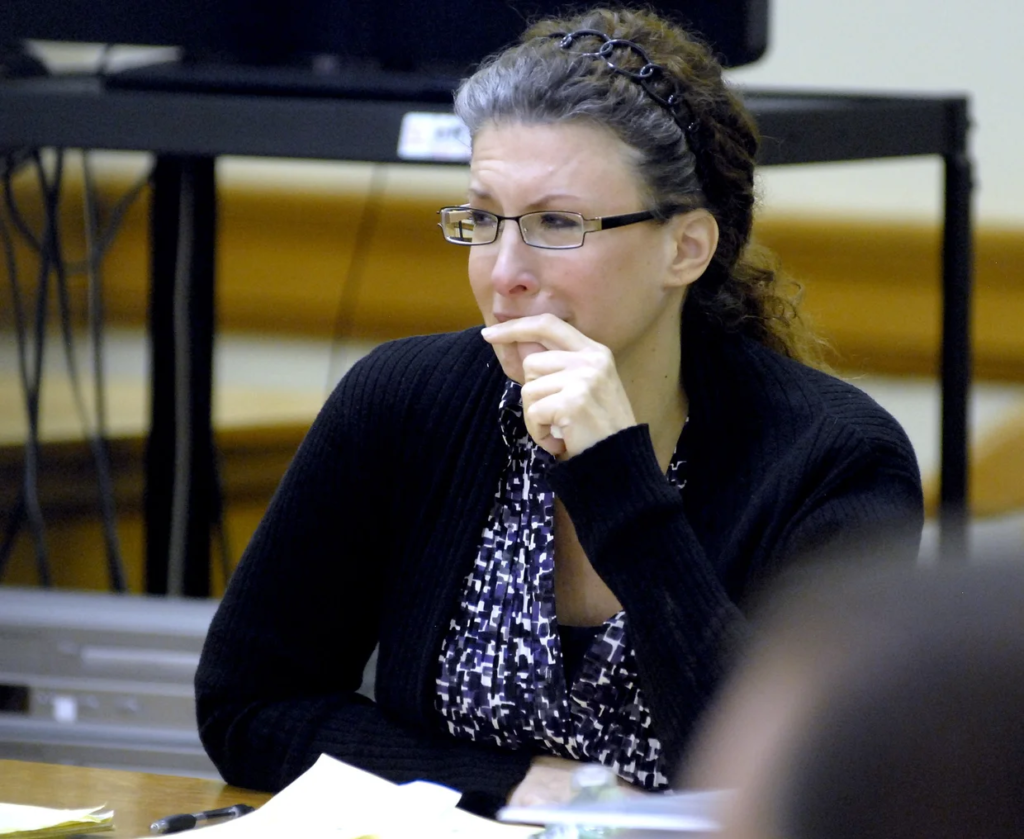
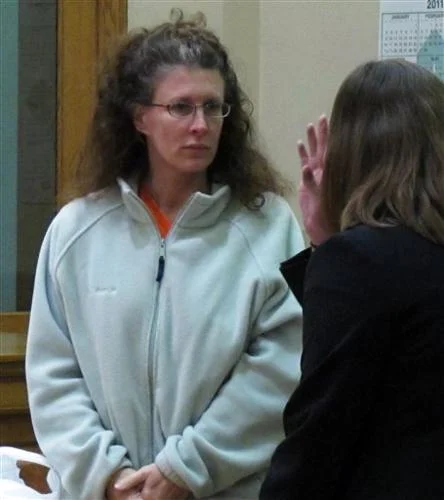
On November 7, 2011, the jury found Tracey Richter guilty of first-degree murder. She buried her face in her arms when the verdict was read. On December 5, 2011, she was sentenced to life in prison without the possibility of parole. Iowa does not have the death penalty, and life without parole is the mandatory sentence for a first-degree conviction. She was 45 years old.
From prison, Tracey began corresponding with a convicted child sex offender in Wisconsin named James Landa. In one letter, she provided Landa with Michael Roberts’ full name, Social Security number, date of birth, physical description, and home address. Prosecutor Ben Smith, who learned of the letter, told reporters that he feared for Michael and his children. The Iowa Court of Appeals upheld the conviction in 2017.
Michael Roberts eventually won full custody of Noah and Mason and moved with them to Brisbane, Australia. Noah had been 3 years old on the night his mother killed Dustin Wehde. Mason had been 1. Neither has seen Tracey since her conviction.
Dustin Wehde was 20 years old. He had mowed the lawn. He had sat in the pew. He had come over that December evening because a woman he trusted said she needed help with some paperwork. His father was buried beside him by the following Thanksgiving. His mother sat in a Fort Dodge courtroom on November 7, 2011, and wept when the jury came back.
