
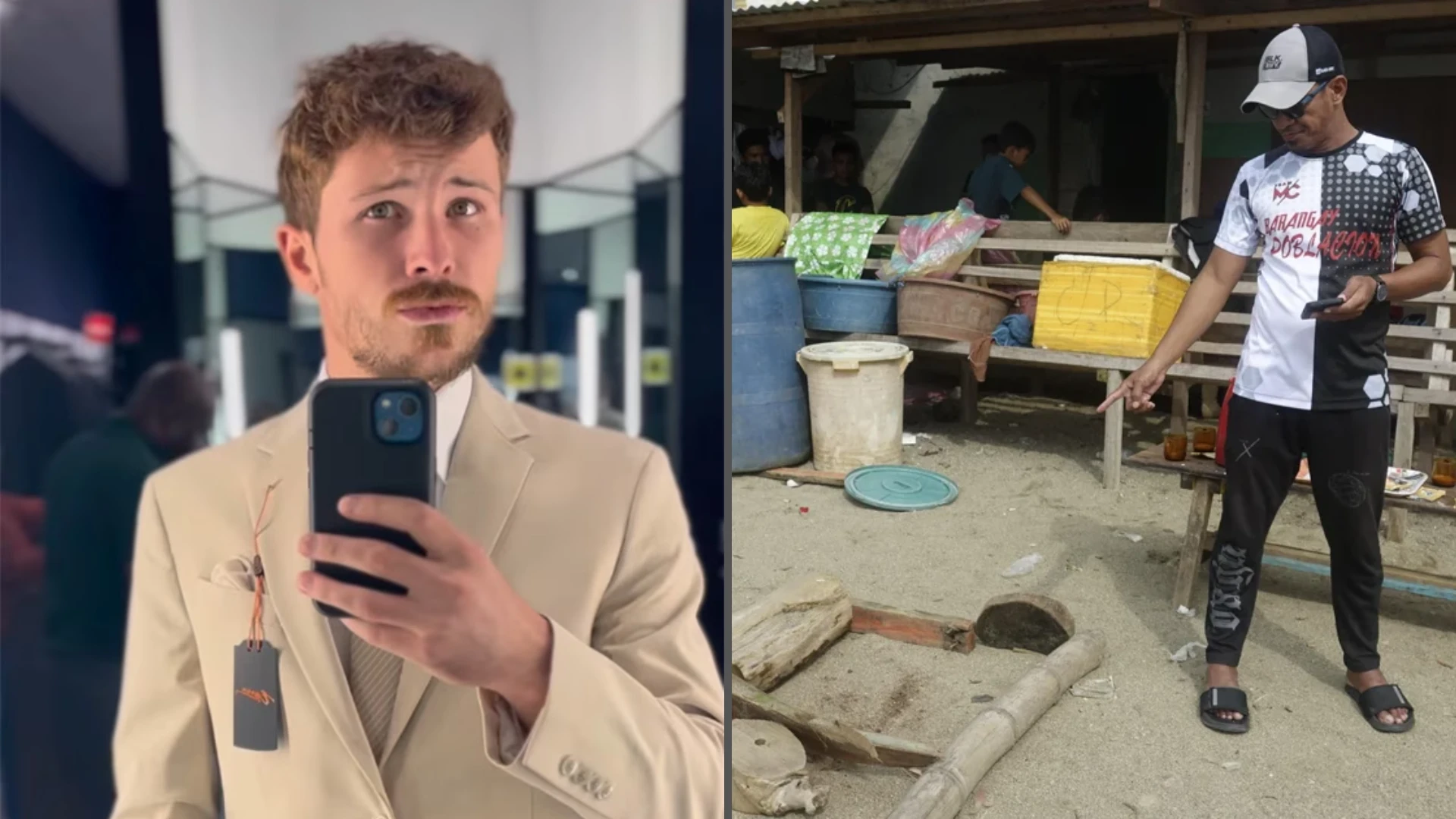
On the evening of October 17, 2024, Elliot Eastman sat on the floor of his small home in Sibuco and ate his dinner in front of a live stream camera. He appeared flat and disheveled, answering viewer questions in short, disconnected fragments. When someone asked whether he was enjoying the Philippines, he paused. “There’s some parts that I like about it,” he said. “There’s some parts that I don’t like.” A viewer pushed further and asked what he didn’t like. He answered without inflection. The bathrooms smelled. He was getting tired of being around all the same people. Then he turned off the camera. He did not say goodbye.
Two hours later, four men dressed as police officers approached his property through the dark. Elliot Eastman was 26 years old.
A Life Left Behind
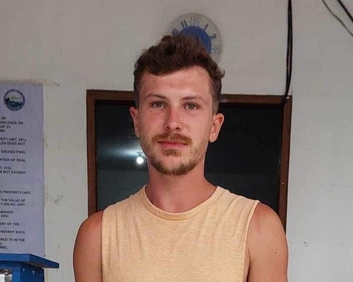
Elliot Eastman grew up in Hinesburg, Vermont, a town of roughly 900 residents tucked into the hills of Chittenden County. Born in 1997, he graduated from Champlain Valley Union High School in 2016 and went on to study at Ithaca College in New York before returning home. Classmates remembered him as quiet and reserved but well-liked. He was the kind of person who drifted rather than pursued, good-natured but without a fixed direction.
By 2022, he was working as a DoorDash driver and Uber driver in Hinesburg, filling his spare time with photography and ski trips to local slopes. He posted regularly to social media, sharing photographs of his life in Vermont, including the comfortable, scenic neighborhoods and homes he had grown up around. They were ordinary posts to him. To a future audience thousands of miles away, they would paint a very different picture. Hinesburg offered the same lake, the same roads, and the same slow rhythm it always had. Elliot wanted something vastly different.
At the end of 2023, he made his decision. He settled his remaining obligations, said goodbye to his family, and boarded a flight from Burlington International Airport bound for Manila, more than 8,000 miles away. He chose the Philippines.

Love in the Mountains
The Philippines that greeted Elliot Eastman was not the Manila of museums and shopping malls. He traveled south to the island of Mindanao, to the municipality of Sibuco in Zamboanga del Norte, and settled along its coast. The average monthly wage in that part of Zamboanga del Norte was roughly $200. To anyone who had come across Elliot’s social media and seen his photographs of Vermont, he would appear extraordinarily wealthy by comparison. That gap between perception and local reality would matter enormously.
He had also placed himself in one of the most dangerous regions in Southeast Asia. The U.S. State Department maintained an explicit advisory against travel to Central and Western Mindanao due to the high risk of terrorism and kidnapping. The Australian, British, and Canadian governments issued nearly identical warnings. Terrorist and armed groups operating in and around the Sulu Sea had a well-documented history of targeting foreign nationals for ransom. In the decade before Elliot arrived, more than 40 Westerners had been kidnapped in the region. He was aware of all of it. He described taking pride in being the only Westerner willing to settle there anyway.
In the mountains of Zamboanga del Norte, he met Karisha Jala, the daughter of a local shaman. By his own account, it was love at first sight. The two married in a traditional Muslim ceremony in July 2023, with Elliot converting to Islam for the occasion. Karisha was a Sama-Sibuco woman, native to exactly the community Elliot had chosen. She was not naive about what that community was capable of. When Karisha was in the fifth grade, one of her classmates, a Canadian, had been kidnapped from the area. The ransom demand was $50,000. Elliot knew about this. He stayed anyway.
After a brief return to the United States to earn money, he settled permanently in Sibuco in May 2024, moving into Sitio Tungawan, Barangay Poblacion, a coastal community he described as somewhere once accessible only by boat. He rented a small apartment there for 3,000 pesos a month, roughly $52, utilities included. He was, by his own account, the only permanent Western resident the community had ever seen.
The Camera Never Blinked
Elliot documented everything. He began posting YouTube shorts in January 2024, launching his first of what would become more than 500 short-form videos over the months that followed. His first title told viewers exactly where he was and exactly why it mattered: “Living in the most dangerous area of the Philippines Red Zone.” Daily long-form vlogs followed in February. By June he had added live streams, hoping the format would accelerate his path to YouTube monetization. He was simultaneously building audiences on Facebook and TikTok and had integrated donation pages through PayPal, Venmo, and Buy Me A Coffee into each platform. By the end of the year, his channel had produced more than 600 videos in total.
The logic behind the volume was sound. He calculated he needed roughly $200 a month to survive in Sibuco. Even modest donations from Western viewers would cover his costs many times over. He opened a small general store in the summer of 2024, selling toothpaste, cooking oil, noodles, and canned goods at a 30% markup. He installed community Wi-Fi and charged locals for access. He launched an informal lending operation, providing cash to neighbors at 20% interest. And he filmed all of it: the receipts, the inventory, the loan figures, the profits, the projections. In one video, filmed days before his abduction, he reported the exact breakdown on camera. He had lent a neighbor 21,400 pesos. The neighbor repaid 23,500. He immediately re-lent 35,000 to the same person. He announced the return figures and the new amount on screen, for any viewer who happened to be watching.
Karisha appeared in the footage regularly, joining live streams alongside him and performing ease in front of the camera. She joked with viewers, answered questions, seemed relaxed. What the streams also captured, in a different register entirely, was her refusal to go certain places without other people present. The two versions of Karisha sat side by side in the archive: the one who laughed on camera, and the one who would not walk to the waterline alone.
To his growing audience, the footage was compelling. Elliot was an ordinary American living somewhere almost no Western viewer had ever seen, running businesses, navigating an unfamiliar culture, and sharing all of it without filters. But something his audience was not equipped to interpret was accumulating in the background. His equipment kept breaking. His money was running out. And the community around him was watching him more closely than he realized.
The Warnings He Ignored
By the summer of 2024, fear had become a constant thread running through Elliot’s live streams. He spoke about it openly, sometimes at considerable length, in front of any viewer who happened to be watching. He described feeling trapped, unable to move freely around his own neighborhood without provoking alarm from Karisha’s family, who worried that any violent incident involving a foreigner would bring consequences down on them as well. He talked about drivers who appeared to deliberately swerve vehicles toward him. He complained about men urinating on the floor of his store bathroom and neighbors burning piles of trash around the perimeter of his building. Small aggressions, accumulating steadily.
The threats had also become direct. People in the community were approaching his family to relay them. “People coming here to tell my family that there’s people that want to kidnap me or they’re threatening to kidnap me,” he said during one live stream. “This is like a real life thing for me here.” He questioned aloud in those same sessions whether his neighbors would help him if someone came, or simply do nothing. The question was not rhetorical. He genuinely did not know.
He talked, more than once, about going back to the United States. He mapped it out on camera: renew his license, pick up delivery work, make some money, and return to the Philippines properly prepared and on his own terms. “Not a bad idea,” he told his viewers, and seemed briefly to mean it. Then he talked himself out of it. His two solar inverters had both burned out, one after the other, taking most of his available savings with them. “I spent all my money on this business,” he said after the second one failed, “so either I get this business running or basically I just get home.” He got the business running. He did not go home.
He had also made himself conspicuous in ways he may not have fully reckoned with. In a Muslim-majority community where men observed strict modesty codes, covering themselves between the navel and the knees, Elliot routinely filmed himself shirtless and in shorts. The cultural gap was visible and persistent. His social media profiles still displayed photographs from Vermont, the well-kept neighborhoods and comfortable properties he had grown up around. To local eyes, those images confirmed what his businesses already signaled: that he had access to money well beyond what anyone in Sibuco could claim. Combined with the store, the Wi-Fi operation, and the loan book, Elliot had made himself, in the eyes of certain people in Sibuco, the most financially prominent foreigner in the area. The only foreigner, in fact.
Karisha’s unease surfaced in the footage repeatedly. During one live stream, she refused to go anywhere near the water with just the two of them and no one else along. Elliot pushed back. She held firm. The disagreement played out on camera, in front of their viewers, in fragments of a clash neither of them fully articulated. Karisha had grown up in this community. The Canadian classmate kidnapped when she was in the fifth grade was not an abstraction to her. She knew what the area could produce.
On October 6, 2024, eleven days before his abduction, Elliot filmed himself, Karisha, and a friend walking the shoreline near their home. The water was only a short walk from their front door. A group of men had gathered along the edge of it. Elliot went quiet as he recorded. The men appeared to be carrying guns. “There’s like four of them,” he said, keeping his voice low. “And they’re looking at us.” Nothing happened that day. He went home. He did not leave Sibuco.

The Night of October 17
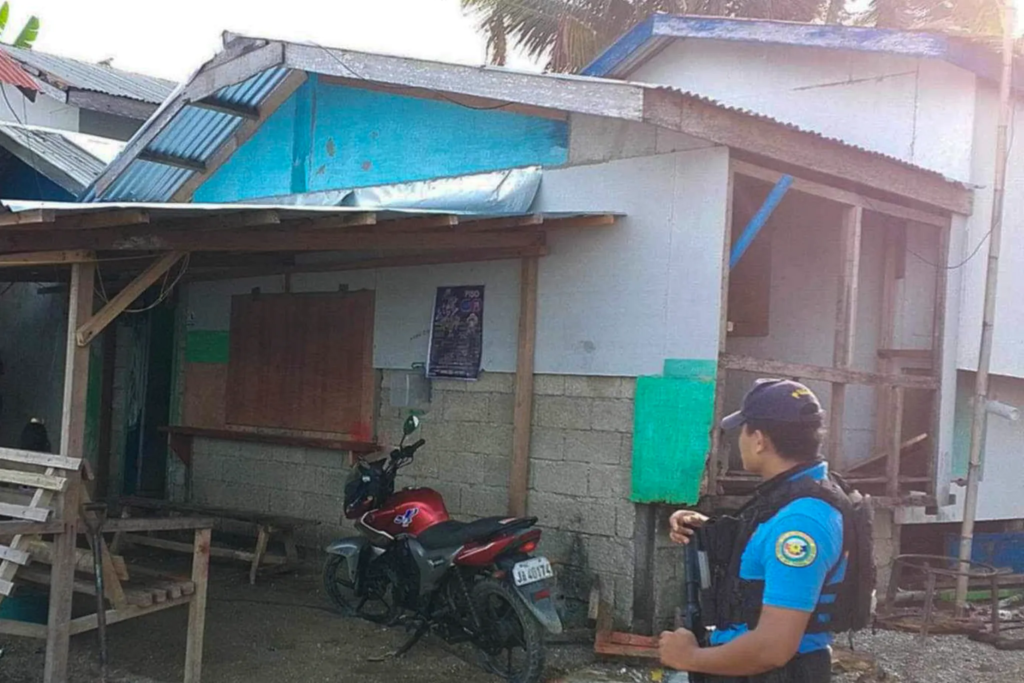
Shortly before 10 p.m. on October 17, 2024, four men dressed as police officers arrived at Elliot Eastman’s home in Barangay Poblacion, Sibuco. They were not police. They were armed with an M16 rifle.
Elliot resisted. One of the men shot him in the thigh. Another round struck him in the abdomen. The others dragged him from the house while Karisha screamed and neighbors gathered at the edges of the scene. The men pulled him across the sand and into a waiting motorboat, which immediately pushed out into the dark water of the Sulu Sea. Local police arrived around 11 p.m. and attempted to give chase. The boat was already gone.
What investigators found inside and around the home told the rest of the story. A long smear of blood ran across the vinyl floor. More blood marked the sand outside. Scattered nearby were a hat, a handbag, and spilled food, the remnants of whatever Elliot had been doing when the door came open. In the sand, a single spent cartridge from an M16 rifle.
The Truth Emerged
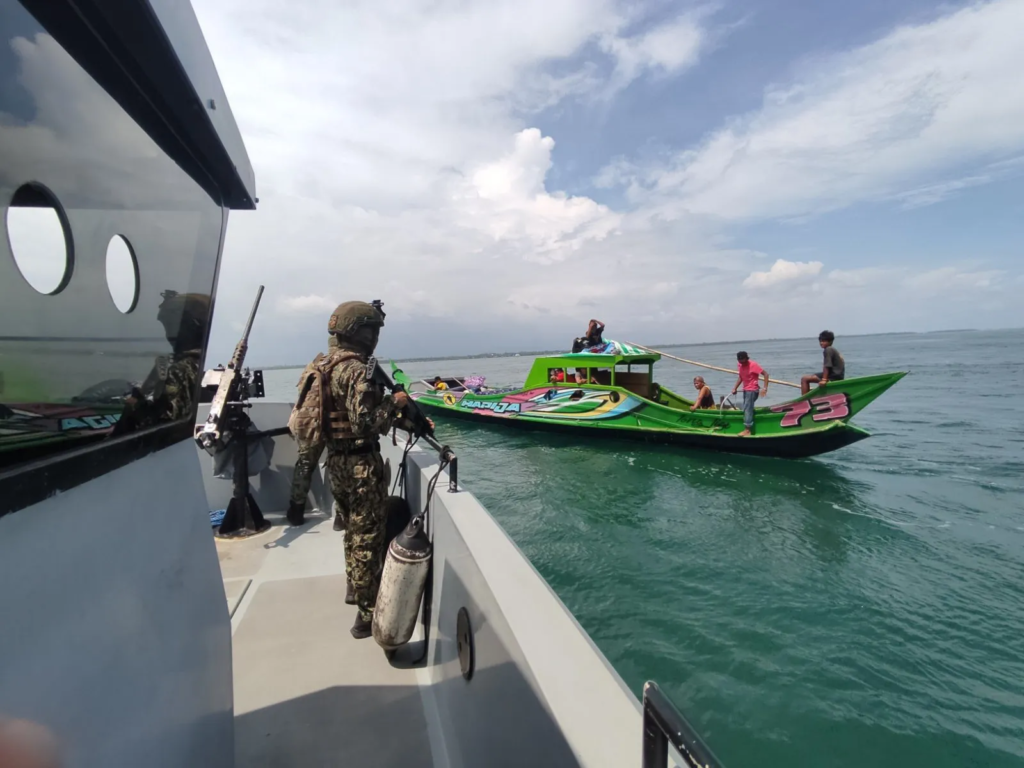
The Philippine National Police launched a Critical Incident Management Task Group codenamed “Eastman,” coordinating with the FBI and the U.S. Embassy in Manila, which had deployed resources within days of the abduction. The local mayor announced a reward of 150,000 Philippine pesos, approximately $2,500, for information leading to Eastman’s whereabouts. Search operations swept the coastline and the islands of the Sulu Sea for weeks. No ransom demand ever arrived. No proof of life was ever received. By late October, authorities had shifted quietly from a rescue operation to a recovery effort.
Three persons of interest were identified early in the investigation: Mursid Ahod, Abdul Sahibad, and Fahad Sahibad. Criminal complaints for kidnapping and serious illegal detention were filed against multiple suspects before the Zamboanga del Norte Prosecutor’s Office on October 29, 2024. On November 13, three suspects linked to the case were killed in a police shootout in Zamboanga Sibugay. Others surrendered in the days that followed. Each arrest moved investigators closer to the account they were already beginning to accept.
On December 5, 2024, Lt. Col. Ramoncelio Sawan, acting spokesperson for Police Regional Office 9, confirmed publicly what the evidence had been pointing toward for weeks. A witness account gathered in October and a sworn statement from an arrested suspect described the same sequence of events: Eastman had died from his gunshot wounds while being transported on the motorboat that night. His captors, unable to negotiate a ransom for a dead man and unwilling to bring a body to shore, threw him overboard near Zamboanga City. “We are constrained to believe that he has died,” Sawan told reporters. “All of the information that we have points to that.” Vermont Senator Peter Welch called for justice on behalf of the Eastman family that same week.
On January 7, 2025, police intercepted the alleged mastermind of the abduction aboard a passenger ferry crossing the Basilan Strait. The suspect, Jackaria Siddik Jamani, 35, of Sibuco, described by authorities as an Abu Sayyaf Group supporter, was arrested on a warrant for kidnapping and serious illegal detention issued on December 25, 2024. He was taken into custody without bail. Several other suspects, including Abdul Sahibad, remain at large. The motive for the abduction has never been established.
Elliot Eastman’s body has never been found. He had returned to Sibuco that October specifically to attend Karisha’s graduation. He had not planned to stay long.
