
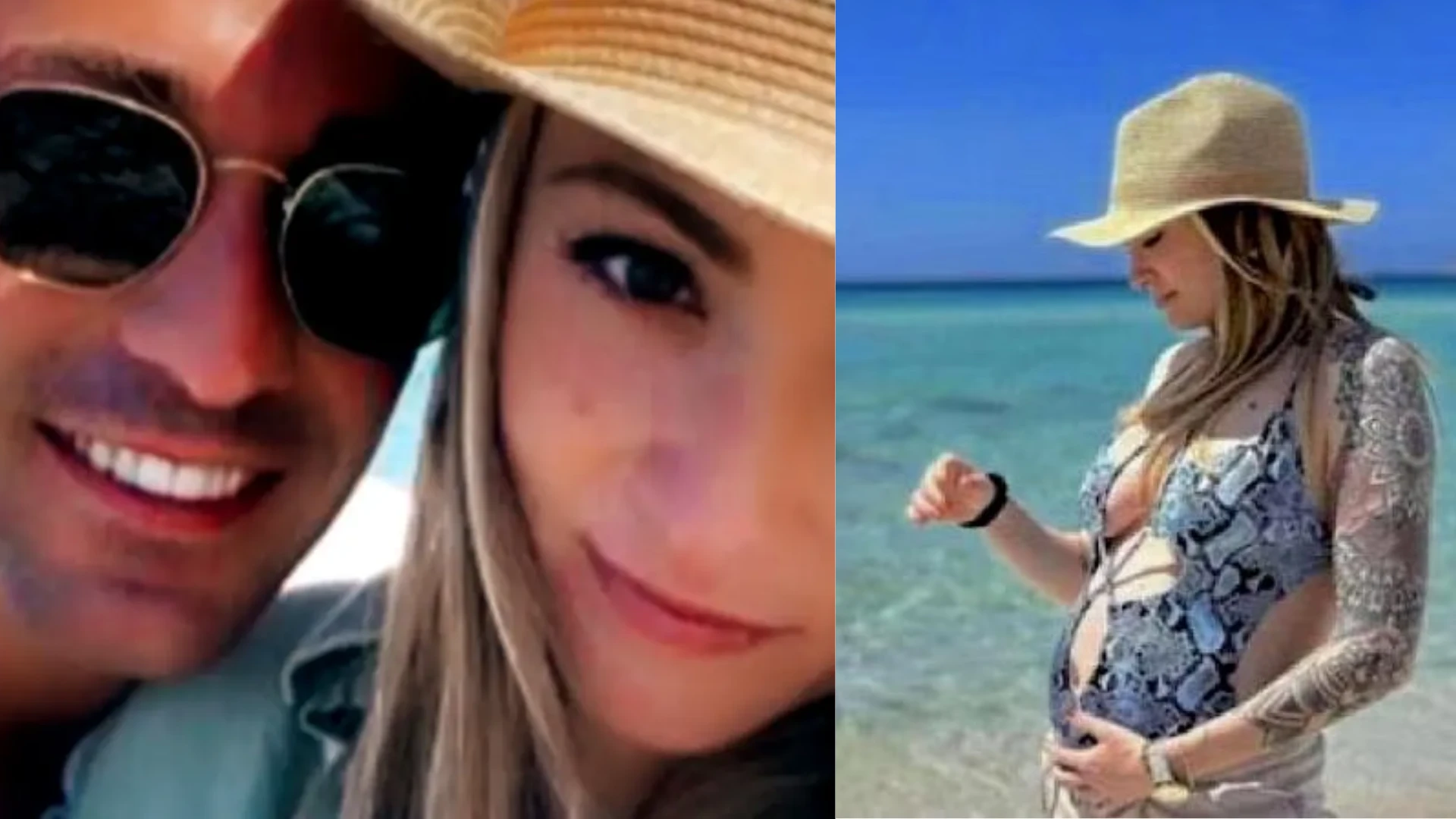
On the afternoon of May 27, 2023, Giulia Tramontano sat across a table from a stranger at the Armani Hotel in Milan and heard the full extent of what had been done to her. She was 29 years old and seven months pregnant. She had come to the hotel knowing it would be bad. She had not known how bad.
A few hours later, after she had returned home and confronted Alessandro Impagnatiello, the man she lived with, she sent a voice message to a friend. “He told me everything, about absurd things,” she said. “I am shocked by the life he led, by the things he has done and told me. I will never find peace.”
Shortly after sending that message, she was killed.

A Life in Senago
Born on May 2, 1994, in Sant’Antimo, a town in the province of Naples, Giulia Tramontano was the eldest of three children. Her father, Franco, described her as someone who chose courage at every step. Her sister Chiara, who would become her most vocal public advocate after her death, described her differently: “She was present, but never noisy. She was silent. When you are so sensitive in this violent world, you are prey for the lion.”
In her mid-twenties, Giulia moved north to Senago, a commuter town on the western edge of Milan’s metropolitan area, to be with Impagnatiello and build a career as a real estate agent. The town was his territory. He had grown up in Senago, born in nearby Sesto San Giovanni. She was the one who had uprooted herself to be there.
She met him when he was working at the Armani Bamboo Bar, a luxury hotel venue in the city center. He was attentive and said the right things about the future. He was also, unknown to Giulia, already the father of a six-year-old child from a previous relationship.
When Giulia discovered she was pregnant, she told Chiara. Chiara tried to help her access an abortion after they also discovered Impagnatiello’s infidelity. But Giulia had passed the 96-day legal limit under Italian law. The option was no longer available. She decided to keep the baby. She named him Thiago.
The Double Life
The suspicion started through an unlikely route.
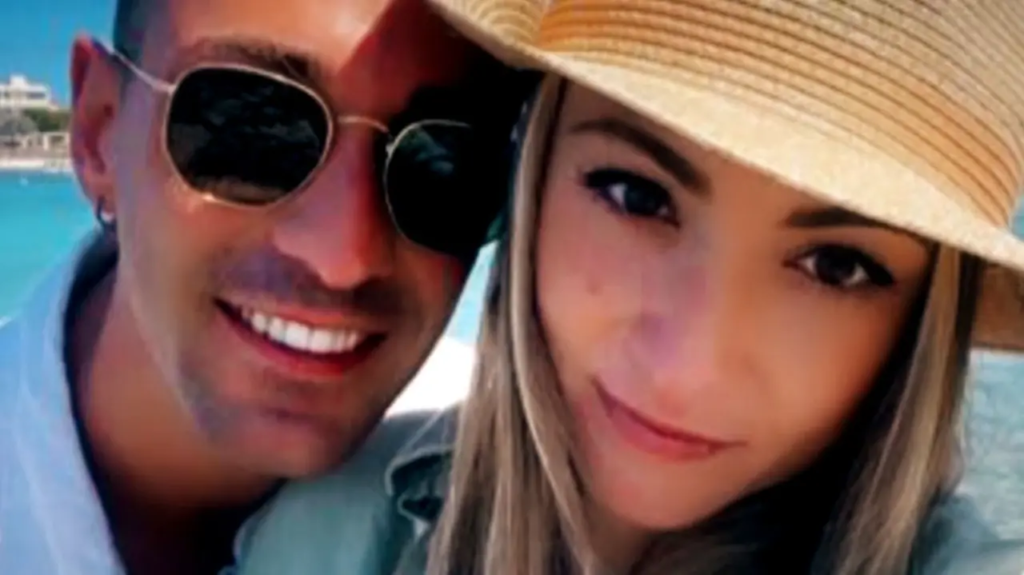
Giulia noticed that when her AirPods connected to the shared iPad at home, she could track Impagnatiello’s location. He told her he was at work. The location placed him, day after day, at the same spot near the hotel: the area where his 23-year-old Italian-English colleague spent her time. When Giulia raised it, he told her she was imagining things. He told her she had a mental disorder. He told the same thing to colleagues at the Armani Hotel: that Giulia was a fragile, attention-seeking former girlfriend who refused to accept they were over. He was still living with her, sleeping in her bed, and she was seven months pregnant with his child.
His colleague had her own doubts. She found recent photographs of Impagnatiello and Giulia on his phone, clearly taken as a couple still together. He explained them away. When she continued to press, he produced a paternity test he had reportedly altered himself to show the baby was not his. She remained unconvinced.
One night, while Impagnatiello slept, she picked up his phone and called Giulia’s number.
Giulia answered. The call was brief. Both women understood immediately what it meant. They agreed to meet in person the following afternoon at the hotel.
The meeting lasted more than an hour. According to later court testimony, there was no hostility. The colleague apologized. Giulia recognized that she had been manipulated by the same man and that his colleague was a fellow victim. By the end of the conversation, Giulia’s decision was made: confront Impagnatiello, end the relationship, and return to Naples after the birth. She sent messages to her mother and sister that afternoon telling them exactly that. Then, after returning home, she recorded the voice message to her friend. Her last contact with her family was a message sent at 9:43 p.m. telling her mother to go and rest.
Months of Rat Poison
What Giulia did not know, and would not learn before she died, was that Impagnatiello had been trying to kill her for months before she confronted him.
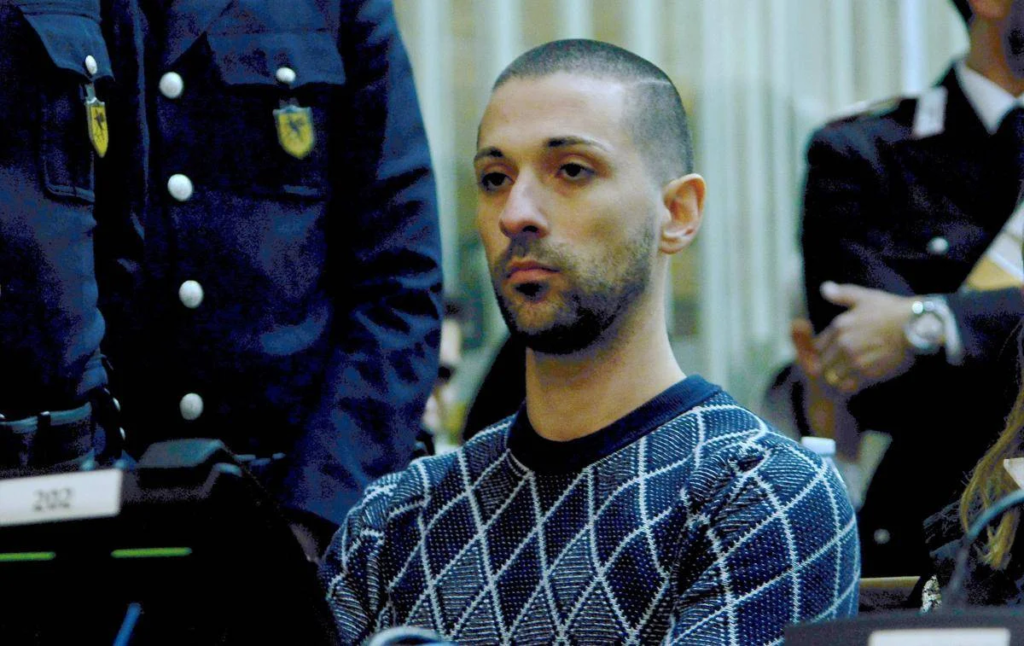
As early as December 2022, shortly after she confirmed the pregnancy, he had begun researching how to poison her. He dissolved bromadiolone, a highly toxic anticoagulant rodenticide, into her food and drinks. He searched online for the quantity needed to kill a person, for how long it would take to act, and for the most effective methods of administration. When the symptoms she developed failed to escalate as quickly as he had planned, he searched for an explanation and found one: the poison loses potency in hot drinks. He adjusted accordingly.
In January 2023, he typed: “How much rat poison does it take to kill one person.” According to prosecutors, he also searched for how to kill a fetus using poison. In February 2023, he purchased chloroform under a false name through a specially created email address. Sachets of rodenticide were later found by the Carabinieri in his backpack.
Throughout those months, Giulia had been messaging friends about feeling unwell. In her private chats from December 2022, she wrote: “I feel like crap, I have terrible heartburn. My stomach is killing me.” In another message: “I feel drugged.” Her sister Chiara testified in court that food, milk, and water all tasted wrong to Giulia, and that she told their mother the milk smelled strange the day after opening it. Both women assumed it was the pregnancy.
Sickeningly, the autopsy confirmed the poison had reached both of them. Bromadiolone was found not only in Giulia’s blood but also in the hair of Thiago, the baby she was carrying.
In court, Impagnatiello claimed he had administered the poison only twice, and only to cause a miscarriage. Prosecutors argued the poisoning was systematic over several months. The Milan Assize Court of Appeal ultimately found the poisoning was intended to terminate the pregnancy rather than kill Giulia outright. That finding excluded premeditation from his final sentence. Giulia’s family called it a second death. On April 8, 2026, the Court of Cassation ordered a new appeal, accepting the prosecution’s argument that premeditation should be reexamined.

The Night of May 27
When Giulia returned home on the evening of May 27, Impagnatiello was already there. He had learned that his colleague and his pregnant girlfriend had met at the hotel that afternoon. He left work at 5 p.m. and rode home on his scooter. Surveillance cameras placed Giulia entering the apartment on Via Novella at approximately 7:37 p.m.
She was attacked almost immediately.
She was stabbed 37 times, initially in the back and then repeatedly in the neck. Forensic examination confirmed that every wound showed vital hemorrhagic infiltration, meaning she was alive through each one. There were no defensive wounds on her hands or arms. She had no time to raise them. She died of blood loss.
Impagnatiello then attempted to burn her body in the bathtub with denatured ethanol. When that failed, he moved her to the garage, then to the trunk of his car. He searched online for how to dispose of a body and how to erase traces of blood. He scrubbed the apartment with bleach and ammonia. The murder weapon, a kitchen knife, was left in the block above the refrigerator. He went out and bought a folding metal cart, paying in cash, to help move her remains. Days later, when the Carabinieri sprayed luminol on the cart, it lit up with biological traces matching Giulia.
The following morning, he went to work.
That afternoon, May 28, he went to the police station and filed a missing persons report. He said they had argued the previous night, that he had left while she was still asleep, and that he had no idea where she had gone. He provided a non-existent address as a lead. While the report was open, he continued sending messages from Giulia’s phone, pretending she was alive and needed space.
By that point, her family already knew. Chiara contradicted his account the same evening he filed the report and contacted Chi l’ha visto?, a national television program covering missing persons cases. Giulia’s identification documents, bank cards, and shoes were all still in the apartment on Via Novella. She had not left voluntarily. She had not left at all.
Life Imprisonment
On the night of May 31, at 2:30 a.m., Impagnatiello confessed. He told investigators where to find the body. A few hours later, Giulia Tramontano was found in a cavity near a row of garages a few hundred meters from the apartment, wrapped in plastic sheeting. Thiago was still inside her. He would have been born in August.
Luminol testing produced results that lasted more than two minutes in the trunk of Impagnatiello’s car. Blood was found in the hallway, on the stairs, in the kitchen, and along the tile joints of the living room floor. A covering cloth, believed to have been laid down before the attack, was never recovered. Giulia’s debit card, driving license, and credit card were found in a manhole at the Comasina stop of the Milan metro.
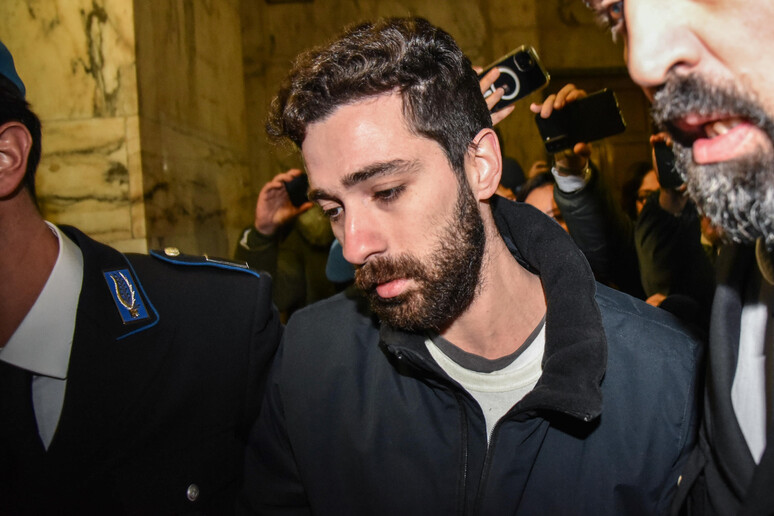
Trial began on January 18, 2024. In his opening statement, Impagnatiello apologized. “I was caught up in something that will always be inexplicable,” he told the court. “I apologize for my inhumanity. I was shocked and lost. That day I destroyed the child I was ready to welcome.” The family rejected it through their lawyer: “He administered poison to her and Thiago for months. He has no right to pronounce their names.”
Chiara walked out of the courtroom when he began to speak. She wrote on Instagram afterward: “You can apologize if you accidentally hit my car’s mirror. You can’t apologize if you poisoned and killed my sister and nephew, mocking and deriding her figure.”
Under cross-examination, Impagnatiello was asked how he had felt upon learning from news coverage that he had delivered 37 stab wounds. He described sitting in his cell and miming the motion of stabbing, once for each count. “It’s a frightening, suffocating figure,” he said. When the prosecutor asked why he had told investigators he had stabbed her only three times, he said: “I could have said any number. I was in that state of hiding, of running from the monster that had just come out of me.”
Forensic psychiatrists appointed by the court found narcissistic traits and a complete absence of guilt, but confirmed he was fully capable of conscious decision-making. The court held that he killed Giulia not because she wanted to leave, and not because she carried a child he did not want, but because she had “exposed him as a liar before those who, in his eyes, represented his public projection, his visible facade.”
On November 25, 2024, the International Day for the Elimination of Violence Against Women, the Milan Assize Court sentenced Impagnatiello to life imprisonment with three months of daytime isolation, plus an additional seven years for concealment of a corpse and non-consensual termination of pregnancy. He was ordered to pay Giulia’s parents 200,000 euros each and her siblings 150,000 euros each. Hundreds of thousands of people had already marched across Italy in the months following her death, carrying red shoes and white balloons, chanting “basta.” The Municipality of Milan posthumously awarded Giulia the Ambrogino d’Oro, the city’s highest civilian honor.
On appeal in June 2025, the life sentence was confirmed. Premeditation was excluded, but cruelty was not. On April 8, 2026, the Court of Cassation ordered a new appeal to reexamine premeditation. The legal argument over what Impagnatiello intended and when is not yet finished.
Giulia Tramontano was 29 years old. She had left Naples and uprooted her life for a man who was poisoning her food while she slept. On the last afternoon of her life, she sat in a hotel meeting room with a woman she had never met and heard the truth about all of it. She sent her mother a goodnight message at 9:43 p.m. and went home to face him.
She never made it back to Naples.

Hey dumbf**ks. I disabled ad-blocker but your shitty website kept putting up a wall asking me to disable it. IT WAS. But I am also running Privacy Badger. You don’t need my personal info to serve me ads, shitbricks. Instead of disabling privcay badger, I enabled no-script plugin which stops your stupid full screen pop-up.
You suck.