
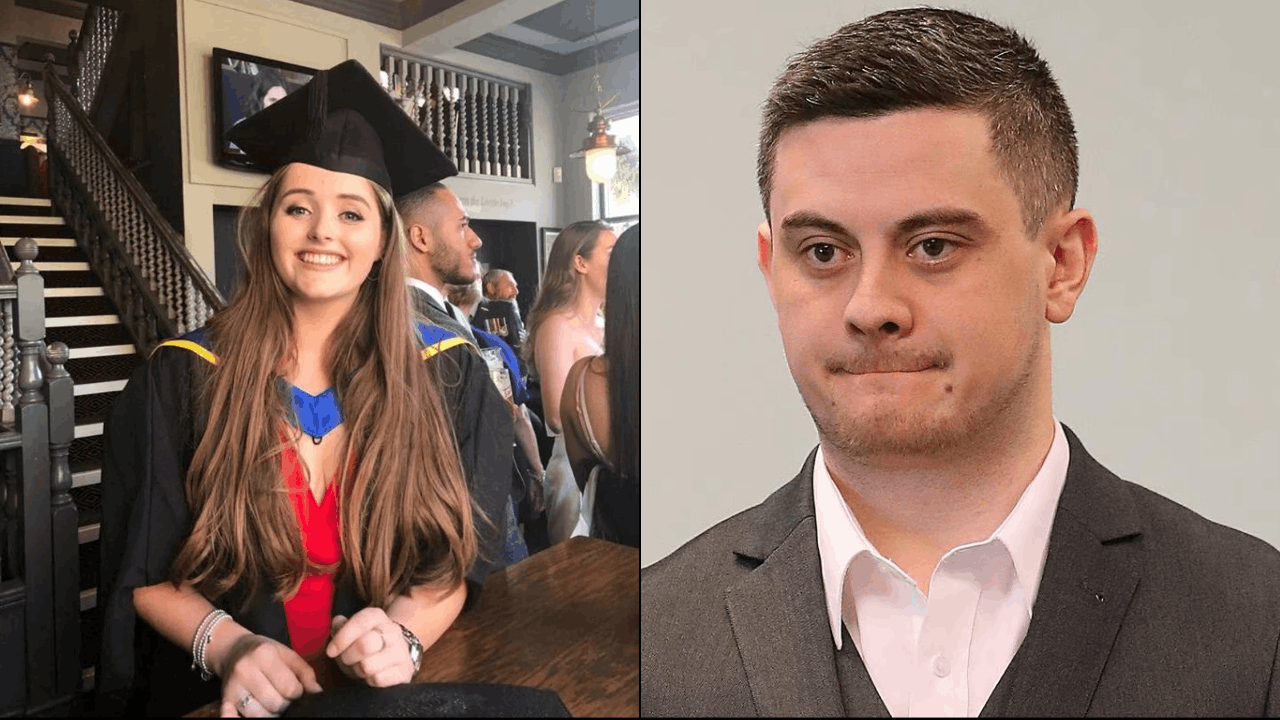
December 1, 2018, just after 5:30 in the afternoon. Grace Millane paused outside the SkyCity entertainment complex in central Auckland, pointed her phone at a Christmas tree decorated for the season, and sent the photograph back home to her family in Essex. She was 21 years old. It was the last message they would ever receive from her.
Grace set off for adventure
Grace Emmie Rose Millane was born in Wickford, Essex, on December 2, 1996, the youngest of three children. Her parents, David and Gillian, raised her alongside her two older brothers, Michael and Declan. Those who knew Grace described her as sociable, lively, and deeply family-orientated. She loved art and creativity, had a warmth that drew people to her, and was, by all accounts, exactly the kind of person her family could not imagine the world without.
After completing a degree in advertising and marketing at the University of Lincoln, Grace had one thing in mind before the next chapter of her life began: a year-long backpacking adventure. She had been saving for it since before she graduated. Before she left, in a gesture entirely typical of the person she was, Grace cut her long hair off and donated it to the Little Princess Trust, which creates wigs for children undergoing cancer treatment.
In October 2018, Grace left home and began travelling. She flew to Peru, spent six weeks moving through South America, met other travellers along the way, and sent her family a near-constant stream of photographs, voice messages, and updates. On November 20, 2018, Grace arrived in New Zealand alone. Eleven days later she had made her way to Auckland and checked into The Base Backpackers hostel on Queen Street, sharing a room with other travellers.
On the afternoon of Saturday, December 1, the eve of her 22nd birthday, Grace left the hostel at around 5:37 pm. She was wearing a knee-length black dress and white shoes, carrying a small handbag. She had made plans to meet someone she had matched with on Tinder. She had been unsure at first about going, but after more conversation she and her date had agreed to get drinks. She sent word to her friend Ameena Ashcroft that the date was going well. He was an oil manager, she said. He lived in a hotel. They clicked.

The night of December 1
Grace met her Tinder date at SkyCity. The two visited several bars over the course of the evening. Cameras captured them enjoying each other’s company, embracing and laughing. Grace took that photograph of the Christmas tree outside and sent it home. At some point during the evening the pair moved on to the Bluestone Room, a bar in central Auckland, where they continued to drink and were seen kissing at their table.
At around 9:20 pm, Grace stepped away from the table, perhaps to use the bathroom.
In her absence, her date picked up her handbag and searched through it before returning it to her seat. At 9:29 pm, while Grace was still in the bar, the man left a comment beneath her most recent Facebook photograph. “Beautiful. Very radiant.” Just after 9:40 pm, the pair left the Bluestone Room arm in arm.Cameras captured them arriving at CityLife Auckland, a hotel and serviced apartment complex nearby. His arm was around her shoulder. She held his hand. They took the lift to the third floor together.
Grace Millane was never seen leaving the building.
The following morning, what would have been Grace’s 22nd birthday, cameras inside CityLife Auckland picked up her date leaving the hotel alone. Over the hours that followed, he travelled to a shopping centre and purchased a large suitcase. He then bought cleaning supplies.
Before noon he had hired a red Toyota Corolla from a rental company. Later that day, he met with another woman he had been messaging on Tinder. She later told police he made her feel deeply uneasy, speaking about burying bodies and mentioning that his friends were police officers.
She declined to get into his car and made her own way home. That evening he hired a Rug Doctor carpet cleaning machine from a hire shop, telling staff he had red wine stains that needed removing. At around 9:30 pm he loaded two suitcases onto a hotel trolley and transferred them to the rental car.Early the next morning he purchased a shovel. He then drove out to Scenic Drive, near the Waitākere Ranges reservoir to the west of Auckland. Grace’s body was buried approximately ten yards from the road.

A city searched for Grace
Back in England, Grace’s family sent birthday messages on December 2. None of them heard back. Her brother Declan later said she had been bombarding them with photographs and updates throughout the entire trip. Silence on her birthday, of all days, was immediately alarming. Her parents contacted Auckland police and formally reported Grace missing.Officers reached out to The Base Backpackers, who confirmed she had not returned on the night of December 1.The majority of her belongings remained at the hostel. Initially, detectives did not suspect foul play.
But the trail moved quickly. Almost six terabytes of CCTV data were processed. Grace’s movements through the city on the night of December 1 were reconstructed from footage. The mystery man she had been with was identified. Police noted the Facebook comment left beneath Grace’s profile photograph at 9:29 pm that same evening. The person who posted it was the same man captured on camera walking Grace into CityLife Auckland. His name was Jesse Kempson, 26, and he was currently residing in the hotel.
On December 5, the same day Grace was formally reported missing, Kempson was asked to come into the station for routine questions. He was cooperative, relaxed, and denied anything had gone wrong. He said the date had ended pleasantly, with a hug, a kiss on the cheek, and plans to meet again the following day. He said he had tried to message Grace on Tinder afterward but found that she had unmatched him. That, he claimed, was the end of it.
By that point, detectives had already viewed the footage of him leaving the hotel with two suitcases. They had also seen him power-washing the interior of the rental car. They did not yet know what they were looking for. On December 7, Grace’s father David flew to Auckland and made an emotional public appeal, describing his daughter as “a lovely, outgoing, fun-loving, family-orientated” young woman who had never gone this long without contact in her life. The nation watched.
Vigils were held across the country.On December 8, as more evidence emerged from the forensic search of Kempson’s room, he was taken in for a second interview. His account had changed.

Jesse Kempson’s constructed world
Jesse Shane Kempson was born in Wellington and had moved repeatedly during childhood after his parents separated. He had been partially raised by grandparents and was largely estranged from much of his family. By the time he crossed paths with Grace Millane, he had built an entire life out of fabrication. Everyone who knew him described the same trait: pathological, compulsive lying.
He told people he was dying of cancer. He claimed a cousin was an All Blacks rugby player. He told landlords he was a professional softball player awaiting signing money from the New Zealand national team, the Black Sox. When one landlord contacted Black Sox management directly, the lie collapsed. He told the manager at CityLife Auckland that he was a senior Woolworths executive earning a high salary.
His rent was being paid by state benefits. His most recent job had been in telephone sales. He was dismissed for dishonesty on December 1, 2018. The same day he met Grace Millane.
In his second police interview, Kempson said Grace had asked him to engage in rough sex. He said he had held her throat at her request. He said he fell asleep in the shower and woke to find her dead. He claimed to have panicked and, not knowing what to do, placed her body in a suitcase and driven out to bury her. He denied he had killed her.
Detectives did not accept this account.
Forensic examination of his hotel room revealed Grace’s blood covering the floor despite Kempson’s extensive cleaning efforts. A pathologist later determined she had been strangled, with bruising on her arms and chest consistent with being pinned down. The pressure on her neck, they found, had been maintained for between four and five minutes. At around 1:30 am on the night Grace died, while her body remained in his room, Kempson had used his phone to search for “hottest fire,” “flesh-eating birds,” and “Waitākere Ranges,” the location where he would later bury her. He then accessed a pornography website. He took photographs of Grace’s body.
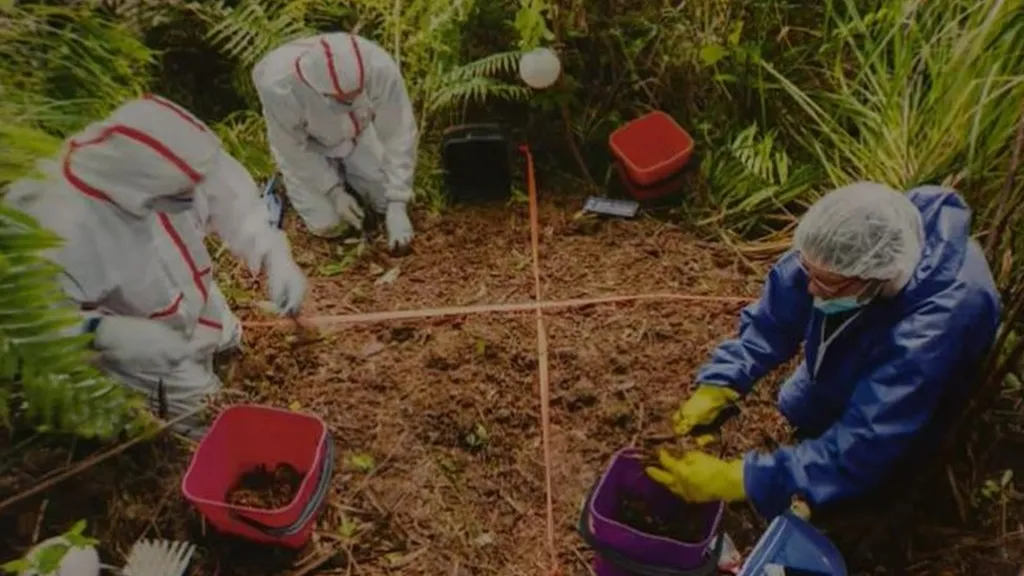
On December 8, Kempson was charged with Grace’s murder. The next day, officers located her body on Scenic Drive, near the Waitākere Ranges. Detective Inspector Scott Beard, who had led the investigation and spent long hours with David Millane throughout the search, confirmed the discovery at a press conference. He later flew to England for Grace’s funeral at Brentwood Cathedral in Essex.
Trial, verdict, and further convictions
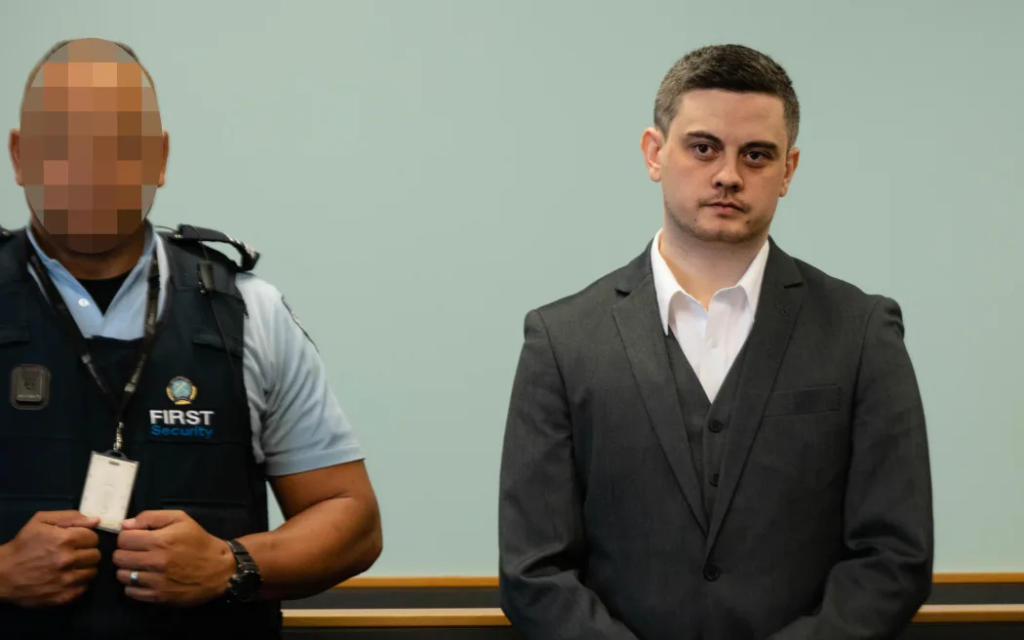
Jesse Kempson pleaded not guilty at Auckland High Court in January 2019. His trial opened in November 2019. Over three weeks, jurors heard the full account of Grace’s final evening, the forensic evidence from CityLife Auckland, the testimony of the woman he had spoken to on Tinder the day after Grace’s death, and the results of the post-mortem. Kempson remained largely expressionless throughout, occasionally glancing at court papers or holding his head in his hands.
The defence argued that Grace’s death was a tragic accident resulting from consensual rough sex gone wrong and that Kempson had simply panicked afterward. The prosecution rejected this entirely. Crown counsel told the jury that maintaining fatal pressure on someone’s neck for five to ten minutes, during which the victim loses consciousness and becomes limp, could not be accidental. It required continuation. It required intent.
On November 22, 2019, after approximately five hours of deliberation, the jury returned a unanimous guilty verdict. Kempson was sentenced on February 21, 2020, to life imprisonment with a minimum non-parole period of 17 years. At the sentencing hearing, Gillian Millane delivered a victim impact statement describing in detail what she had endured.
She said she tormented herself daily over what Grace had experienced at his hands. New Zealand Prime Minister Jacinda Ardern had already issued a public apology to Grace’s family, stating that their daughter should have been safe and she was sorry.
Kempson appealed his conviction. The Court of Appeal dismissed it in December 2020. The name suppression order was lifted by the New Zealand Supreme Court on December 22, 2020, allowing his identity to be published within New Zealand for the first time.Two more trials followed in 2020, both heard by judge alone.
In October, Kempson was convicted of eight charges relating to a sustained campaign of physical, sexual, emotional, and financial abuse against a former partner he had met on Tinder in 2016. She told the court he had held knives to her throat, choked her, forced her to perform sex acts, and drained her bank account of ten thousand dollars.
He was sentenced to seven and a half years. In November, he was convicted of raping a young British tourist he had also met on Tinder, eight months before Grace’s murder. During that assault he had told his victim: “If you don’t do this I will kill you and I will kill your family.” He received a further three and a half years. The combined eleven-year sentence for both additional offences runs concurrently with his sentence for Grace’s murder.
What Grace left behind
In November 2020, David Millane died of cancer. He had been diagnosed with the disease after attending his daughter’s killer’s trial in Auckland in late 2019. The cancer spread. He died in his hometown of Wickford, Essex, approximately two years after Grace was murdered, survived by his wife Gillian and sons Michael and Declan. Grace’s family posted a tribute online: “We are heartbroken by the loss of David, and he will be deeply missed.”
In Grace’s name, her family and friends raised over eleven thousand pounds for the White Ribbon Campaign, a charity working to end male violence against women by engaging men and boys in challenging harmful behaviours. They also established the Love Grace project, which collects handbags filled with essential items to support women in refuge from abusive relationships.
Grace had donated her hair before she left home so a child with cancer could have it. She had been sending photographs of Christmas trees when she was taken. She was 21 years old, one day from her birthday, and she had the rest of the world still to see.
