
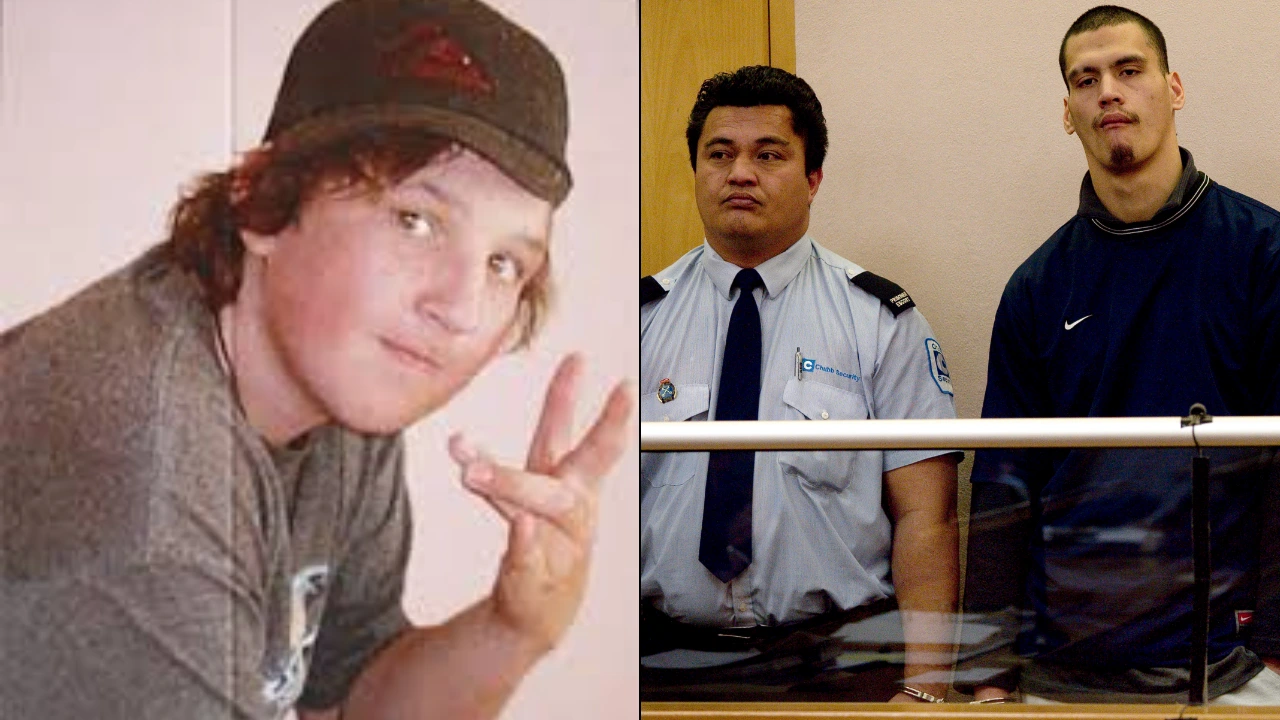
At 17:50 on August 24, 2006, a prison transport van operated by Chubb Security left the North Shore District Court in Auckland, New Zealand, bound for Auckland Central Remand Prison in Mount Eden. In one of the van’s four compartments sat 17-year-old Liam John Ashley, who had pleaded guilty that afternoon to a string of minor offences. He was sharing the compartment with a third man and with George Charlie Baker, a 25-year-old with 79 prior convictions. No guard was watching the compartment. The van would not arrive at its destination until 18:05. By then, Liam Ashley was dying.
A boy in minor trouble
Liam John Ashley was born on 17 May 1989, the youngest of four children, and grew up in North Shore City, Auckland, with his parents Ian and Lorraine Ashley. Diagnosed with attention deficit hyperactivity disorder at age three, he was prescribed Ritalin at five and moved through at least three schools due to behavioural and learning difficulties before attending Waimokoia Special School in Half Moon Bay, a last-resort school for the country’s most difficult children.
He later attended Halswell Residential College in Christchurch, a facility for students with complex behavioural problems and neurodevelopmental disorders, before his father brought him back to Auckland for mainstream schooling in 2004. After leaving school, Liam worked for his father’s car cleaning and detailing business.
Nicknamed “Crazy Liam” by his friends, he had minor brushes with police over public drinking and disorderly conduct. None of it had landed him before the youth justice court. That changed in the summer of 2006.
On 30 June, Liam was arrested and charged with trespass, burglary, and possession of a knife in a public place. He was bailed, then returned to court on 26 July facing additional charges including unlawful presence in an enclosed yard, driving without a licence, and failure to answer police bail.He was bailed again. On 18 August, three more charges were added: unlawful operation of a motor vehicle (he had taken his mother’s car without permission), possession of a marijuana pipe, and a second burglary charge.
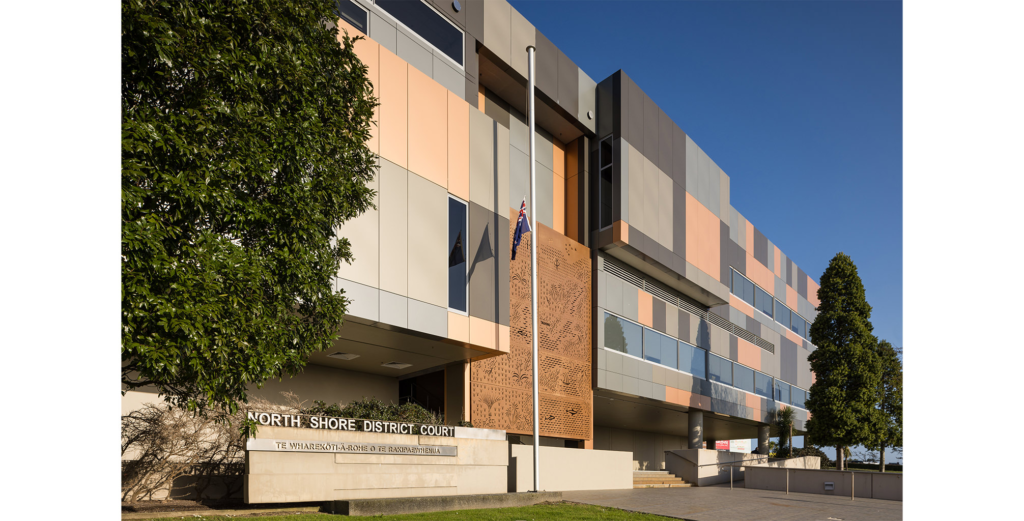
The court hearing that changed everything
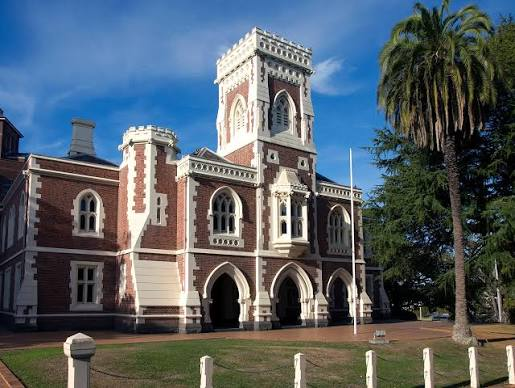
On the morning of 24 August 2006, Liam appeared before Judge Barbara Morris at the North Shore District Court and pleaded guilty to most of the charges against him. During the hearing, it emerged that his parents had told the court they did not want Liam returning home. Much of his offending had targeted their property and they feared it would escalate.
With no acceptable bail address available, Ian and Lorraine Ashley hoped that being remanded to prison would give their son a shock and stop him heading toward more serious trouble. They believed, at the time, that prison was the safest option.
Judge Morris asked the probation officer present whether 17-year-olds were kept separate from adult prisoners. She was reassured that Liam would “almost certainly” be held in a youth wing and kept away from adult offenders. Satisfied, she denied bail and set a sentencing date of 8 September, the earliest a pre-sentence report could be prepared, to limit the time Liam would spend inside.
What neither the judge nor Liam’s parents knew was that four days earlier, on 20 August, Liam had been assessed through the Prison Youth Vulnerability Scale and rated a “high” vulnerability risk. He had scored 17 out of 24 points in “vulnerability to victimisation.” The assessment had not reached the people who needed it.
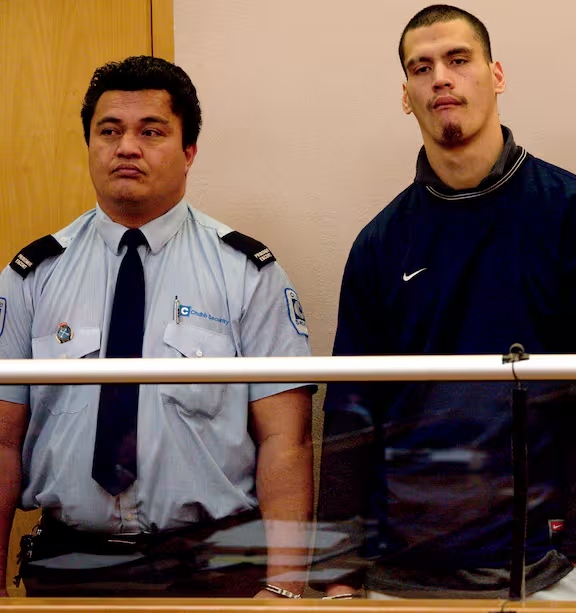
George Charlie Baker
George Charlie Baker, 25, from Whakatāne, was a concrete fabricator by trade. By the time he crossed paths with Liam Ashley, he had 79 prior convictions, the majority for violent assaults. He had spent almost all of the previous seven years in prison or psychiatric care after a conviction for assaulting an elderly woman during a home invasion. During that imprisonment, psychiatric assessments had identified him as likely to “resort to extreme violence in order to obtain fame.”
Baker had been released from that sentence in March 2006 and was back in custody within weeks. In April 2006, he stabbed a teenager during an attempted mugging at a wharf in Beach Haven, North Shore City. He was on remand for aggravated robbery and wounding with intent when he appeared at the same court as Liam Ashley that August morning. He had also sent explicit death threats by mail to the Beach Haven stabbing victim and to that victim’s family.
Earlier on the morning of 24 August, before the court appearances, Liam and Baker had been held in the same cell. Baker talked to Liam and established that the teenager lived near where the Beach Haven stabbing had occurred. He concluded that Liam could be a witness who might testify against him in court. He was wrong. But that conclusion would cost Liam his life.
Inside the van
Prison authorities loaded Liam into the transport van at 16:48. The van made a 30-minute stop at Henderson Police Station at 17:15, then continued toward Mount Eden.
Everything that followed inside the compartment was witnessed by David Olds, the third prisoner present, initially identified in official records only as “Prisoner E.” According to Olds, Liam and Baker spent time talking about an escape before lying on their backs for 15 minutes trying to kick open a hatch in the van roof. When that failed, Baker suggested Liam fake a seizure to get the guards to open the van door. Liam refused. Baker told him he would put him in a “sleeper hold” instead.
In a 2009 interview, Olds described what followed: “Liam was like, ‘Yeah, OK’. He was sitting there for ages in the sleeper hold and Baker was talking away to him, going ‘Is that all right?’ Liam’s going, ‘Nah, nah, it’s not working. I can still breathe. You’ve got to go a bit tighter.’ The last word I remember him saying was ‘tighter’. He was totally trusting.”
At approximately 17:50, with the van approaching Auckland Central Remand Prison, Baker snapped. He turned on Liam, shouted “You’re that fucking nark, you’re the reason I’m in this shit hole,” and began attacking him. He tried to break the boy’s neck by jerking it side to side, strangled him, slammed his head against a steel seat, then kicked and stomped on his head. The attack lasted between 10 and 15 minutes. During it, Baker told Olds he had been “hired to kill Liam because he was a nark” and shouted “Fucking die, fucking die” and “this guy is taking ages to die, he’s breathing.”
No guard was monitoring the compartment. The attack went entirely undetected.
At 18:05, the van arrived at its destination and officers opened the prisoner compartment. Baker told them: “Get that fella out, I killed him.” Then: “Uso, you better pull that guy out. I just killed him. He isn’t breathing.” Staff performed continuous CPR on Liam until an ambulance arrived 25 minutes later. He was taken to Auckland Public Hospital with severe brain injuries.
The following morning, 25 August 2006, at 10:30, his family chose to remove him from life support. Liam Ashley died at 10:45.
A preventable death
Baker freely admitted killing Liam but claimed the attack was not premeditated. He said he attacked the boy because he believed he was an informant. He pleaded guilty to murder on 1 December 2006 and on 15 December was sentenced to life imprisonment with a minimum non-parole period of 18 years.
Subsequent investigations found that errors in Baker’s documentation had prevented information about his classification as a high-risk prisoner from reaching the staff responsible for his transport. Despite Department of Corrections regulations requiring prisoners under 18 to be kept separate from adult offenders “where practicable,” Liam had not been separated on three separate occasions: once on 21 August and twice on 24 August. Investigators concluded that established procedures had placed “insufficient emphasis on the separation of youth and adult prisoners.”
New Zealand Prime Minister Helen Clark described Liam’s death as “an extremely shocking event” and said it was “totally unacceptable for someone to be killed in the back of a security van.” Corrections Minister Damien O’Connor called the murder “senseless” and “preventable.” In 2007, Chief Ombudsman John Belgrave and Ombudsman Mel Smith conducted a formal inquiry and described the Department of Corrections’ prisoner transport practices as “inhumane.
” New waist restraints, tethering prisoners’ wrists to a waist belt during transport, were introduced in 2008 directly in response to Liam’s death. Chubb Security, which had held the prisoner transport contract since 1998, announced in June 2007 that it no longer wished to continue that work.
The Ashley family received an undisclosed compensation payment from the Department of Corrections in January 2009. Ian and Lorraine Ashley eventually moved to Australia. Years later, both said they had forgiven George Baker. Lorraine said that forgiving Baker had brought a degree of peace, and that forgiving herself had proved the harder task. Baker did not make the decision easy.
After the conviction he attacked a prison guard in 2008, took an 83-year-old fellow inmate hostage in 2009, threatened hospital staff with a glass shard in 2016, and in 2020 was convicted of throwing boiling jam on another prisoner and repeatedly stabbing him with a pen. In 2010, a court sentenced him to preventive detention with no possibility of parole for at least 16 more years.
At the reassurance hearing held on 8 September 2006, the day that would have been Liam’s sentencing, Judge Barbara Morris told Ian and Lorraine Ashley: “Do not think things would have been different if you had come here and offered a place of residence. He would have been remanded in custody anyway.”
Liam Ashley was 17 years old.
