
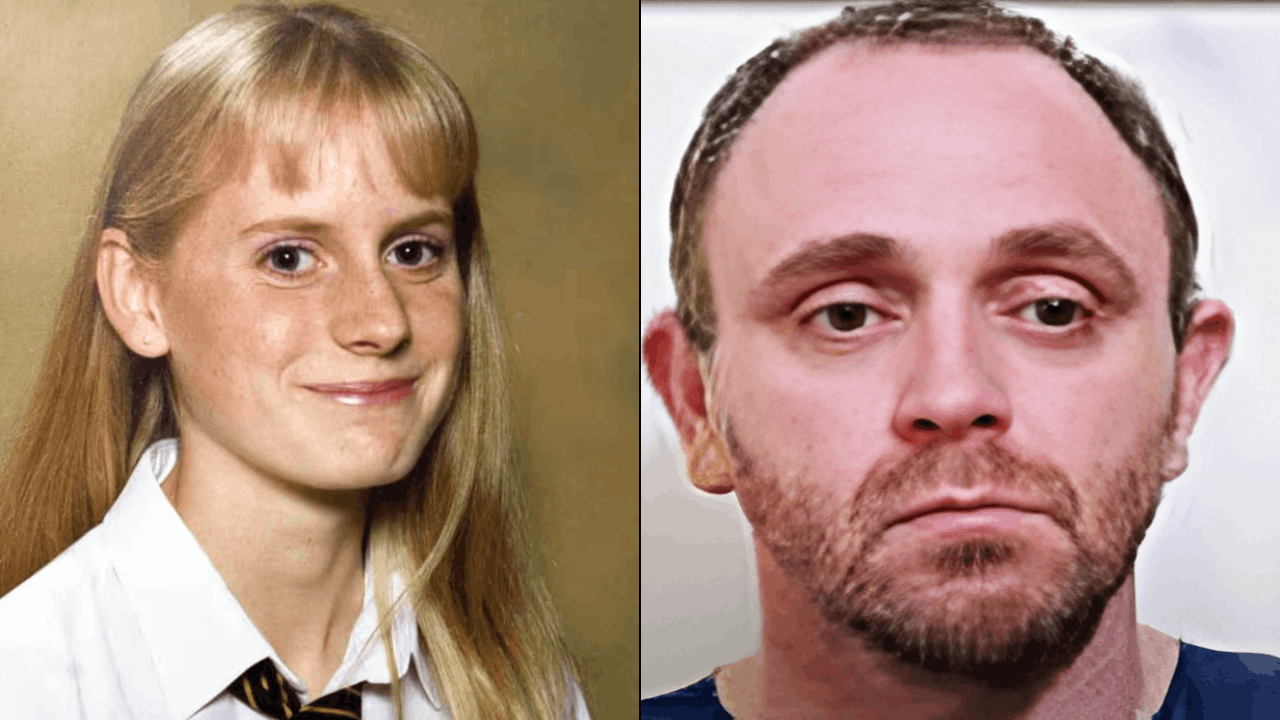
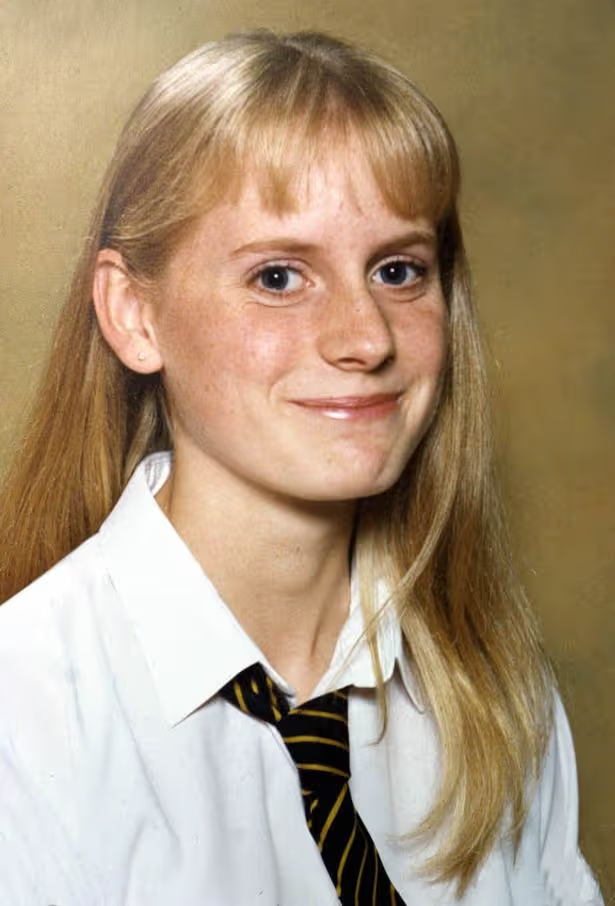
On the evening of 25 August 2000, seventeen-year-old Heather Tell left her home in Tamworth, Staffordshire, and took the familiar shortcut through Kettlebrook Linear Park. She was due to meet her friend Laura Ravenhill at Belgrave Dance Studio at 8:30 p.m., then catch a film. She had made the same journey dozens of times before. She had her phone. It was still light outside.She never reached the other side of the park.
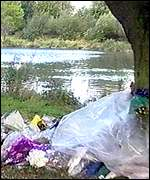
She left home at dusk
Heather Tell was born and raised in Tamworth, a town in Staffordshire, north-east of Birmingham. She had been studying for a BTec in performing arts at Sutton Coldfield College, with a particular gift for conveying emotion through movement. She was 17 years old and two months short of her 18th birthday, which she and her friends had been planning in detail: a trip to London, a shopping day, the kind of milestone she had been looking forward to all year.
On the evening of 25 August, she told her father Peter she was heading out to meet Laura at the dance studio. She waved goodbye to a neighbour as she turned onto the street. Minutes into the walk, she cut through Kettlebrook Linear Park, a long, narrow corridor of overgrown greenery running through the Belgrave area of town. Local people used it as a shortcut. It was not a well-known landmark. You had to have grown up in that part of Tamworth to know it was there.Somewhere along that path, Michael Chidgey was waiting in the bushes.
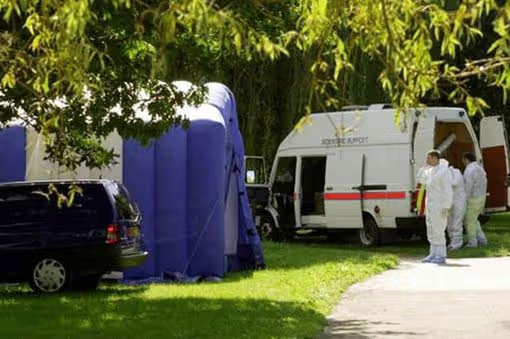
The body was found
When Heather failed to arrive, Laura Ravenhill called the Tell family home. Peter Tell told her that Heather had already left. The family went out to walk the route themselves and found nothing. By 10 p.m. the streets were dark, the search had grown to include extended family, friends and volunteers from the town, and police had been called. Sniffer dogs were brought in that night rather than waiting, a decision that reflected how seriously officers were treating the disappearance.
The search went through the night without result. On the morning of 26 August, a family friend cycling through the park spotted something in the undergrowth. He got off his bike and walked closer.It was Heather. She was dead.
Police cordoned the area immediately. A tent went up over the body against the rain that had been falling through the night. Officers noted a thin ligature mark around her neck. Her clothing had been removed. Her mobile phone lay on the opposite side of the path, snapped in half. Her earrings had been torn out. Examination of her call records showed she had tried to reach her father Peter in the final moments before the attack. The call never connected.
The post-mortem confirmed death by asphyxia. Chidgey, stockily built, had leapt on Heather, who was 5ft 3in and slight, and dragged her into the undergrowth. He stripped off all her clothing except her socks, pushed her underwear into her mouth as a gag, and tied a lace from her own trainer tightly around her neck. She had not been raped, but the attack bore every marker of a sexually motivated crime.
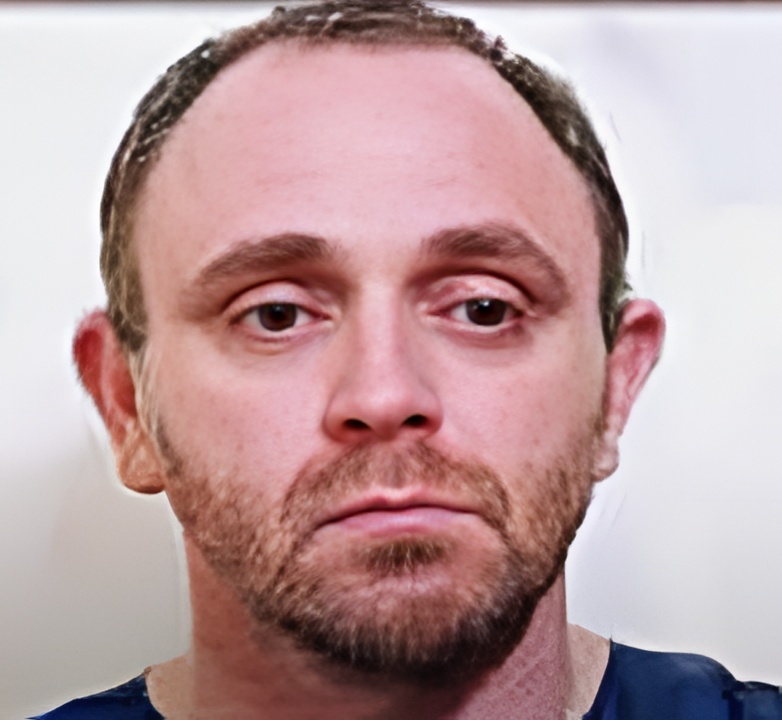
Police traced a suspect profile
The crime scene had been damaged by rain through the night. Officers managed to recover a small DNA sample from Heather’s underwear, but when it was run against the national database, there was no match. Detectives were left with a recovered sample, no leads, and a park that offered almost nowhere to start.
They pursued two lines simultaneously. The first was a public appeal, coordinated partly through the Tamworth Herald, with officers asking anyone who had been in or near the park that evening to come forward. The second was an audit of recent sexual offences across the area. Investigators worked from the assumption that murder of this kind was rarely a first offence, and that whoever had killed Heather very likely had a record.
The appeals produced results. A cyclist named Johannes Prince came forward to say he had been in the park on the night of the murder and had twice encountered the same man. Cycling to a friend’s house, he had spotted a man hiding in a bush and watched him cover his face as Prince passed. An hour or so later, cycling back, Prince encountered the same man again near Belgrave Dance Studio.
This time the man stepped directly into his path, forcing him to stop, and in doing so gave Prince a clear, close look at his face and his clothing. Prince described him as appearing to be in his forties, wearing what looked like a blue tracksuit. The timing placed him in the park within minutes of Heather’s estimated time of death.
His own family exposed him
A second lead came with a name.An eighteen-year-old worker at Partners stationery store in Tamworth had been sitting with a suspicion about her father for days. She told her colleagues what she knew: that he had served time in prison for attempted rape.
That on the night of Heather Tell’s murder, he had not come home. That he had reappeared the following morning, within hours of Heather’s body being found, soaking wet, physically exhausted and unable to account for where he had been.Her colleagues went to the police. Her mother had already done the same.
Her father was Michael Chidgey, a coach driver from Medway, Belgrave, living within walking distance of the park where Heather’s body was found. When officers looked at his record, they found not one prior offence but a pattern of escalating sexual crimes stretching back to the early 1970s. He had accumulated ten indecent exposure convictions.
One of them had taken place at Kettlebrook Linear Park itself. He had made a series of indecent phone calls to women in the days immediately before Heather’s murder. And his most serious charge, attempted rape, had come when he spotted a 43-year-old woman whose car had broken down on a quiet road, offered to help her, then attacked her when the opportunity arose.
She fought back. He punched her in the face, snatched her handbag and ran. She noted his licence plate before he drove away, and he served two years in prison.He had not come to police attention again in the seventeen years since. He was not on the Sex Offenders Register because his offences predated the 1997 legislation, which was not applied retrospectively.
His wife and daughter had known about his history for years, and had long been disturbed by his behaviour, including a habit of dressing in women’s clothing. When Heather Tell was murdered near their home, they could no longer stay silent.Chidgey was brought in for questioning. He denied any involvement. Without physical evidence connecting him directly to the scene, police had to release him. But they had already taken a DNA sample.
DNA and the identity parade
The sample recovered from Heather’s underwear was tested against Chidgey’s DNA using the profiling methods available in 2000, which compared broad genetic markers rather than the full specificity of a direct sample match. A profile match of this kind still carried odds of approximately one in seventy million against coincidence.It matched.
When confronted, Chidgey offered an explanation. He claimed he had a compulsion to visit lingerie shops and handle the underwear on display racks. His DNA, he suggested, had transferred to a garment in a shop, which Heather had later bought. Investigators brought in a representative from the bra’s manufacturer to examine the item.
The representative found visible wear, deteriorating stitching and signs of repeated washing. It was not a recent purchase. The scenario Chidgey described was not physically possible.Police called Johannes Prince in for an identity parade. Among the men lined up before him, Prince identified Chidgey without hesitation.
Chidgey was charged with the murder of Heather Tell. The trial opened at Stafford Crown Court in December 2001. The jury, eight women and four men, heard testimony from Prince, from Chidgey’s own wife and daughter, from the manufacturer’s representative, and from the forensic evidence recovered at the scene. After deliberating, they returned a majority verdict of eleven to one. Chidgey was found guilty. Only then, after the verdict, did the jury hear the full catalogue of his previous sex offences.
Judge Mr Justice Poole sentenced him to life in prison, describing him as ruthless and ruling that he had acted purely for his own gratification. Detective Superintendent Peter Hall, who led the investigation, said afterward that Chidgey was pure evil and that the public had to be protected from him. He added: “Heather’s only contribution to her fate was to be a pretty young girl in a public park on a summer’s evening.”Heather Tell’s friends packed the public gallery for the verdict. They wore sprigs of heather.
