
On April 13, 1977, Charlie McLeod and his wife Mavis drove out to an abandoned farmhouse they owned near the small community of Lindbrook, Alberta, roughly thirteen kilometres west of Tofield. They were not looking for anything unusual. They were there to salvage a pump from a disused septic tank.When they lifted the cover and looked down into the murky water below, they saw what appeared to be a grey wool sack. Then they noticed a shoe. And then, attached to the shoe, a leg.They did not go in. They did not attempt a rescue. It was clear, at a glance, that no rescue was possible. They left the farm and called the police.
Finding the man in the tank
Two officers arrived at the property to begin what quickly became one of the most gruelling crime scene recoveries in Alberta’s history. The tank was 1.8 metres deep. The water and decomposing sludge made the work slow and grinding. Officers could not simply lift the remains free. They had to bail the liquid out bucket by bucket, checking every load for evidence as they worked. When the level had dropped enough, they carefully recovered the body.
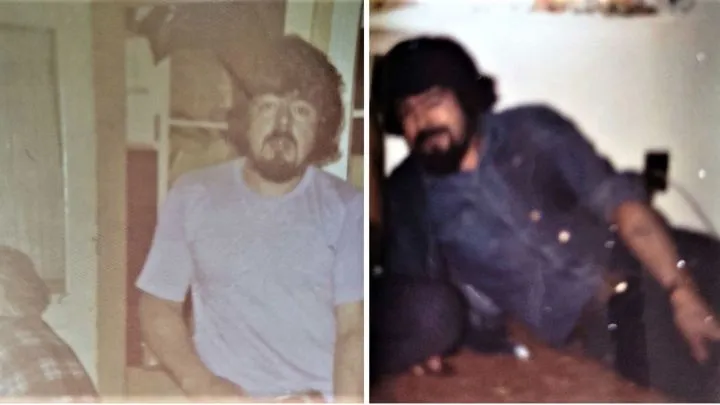
The man was fully decomposed, but still clothed. A blue Levi’s shirt. A t-shirt. Jeans. Grey wool socks. Brown imitation wallabee-style shoes. His body had been rolled into a yellow bedsheet, bound with nylon rope, and placed in the tank headfirst. The remains had been covered with quicklime, a method used to suppress odour, deter insects, and accelerate decomposition.It was not an accident. It was a disposal.
The autopsy confirmed what the scene already implied. The man had been beaten, tied down, and burned repeatedly with a butane blowtorch and lit cigarettes. Burn evidence was found on his clothing, including on the sole of one of his socks. He had been sexually mutilated, most likely with farming shears. He had then been shot at least twice in the head and chest. The RCMP would later describe his death as one of the most vindictive and sadistic crimes they had ever encountered.
The search for a name
The man had no wallet, no papers, and no identification of any kind. Fingerprints could not be recovered from the state of the remains. The farm itself showed no evidence that he had been killed there. Whatever had happened to him had happened elsewhere, and someone with knowledge of the property had chosen the abandoned tank as a disposal site, likely confident it would not be disturbed.
Investigators built what profile they could. The man appeared to be between 5’6″ and 5’9″ tall, and weighed an estimated 150 to 180 pounds. He had dark hair. Based on bone analysis and decomposition, investigators believed he was in his mid-twenties and that he had been dead for several months before discovery, placing his death somewhere between 1976 and early 1977. Initial uncertainty about whether he was Caucasian or Indigenous complicated the missing person comparisons investigators needed to run. If the racial description was wrong, the search could eliminate the right person early.
Dental records became the most promising avenue. The man still had all his teeth, and several showed what appeared to be recent fillings. X-rays and dental records were distributed to more than 800 dental practitioners across Canada and published in dental trade magazines and bulletins. No match came back.The man was eventually buried in an unmarked grave in Edmonton. The RCMP gave him a placeholder name that would follow him for the next four decades. They called him Septic Tank Sam.
Decades of dead ends
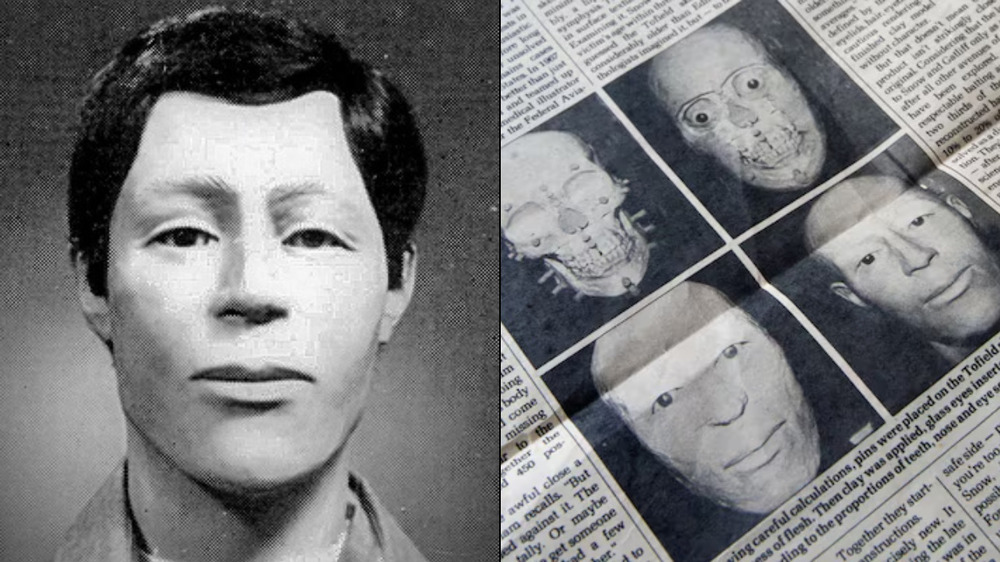
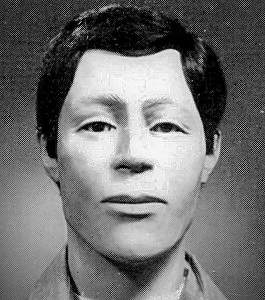
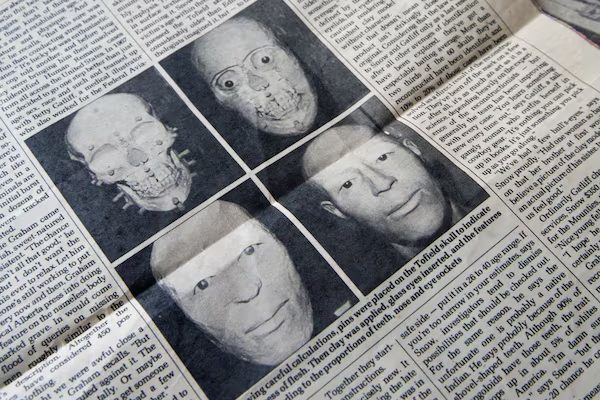
In 1979, the remains were exhumed for further forensic work. Skull and bone measurements were used to refine the biological profile, concluding the victim was likely Indigenous and approximately 35 years old. Medical examiners then developed a three-dimensional facial reconstruction built from more than 50 skull measurements and 75 bone measurements, and released it publicly. New leads came in. Investigators interviewed witnesses and ran additional missing person comparisons. The case stayed cold.
By 2012, DNA technology had advanced to the point where a partial genetic profile could be extracted from the degraded tissue. In October 2017, the RCMP announced a national DNA program for unidentified remains, allowing family members of missing persons to submit their own DNA for comparison. In 2019, the 2012 partial profile was run against the new Canadian database. It returned no match.
In 2020, the Alberta RCMP Missing Persons Unit and the Office of the Chief Medical Examiner partnered with Othram Inc., a private forensic DNA laboratory based in The Woodlands, Texas, that specialises in solving cold cases through advanced genome sequencing. Othram built a more complete genetic profile from the degraded material. Investigators used it to construct a family tree.
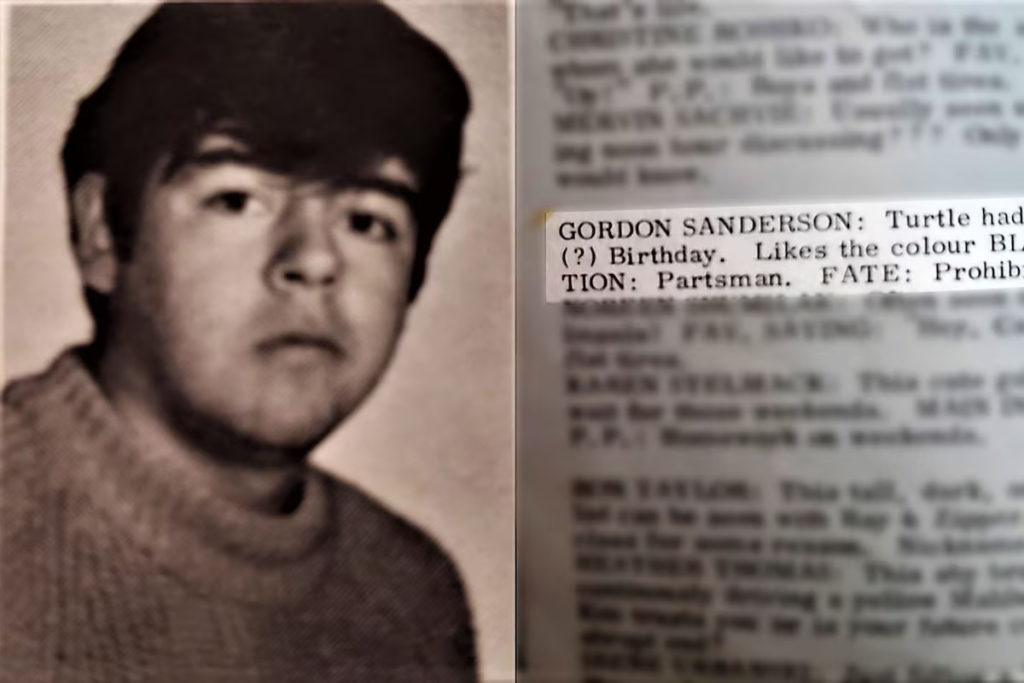
One of the people identified through that process was a woman named Joyce Sanderson. She had lost contact with her brother in late 1976. The RCMP obtained familial DNA samples from Joyce for confirmatory testing.Nearly 45 years after his body was found in that tank, the test came back positive.
Gordon Edwin Sanderson
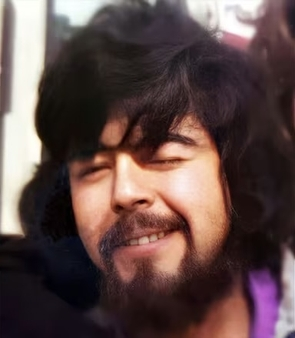
The RCMP officially identified the victim in January 2021. His name was released publicly on June 30, 2021.His name was Gordon Edwin Sanderson, known to his family and friends as Gordie. He was born on October 22, 1950, in Manitoba.At the age of nine, Gordon was removed from his family and placed into foster care under the Sixties Scoop, a government child welfare practice operating from the 1960s through the 1980s during which thousands of Indigenous children across Canada were separated from their families and communities. By the 1970s, Gordon was living in Edmonton.
He struggled with addiction. He had periodic run-ins with police. He was a vulnerable man operating at the margins, and that vulnerability made him a target.The last time Joyce saw her brother, Gordon told her he was going to visit his brother in Calgary. He never arrived. It would be years before Joyce reported him missing.After the identification, the RCMP offered what theory they had. They believed Gordon was killed by associates involved in criminal activity in the Edmonton area. They acknowledged that given the time elapsed, the killer or killers may already be dead.
No one has ever been charged with Gordon Sanderson’s murder. The investigation remains officially open.Gordon Sanderson was 26 years old. He had a daughter. He had a sister who spent more than four decades not knowing what had happened to him. His life was shaped from the age of nine by a government policy that deliberately severed him from everyone who might have protected him, and it ended in circumstances so extreme that the RCMP struggled to find language adequate to describe them.His name is Gordon Edwin Sanderson. He was called Gordie.
ARTICLE TWO
How Tiffany Bradley Was Trafficked, Murdered at 16, and Spent 26 Years as Chelsea Jane DoeOn the morning of November 13, 2000, a maintenance worker at the Soldiers’ Home in Chelsea, Massachusetts, noticed something in the parking lot. It was a heavy bundle, wrapped tight, wrapped wrong. He called the police.When officers arrived and unrolled the fabric, they found the lower half of a young woman’s body. She had been cut in half at the torso. Her head, her hands, and her heart were missing.She had no identification. She had no name. For the next 26 years, she would be known only as Chelsea Jane Doe.
The body in the parking lot
Forensic examiners determined that the victim had died approximately 24 hours before she was found. Despite the condition of the remains, the cause of death was strangulation, not dismemberment. She had been killed first, then cut apart.She was a young Black woman, estimated by investigators to be in her late teens or early twenties. Petite. Athletic. The removal of her head and hands was deliberate: without them, there were no fingerprints to take, no face to run through recognition systems, no dental X-rays to compare. Whoever left her there had done everything possible to make her impossible to identify.
Investigators worked the parking lot for anything the killer might have left behind. They found a surveillance camera positioned directly at the dump site. The footage showed a tan 1988 Lincoln Town Car pulling into the lot, a figure dragging a bundle from the vehicle, and the car driving away.Within hours, the car had been traced. It was registered to a 36-year-old man named Eugene McCollom, who was renting a room at the YMCA in Lynn, Massachusetts.
The man who became a machine
When police searched McCollom’s room at the Lynn YMCA, they found blood stains and evidence of a cleanup. McCollom initially denied any involvement. Then he confessed.He told detectives that he had met a young woman in Boston’s Chinatown and offered her money for sex. She told him her name was Lisa. She told him she was from Philadelphia. He drove her to his room.According to McCollom, they argued over payment. He claimed she reached for a knife. He wrapped his hands around her throat and strangled her.
What followed was systematic. Rather than call emergency services, McCollom retrieved what he described as a Rambo-style knife and began dismembering the body. He removed her head, her hands, several of her toes, and her heart. He cut the torso in half. He told investigators he did it to prevent identification and to make the remains easier to transport. When detectives asked how he could bring himself to do it, he said he had become like a robot. Like a machine.
He wrapped the torso in a quilt, tied the feet with a shoelace, and loaded the bundle into his Lincoln Town Car. In the early hours of November 13, 2000, he drove to the Soldiers’ Home and left her there. He placed the remaining body parts in a container and buried them at Nahant Beach, a stretch of coastline north of Boston. He initially told police he had thrown the container in a dumpster.He had lied.
The killer without a name for his victim
At his sentencing in 2005, McCollom told the court that his murderous impulse grew from the killing of his younger brother Patrick, stabbed to death at a nightclub in Revere, Massachusetts, in 1996. The man accused of the killing was acquitted. McCollom said that acquittal turned him into a ticking time bomb.
While he was awaiting trial for the Chelsea killing, investigators connected him to a second murder. The decapitated body of John “Jackie” Leyden had been found in his East Boston apartment in 2001. Leyden’s own brother had initially been charged with the killing before McCollom confessed to bludgeoning Leyden with a pipe and severing his head. He had taken the head to Fort Lauderdale, Florida, and buried it in a park.
McCollom pleaded guilty to manslaughter in Leyden’s case and received a 10-to-12-year sentence. He then appeared before Essex Superior Court Judge Howard J. Whitehead to answer for the Chelsea killing. He pleaded guilty to second-degree murder and was sentenced to life in prison, with eligibility for parole after approximately 22 years.Investigators had the killer’s name. They still did not have the victim’s.

How they found Tiffany
In 2004, police excavated Nahant Beach and recovered the container McCollom had buried there, finding the victim’s head and hands. Even with those, identification proved impossible with the technology available at the time.By the early 2020s, forensic DNA technology had advanced to allow genetic profiles to be matched against distant relatives in genealogical databases. In 2023, the case was referred to Othram Inc.,
the same Texas-based forensic DNA laboratory that had identified Gordon Sanderson two years earlier. Genealogists spent nearly three years building out the family tree generated by the victim’s DNA profile, eventually locating a relative through whom they could trace a direct familial line.On June 3, 2026, the Massachusetts State Police, the FBI, and the Suffolk County District Attorney’s Office held a press conference. Suffolk County District Attorney Kevin Hayden addressed the room directly.
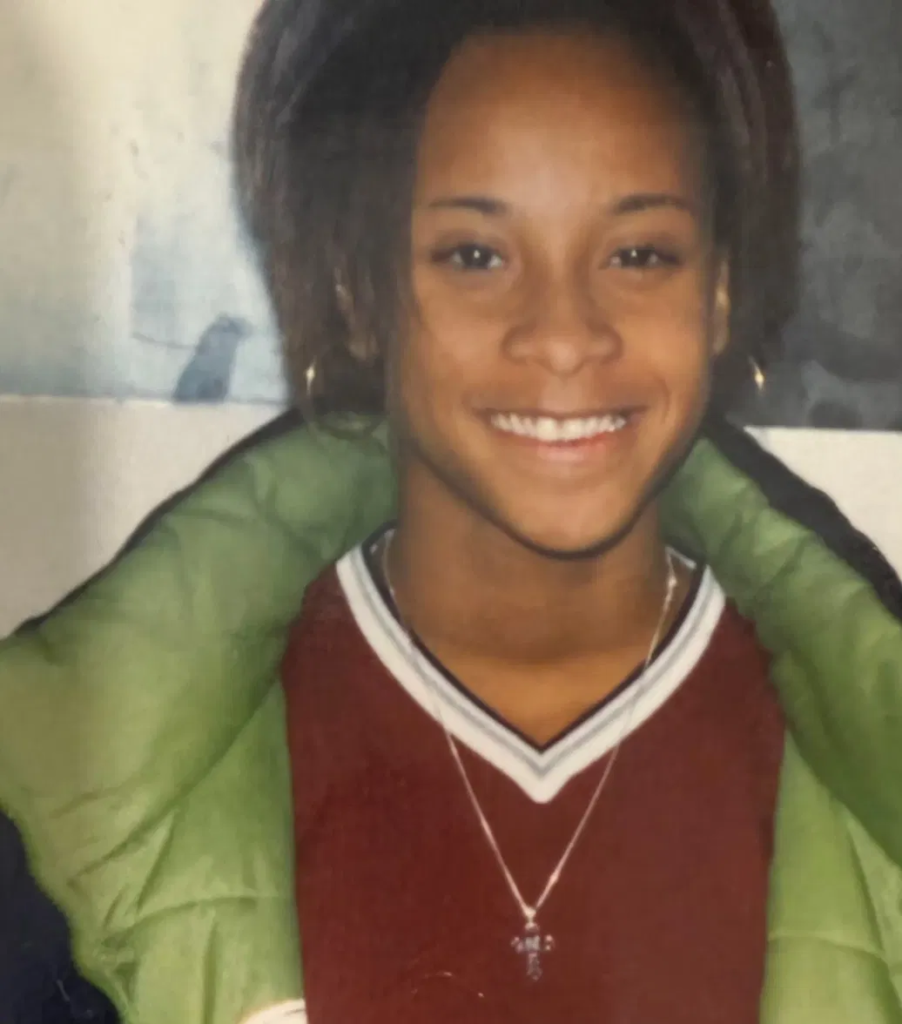
“This is not a story about a case going unsolved for years and years,” he said. “The story here is about an incredible 25-year effort by multiple law enforcement agencies to find the identity of a girl who had come to be known as Chelsea Jane Doe.”The victim’s name was Tiffany Bradley. She was 16 years old. She was from Allentown, Pennsylvania.
Who Tiffany Bradley was
Tiffany was born in November 1983. She loved basketball. She was artistic and sociable. People who knew her described her as caring, outgoing, and funny. She had a normal family life, though her father worked long hours, often leaving Tiffany and her siblings in their mother’s care.On November 8, 2000, she called her cousin Joelle from somewhere in New York. She said she would call back. Her voice was trembling. She sounded nervous. She never called back.
Five days later, her remains were discovered in a parking lot in Chelsea, Massachusetts. She was 16 years old. She was 315 miles from home.The FBI has since stated its belief that Tiffany was trafficked along the Interstate 95 corridor before her death, coerced into selling herself by people who controlled her movements. When she told McCollom her name was Lisa and that she was from Philadelphia, she was almost certainly repeating what she had been instructed to say. The lies that kept her nameless for 26 years were not hers. They were the lies of the people who trafficked her.
At the press conference in June 2026, Tiffany’s family stood alongside the investigators who had refused to close her file. Her aunts and cousins thanked the agencies for not letting her remain a name on a box on a shelf. They said they were relieved, finally, to bring Tiffany home.She loved basketball. She called her cousin from New York and promised she would call back.She was 16 years old.
