
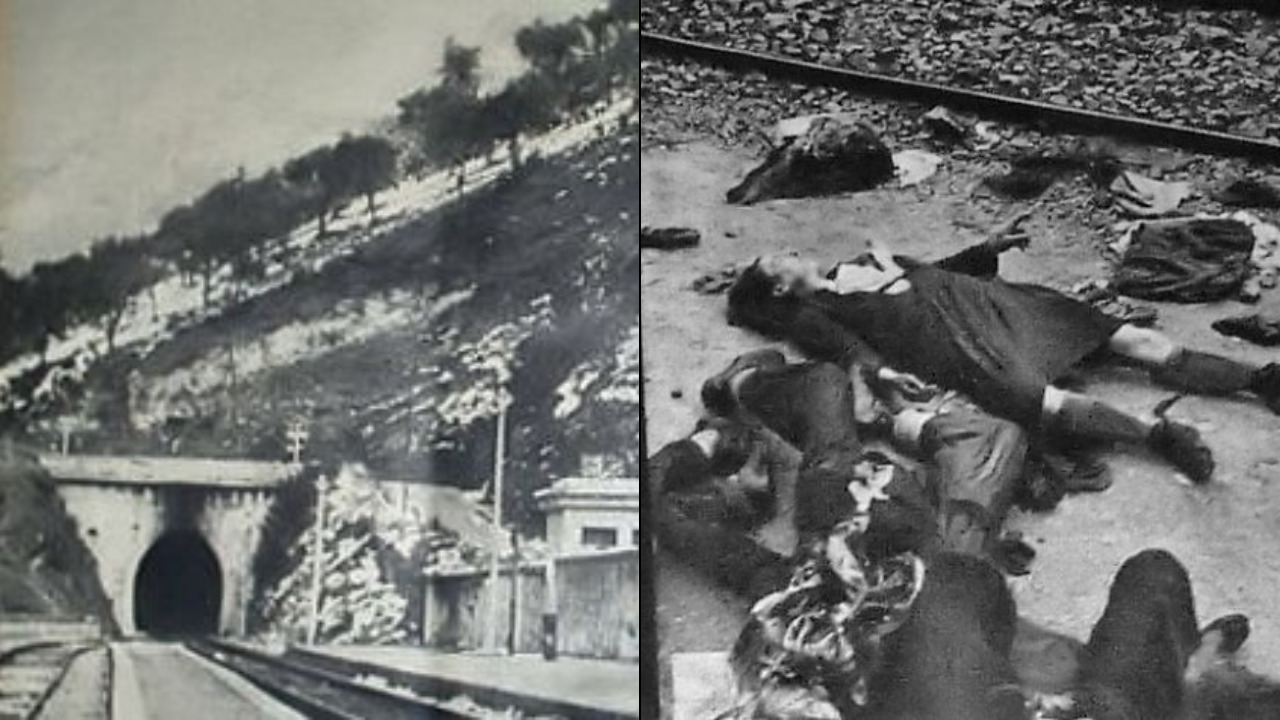
On the night of March 2, 1944, freight train 8017 crawled toward the mouth of the Galleria delle Armi, a tunnel cutting through the Apennine Mountains of southern Italy. Officially, the train carried a small crew and no passengers. Unofficially, it was hauling as many as 650 stowaways packed into open freight wagons, ordinary people chasing food in the middle of a war. By the time anyone realized something had gone wrong, most of them were already dead.
Italy in 1944 was tearing itself apart from the inside. Mussolini had allied the country with Nazi Germany, then watched it collapse after a failed campaign in North Africa. When Italy signed an armistice with the Allies in 1943, German forces retaliated by installing Mussolini as the puppet ruler of a new Italian Social Republic in the north, while the legitimate Kingdom of Italy held the south. Two Italian governments were now at war with each other, inside a country already at war with the rest of Europe.
Wartime Italy’s desperate black market
Civilians paid for it directly. Trains were reserved for troops and military cargo, leaving ordinary travelers almost no way to get around. Food was scarce too. Crops grown in the countryside were funneled to the front lines, leaving city dwellers in places like Naples with barely enough to live on.
So people improvised. City residents traded coffee and cigarettes acquired from Allied soldiers for meat and dairy from rural farmers, and freight trains became the only practical way to reach them. Certain routes became so associated with the trade that people nicknamed them Black Market Express Routes. Authorities knew stowaways were riding the freight lines illegally. They looked the other way, because the alternative was hungrier cities and angrier civilians.
A fatal shortage of coal
Coal was scarce too, and what little existed was often low grade. Burning it produced less power and far more carbon monoxide, an odorless, invisible gas. A month earlier, in February 1944, a train linked to Allied military supply lines suffered a warning of its own on the nearby Baragiano–Tito route: a driver was overcome by fumes inside a tunnel, fell between the engine and the tender, and was killed. Officials called it a tragic accident. Nothing changed.
Train 8017 left Naples on the evening of March 2, pulled at first by an electric engine before switching to two steam locomotives at Battipaglia, where the line’s electrification ended. The lead engine, numbered 480.016, was a standard Italian design. The second, numbered 476.058, was an Austrian-built machine with its controls mounted on the opposite side. An unknown number of additional stowaways climbed aboard during the Battipaglia stop. By the time the train pulled out again, it may have been carrying close to 650 unofficial passengers riding alongside roughly 47 wagons of freight.
Trapped inside the Armi Tunnel
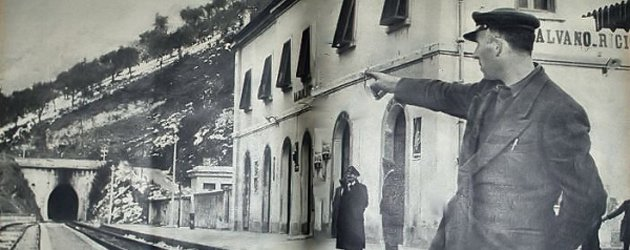
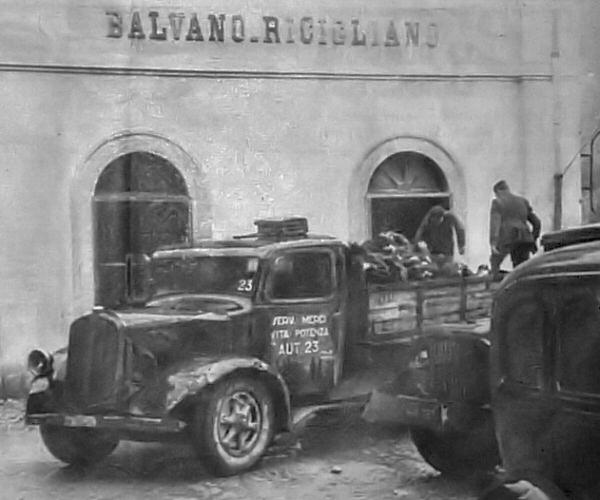
Just before midnight, the train stopped briefly at Balvano-Ricigliano station, where station manager Vincenzo Maglio gave the signal for it to continue. Fifty minutes later it pushed on, crawling at barely 15 kilometers per hour through thick fog toward the tunnel entrance. The plan was routine: staff at Bella Muro station on the far side would telegraph back to Balvano once the train had cleared the tunnel. That telegraph never came.
Somewhere inside the winding, 1.3 percent uphill grade of the Armi Tunnel, at roughly two in the morning, the overloaded train stalled with nearly its entire length still buried inside the mountain. The air was already thick with smoke from a train that had passed through just before it. As the crew tried to restart the engines, more carbon monoxide poured into the enclosed space. The driver of the second locomotive tried throwing it into reverse to pull the train back out, but because his engine’s controls sat on the opposite side from the lead engine’s, the two crews had no way to see or signal each other.
He fainted before the reversal could take hold, while the lead locomotive kept pushing forward. The train went nowhere.Most passengers were asleep. The gas gave no warning: no smell, no color, nothing to signal danger before it was too late. One by one, people lost consciousness where they sat. A handful managed to stumble off the train and run for the tunnel’s exit. Almost none of them made it. At least one passenger who had briefly stepped off to walk near Balvano avoided the tunnel altogether and survived by accident. In the rearmost wagons, still sitting in open air outside the tunnel mouth, roughly forty people survived.
A death toll Italy hid
By 2:40 a.m., deputy stationmaster Giuseppe Salonia, who had taken over from Maglio for the night, was fielding calls from a stationmaster further down the line asking why train 8017 had never arrived. Some accounts say it was a brakeman named Michele Polo who finally grasped what had happened and walked back to Balvano on foot to raise the alarm, arriving around 5:10 a.m. and simply announcing that everyone was dead.
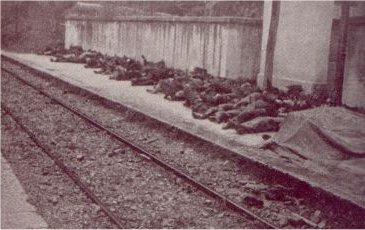
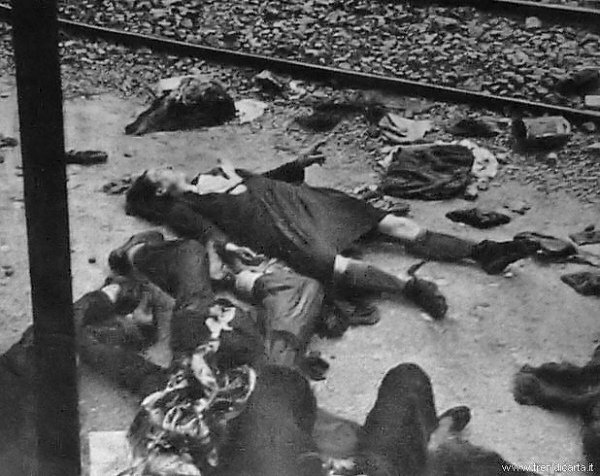
Other sources instead credit a brakesman named Giuseppe De Venuto with making that same walk. Either way, a telegrapher in Potenza named Luigi Quaratino relayed the first word of the disaster outward by 3 a.m., and help still arrived hours too late. A rescue locomotive couldn’t even reach the wreck at first. The tracks leading to it were covered in bodies.When Red Cross workers finally reached the scene at 8:40 a.m., they described the dead as looking strangely calm, their faces pleasant and untroubled, marked only by faint trails of blood at the nose.
Carbon monoxide had killed almost all of them in their sleep, before they ever understood they were in danger.The Italian government’s official count was 517 dead. Genealogist Mario Restaino later compiled a list of 432 identified victims by name, while researcher Gianluca Barneschi found records suggesting the true number, counted as bodies were laid out on the station platform, may have reached 626. Only the train’s crew received formal funerals. Everyone else was buried in four unmarked mass graves at Balvano’s cemetery, without ceremony, without headstones bearing their names.
No one was ever held responsible
Wartime censorship kept the disaster out of newspapers entirely. Allied commanders worried it would crush civilian morale. Italian officials wanted nothing to do with a catastrophe of that scale under their watch. An Allied military investigation led by a General Gray concluded the disaster was simply an act of God. A separate Italian penal inquiry reached the same conclusion by a different name, force majeure, and closed without charges against anyone.
Roughly 300 victims’ families eventually sued the state railway for compensation, but the case was resolved years later under a general Italian law on war damages rather than through any finding of fault. It wasn’t until 1951, seven years later, that a parliamentary commission investigated at all, and by then too much evidence had already disappeared.Of the roughly 49 people who survived the tunnel, many never fully recovered. Carbon monoxide poisoning had left several of them with permanent brain damage, a second cost of the disaster that outlived the war itself.
The disaster has never entirely faded from memory, even if it took decades to surface. Genealogist Mario Restaino’s research and Barneschi’s later book gave many of the dead their names back, decades after they were buried without them. A 2013 docu-film and a 2015 documentary from Italian public broadcaster RAI both revisited the tunnel and the night inside it, and a dramatized feature film followed not long after.
In March 2024, eighty years after the disaster, Balvano’s mayor Ezio Di Carlo unveiled a new plaque naming the victims of train 8017, and the Basilicata region now marks an annual Day of Memory for the disaster, with education programs aimed at keeping the story from being forgotten a second time.They were classified afterward as casualties of war. In a sense, they were. Not from bombs or bullets, but from the particular cruelty of a country so consumed by conflict that hundreds of people could climb aboard a train just trying to feed their families, and never be seen again.
