
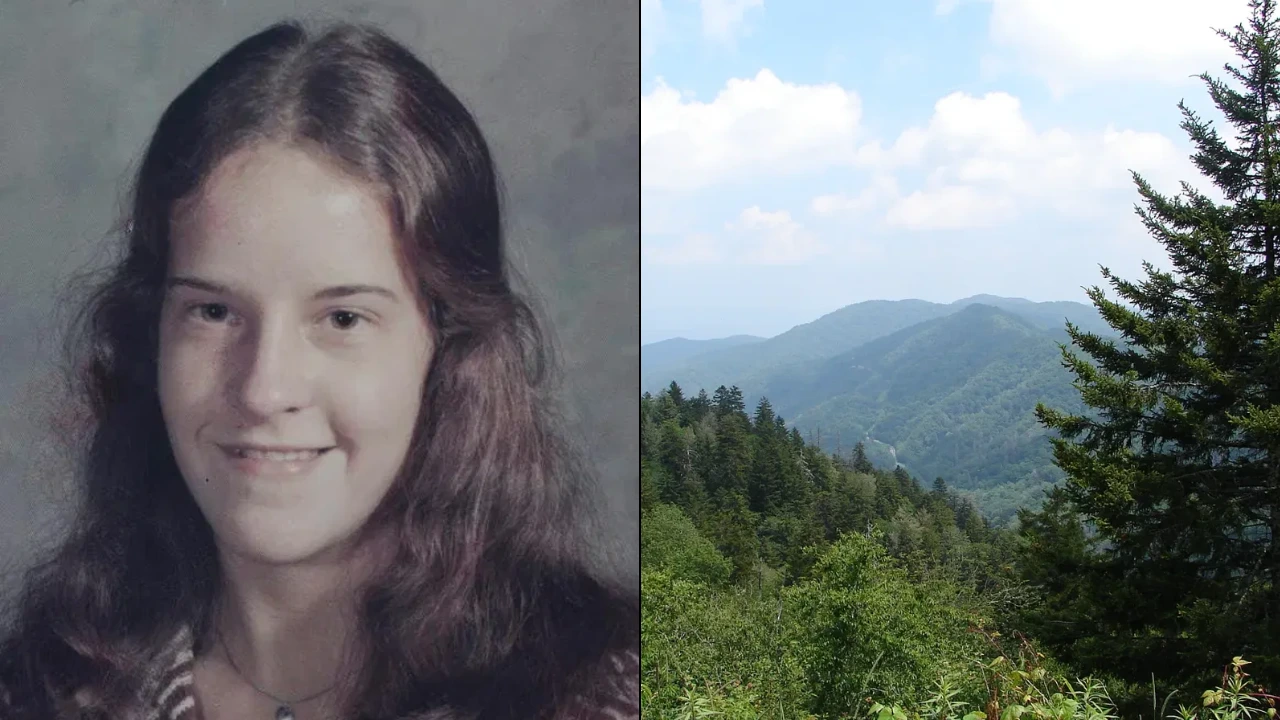
On October 8, 1976, at around 3:00 p.m., a group of Bearden High School students paused to rest on the Forney Ridge Trail in Great Smoky Mountains National Park. One of them said she didn’t want to stop. She kept walking. A girl named Bobby Cogill later told investigators she had watched Trenny Gibson bend down, veer right, and step off the trail and into the trees. Cogill looked away for a moment. When she looked back, Trenny was not there.
By 3:30 p.m., when the students reached the Clingmans Dome parking lot, a headcount was taken. Forty students had set off that morning. Thirty-nine came back.
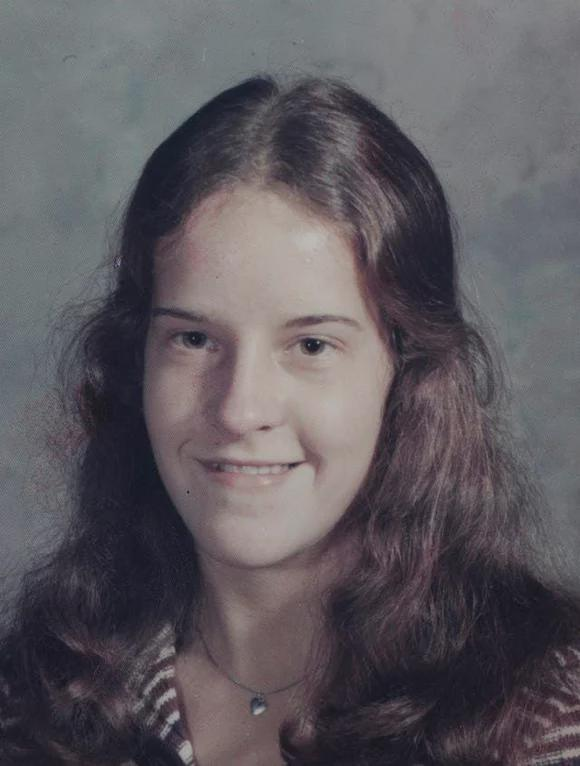
Teresa “Trenny” Lynn Gibson was born on August 17, 1960, and lived with her parents Hope and Robert Gibson Sr., her older brother Robert Jr., younger sister Tina, and five-year-old brother Miracle in Knoxville, Tennessee. She was quiet, academically strong, and worked at a cafeteria at the local mall, saving most of what she earned. She dreamed of studying landscape architecture at the University of Tennessee. She was five feet three and weighed 115 pounds. She adored her dog, Mitzi. On the morning of October 8th, Hope drove Trenny to school as usual and pulled away without concern. It was the last time she saw her daughter.
The official account of what happened next is well known: a school field trip, a trail, a girl who stepped sideways into the woods and was never found. What the official account leaves out is almost everything that matters.
The School Trip Turned Surprise
The field trip was organized by Wayne Dunlap, who taught ornamental horticulture at Bearden High. Dunlap had kept the destination secret and announced it only once the students were seated on the bus: Great Smoky Mountains National Park. The students cheered. Dunlap would be the only adult chaperoning all forty of them.
Trenny had expected the trip to be cancelled because of the rain and had not brought a coat. On arriving at school she borrowed a brown plaid jacket from Robert Simpson, a classmate who was also her older brother’s best friend. Simpson’s father was the Knox County Assistant District Attorney. Trenny and Robert sat together at the back of the bus for the fifty-mile drive.
The plan was to hike the Forney Ridge Trail 1.8 miles south to Andrews Bald, a grassy high point in the park, then return to the bus by 3:30 p.m. Dunlap told the students to stay on the trail and not take any side routes. As the group climbed, the narrow trail strung them out into loose clusters of twos and threes. Trenny and Robert arrived at Andrews Bald together at around 1:30 p.m. They ate lunch under a tree as the rain picked up. Shortly before 2:00 p.m., most students decided to head back. Trenny left with that group. Robert said he wanted to stay behind. She said goodbye. That was the last time, by Robert Simpson’s own account, that he saw her.
The Last Hour on the Trail
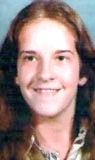
The return hike moved fast. The weather had worsened and students who had not dressed for it were in no mood to linger. Trenny walked quickly. Around 2:50 p.m., she caught up with a group that included Bobby Cogill, Angela Beckner, Lisa Michels, Scott Troy, and Anita Rounds. Cogill later told investigators she had walked alongside Trenny for a stretch, and that when someone suggested they all rest, every member of the group stopped and sat down.
Except Trenny. She said she didn’t want to stop, and she kept moving.
Anita Rounds recalled watching Trenny continue up the trail, estimating they were roughly half a mile from the parking area at that point. Then student David Eastham approached from behind. Rounds turned to look at him. When she turned back, Trenny was not on the trail.
Cogill later told investigators she had seen someone who looked like Trenny stop, bend forward, turn right, and walk into the trees. The terrain at that spot was dense and heavily overgrown. There was no visible path. Nobody called after her. Everyone assumed she would be at the bus.
The Search Followed a Scent
Dunlap recognized something was wrong quickly. He sent a student back toward Andrews Bald and walked toward Double Spring Gap himself. Both searches came up empty. He reported Trenny missing. By 6:30 p.m., park rangers were on the trail. By 8:24 p.m., Hope had been informed. Trenny’s father flew back from a business trip in Baton Rouge, Louisiana. Both parents arrived at park headquarters around midnight, carrying recently worn clothing to give the search dogs a scent.
What the dogs found over the next three days changed the shape of the investigation.
On October 9th, one team picked up Trenny’s scent near Andrews Bald and tracked it toward Forney Creek Trail. Another team located her scent on the Appalachian Trail near the Clingmans Dome tower and followed it for approximately a mile and a half before losing it at Clingmans Dome Road. October 10th: dogs confirmed the same pattern. October 11th: multiple teams independently ran the same route, northeast along the Appalachian Trail toward Collins Gap, then off-trail toward the road. Every time, the scent ended at the pavement.
The search lasted ten days, involved 756 searchers, and swept three miles in every direction. Trails were walked out to fifteen miles. Helicopters flew when the weather allowed. A second search was mounted in April 1977. Nothing was found inside the park. No trace of Trenny Gibson, alive or dead, has ever been located there.
Among the details that didn’t make it into the official NPS search logs: at the spot where Cogill watched Trenny leave the trail, a searcher named Randy Collins reportedly found a partial can of beer and a cluster of cigarette butts. The beer was fresh enough to smell. The butts had a distinctive triangular filter associated with Parliament brand cigarettes. Collins bagged them and handed them to a park ranger, who discarded them. This was 1976. DNA forensics didn’t exist.
Collins later said the footprints in that area suggested two people had waited there: one larger and heavier, one smaller. At the spot on Clingmans Dome Road where the scent trail ended, more cigarette butts were reportedly found by investigators, apparently dumped in a pile from a car ashtray. The implication is direct: someone waited in the woods while Trenny came off the trail, walked her to the road, and left in a car.
The FBI opened an investigation on October 12th. That file has never been released.
Kelvin Bowman and the Break-In
Almost exactly a year before Trenny disappeared, on the night of October 11, 1975, a fellow Bearden student named Kelvin Bowman came to the Gibson home. The version Hope Gibson told police, and later repeated to journalists and researchers, was that Bowman was an intruder. He had come to Trenny’s bedroom window and tried to force his way in. Hope grabbed a gun and shot him in the foot. He was arrested, sentenced to two years in a juvenile correctional facility, and served six months. Before being taken away, Hope said, Bowman threatened Trenny’s life in the courtroom.
The juvenile court records are sealed. His specific words cannot be confirmed.
By October 1976, Bowman was back at Bearden High School. Some students claimed they had seen a car matching his following the school bus on the morning of October 8th. Principal Frank Hall confirmed Bowman had attended school all day. Teacher Dunlap said no car had followed the bus. Bowman was cleared.
But Hope’s version of the October 1975 incident was not the only account on record. Michael C. Bouchard later interviewed Bowman directly. Bowman told him that he and Trenny had been in a relationship for months. Trenny had been leaving her window unlocked. On the night Hope shot him, Bowman said, he was not breaking in. He was entering through a window Trenny had opened for him, as they had arranged to do many times before.
Bowman is Black. Trenny was white. This was Knoxville, Tennessee, in 1975. According to Bowman, Trenny’s father arrived at the hospital after the shooting and made his views on the relationship known in explicit terms. Laura Riste, who has spent years investigating the case and speaking directly with many people connected to it, told Bouchard she found Bowman’s account more internally consistent than Hope’s. A neighbor from the Gibsons’ street told Riste that on the night of the shooting, she saw Bowman walking down the road, limping, saying he had been shot. He was not inside the house. He was not being restrained. He was walking away.
Sickeningly, Bowman’s clearing as a suspect may have been the most straightforward aspect of his connection to this case. What becomes harder to accept is the possibility that the family’s identification of him as the primary threat may have diverted attention, and resources, away from everyone else.
What Robert Simpson Knew
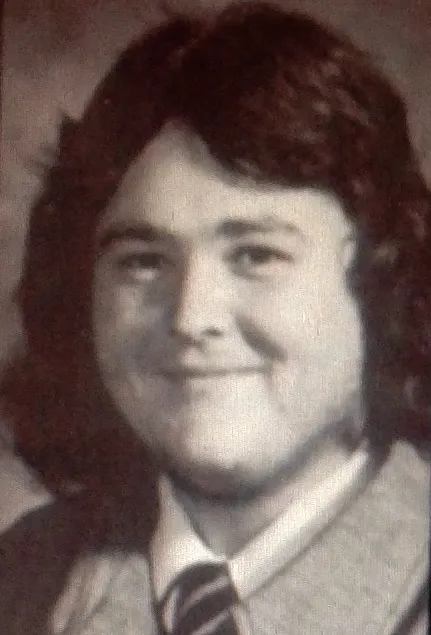
Robert Simpson was never questioned by police. His father, the Assistant District Attorney, advised him to say nothing. He said nothing.
What he did in the days that followed raised questions that were never formally pursued. While the Gibsons stayed in Gatlinburg as the search continued, Simpson reportedly visited their Knoxville home multiple times and began screening their phone calls. Hope’s sister, Flossy Collins, was staying at the house looking after the younger children. She eventually persuaded Simpson to stop coming. During those visits, Simpson made two statements to Trenny’s younger sister Tina that investigators would later hear repeated back: “If Kelvin Bowman has Trenny, he will kill her. If he doesn’t have her, I think she might have run off with some horny hitchhiker.”
Those two sentences have troubled researchers for decades. Riste has noted that the phrasing sounds less like concern and more like an attempt to direct suspicion. One sentence points toward Bowman. The other closes off the investigation without implicating anyone with a name.
Trenny’s heavy Stanley comb, which she reportedly carried everywhere, was found on the dashboard of Simpson’s car after the disappearance, reportedly worked through his own hair. Her brother Robert Jr. asked about it. Simpson said Trenny had given it to him to hold. Riste and Bouchard have both acknowledged a benign explanation is possible: Trenny had been wearing Simpson’s jacket, and she may have transferred the comb to a pocket before leaving it with him. But neither the comb nor Simpson’s behavior at the Gibson home was ever formally investigated. His father made sure of that.
Simpson died in recent years. Bouchard’s book “Trenny,” published on October 8, 2025, the 49th anniversary of her disappearance, details what he describes as an FBI cover-up intended to protect the son of the Assistant District Attorney. The FBI files remain sealed.
The Ring Changed Hands
On the day she disappeared, Trenny was wearing a diamond and star sapphire ring gifted to her by her family. It was worth approximately $600. She wore it every day.
After Trenny went missing, the ring surfaced on the hand of a girl one year below her at Bearden High. Riste was later contacted by a woman who had confronted this girl by phone years later. The girl said Trenny had given her the ring on the day of the field trip, asking her to hold it. When pressed to return it to the Gibson family, the girl agreed it was the right thing to do. She never did. She died in her early forties.
Robert Simpson separately told investigators a different story: that Trenny had given the ring, while in a washroom during the trip, to a different girl in the sophomore class for safekeeping. That girl denied knowing anything about the ring.
The question of why a sixteen-year-old would give away a $600 piece of sentimental jewelry to two different people on the same day has no clean answer. Riste has noted it is consistent with a pattern of someone intentionally shedding valuables before a planned departure. If that is true, the identity of whoever helped carry out that plan is the central unanswered question in the case.
Several Bearden alumni interviewed over the years have told researchers they knew more about what happened on that trail than they ever told police. Why they stayed quiet is a question nobody has been able to compel them to answer. Most of the principals are now dead. Kelvin Bowman, Robert Simpson, and others who may have had relevant knowledge have all died without their accounts being formally captured.
Trenny Gibson was born on August 17, 1960. She would be 65 years old today. Multiple search dog teams, on multiple days, independently tracked her scent to a road. The trail ended at the pavement. In every investigation since, the clearest evidence points to the same conclusion: she left the park in a vehicle. Whether she went willingly or was taken, and who was driving, remains unknown. No physical trace of her has ever been found.
