
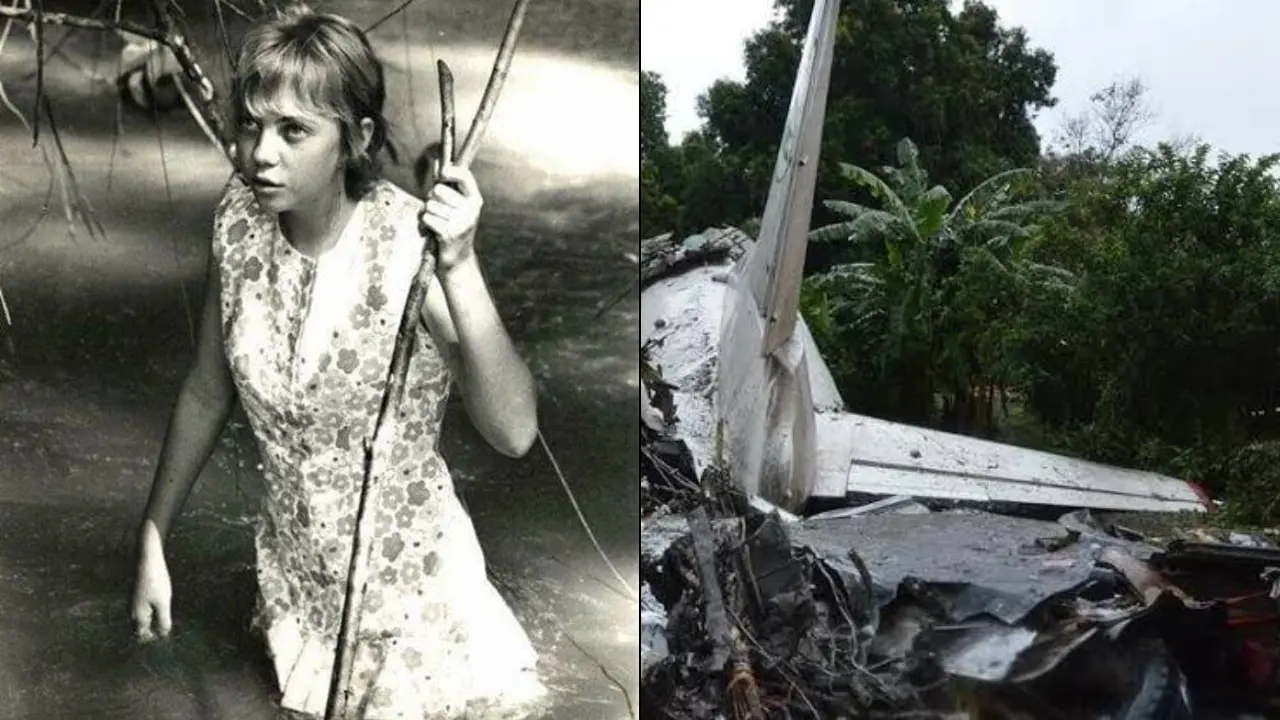
On Christmas Eve, 1971, seventeen-year-old Juliane Koepcke was sitting beside her mother aboard LANSA Flight 508 when the fuselage began to tear itself apart around her. The plane was 10,000 feet above the Peruvian Amazon. Her mother screamed: “This is the end.” Then the aircraft disintegrated, and Juliane was no longer inside it.
She had no parachute. She had one sandal. She had a thin dress.
Of the 92 people aboard that flight, she was the only one who walked out of the Amazon alive.
A family built for the jungle
Juliane Margaret Beate Koepcke was born on October 10, 1954, in Lima, Peru, the only child of German zoologists Maria and Hans-Wilhelm Koepcke. Her parents worked at Lima’s Museum of Natural History before relocating to the Peruvian Amazon when Juliane was fourteen to establish the Panguana research station, a remote field outpost deep in the rainforest. She grew up alongside caimans, vampire bats, poisonous spiders, and venomous snakes. Her mother, Maria, was an ornithologist who taught her to identify birds by their calls alone. Her father taught her the rule that would later save her life: if you are ever lost in the jungle, follow the water. A small creek leads to a larger one, which eventually leads to a river, and rivers lead to people.
By December 1971, Juliane was completing her final year at the Deutsche Schule Lima Alexander von Humboldt. She graduated on December 23. Her mother had wanted to leave for Panguana several days earlier, but Juliane had asked to stay in Lima for her graduation ceremony. Maria agreed. They scheduled a flight home for Christmas Eve morning. It was the only one available.
The airline nobody should have trusted
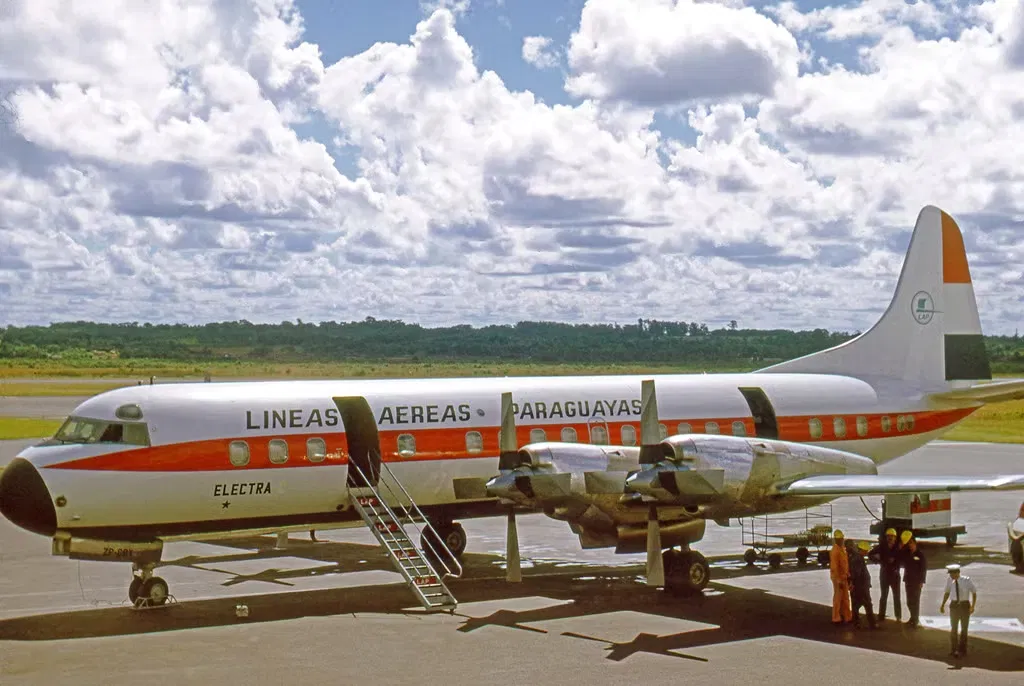
By 1971, the Peruvian carrier LANSA had already been responsible for two separate fatal crashes. Locals had a saying about the airline that translated roughly as: LANSA lands on its belly.
Hans-Wilhelm Koepcke refused to let his wife and daughter book a LANSA flight. He knew the record. With all other Christmas Eve routes sold out and no alternative, Maria and Juliane boarded anyway. The Peruvian government had kept LANSA’s operating license active despite two prior disasters. That was not an oversight. It was a decision someone made, and 91 people paid for it.
Flight 508 came apart
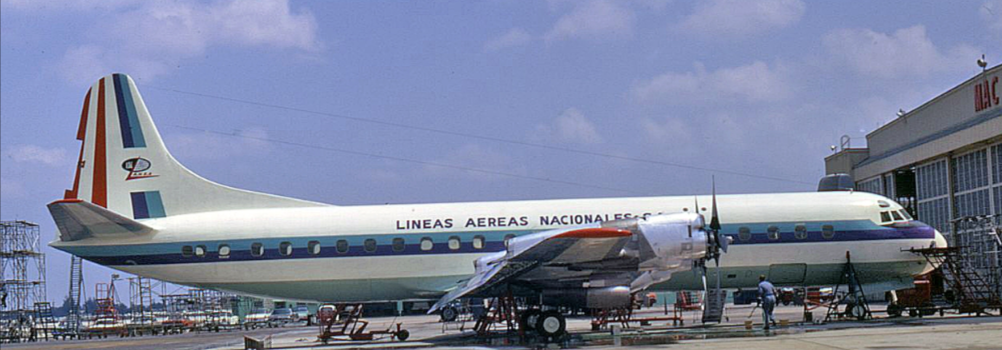
Just over twenty-five minutes into the flight from Lima to Pucallpa, LANSA Flight 508 flew headfirst into a severe storm. Lightning struck the aircraft. The fuselage began to disintegrate mid-flight, scattering passengers and debris across nine square miles of jungle while the plane was still airborne.
Juliane found herself outside the aircraft, still strapped into her row of three seats, the jungle spinning below her. The only sound was the wind in her ears. Then she lost consciousness.
Investigators later concluded that the row of seats she was attached to likely spun through the descent, creating air resistance the way a helicopter blade would. A warm updraft from the storm below may have slowed her further. The dense canopy of the Amazon absorbed the final impact rather than the ground itself, layers of branches taking what the earth would have finished.
She fell approximately 3,000 meters. She was still alive.
Eleven days in the Amazon
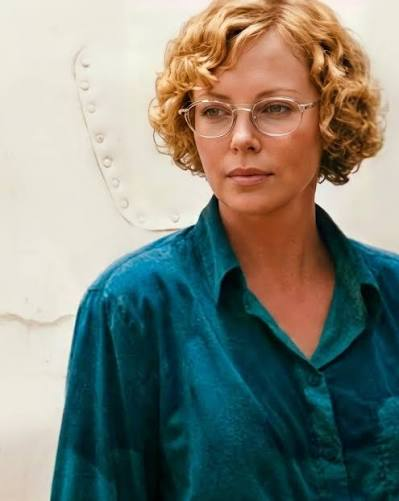
Juliane came to in the Amazon with her left eye swollen shut, a broken collarbone, deep cuts across her arms and legs, and a torn ligament in her left knee that she did not discover until months later. Doctors who examined her afterward said it was medically impossible to walk on a knee injury that severe. She had no idea she had it.
She had no glasses, leaving her nearly blind in the densest jungle on earth. Search planes could be heard overhead in the first days, but the canopy made her invisible from above. After a few days, they stopped. She was entirely on her own.
Her father’s rule held. She found a small stream and began following it downhill, licking droplets from leaves to stay hydrated and drinking from the stream when she had to, accepting the risk of illness over the certainty of dying from dehydration. She led with her one sandal to give at least one foot some protection against snakes. The jungle offered almost nothing edible to a woman who could not see past a few feet. She found a bag of candies from the wreckage and ate them. She found a Christmas cake caked in mud, tried one bite, and abandoned it.
Nights were the hardest. It either rained cold or the mosquitoes took over. She covered herself with large leaves and slept against tree trunks where she could find them. On the fourth day, vultures circling overhead led her to three passengers still strapped into their seats, driven headfirst into the ground with such force that half of each body was buried. She checked the foot of one victim. The toenails were painted. Her mother never painted her toenails.
She pressed on.
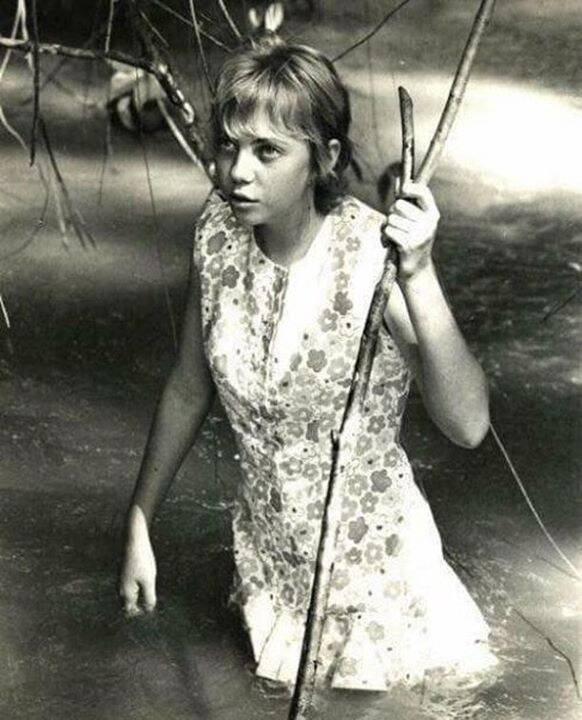
On day five or six, she heard birds she recognized. Her mother had taught her the call of the hoatzin, a species that nests along bodies of water. She followed the sound until she reached a large river and waded in. She moved downstream for days, poling a stick through the shallows ahead of her to detect stingrays. She stayed close to the bank and away from the deeper channel where anacondas and caimans moved. At one point she heard infant caimans calling from the bank and saw the mother rise and advance toward her. She eased back into the water, went completely still, and waited. The caiman turned back.
By the time she found a small boat pulled against a riverbank, the wound in her upper left arm had become an infestation. Botfly larvae had hatched inside the gash she had received in the crash. She found gasoline from the boat’s engine and poured it directly into the cut. The maggots surfaced one by one. She pulled out approximately thirty herself. Fifty came out in total. She laid down on the sandy bank under a tarp.
It was the best sleep she had ever had.
Three men came back early
The camp belonged to forest workers Beltran Paredes, Carlos Vasquez, and Nestor Amaifuen. They had not planned to return that day. They checked on the camp and their boat every three weeks and had come back early entirely by chance. When they found a teenage girl with blond hair and bloodshot eyes sitting in their shelter, they told her afterward they thought she might be a water spirit. There is a legendary figure in Peruvian Amazon folklore called Yacumama, the water mother.
She told them what had happened. They cleaned her wounds, removed the remaining maggots, fed her, and the following morning loaded her into a canoe. Eleven hours downriver, she reached a more inhabited area and was airlifted to a missionary hospital. Eleven days had passed since Christmas Eve.
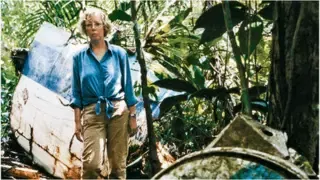
After she recovered enough to move, Juliane guided search teams back toward the crash site. On January 7, 1972, they found the first pieces of wreckage. The following day they recovered 20 bodies. On January 12, Hans-Wilhelm Koepcke identified his wife Maria’s remains by her distinct feet, despite serious injuries to her face.
Forensic analysis of the recovered bodies then revealed something that reframed the entire disaster. Multiple passengers had survived the initial fall from the disintegrating aircraft, just as Juliane had. They had been alive, conscious, and waiting in the jungle. At least 14 of them outlasted the crash itself.
The search had been called off before any of them were found. None of them made it out.
She went back to the jungle
Juliane Koepcke returned to West Germany to recover. She studied biology at the University of Kiel and graduated in 1980, then earned a doctorate from LMU Munich with a thesis on bat ecology in the Peruvian rainforest. She married German entomologist Erich Diller in 1989. Following her father’s death in 2000, she took over as director of Panguana, the research station her parents built in the same jungle that should have killed her. She currently works as a librarian at the Bavarian State Collection of Zoology in Munich.
In 1998, German filmmaker Werner Herzog released Wings of Hope, a documentary in which Koepcke accompanied him back to the crash site. Herzog had his own reason for making it. In late 1971, while scouting locations for his film Aguirre, the Wrath of God, he had been booked on LANSA Flight 508. A last-minute change of plans removed him from the passenger list. He had wanted to tell her story ever since, but was unable to locate her for decades because she avoided the media. He eventually found her by contacting the priest who had performed her mother’s funeral.
In 2011, Koepcke published her autobiography, Als ich vom Himmel fiel, released in English as When I Fell from the Sky. It won the Corine Literature Prize that year. In 2019, the government of Peru named her a Grand Officer of the Order of Merit for Distinguished Services.
She has described the survivor’s question as something that will never leave her. Why was she the only one. It always will. There were 92 people on LANSA Flight 508, and she has spent more than fifty years living with 91 answers she can never give.
