
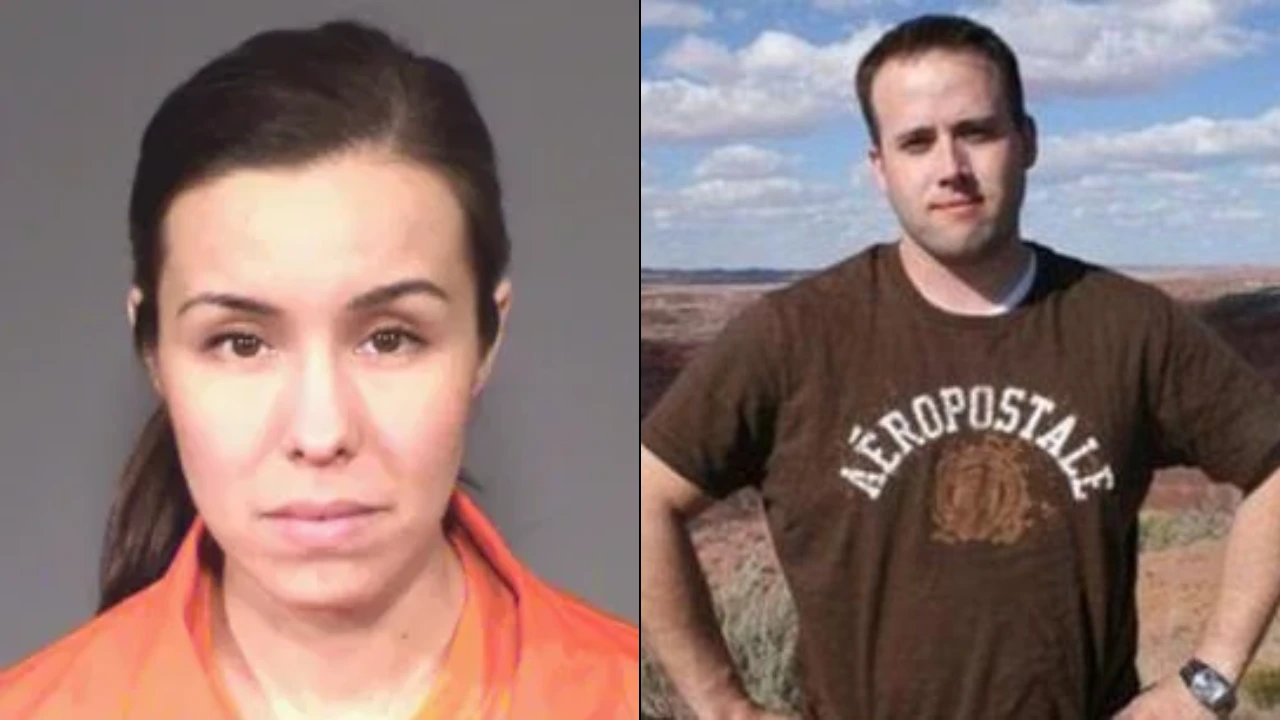
On June 9, 2008, a group of concerned friends went to Travis Alexander’s home in Mesa, Arizona. His roommates had not seen him in several days but assumed he was traveling. His bedroom door had been locked. When they finally located a key and stepped inside, they found large pools of blood running from the hallway into the master bathroom. In the shower at the end of the hall, they found Travis Alexander. He had been stabbed 27 times, had his throat slashed through the trachea, jugular vein, and common carotid artery, and had been shot once in the forehead. He had been dead for five days.
In the 911 call placed from that bedroom, the dispatcher asked whether Travis had any enemies. His friends had an immediate answer. There was an ex-girlfriend who had been stalking him, they said. Her name was Jodi Arias.
Travis Alexander
Travis Victor Alexander was born on July 28, 1977, in Riverside, California, to Gary David Alexander and Pamela Elizabeth Alexander. He was one of eight children. At the age of eight, he went to live with his paternal grandparents. After his father died in July 1997, his seven siblings joined their paternal grandmother as well. Travis emerged from that fractured early life with considerable drive. He performed stand-up comedy under the stage name “Eddie Snell” and eventually built a career as a salesman and motivational speaker for Pre-Paid Legal Services (PPL), working out of Mesa, Arizona. By his early thirties he was an active and well-regarded member of the Church of Jesus Christ of Latter-day Saints, widely liked and connected.
That was the Travis Alexander his friends knew. It was not the whole picture.

Jodi Arias and the relationship
Jodi Ann Arias was born on July 9, 1980, in Salinas, California, to William and Sandra Arias. She withdrew from Yreka Union High School in 11th grade and spent her early twenties working as an aspiring photographer, model, and waitress before landing a sales role at PPL. In 2006, she met Travis Alexander at a company conference in Las Vegas, Nevada. The connection, at least on Arias’s side, was immediate and intense.
Travis was a practicing Mormon and could only date within his faith. Arias converted to the Church of Jesus Christ of Latter-day Saints and was baptized by Alexander himself on November 26, 2006. They began dating in February 2007. The relationship lasted five months before Travis ended it in June 2007.
What followed was more dangerous than the relationship itself. Arias relocated to Mesa, Arizona, to remain close to Travis. The two continued a sexual relationship that Travis kept largely concealed from his social circle. His friends had a clear-eyed view of the dynamic: they called Arias his obsessive, unstable ex. Travis told them he believed she had slashed his car’s tires and accessed his Facebook account without permission. He told them she showed up unannounced in the middle of the night. His friends urged him to cut contact entirely.
He did not.
In April 2008, Arias moved back to Yreka, California, to live with her maternal grandparents. She was still communicating with Travis. He had begun pursuing a new relationship and was planning a trip to Cancun with friends. By late May 2008, Arias was making preparations of a different kind entirely.
June 4, 2008
On or around May 28, 2008, a burglary was reported at the Yreka home where Arias was staying with her grandparents. Among the items taken was a .25 caliber pistol. It was never recovered.
In early June, Arias rented a car from Budget Rent-A-Car in Redding, California. Before picking it up, she called a former boyfriend, Daryl Brewer, and asked to borrow two five-gallon gas canisters. On June 3, she purchased a third canister at a local shop. That evening in Pasadena, California, she filled all three at a gas station, paying for eight gallons on her Mastercard and then nine gallons in cash four minutes later. The canisters meant she could drive hundreds of miles without leaving a traceable record of gas purchases along her route.
She drove to Mesa.
Travis Alexander was murdered on June 4, 2008. His digital camera, recovered by police from a washing machine in the home, documented the final hours of his life. Photographs recovered from the damaged device showed Arias and Travis together in sexually suggestive poses, timestamped at approximately 1:40 p.m. The last photograph of Travis Alexander alive, showing him in the shower, was taken at 5:29 p.m. Moments later, the camera captured an image that appeared to have been taken by accident: Travis, bleeding heavily on the bathroom floor. A shoe appeared at the edge of the frame. It was later confirmed to match footwear belonging to Jodi Arias. The camera had been kicked across the floor during the attack.
Travis sustained 27 stab wounds, a slashed throat that severed his trachea, jugular vein, and common carotid artery, and a single gunshot wound to the forehead. Medical examiner Kevin Horn later testified that the gunshot was likely inflicted after death and that Alexander had extensive defensive wounds on his hands and arms, consistent with a sustained struggle.
After the attack, Arias attempted to clean the crime scene, wiping surfaces and Travis’s body. She missed a bloody handprint on the hallway wall. DNA analysis later confirmed it contained genetic material from both Travis Alexander and Jodi Arias.
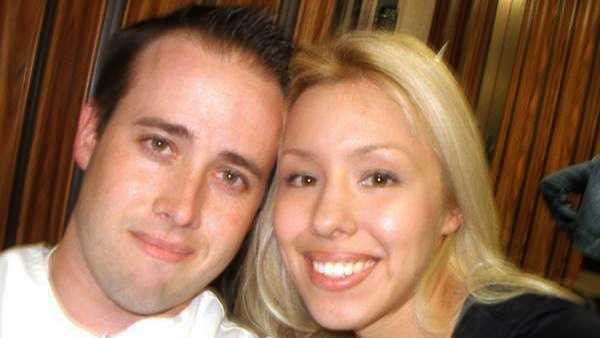
The alibi falls apart
Arias drove out of Mesa and north toward Utah. The following day she met a new acquaintance, Ryan Burns, in the Salt Lake City suburb of West Jordan. Burns and his friends noticed that Arias, who had previously been blonde, had dyed her hair dark brown. She wore long sleeves on a hot day. She had bandages on both hands, which she attributed to cuts sustained while working at a restaurant she called Margaritaville. Investigators later confirmed no restaurant by that name had ever operated in the state.
On the drive, a police officer pulled over the rental car. The front license plate was missing and the rear plate had been mounted upside down. Arias talked her way through the stop.
When she returned the car on June 7, it had accumulated over 2,800 miles. The rental clerk testified that the vehicle was missing its floor mats and had red stains on both the front and rear seats. The car had been cleaned before police were able to examine it.
Back in Mesa, Travis’s friends had been attempting to reach him since June 4. On June 9, they went to his home, found a key, opened his bedroom door, and called 911. In that call, they named Jodi Arias within the first minute.
Police contacted Arias the same day. She told them she had not seen Travis since April.
Detectives had already begun building the case. Arias had voluntarily submitted a DNA sample, which matched the partial handprint at the crime scene. The recovered photographs placed her in Travis’s home on the afternoon and early evening of June 4. A spent .25 caliber shell casing found near the body matched the specifications of the pistol reported stolen from her grandparents’ home. On July 9, 2008, a Maricopa County grand jury indicted Arias on a charge of first-degree murder. She was arrested at her grandparents’ home in California six days later and extradited to Arizona on September 5. She pleaded not guilty on September 11.
Jodi Arias gave investigators three separate accounts of what had happened. In the first, she had not been in Mesa at all that week. In the second, which she produced after investigators confronted her with the photographs from the recovered camera, two masked intruders had broken into Travis’s home, murdered him, and threatened her family if she spoke.
She held that version for two years. In 2010 she abandoned it and said she had killed Travis, but purely in self-defense. She claimed he had been physically and emotionally abusive, harbored pedophilic urges she had tried to help him manage, and had lunged at her in fury after she accidentally dropped his camera in the bathroom. She had fought back to save her life.
Trial and verdict
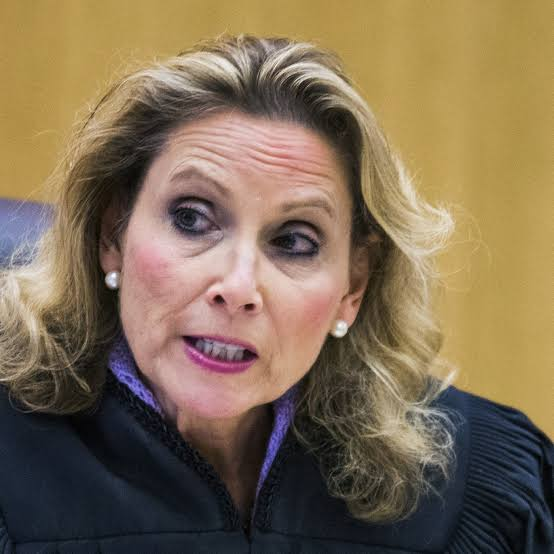
Voir dire began on December 10, 2012, in Maricopa County Superior Court before Judge Sherry K. Stephens. Opening arguments were delivered on January 2, 2013. Prosecutor Juan Martinez pursued the death penalty. Arias was represented by appointed attorneys L. Kirk Nurmi and Jennifer Willmott, who argued that Travis’s death was a justifiable act of self-defense.
The trial ran five months. Arias testified for 18 days, a duration that criminal defense attorney Mark Geragos later described as unprecedented. She detailed a pattern of alleged abuse and maintained throughout that she had acted out of nothing but fear.
The prosecution dismantled the claim step by step. They argued Arias had staged the burglary at her grandparents’ home to obtain the murder weapon, purchased gas canisters to avoid leaving a traceable route, and driven more than 2,800 miles in a rental car stripped of its floor mats. She had dyed her hair, told a story about a restaurant that did not exist, and mounted two license plates incorrectly on a vehicle she ultimately returned stained and overloaded with mileage. Ryan Burns testified that Arias had seemed entirely normal when she arrived in Utah the day after the murder.
After 15 hours of deliberation, on May 8, 2013, all twelve jurors found Jodi Arias guilty of first-degree premeditated murder. Seven of the twelve also found her guilty of felony murder. As the verdict was read, Travis Alexander’s family embraced one another. Outside the courthouse, a crowd cheered.
The sentencing phase took two more years. The jury deadlocked twice on the question of the death penalty, in May 2013 and again in March 2015. On April 13, 2015, Judge Stephens sentenced Jodi Arias to life imprisonment without the possibility of parole. She is currently held at Arizona State Prison Complex, Perryville, at medium-security level. In 2026 she published a statement claiming investigators had lost or destroyed evidence in her case and announced she was preparing a new constitutional appeal.
Travis Alexander was 30 years old when he died. He was buried at Olivewood Memorial Park in Riverside, California, not far from where he was born.
