

On January 19, 2021, Eliyahu “Eli” Weinstein walked out of federal prison a free man. He had served less than eight years of a 24-year sentence for defrauding more than 200 investors out of roughly $200 million, the great majority of them fellow members of the Orthodox Jewish community in Lakewood, New Jersey. President Donald Trump commuted his sentence to time served on the final full day of his first term.
That evening, Weinstein posted a video from Lakewood thanking the supporters who had lobbied on his behalf. “My goal,” he said, “is to make everybody proud of me and to lead my life in the proper fashion.” Within eleven months, he was running a new Ponzi scheme.
The used car salesman from Lakewood
Weinstein grew up in Brooklyn, the son of a Jewish community leader and a school principal. By his early thirties, he had settled in Lakewood, a densely populated township in Ocean County that is home to one of the largest Orthodox Jewish communities in the United States, and was working as a used car salesman.
He was known as devout and well-connected, the kind of man neighbors called when something needed handling. “He was the go-to person in Lakewood,” Samantha Weitzen, one of his eventual victims, later told a federal court. “Everyone went to Eli when they needed something done.”
He supplemented that reputation methodically. He donated generously to religious organizations and charities throughout the community, and spent heavily on Judaica, the devotional artwork and sacred artifacts that carried obvious significance to his neighbors. The giving enhanced his standing.
The standing brought him investors. He told people he had privileged access to real estate transactions that would generate returns unavailable through ordinary channels. What he was building, prosecutors would later demonstrate, was a façade designed to be monetized.
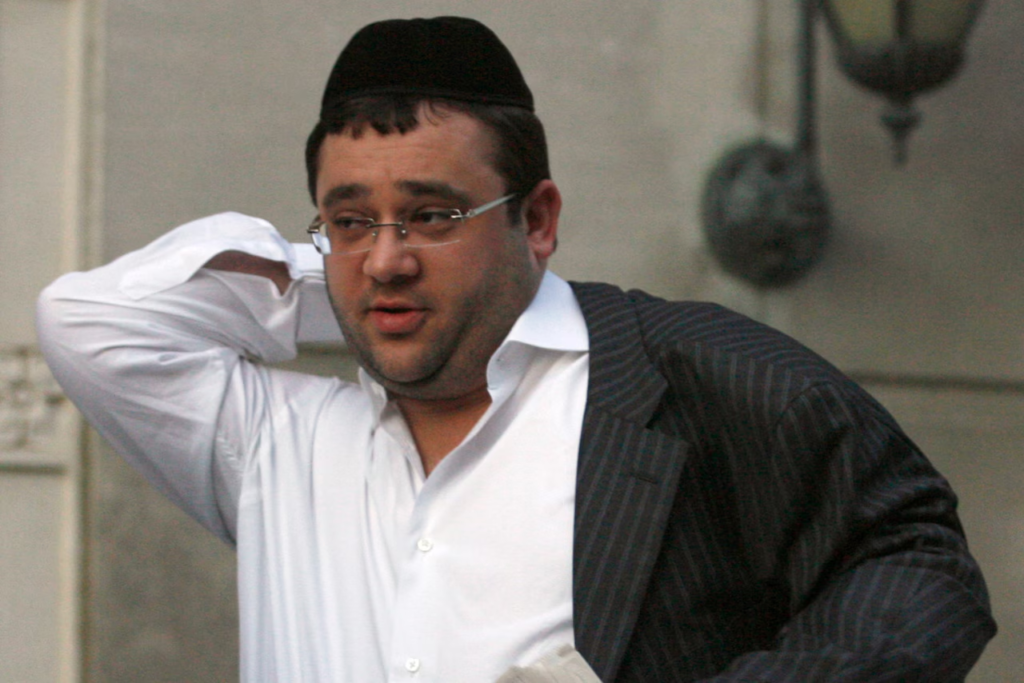
The $200 million real estate fraud
Beginning in September 2005, according to federal prosecutors, Weinstein and co-conspirator Vladimir Siforov of Manalapan, New Jersey, began soliciting investments by falsely representing that specific real estate deals existed and that investors’ money was funding those transactions. He exploited a custom specific to his community: in Lakewood’s Orthodox business culture, transactions were often sealed on a handshake and without written records.
Weinstein used that trust as cover, approaching neighbors with verbal promises and fabricated paperwork, including manufactured mortgages, deeds, and checks designed to make the arrangements appear legitimate.
The scheme operated as a Ponzi: he did not invest the money. When early investors were owed returns, he paid them with funds raised from newer investors, not from any real estate activity. So long as new money kept flowing in, he could sustain the illusion. In the meantime, he spent liberally on himself: leasing luxury vehicles, gambling at Las Vegas casinos, purchasing jewelry, and directing portions of the proceeds to the charitable and religious donations that continued to deepen his community profile.
Sickeningly, the same money he stole from his neighbors funded the reputation that kept drawing more of them in.The scheme expanded as the years passed. By April 2010, Weinstein had largely exhausted the pool of willing investors in the Orthodox community and could no longer meet repayment demands from his earliest victims. He and Siforov began soliciting investors outside the community, defrauding additional victims across multiple states. But that pool also had limits.
Some of the original investors began comparing notes about missing returns and unresponsive promises. They contacted the FBI. On August 12, 2010, federal agents arrested Weinstein at his Lakewood home on charges of bank fraud and wire fraud. Prosecutors would ultimately establish losses to investors of at least $200 million.
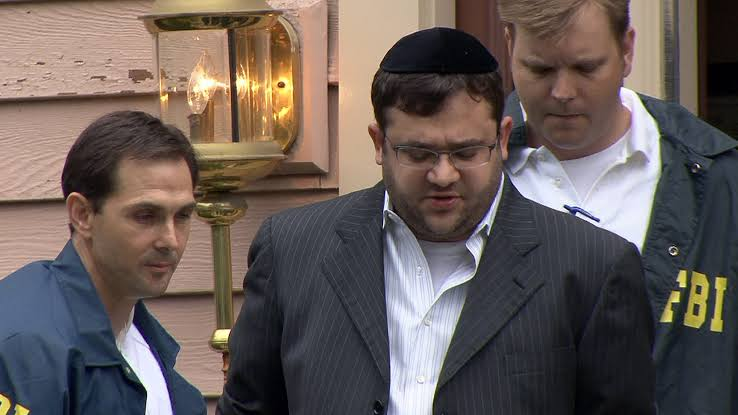
Second fraud, committed while facing the first
Weinstein was released on bond pending trial, subject to a court order barring him from conducting any financial transaction exceeding $1,000 without the prior approval of a court-appointed special counsel. He violated those terms immediately.
In February 2012, with Facebook preparing for its May IPO, Weinstein recruited co-conspirators Alex Schleider of Lakewood and Aaron Glucksman of Brooklyn. Together they approached investors and offered what they described as a rare opportunity: access to large blocks of Facebook shares before the company went public, shares that were difficult to obtain and widely expected to surge at the IPO.
No such shares existed or were accessible to Weinstein’s group. Around the same time, the trio solicited investments in a Florida apartment complex and the purchase of mortgage notes on seven Florida condominiums. Several of those condominiums were properties Weinstein himself had previously owned and lost to foreclosure. He was now fraudulently selling investors the opportunity to buy his own former losses.
None of the money went to Facebook stock or Florida real estate. Weinstein used it to pay the legal fees he had accumulated defending himself in the $200 million case, to cover his children’s religious school tuition, and to pull his home back from foreclosure. “Shamelessly, he even used the money he stole to pay the legal fees he accumulated from the previous scam,” U.S. Attorney Paul J.
Fishman said after Weinstein’s guilty plea. The second scheme generated additional investor losses of approximately $6.7 million. Glucksman was sentenced separately to 52 months.
On February 25, 2014, a federal judge sentenced Weinstein to 22 years in prison for the real estate fraud.
In December 2014, a second sentencing added 24 months for the Facebook and Florida schemes, bringing his combined sentence to 24 years, to be followed by three years of supervised release. He was ordered to pay $230,406,799 in restitution. His victims would see almost none of it.
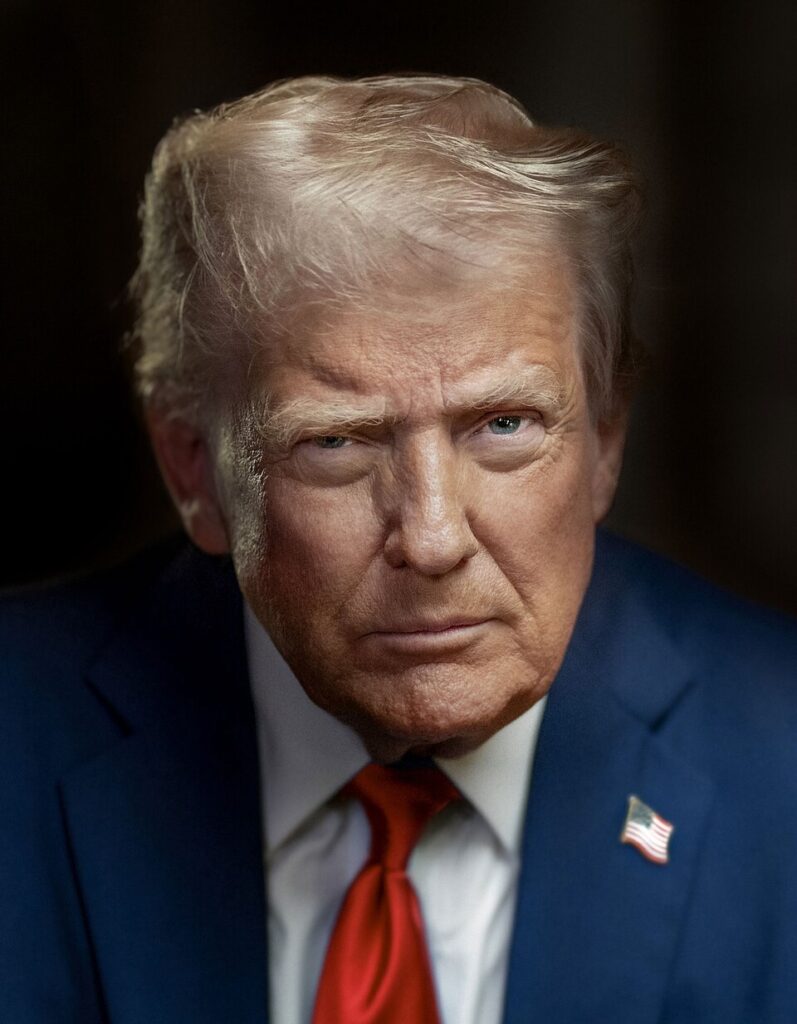
The presidential commutation
Weinstein entered federal prison in 2015. While incarcerated, a lobbying campaign assembled around his case, supported by attorney Alan Dershowitz, former U.S. Attorney Brett Tolman, and former Representative Bob Barr. On January 19, 2021, his final day in office, President Trump commuted Weinstein’s sentence to time served. Weinstein was among 74 people who received executive clemency actions that day, a group that also included Trump’s former chief strategist Steve Bannon and rapper Lil Wayne.
The commutation did not erase his convictions. It eliminated the remaining years of his prison term and placed him on the three-year term of supervised release that had been attached to his sentence, requiring him to report his activities and earnings to a probation officer and to turn over any money he earned toward his outstanding restitution obligations.
Gurbir Grewal, the New Jersey Attorney General who had helped prosecute Weinstein, did not hide his reaction. “I’m disgusted,” Grewal said. “It’s no surprise that President Trump granted clemency to Eli Weinstein: It’s one huckster commuting the sentence of another.” More than 200 victims had watched eight years pass with no meaningful restitution. Now the man who owed them $230 million was walking free, his remaining sentence erased, required only to check in with a probation officer.
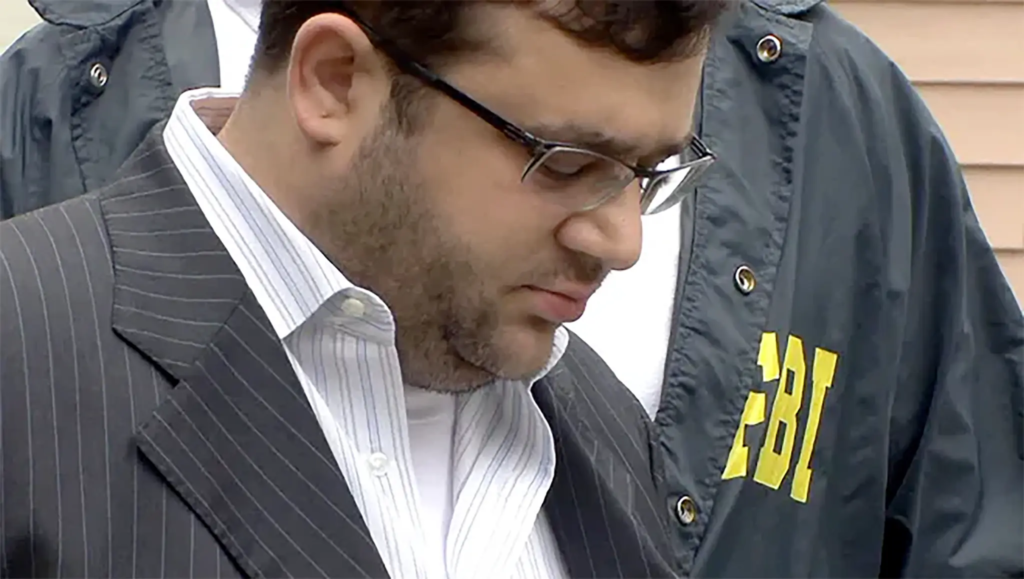
Optimus Investments and the third conviction
By November 2021, less than a year after his release, Weinstein was building his third scheme. The constraints of his supervised release shaped the operation from the start: because any income he generated was supposed to go to his victims, and because any involvement in business was supposed to be disclosed to his probation officer, Weinstein could not operate openly.He chose to operate invisibly instead. “I have a bad reputation,” he acknowledged in a conversation that was secretly recorded. Investors “wouldn’t give them a penny” if they knew who he was.
Working under the alias “Michael Konig,” Weinstein formed Optimus Investments Inc. in September 2021 with co-conspirator Aryeh “Ari” Bromberg of Lakewood and Joel Wittels, also of Lakewood. Bromberg and Wittels fronted the company publicly while Weinstein ran it from behind the scenes.
A sixth figure, Shlomo Erez, an Israeli citizen who claimed to be Weinstein’s attorney, helped conceal Weinstein’s identity and managed money on his behalf. Alaa Hattab, a broker based in Ottawa, Canada, solicited investors and actively hid Weinstein’s activities from the United States Probation Office.
The pitch adapted to the news cycle. In late 2021, investors were promised access to scarce pandemic supplies: N95 masks, COVID-19 test kits, and baby formula in short supply. As Russia’s invasion of Ukraine became the dominant news story in 2022, the pitch shifted to first-aid kits bound for Ukrainian civilians in need.
In each case, the deals were invented. Optimus could not pay its investors from the start. Rather than acknowledge this, the conspirators began using incoming investor funds to make Ponzi-like monthly payments to earlier investors, telling them the payments were legitimate returns.
To expand the investor pool, Optimus routed deals through Tryon Management Group LLC, a New Jersey investment firm owned by Christopher Anderson and Richard Curry. Tryon marketed the opportunities to its existing clients, consisting mostly of friends and family, who gave money to Tryon believing the deals were legitimate and unaware of Weinstein’s involvement. Tryon then transferred those funds to Optimus.
Anderson and Curry initially had no knowledge that the operation was fraudulent. In late August 2022, Hattab revealed Weinstein’s true identity to them. What followed were a series of meetings between Anderson, Curry, and Weinstein, at least two of which also included Wittels.
Weinstein confirmed who he was. “I am Eli Weinstein,” he said in one recorded exchange. In another, he addressed the fraud directly: “I finagled, and Ponzied, and lied to people to cover us.” In a separate recorded conversation, he revealed that he had hidden assets from the government while on supervised release, boasting: “I just told you something that no one in the world knows because I hid money.
Get it?” After the meetings, rather than go to authorities, the conspirators initially agreed to raise additional money to cover the collapsing payments and continue concealing Weinstein’s identity from investors. Eventually, Anderson and his business partner brought the recordings to the FBI and confessed to their own involvement.
In July 2023, Weinstein was arrested for the third time, this time while still on supervised release from his prior convictions.
After a six-week jury trial in Trenton federal court, he was convicted in March 2025 on multiple counts including wire fraud, securities fraud, money laundering, and obstruction of justice. Bromberg was convicted alongside him.On November 14, 2025, U.S. District Judge Michael A. Shipp sentenced Weinstein to 37 years in federal prison and ordered him to pay $44,294,803 in restitution, due immediately. Bromberg received 12 years.
Across three convictions, Weinstein had defrauded more than 350 people out of more than $270 million, the majority of them members of the religious community he had grown up in and built his life around. Samantha Weitzen, who had once gone to him for help getting her family’s headstone placed at a cemetery, who had trusted him the way everyone in Lakewood trusted Eli, was still owed money she would almost certainly never see.
