

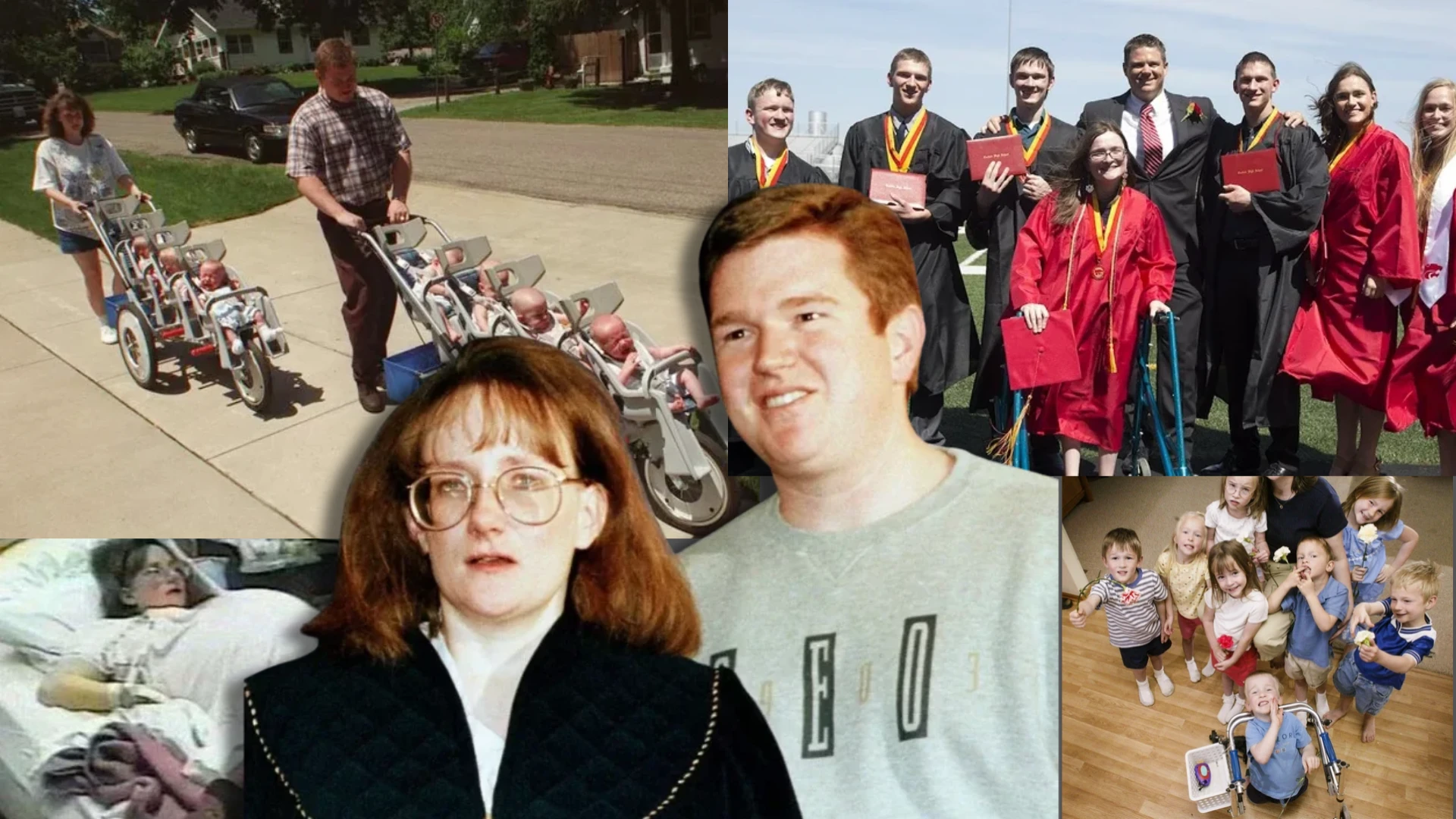
At 12:30 p.m. on Wednesday, November 19, 1997, anesthesiologist Dirk Brom gave Bobbi McCaughey an epidural at Iowa Methodist Medical Center in Des Moines. Minutes earlier, the 29-year-old seamstress had walked to the operating table on her own.
Around her stood a medical team that had planned this delivery for weeks, and every member had one specific job. At 12:48 p.m., doctors lifted out a boy weighing 3 pounds, 4 ounces. At 12:54 p.m., they lifted out the last baby.
There were seven.
The McCaugheys wanted another child
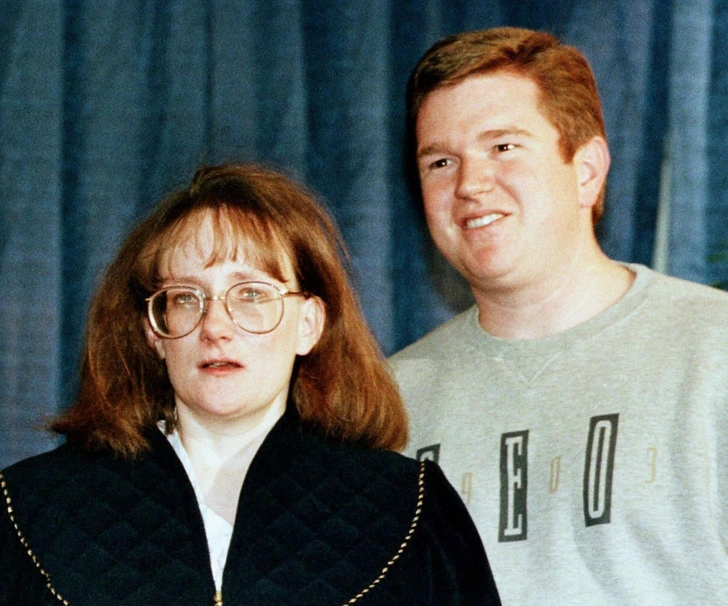
Before the cameras arrived, Bobbi and Kenny McCaughey lived small, quiet lives. Bobbi was 29 and Kenny was 27. Both were devout Baptists who opposed abortion, and they lived in a tiny two-bedroom ranch house in Carlisle, Iowa. Kenny worked as a billing clerk at the local Chevrolet dealership, and Bobbi worked from home as a seamstress. The couple had met at Bible college. Bobbi was born in Alberta, Canada.
Starting a family had not come easily. Bobbi spent a year on one fertility drug with no result, then switched to the more powerful Metrodin. It worked. Their daughter, Mikayla Marie, was born on January 3, 1996.
When the couple returned to Dr. Katherine Hauser, a reproductive endocrinologist in Des Moines, they wanted a second child without waiting another year. On Hauser’s advice, Bobbi started Metrodin right away at a lower dose, and she became pregnant on the first try. Hauser had warned them that about 20 percent of women who conceive on Metrodin carry twins or triplets, and that a few carry more.
Then came the six-week scan.
The sonogram showed seven fetuses, each in its own amniotic sac. Doctors explained selective reduction to the couple, and the McCaugheys refused it because of their faith. “God gave us those kids,” Bobbi said when word of the pregnancy began to leak.
The odds were brutal. Septuplets had been delivered only a handful of times, and in no case had all seven lived more than a few days or weeks. Survivors faced possible cerebral palsy, kidney and bowel problems, and blindness.
Bobbi waited weeks in hospital
Three weeks after the discovery, perinatologists Dr. Paula Mahone and Dr. Karen Drake ordered Bobbi onto bed rest. Back home, the church took over. Carlisle had about 3,400 people, and members of the McCaugheys’ church brought meals three times a week once bed rest began.
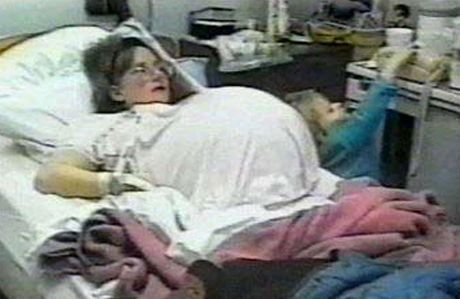
On October 15, Bobbi was admitted to Iowa Methodist Medical Center and given medication to stop labor. The drugs caused headaches, hot flashes and malaise. Carlisle had known about the pregnancy for months. The admission made it international news.
By the end, her waist measured 52 inches.
In the middle of her 30th week, her contractions reached 10 an hour. Bobbi told her doctors that after more than 30 weeks of pregnancy she had had enough, and Mahone and Drake agreed to deliver. Mahone later recalled sitting by the telephone for several minutes before she made the call.
The next morning, pagers summoned a pre-selected 66-member medical team that some hospital staff had nicknamed Operation Snow White.
Seven babies arrived in six minutes
The team worked in three places. The first was the delivery room. In a second operating room, three neonatologists directed stabilization teams. The third was the neonatal intensive care unit at Blank Children’s Hospital. About 40 medical staff took part in the delivery itself.
Mahone made a 15-inch vertical incision instead of the usual horizontal cut to give herself room to work. On the sonogram, the babies had been lettered A through G and lay in an inverted pyramid. As each baby came out, Bobbi’s uterus contracted and pushed the next one into position.
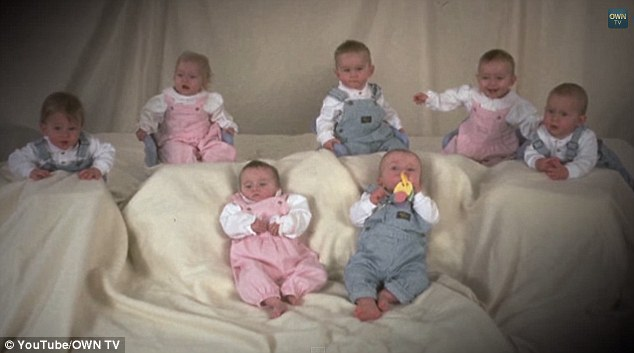
They arrived about a minute apart:
- Kenneth Robert, 12:48 p.m., 3 pounds 4 ounces
- Alexis May, 12:49 p.m., 2 pounds 11 ounces
- Natalie Sue, 12:50 p.m., 2 pounds 10 ounces
- Kelsey Ann, 12:51 p.m., 2 pounds 5 ounces
- Nathan Roy, 12:52 p.m., 3 pounds 3 ounces
- Brandon James, 12:53 p.m., 2 pounds 14 ounces
- Joel Steven, 12:54 p.m., 2 pounds 15 ounces
Bobbi stayed awake and calm the whole time, though Brom saw tears in her eyes. She listened closely as doctors announced the sex and condition of each child. Nurses placed each newborn in a high-tech carriage fitted with heart, oxygen and breathing monitors, then wheeled it on a four-minute trip through the corridors to the NICU. According to Time, Bobbi reportedly had a tubal ligation before she left the operating room.
Kenny visited his four new sons and three new daughters, then held a press conference at Missionary Baptist Church in Carlisle. His first word in public was “Wow!” When reporters asked whether he would do it again, he said it was someone else’s turn.
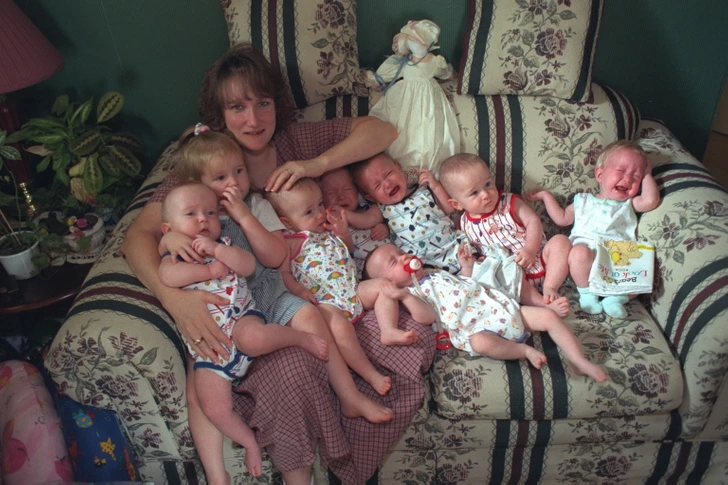
The world rushed to Carlisle
At the time, only one other set of septuplets was known to have been born alive, in Saudi Arabia that September. Time reported that three of those babies died about a month later. The McCaughey babies were on track to become the first complete set to survive. A second surviving set was born in Abha, Saudi Arabia, on January 14, 1998.
President Bill Clinton phoned the McCaugheys to congratulate them. In December 1997, Bobbi and Kenny appeared on the cover of Time.
Gifts arrived fast. Carlisle’s incoming mayor pledged to find land for a house, and local businesses pledged to build one. Chevrolet gave the family a 15-seat van. Procter & Gamble, Mott’s and Gerber offered free diapers, apple juice and baby food. The donations eventually included a 5,500-square-foot house, a nanny service, clothes and two years of diapers. The State of Iowa offered full scholarships to any state university, and Hannibal-LaGrange University in Missouri offered scholarships to all seven at birth. Bobbi said strangers sometimes came to the back door and asked to hold a baby.
The costs were large too. NICU care was estimated at $1,000 a day, plus a few thousand dollars more each day for ventilators, blood work and physician fees. Insurance had covered most of the bills so far. Newsweek estimated the first year would take 15,400 diapers and 1,460 loads of laundry.
Not everyone celebrated. Ethicists and doctors warned that fertility treatments were being used indiscriminately and irresponsibly, at great medical risk. Mark I. Evans advised selective reduction for any pregnancy with more than three fetuses. Louis Keith argued the whole treatment cycle should have been canceled before insemination. John P. Elliott, who had delivered quintuplets in Phoenix the year before, warned that the success could give other couples false hope. Perinatal epidemiologist Barbara Luke was blunter: “It is an injustice to children to be born in litters.”
One specialist quoted by The Washington Post argued that proper monitoring would have shown that Bobbi’s ovaries had overreacted to the drug. Hauser defended her care and said she had used the same dose she had given the couple two years earlier. She declined to give details of her advice, and she asked whether society should decide how many children a family has.
Then a letter came from the only people alive who knew what the McCaughey children might face. The surviving Dionne quintuplets wrote an open letter that congratulated the family and warned them to protect their children’s privacy.
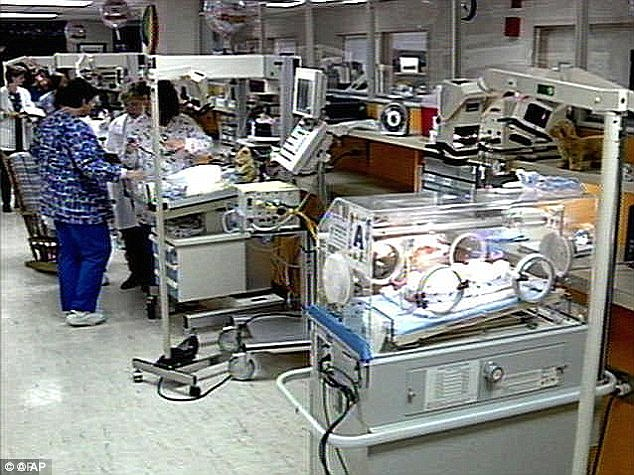
Two of the babies struggled
All seven babies were listed in serious condition at first. Neonatologist Dr. Robert Shaw oversaw their care, and Kenneth was upgraded to fair by Friday. After two days, doctors let Bobbi hold Kenneth, the largest, for a brief cuddle.
The babies stayed in hospital for several weeks, and one stayed more than four months. They came home one at a time over those four months.
Home was a production line. The family went through up to 42 bottles and 70 diapers a day. Volunteers helped at first, and Bobbi cut back their schedule over time. By the fourth birthday, she and Kenny were raising the children on their own.
As the children grew, two of them fell behind. Nathan’s lower body and leg muscles had been rigid since birth, and Alexis had little strength in her trunk. Neither could walk or sit up without help. Nathan got around the house with a belly half-crawl his mother called a “scooch,” and Alexis pushed herself along on her back with her legs.
Then came the diagnoses. Doctors found that Alexis had hypotonic quadriplegia, which causes weakness in all four limbs. Nathan had spastic diplegia, which causes uncontrolled tightening of the leg muscles. Both have cerebral palsy and use walkers. For Alexis, the condition affected movement, muscle tone and cognitive development.
In November 2005, Nathan had spinal surgery at Gillette Hospital in St. Paul, Minnesota. He then spent six weeks in rehabilitation learning to sit, stand and walk properly, and NBC reported that he never complained. Years later, Nathan said he had worked day after day to teach himself to walk on his own.
The family’s working life changed too. Kenny left his job at the car dealership to become a public speaker. He later went back to his longtime job at a metal coating company in Des Moines, and Bobbi became a paraeducator for children with special needs. In a 2006 Dateline interview, Bobbi said that raising them was sometimes “a job I wouldn’t wish on anybody else.”
By the septuplets’ tenth birthday in 2007, the family was turning down most interview requests.

The septuplets grew up
At 16, six of the seven were on the honor roll, all seven played in the school marching band, and six were athletes. In May 2016, they graduated together from Carlisle High School. Then, for the first time in their lives, they split up.
Natalie, Kelsey, Nathan and Joel took scholarships to Hannibal-LaGrange. Kenny and Alexis stayed near Des Moines for community college. Brandon enlisted in the US Army.
A 2022 USA Today interview showed how their lives had turned out. Alexis earned a liberal arts degree and went to work with children at a child care company.
Natalie studied exercise science, met her husband on campus and worked as a patient care technician, a job that grew harder during the pandemic. Kelsey gave up a budding music career to study public relations, reported for campus news and later worked as a receptionist in a medical office. Brandon rose to sergeant, married a woman named Alana and had a child.

Nathan and Joel both earned computer information systems degrees and work in IT. Alexis said it had been amazing to watch Nathan live in his own place, drive to work and support himself. Kenny was married and expecting a son. He said he sometimes felt lonely after growing up in such a crowded house.
In May 2019, Natalie became the first septuplet to marry, and Brandon married that August. Mikayla’s son, born in 2017, had already made the septuplets aunts and uncles. By the end of 2022, Brandon and Kenny had become fathers.
Kenny Sr. serves as a deacon at a Baptist church in West Des Moines. The house that donors built for them now belongs to Ruth Harbor, a nonprofit that supports young mothers.
On November 19, 2026, they turned 29. Kenneth Robert, Alexis May, Natalie Sue, Kelsey Ann, Nathan Roy, Brandon James and Joel Steven McCaughey were born in six minutes. Nearly three decades later, they hold the record as the oldest septuplets.
