
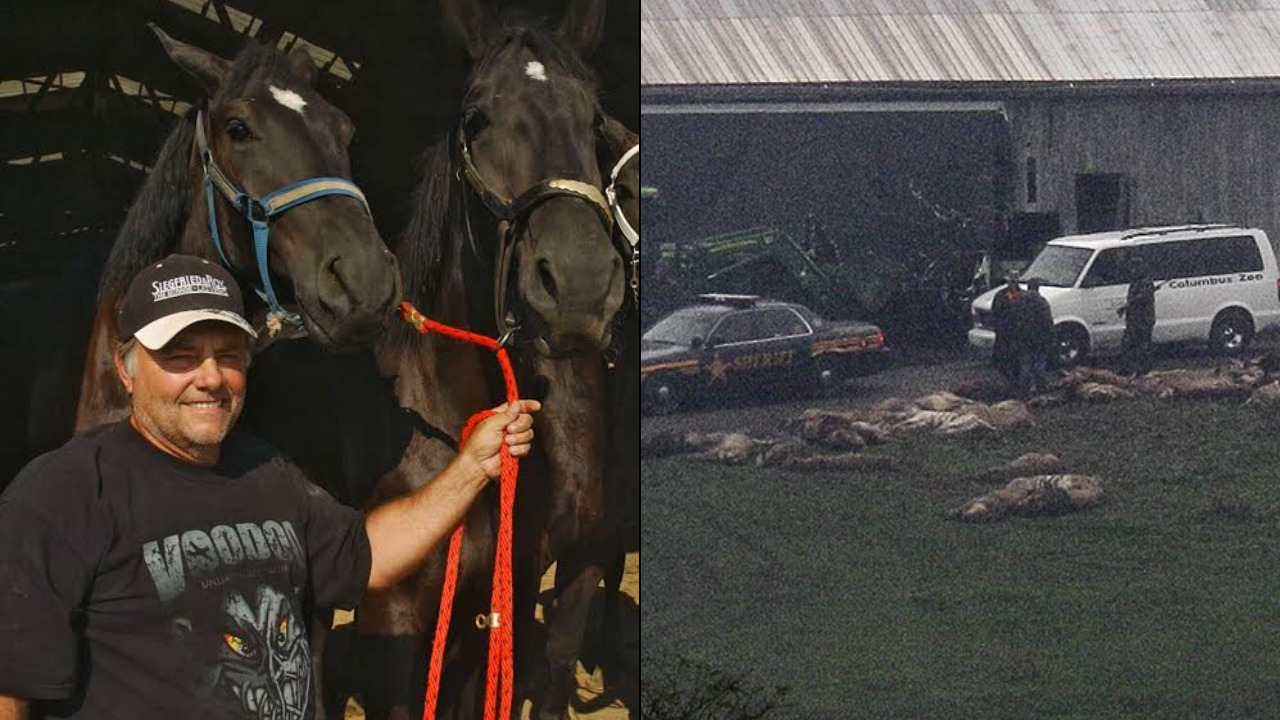
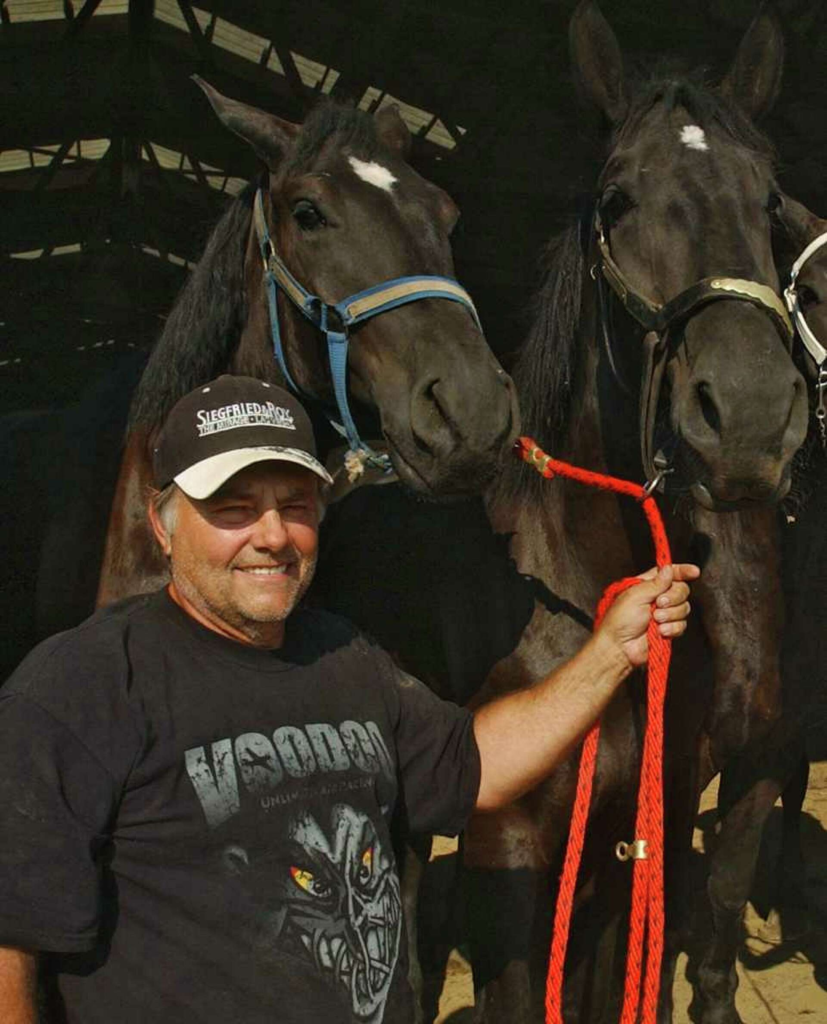
On the evening of October 18, 2011, Sam Kopchak walked out to bring his horse, Red, into the barn on his property outside Zanesville, Ohio. Red was agitated. When Kopchak reached the field, he saw why.Roughly two dozen of his neighbor’s horses were running in tight, frantic circles.
Then he saw what was chasing them a black bear.Kopchak got Red into the barn. As he turned to head back to his house, he had the sudden feeling of being watched. On the other side of the fence stood a full-grown African lion.
He didn’t run. He walked, slowly, back to his house, called his 84-year-old mother, Dolores, and told her to phone 911. She did.”There’s a bear and a lion out,” the caller told the dispatcher. “Right up behind us.”By the next morning, 48 exotic animals lay dead across the Muskingum County countryside, and the man who had set them loose, Terry Thompson, was dead in his own driveway.
A Reputation for Excess
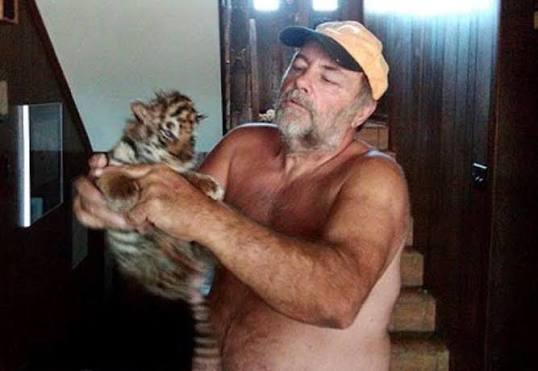
Thompson, 62, was a familiar figure around Zanesville. A Vietnam veteran, he had built a life around acquiring things: guns, motorcycles, dozens of vintage cars, and eventually, animals. What began with a single exotic pet grew into a private menagerie on his 73-acre farm, the Muskingum County Animal Farm, which came to house 56 lions, tigers, bears, wolves, leopards, and monkeys.
Neighbors and friends knew him as someone who “pushed the envelope.” He and his wife, Marian, fed the animals on roadkill, donated livestock, and unsellable chicken parts. In 2008, Thompson appeared on the Rachael Ray Show as an animal handler for a visiting zoologist. But by the end of that year, his other business, dealing firearms, had drawn federal attention.
The Bureau of Alcohol, Tobacco, Firearms and Explosives raided his property and found sawed-off shotguns and unregistered machine guns among his collection. He was convicted and sentenced to roughly a year in federal prison.
The marriage did not survive it. Marian left the farm while he was incarcerated. Thompson was released from prison in late August 2011 and from a halfway house on September 30, just seven weeks before he died. He returned to a farm without his wife, a stack of tax debt approaching $70,000, and, according to friends, a growing sense that he had taken on more than he could manage.
The Cages Open
On the afternoon of October 18, Thompson cut holes in his fencing and opened the cages. Then he shot himself.Deputy Jonathan Merry was the second officer to reach the area, dispatched first to the Kopchak farm. He had barely knocked on the door when a 130-pound gray wolf ran past, heading for the tree line. Sheriff Matt Lutz radioed him not to let it escape. Merry followed it in his patrol car and shot it before it reached cover.
He then drove to Thompson’s property to meet the other arriving deputies, and got out of his car directly into the path of a charging black bear. With no time to reach his rifle, he drew his sidearm and killed it with a single shot from roughly seven feet away.
Over the next several hours, working largely alone with a rifle, Merry would go on to shoot a lioness, a mountain lion, a male African lion, another wolf, a Bengal tiger, and a grizzly bear, working to keep the animals from reaching nearby Interstate 70.Other deputies and a response team from the Columbus Zoo found Thompson’s body near the barn, partially fed on by one of his own tigers.
A Night of Shoot to Kill
As darkness fell, Lutz made the call that would define the incident. Deputies lacked tranquilizer equipment, and even if they had it, sedating a 400-pound tiger safely takes time and expertise no one on scene had.
With dozens of dangerous animals loose near homes, schools, and a highway, Lutz ordered his officers to kill any animal that appeared to be leaving Thompson’s property.Schools closed. Roads were cordoned off.
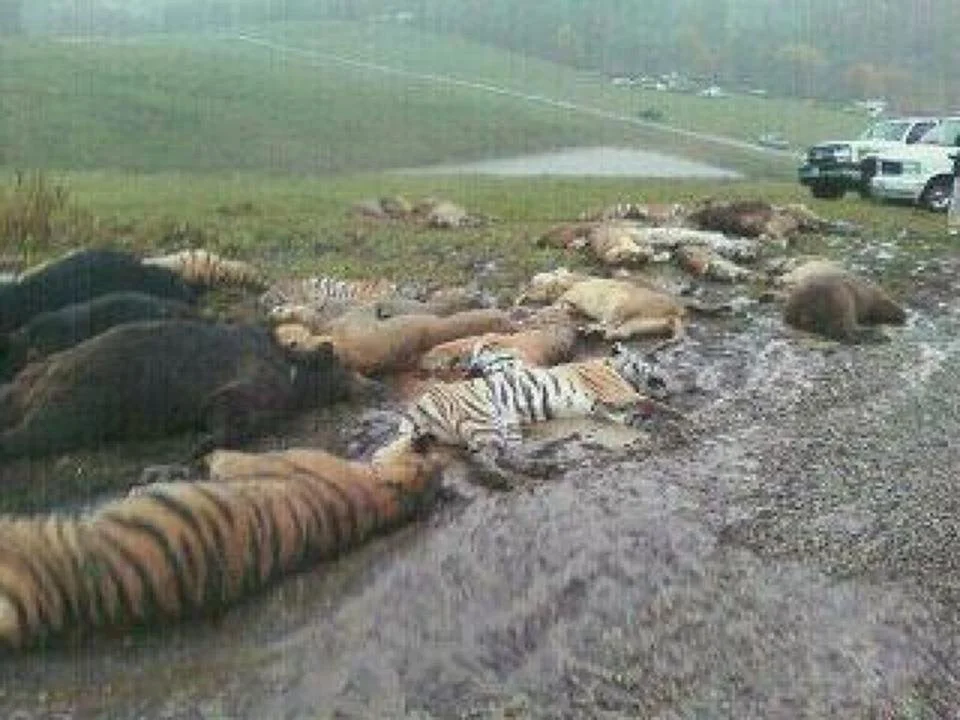
Flashing highway signs warned drivers to stay in their vehicles. By the following afternoon, deputies had killed 48 of the 56 animals: 18 Bengal tigers, 17 African lions, six black bears, two grizzly bears, three mountain lions, two wolves, and a baboon.
Six animals, two leopards, a black leopard, two monkeys, and a grizzly bear, survived because they never left their cages. A monkey was never found and was believed to have been eaten by one of the loose predators.Only one human being died: Terry Thompson.
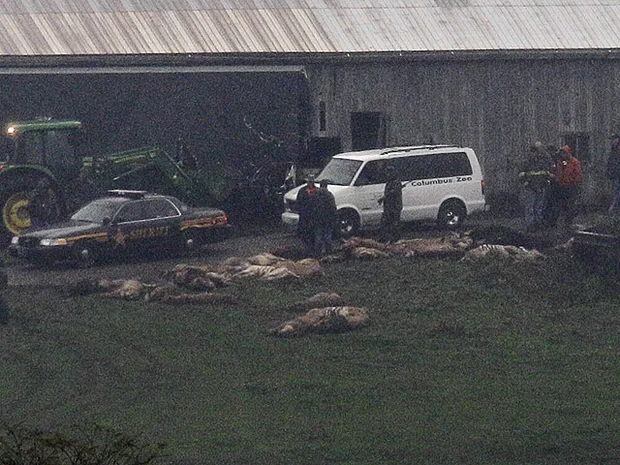
New Laws
The backlash was immediate. Critics, including animal welfare advocates, argued the cull was excessive and that tranquilizers should have been used. Columbus Zoo director emeritus Jack Hanna, who had assisted authorities that night, defended the decision publicly, arguing there was no realistic way to safely dart dozens of large predators in the dark before they reached populated areas.
Ohio had among the laxest exotic animal ownership laws in the country at the time. A resident could legally buy a lion or a tiger without notifying the state, a county, or even a neighbor. That changed in the incident’s wake.
Governor John Kasich signed new restrictions into law in June 2012, and by January 1, 2014, Ohio’s Dangerous Wild Animal Act was fully in effect, requiring registration, microchipping, and strict housing and insurance standards for exotic animal owners, and banning many species from private ownership outright.
Marian Thompson eventually reclaimed the five surviving animals from the Columbus Zoo the following year, after a lengthy quarantine dispute with the state.Forty-eight animals, some of them among the last of their kind, died on a rural Ohio road because one man decided no one else should have them either.
