
At around four in the morning on December 17, 1968, a man knocked on the door of a room at the Rodeway Inn in Decatur, Georgia, and said he was a detective. There had been a traffic accident, he told the woman inside, involving a man in a white Ford. Jane Mackle knew a white Ford. Her daughter’s friend Stewart Hunt Woodward had driven one over to visit a few hours earlier. She unlatched the door. On the other side stood a man in a ski mask holding a shotgun, and a smaller figure beside him that Jane would later say she took for a boy of about twelve.
Barbara Jane Mackle was 20 years old, a student at Emory University, and sick. The Hong Kong flu had swept the campus in the middle of exam week, and she had left a test partway through. Her mother had driven up from Coral Gables, Florida, to nurse her and take her home for Christmas break. They were sharing a motel room because it made sense, and because Barbara was too unwell to make the drive.
The men bound Jane hand and foot and, according to FBI accounts, chloroformed her. Then they took Barbara out into the December cold in her red and white flannel nightgown and put her in a car. Jane freed herself within minutes and called the police. It made no difference. By the time anyone was looking, the car was already heading northeast.
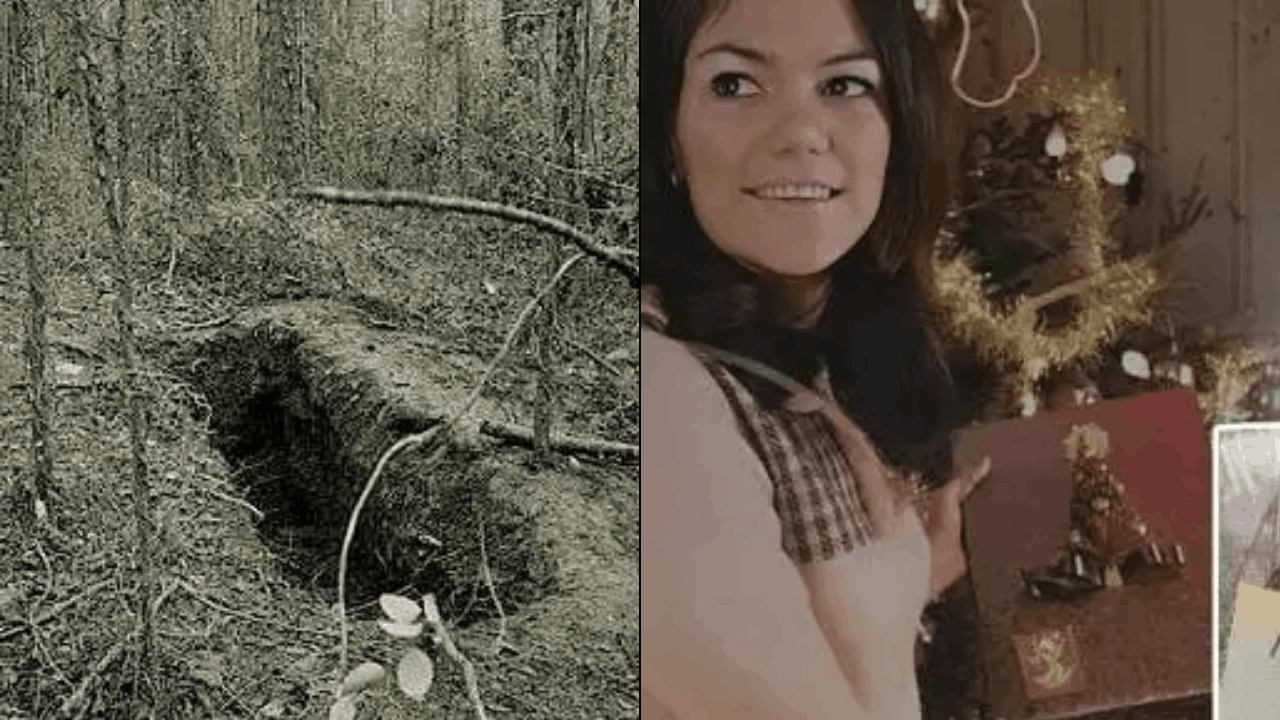
The capsule in the woods
They drove about 20 miles, exited at South Berkeley Lake Road in Gwinnett County, and eased the blue Volvo a hundred feet back into a stand of pines. Gary Steven Krist got out and pulled tree limbs away from a hole in the ground.Inside the hole sat a box roughly seven feet long, three feet wide, and three and a half feet deep, built of plywood and lined with fiberglass. He had built it himself in a construction trailer on the grounds of the University of Miami’s Institute of Marine Science, where he worked as a research technician under the name George Deacon. Only he had access to the trailer.
It had been outfitted with care that is difficult to describe without sounding like praise. A battery-powered lamp. A fan. A sump pump to clear rainwater. Food and water calculated to last roughly a week. A chemical toilet, toilet paper, sanitary napkins. Two flexible plastic pipes running up through the soil to the open air. Typed instructions explaining how to operate the light, the pump, and the ventilation, including a warning not to run the lamp too long because it would drain the battery. He had thought about the sump pump.
He had thought about the battery.He had also laced her drinking water with a mild sedative, which he did not mention.Before she went in, Krist made Barbara hold a hand-lettered sign reading KIDNAPPED and photographed her with a Polaroid. He rejected the first shot because she was not smiling. He told her to smile so her parents would know she was alive, and took a second. According to one account he also took an opal ring off her finger.
Then he told her that he would be checking on her every few hours, and that she should not struggle.She was made to lie down. The lid went on and the screws went in, enough of them that an FBI agent who later examined the box said a three-hundred-pound football player could not have forced it. Barbara began to scream as the first shovelfuls of red Georgia clay struck the lid. The sound of the digging grew duller as the weight above her increased, and then it stopped, and then there was nothing.
Krist did not check on her every few hours. He did not check on her at all. He and Ruth Eisemann-Schier returned to their motel, cleaned up, checked out, and started the long drive back to Miami, listening to radio bulletins about the kidnapping they had just committed.
Eighty-three hours underground
Barbara had no way of knowing that the FBI had mobilized in two states, or that her father Robert, co-founder of the $65 million Deltona Corporation, was already assembling used $20 bills. All she knew was what she had been told before the lid went on, and within hours she understood that the part about being monitored had been a lie.
So she narrowed the world to what she could reach. She rationed the lamp. She sang Christmas carols out loud and off key. She recited hymns. She thought about decorating the tree at home, about a day of ice skating, about a Christmas morning in Coral Gables that she had decided in advance she was going to see. She said later she never doubted she would be found.At some point the lamp battery gave out. She spent the remaining hours in the dark.
The ransom that failed
Robert Mackle wanted to pay and pay quickly. Following instructions, he dropped a suitcase containing $500,000 in used twenties into Biscayne Bay before dawn, just offshore from a stretch of overgrown lots south of downtown Miami.The kidnappers came for it in a Boston Whaler stolen that night from the Institute of Marine Science. A resident woken at five in the morning by an outboard motor saw a white boat beached on a neighbor’s lawn and, thinking of a recent run of burglaries, called the police.
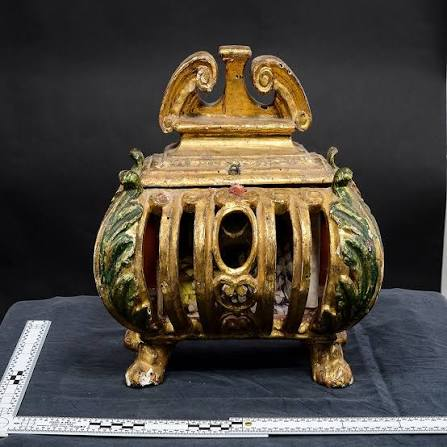
The FBI had not told local police that a ransom drop was in progress. Two officers responded to a routine burglary call and walked straight into it. Krist and Eisemann-Schier dropped everything and ran, leaving behind a duffel bag of scuba gear, the suitcase with the half million dollars still in it, and a blue Volvo parked nearby.The Volvo was the case. Inside it, agents found the car registration in the name of George D.
Deacon, photographs of a man in a policeman’s hat, Eisemann-Schier’s passport, two one-way airline tickets, and the Polaroid of a young woman in a red and white nightgown holding a sign that said KIDNAPPED.Robert Mackle placed an advertisement in the Miami Herald, got a second set of instructions, and delivered the money successfully that Thursday night. Then, for twelve hours, nothing.
Meanwhile the trail from the Volvo ran to the University of Miami, where agents learned that George Deacon built ventilated boxes for a living, and that his supervisor could name a woman he spent a great deal of time with: Ruth Eisemann-Schier, a graduate student from Honduras studying marine science.
A man in Georgia called the FBI to report that he had bought a small trailer and found strange paperwork inside, including letters addressed to both George Deacon and Gary Krist. Fingerprints from the Volvo matched a file already on record for Krist, who had escaped a California prison in November 1966 while serving time for auto theft. Deacon and Krist were the same man.Knowing who had taken her did nothing to tell anyone where she was.
A patch of disturbed clay
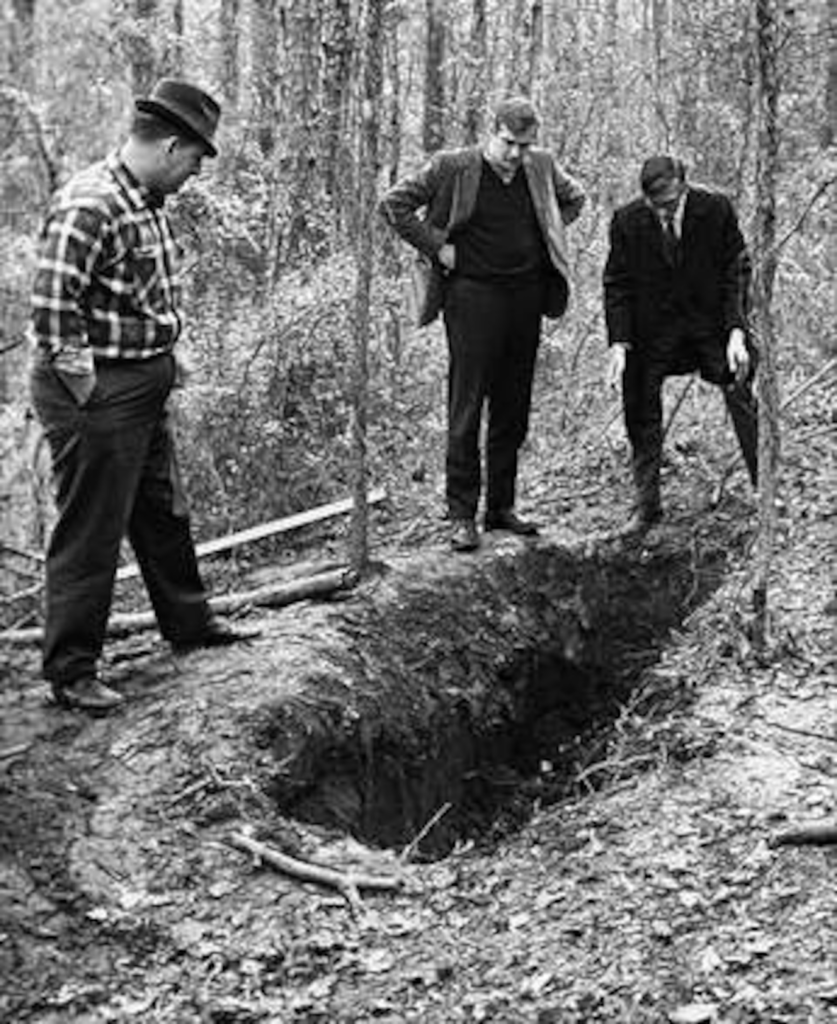
On December 20, Krist telephoned an FBI switchboard operator and gave directions to the burial site. They were vague.The Bureau set up a command post in Lawrenceville and pushed more than a hundred agents into the woods. They dug with their hands and with whatever they could find. Some accounts hold that the first agents to reach the area arrived without shovels.
They shouted her name into the pines, though a woman sealed under eighteen inches of earth had almost no chance of hearing it. The afternoon light started to go, and with it the possibility of walking within ten feet of her and never knowing.Then an agent noticed something on top of a pile of brush: a scattering of fresh red clay that did not belong there.The digging stopped being frantic and became precise.
When they lifted the lid, Barbara Mackle was alive. She had been underground for roughly 83 hours. She was severely dehydrated, had lost about ten pounds, and was too weak to stand, but she was conscious and lucid. The agents cheered. She reportedly looked up at the men who had pulled her out and told them they were the handsomest men she had ever seen.
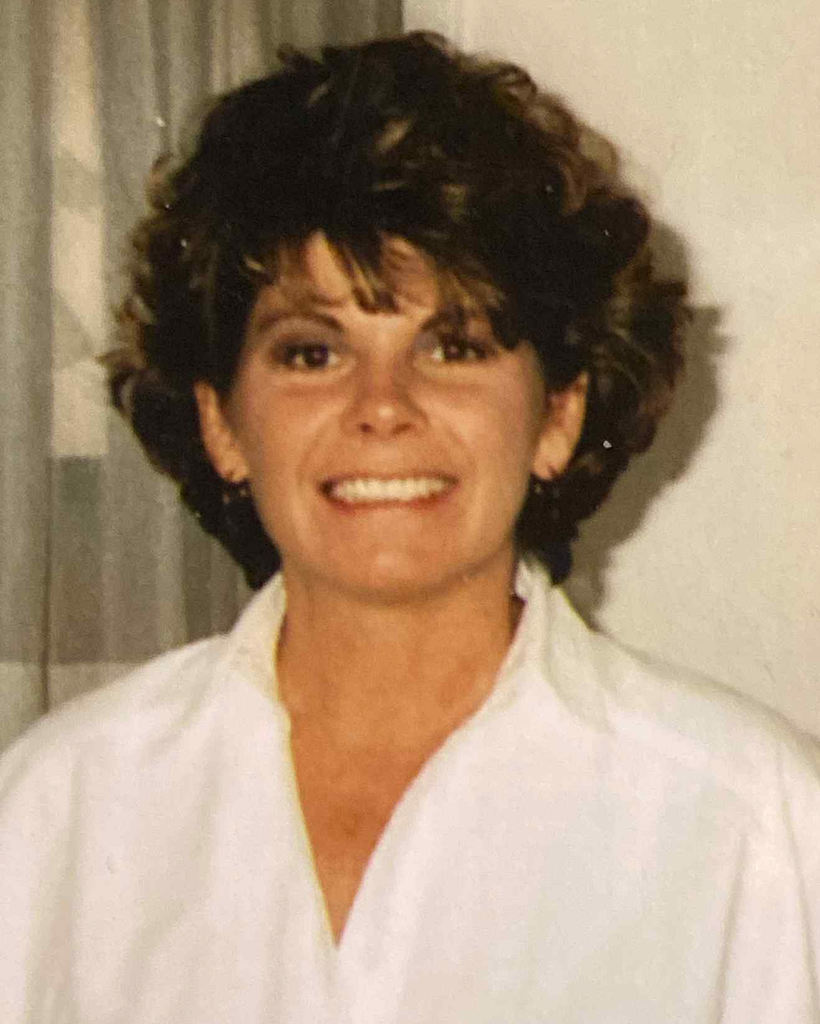
What came after
Krist ran south. He bought a boat with ransom money, paying in twenty-dollar bills, which is what made the seller suspicious enough to call authorities. Agents were helicoptered into waist-deep swamp water still wearing their business suits, and they searched for the better part of two days before he moved. He was arrested on Hog Island, near El Jobean, Florida, on December 22, 1968. Roughly $480,000 of the ransom was recovered.
Eisemann-Schier lasted longer. She traveled by bus across several states, took low-wage work, and posed as a nineteen-year-old college student under the name Donna Sue Wills. On March 5, 1969, 79 days after the kidnapping, she applied for a job in Norman, Oklahoma, and submitted her fingerprints as part of a routine background check. The Oklahoma State Bureau of Investigation matched them.
She had been the first woman ever placed on the FBI’s Ten Most Wanted Fugitives list. She pleaded guilty, was sentenced to seven years, served four, and was paroled on the condition that she be deported to Honduras.Krist was convicted in 1969 and sentenced to life. He was paroled after ten. He then received a pardon that allowed him to attend medical school, and he practiced medicine in Indiana until 2003, when his license was revoked for lying about a disciplinary action during his residency.
In March 2006, federal agents boarded his sailboat off the Alabama coast and found fourteen kilograms of cocaine, reportedly worth about $1 million, and four undocumented migrants. He was sentenced to five years and five months and released in November 2010. In 2012, a federal judge in Mobile revoked his supervised release after he sailed to Cuba and South America without permission, and sentenced him to another 40 months. He was released in 2015.
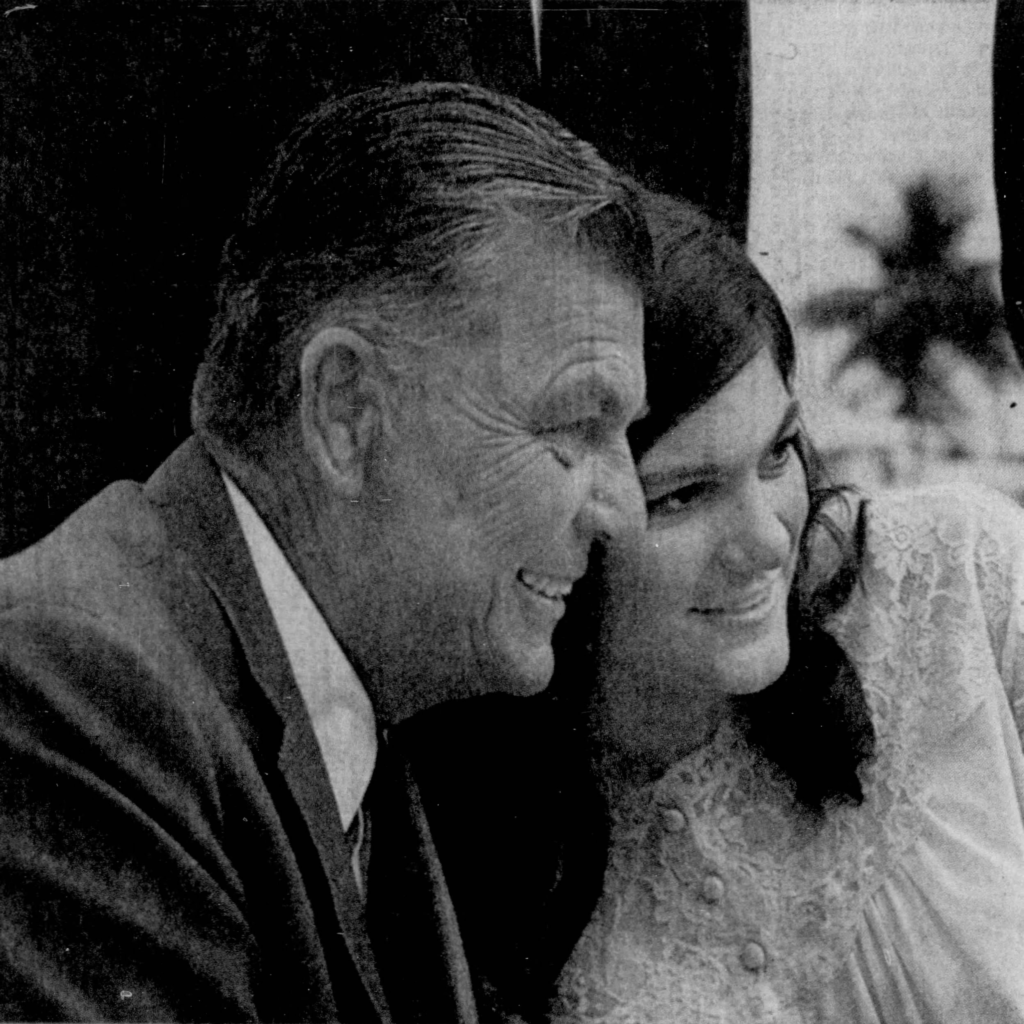
Barbara went home to Coral Gables in time for the Christmas morning she had spent three and a half days picturing. In 1970 she published 83 Hours Till Dawn with Miami Herald reporter Gene Miller, and the account became a 1972 ABC television film, The Longest Night, and a second adaptation in 1990. The 1973 exploitation picture The Candy Snatchers borrowed from her ordeal without her involvement. She married, raised children, and gave almost no interviews.
She was a twenty-year-old with the flu who had left an exam early and gone to lie down, and when a man screwed a lid over her face and shoveled clay onto it, she rationed a flashlight battery, sang carols in the dark to a family that could not hear her, and decided in advance that she would be going home.

So he never planned on killing her, what a kind man!