
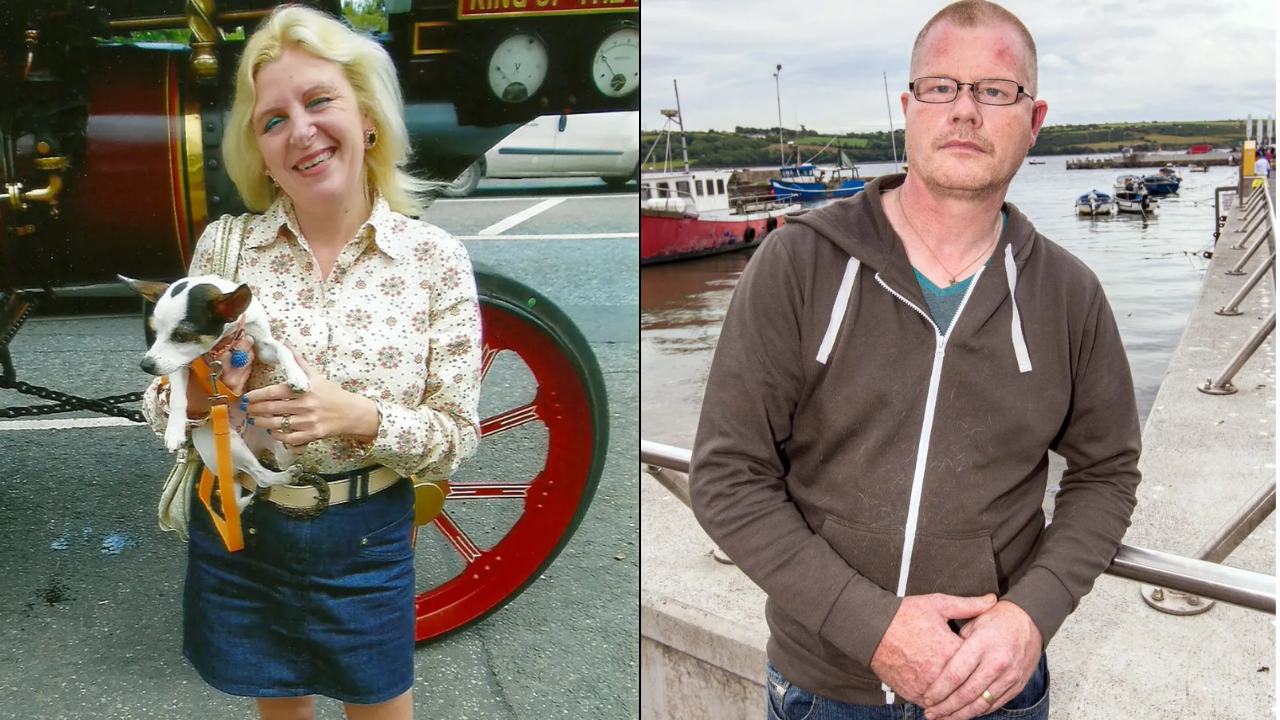
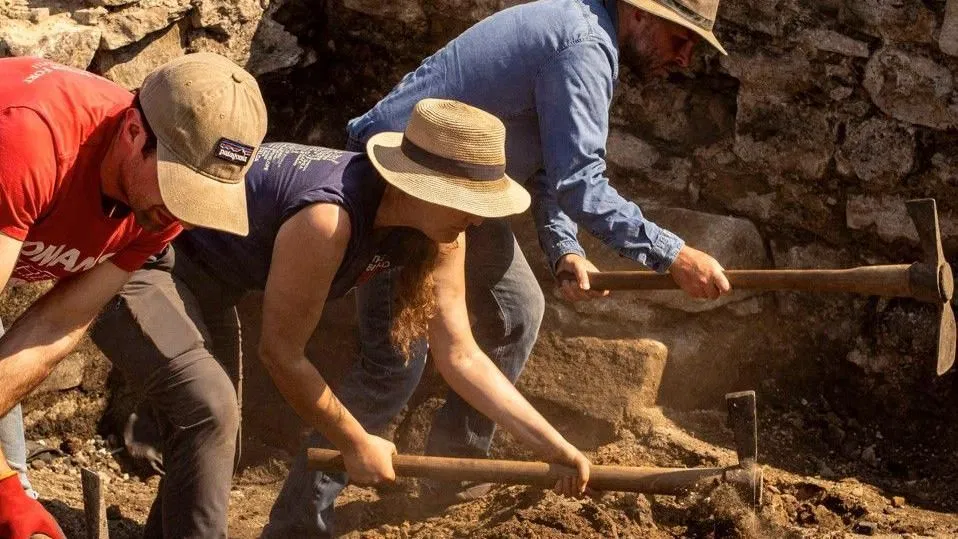
On the evening of October 11, 2023, investigators from An Garda Síochána brought jackhammers into a terraced house on Grattan Street in Youghal, County Cork, and began breaking through the floor beneath the staircase. They had already noticed something the first search team had missed six years earlier: a rectangular patch of concrete, noticeably newer than the floor surrounding it, measuring roughly six feet long by three feet wide. When the jackhammers broke through approximately 64 centimetres down, they reached a layer of black plastic sheeting. Work stopped immediately. A forensic archaeologist took over. The following morning, October 12, investigators uncovered a human hand.
Tina Satchwell had been missing for 2,396 days. Her husband, Richard, had spent much of that time on Irish radio and television, pleading for her to come home.
Tina Satchwell, before Richard
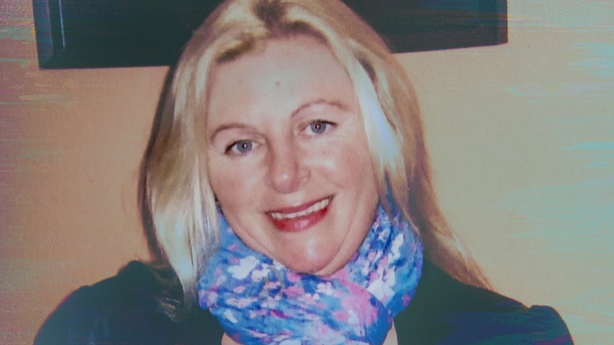
Tina Dingivan was born in Fermoy, County Cork, on November 30, 1972. As a young girl she moved to Coalville, near Leicester in England, to live with her grandmother, and it was there that she first met Richard Satchwell, an Englishman born in 1966. The two married in Oldham in 1990 and eventually moved back to Ireland, settling in Fermoy, where Tina had grown up and where her family remained close.
By the time of her disappearance, Tina had become known among her community as a bright, warm, fashion-conscious woman who filled her home with clothes, shoes, and jewelry. She regularly attended car boot sales across County Cork, buying and selling secondhand items and getting to know vendors by name. She did not have children. Instead, her animals occupied the center of her life. She had two dogs, Ruby and Heidi, and a pet parrot named Valentine. Ruby, a Chihuahua, held a particular place in Tina’s heart. She had gotten the dog in 2012 after losing her brother, and she was known to dress Ruby in outfits matching her own.
She was also a woman who had confided to family that she felt trapped. Her half-sister, Lorraine Howard, later told investigators and then a jury that Richard displayed obsessive, possessive, and controlling behavior throughout their marriage. According to Lorraine Howard, whenever Tina made a new friend, Richard found something wrong with them. He created tension between Tina and members of her own family. Slowly, her circle of contact grew smaller.
Tina had reportedly told Lorraine Howard that if she ever tried to leave Richard, she believed he would follow her to the ends of the earth.
A controlled life in Youghal
In May 2016, less than a year before Tina disappeared, the couple left Fermoy and moved approximately 30 miles away to the seaside town of Youghal. The move took Tina away from the family, friends, and community she had spent decades building. People who knew her later described the relocation as a deepening of her isolation.
Richard worked as a truck driver and was periodically away from home for extended periods. Tina managed the household, spent time with her animals, and visited the car boot markets she loved. But the network of people who would have noticed her absence had thinned considerably since the move. As Lorraine Howard later put it, the control Richard exercised over Tina’s relationships had ensured that when she vanished, very few people nearby would immediately question where she had gone..
The last morning
On Sunday, March 19, 2017, Tina and Richard attended a car boot sale in Carrigtwohill, County Cork. Tina appeared in good spirits. She bought a jacket, a dress, and expensive perfume. At one point she spoke with a friend who jokingly asked whether she was meeting another man. Tina dismissed the idea immediately, saying she had one man and one man only. It was the last time anyone outside the house on Grattan Street saw her alive.
According to Richard, the following morning was unremarkable. He claimed he made Tina breakfast shortly before 9 a.m., then left the house sometime after 10 a.m. to drive to Dungarvan, approximately 30 kilometres away, to collect his social welfare payments and buy parrot food from a pet shop. He said that when he returned around noon, Tina was gone. Two suitcases were missing from the house. So was €26,000 in cash that Richard claimed the couple had been keeping in a box in their attic.
Surveillance footage told a different story. CCTV captured Richard collecting his social welfare at Youghal post office at around 11:10 a.m. that morning, not in Dungarvan. Mobile phone location data showed he returned home directly afterward and remained there until 12:50 p.m. A forensic accountant who later reviewed the couple’s financial records found that their joint bank account had been consistently overdrawn in the years leading up to Tina’s disappearance. There was no evidence the couple had the financial capacity to accumulate €26,000 in savings.
Richard did not call the police. He claimed he assumed Tina had gone to England to stay with family and needed time to clear her head. He waited four days. On March 24, he drove not to the Garda station in Youghal where the couple lived, but to the station in Fermoy, the town where Tina had grown up, and reported her missing.
Fourteen interviews, one story
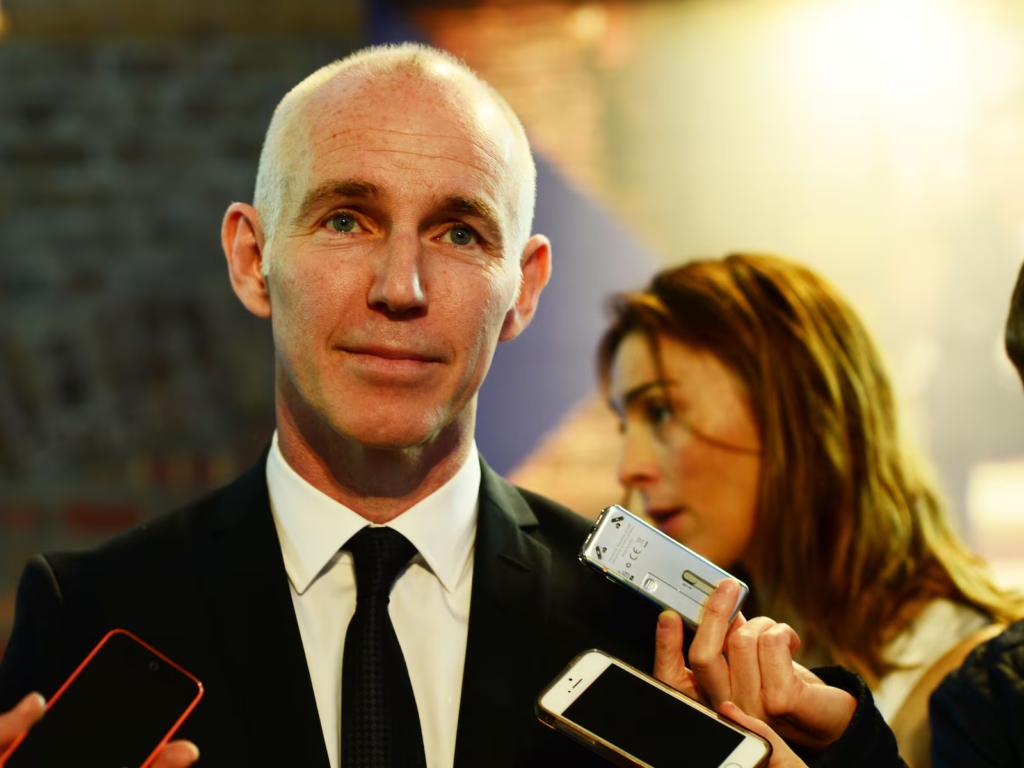
Between June 2017 and March 2018, Richard gave at least 14 recorded media interviews across Ireland. He appeared on RTÉ’s Crimecall, on The Ray D’Arcy Show, and on Cork’s Red FM, among other outlets. Each time, his message was the same: Tina had walked away. She was alive somewhere. She would eventually come back.
“Tina, come home,” he said in one televised appeal. “There’s nobody mad at you. My arms are open. The pets are missing you.”
During a radio interview, he said he would be willing to take a lie detector test to prove his innocence. When the host offered him one live on air, he declined. He said he was tired and unwell.
Behind the public appeals, Richard’s actions were moving in a different direction. Ten days after Tina disappeared, he texted one of her cousins offering her the couple’s large chest freezer. The following day, he listed it online for free. Within weeks, he began selling Tina’s clothes and shoes at the same car boot markets she had loved. When vendors asked where Tina was, he reportedly gave explanations that differed sharply from what he was saying in his interviews. He told some people she had become seriously ill and gone to England for medical treatment. At one point he reportedly claimed she had lost significant weight from illness.
The prosecution later identified an email Richard sent to a charity on the day Tina died, in which he appeared to hint that she might walk out on him. They described it as a calculated attempt to create a digital record he could rely on if her body were ever discovered.
Investigators, meanwhile, were following more than 400 leads, collecting over 170 witness statements, and reviewing approximately 100 hours of surveillance footage. More than 60 reported sightings of Tina came in from across Ireland and abroad. None could be confirmed. Her phone had not been used since March 20. Her bank account had not been accessed. She held no passport. No record existed of her passing through any port or airport in Ireland or the United Kingdom.
On June 7, 2017, Gardaí conducted an initial technical examination of the Grattan Street property. Ten days later, a team of ten officers returned for a full 12-hour search. They photographed each room, examined Richard’s car, seized his laptop and other electronic devices, and applied Luminol to detect traces of blood that might have been cleaned up. They found nothing. They came very close to Tina. They did not know it.
What the laptop showed
The investigation stalled for years. Then in 2021, a new team took over and began reviewing everything collected since March 2017. Among the evidence seized during the June 2017 search was Richard’s laptop. It had never been fully examined.
When investigators finally analyzed it, they found that on March 24, 2017, four days after Tina disappeared, someone had used the device to search for quicklime. They had also watched a YouTube video showing what happens when quicklime is mixed with water. Quicklime has legitimate construction uses, but it has a long association with the concealment of human remains. The timing stood out immediately.
Investigators also returned to photographs taken during the 2017 search of the house. Forensic archaeologist Dr. Niamh McCullagh noticed something that had not drawn attention at the time. The staircase appeared relatively new. The drywall along its side was fresh. A brick wall had been built beneath it. When investigators compared photographs taken before and after Tina’s disappearance, the newly built wall was clearly visible.
In October 2023, they returned to Grattan Street with a cadaver dog named Fern. Fern indicated interest in the area beneath the staircase almost immediately. Search team member Garda Brian Barry noticed the poor construction quality of the brick wall and examined the storage area more closely. When the linoleum floor covering was lifted, a specific section of concrete was visibly different in color from the surrounding floor. It had been poured more recently.
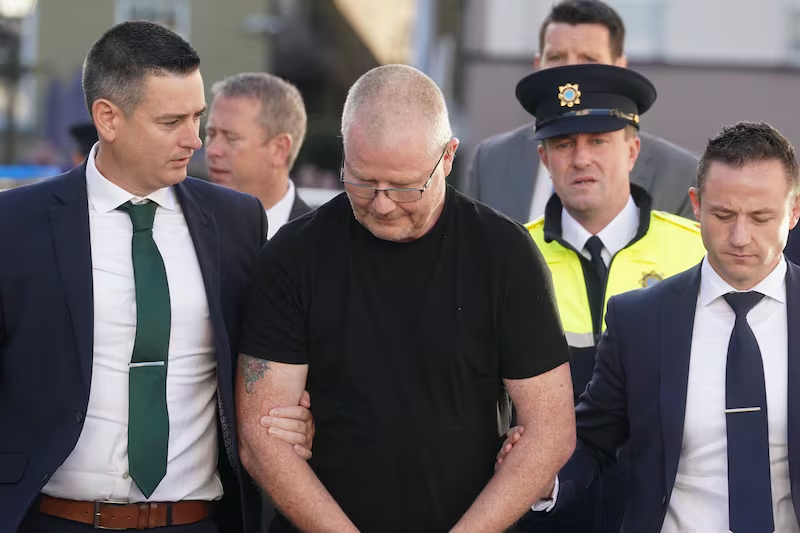
On October 10, 2023, Richard was arrested on suspicion of murder. He was released without charge the following afternoon. He was re-arrested on October 12, after investigators broke through the concrete and found what was beneath it.
The trial, May 2025
Richard Satchwell stood trial at Ireland’s Central Criminal Court in Dublin before Mr Justice Paul McDermott, with a jury of seven women and five men. The prosecution was led by Gerardine Small SC. The defence was led by Brendan Grehan SC.
Once confronted with the discovery of Tina’s body, Richard produced a new account. He claimed that on the morning of March 20, he found Tina at the bottom of the stairs holding a chisel. She attacked him, he said, and tried to stab him in the head. He fell backward, Tina landed on top of him, and he claimed he grabbed the belt from her dressing gown and held it against her neck until she stopped moving. He insisted the death was not premeditated.
What he did afterward was not in dispute. He placed Tina’s body in the chest freezer in their garden shed because, he said, the dogs kept going near her remains. He then dug a hole beneath the staircase, lined it with black plastic, lowered Tina into it face down, and covered her with soil and concrete. He built a brick wall and installed new drywall to conceal the grave.
The post-mortem examination conducted by State pathologist Dr. Margot Bolster found 15 shards of glass in Tina’s remains, including four fragments in her scalp. All came from the same piece of heat-treated glass. Richard’s account of an improvised struggle offered no explanation for them.
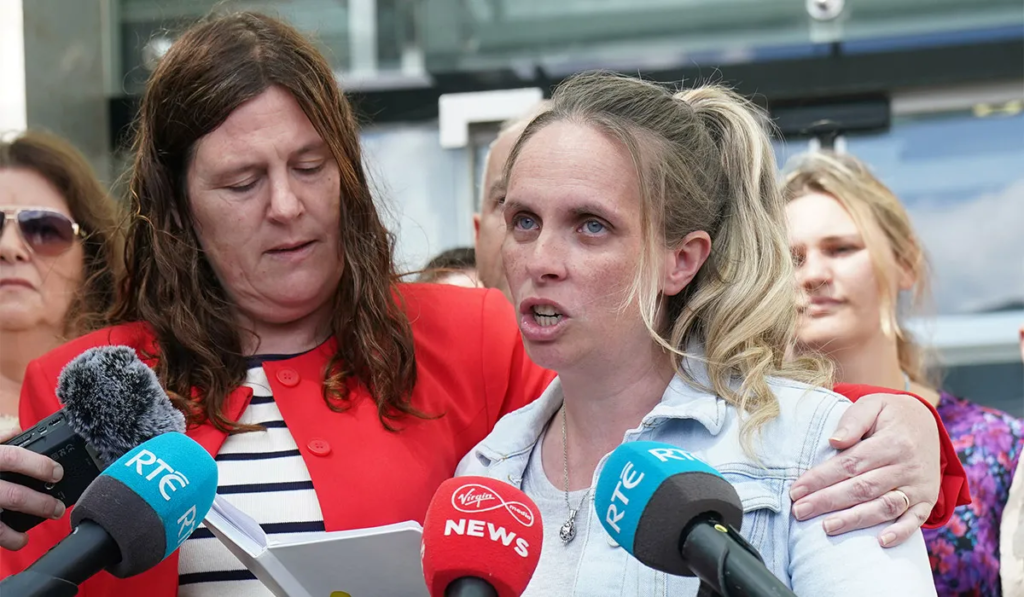
Richard chose not to take the stand at trial and submitted to neither direct examination nor cross-examination by the prosecution. The only witness the defence called was Lorraine Howard, who confirmed that Richard had exhibited controlling behavior toward Tina throughout the marriage, and that she had once overheard Tina say she had slapped him. Prosecuting counsel Gerardine Small told the jury that Richard’s account of how Tina died was implausible and self-serving, pointing to six years of lies, a concealed grave, and a carefully constructed public narrative designed to prevent its discovery.
After more than nine hours of deliberation over four days, the jury returned a unanimous verdict. On May 30, 2025, Richard Satchwell was found guilty of murdering his wife. He showed no emotion as the verdict was read. On June 4, he was sentenced to life in prison.
Tina Satchwell was 44 years old when she died, wearing her dressing gown over tartan pajamas, her wallet still in her pocket and her Tweety Bird tattoo still visible on her chest. She had been buried in her own home, beneath a floor that investigators searched twice before finding her, while the man who put her there stood in front of cameras and asked her to come back to him.
